
Een kersenverkoopster aan de deur — History & Facts
A shaft of sunlight cuts across the tiled floor, drawing the eye to the heart of a quiet domestic exchange. A woman, seated in a pale gown, leans forward with gentle curiosity as a cherry seller, basket in hand and cheeks flushed from the street, offers her wares at the open door. The scene is a study in thresholds—between indoors and out, gentility and labor, the familiar and the fleeting.
Every detail is a clue: the eager spaniel, poised mid-step, senses the promise of excitement; the doll in the seated woman's lap mirrors her own attentive posture, blurring the line between play and real life. Light pools on polished surfaces and crisp fabrics, heightening the sense of order and comfort within, while the open door frames a world just beyond reach. Painted in 1816, this work by Abraham van Strij (I) belongs to a tradition of Dutch interior scenes that flourished in the late eighteenth and early nineteenth centuries, when the everyday rituals of middle-class life became a subject worthy of careful observation. Such paintings were often commissioned by prosperous families eager to celebrate the harmony and refinement of their homes, or acquired by collectors who prized scenes of domestic virtue.
The artist’s attention to architectural detail, the play of light, and the subtle choreography of gesture all speak to the continued influence of seventeenth-century masters, yet the mood here is distinctly of its own moment—poised between nostalgia and the brisk rhythms of a changing society. Now held in the collection of Rijksmuseum Twenthe, this painting invites us to linger in the threshold, watching as a simple transaction becomes a moment of connection.
More Artworks by Abraham van Strij (I)

Abraham van (I) Strij Portret van Petronella van der Koogh (1788 89 1878), echtgenote van Jr. DM 017 1190 Dordrechts Museum
Abraham van Strij (I)

Abraham van (I) Strij Binnenhuis met vrouw en kind DM 847 42 Dordrechts Museum
Abraham van Strij (I)

Hendrik Weymans and his Family
Abraham van Strij (I)
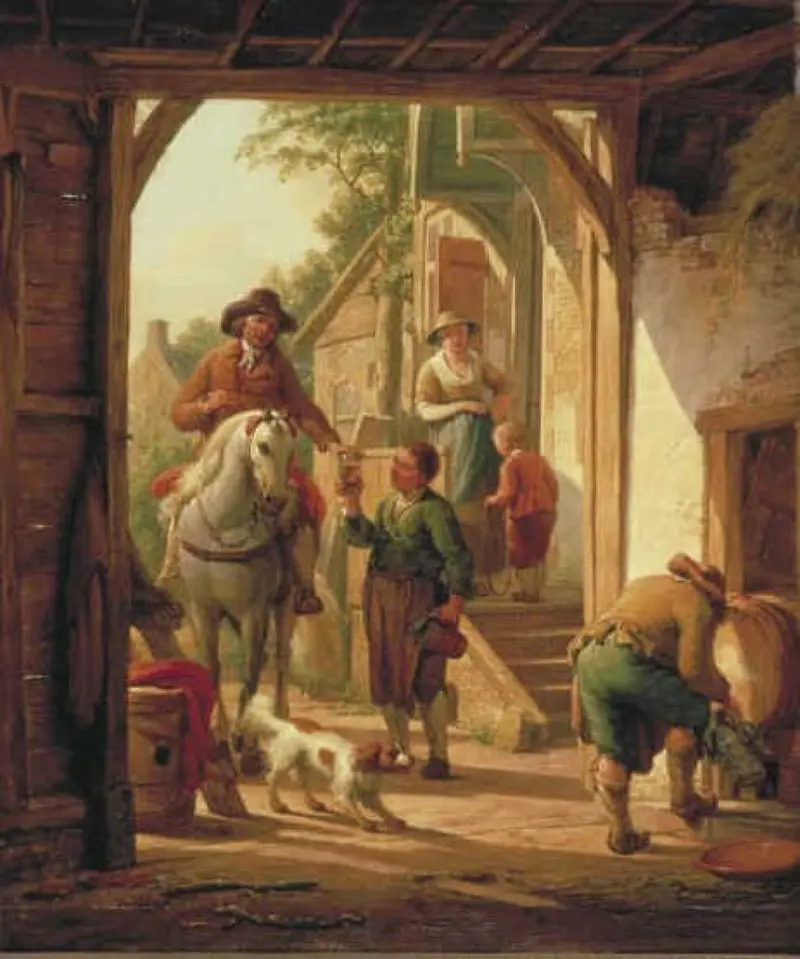
Horseman Resting near a Village Inn
Abraham van Strij (I)
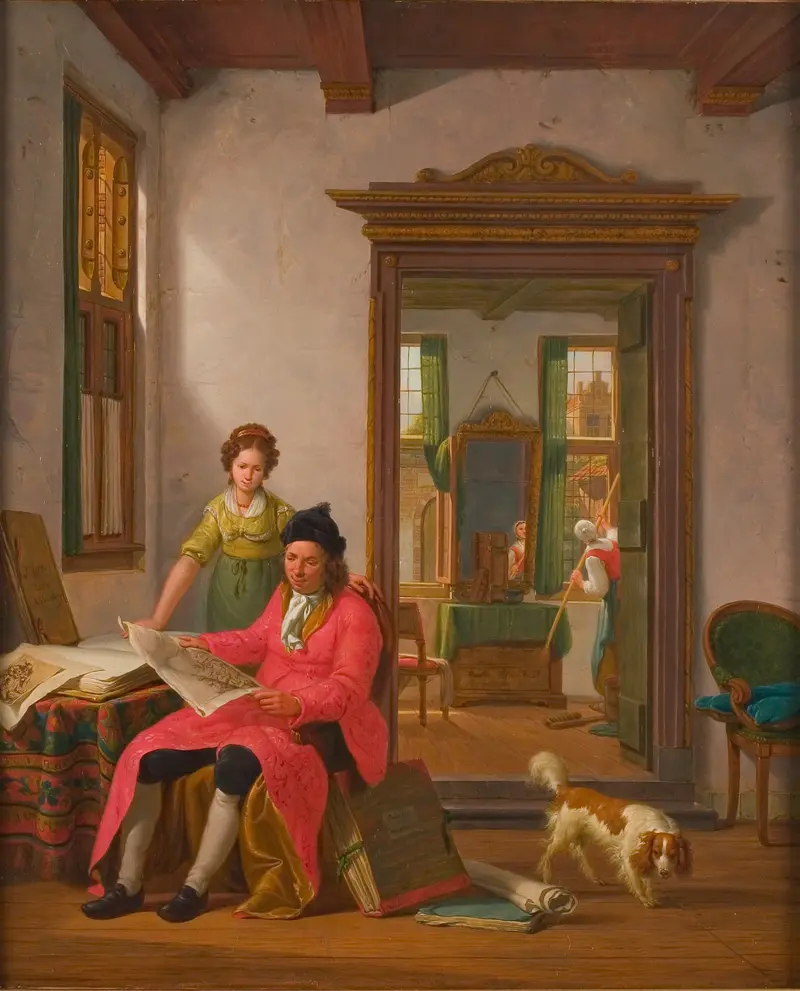
Portrait of an unknown man
Abraham van Strij (I)
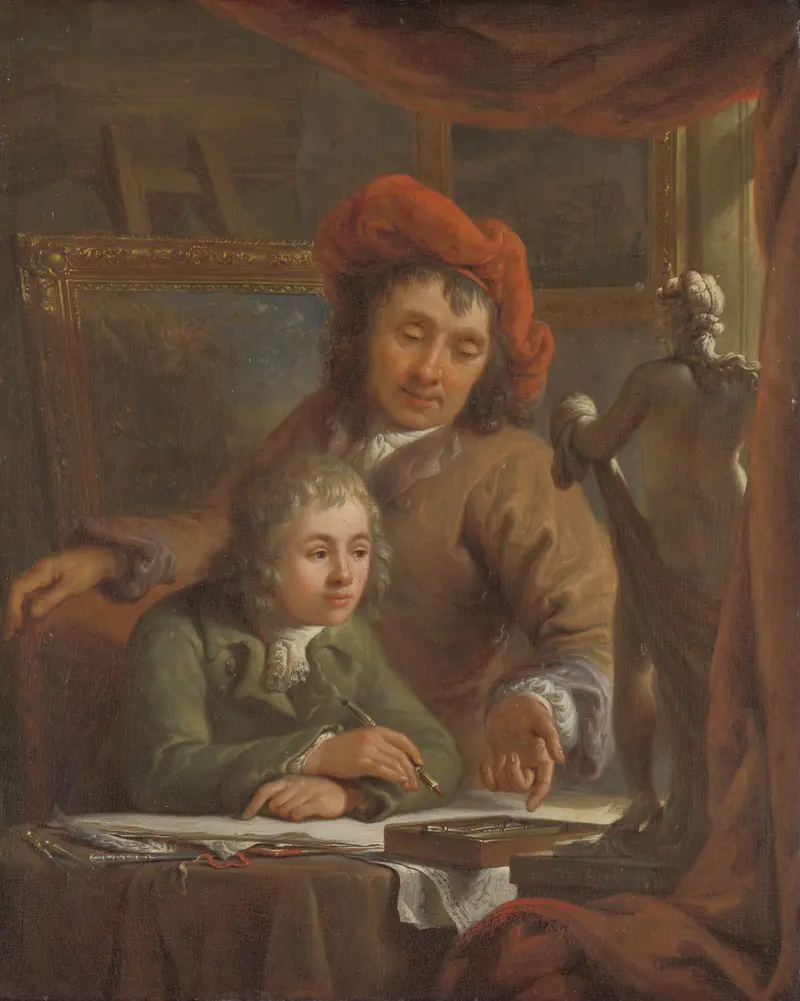
The Drawing Lesson
Abraham van Strij (I)
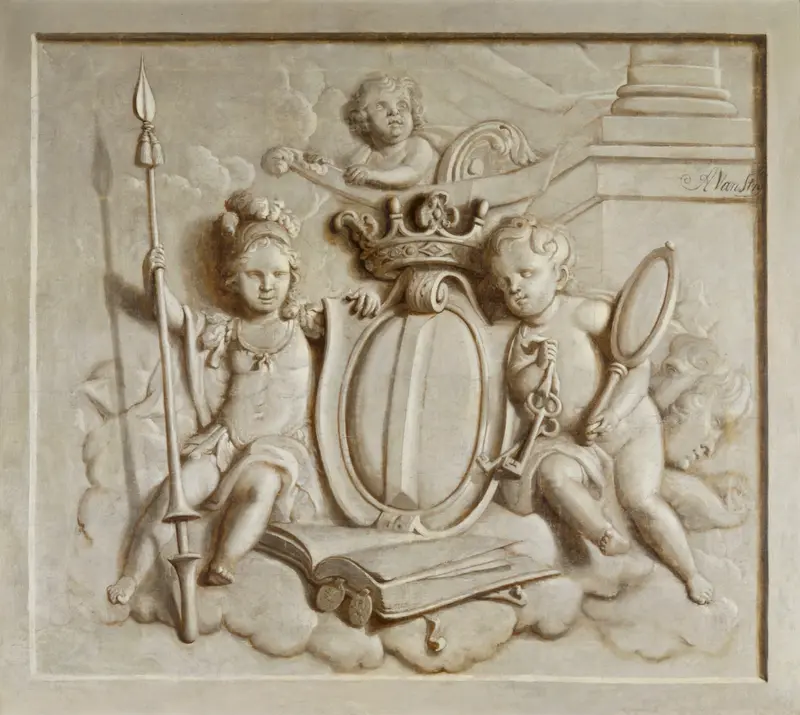
Abraham van (I) Strij Bovendeurstuk met allegorie op de stad Dordrecht DM 017 1188 Dordrechts Museum
Abraham van Strij (I)
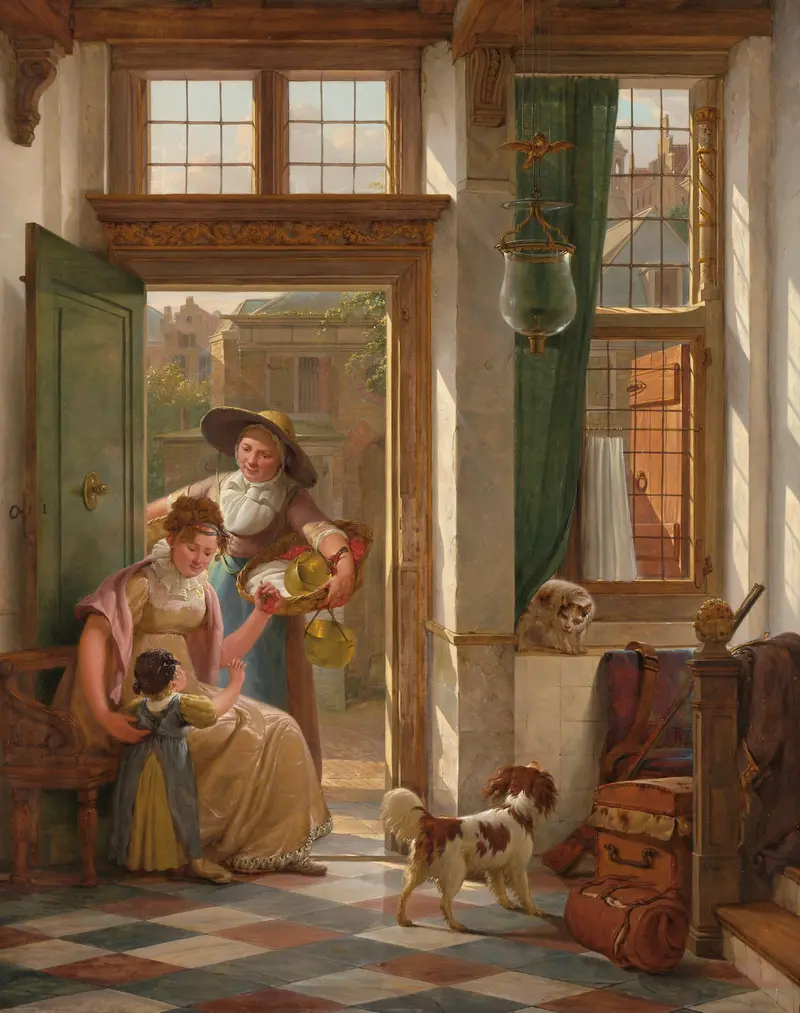
A Cherry Vendor at the Door
Abraham van Strij (I)
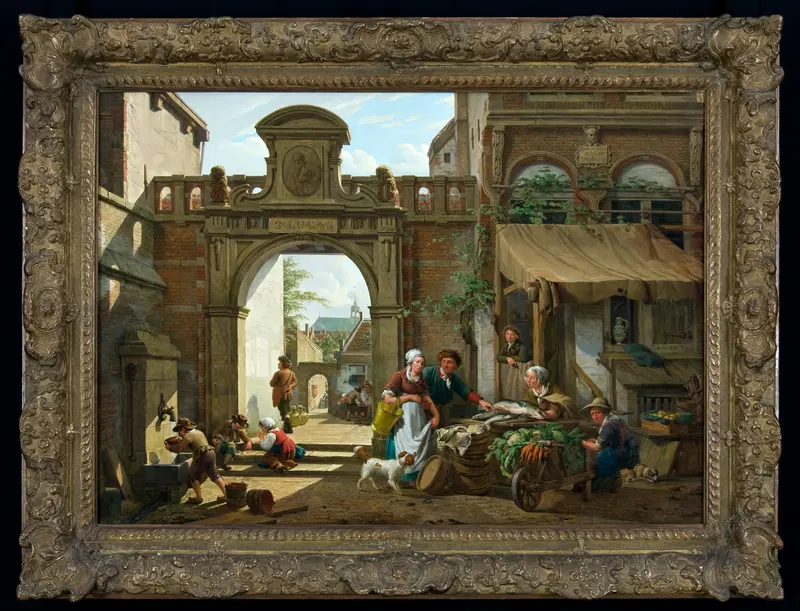
Abraham van (I) Strij Stadsgezicht met het gebouw van het St. Lucasgilde DM 010 950 Dordrechts Museum
Abraham van Strij (I)
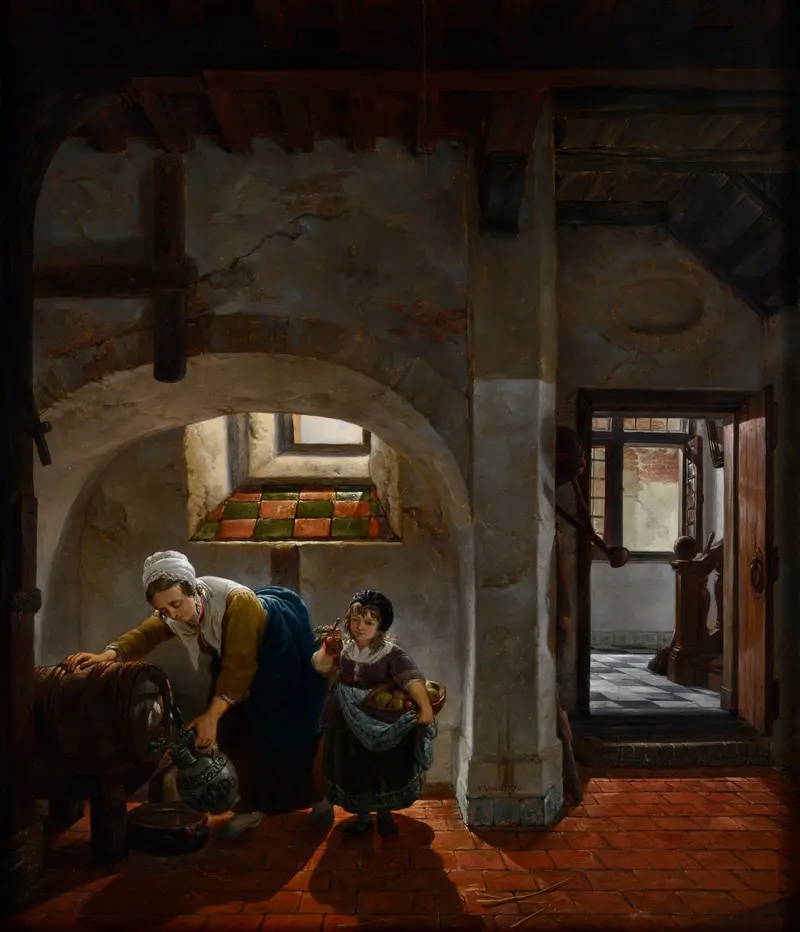
Abraham van (I) Strij Voorraadkelder met een vrouw die een stenen kruik vult en een kind DM 014 1088 Dordrechts Museum
Abraham van Strij (I)
More Genre Scene Art

Banquet of the Officers of the St George Civic Guard
Frans Hals

Rembrandt and Saskia in the Scene of the Prodigal Son
Rembrandt van Rijn

Bal du moulin de la Galette
Pierre-Auguste Renoir

Quadrille at the Moulin Rouge
Henri de Toulouse-Lautrec

A Burial at Ornans
Gustave Courbet

When Will You Marry?
Paul Gauguin