
A Cherry Vendor at the Door — History & Facts
Sunlight pours through the high windows, catching on the polished tiles and the brass of the cherry vendor’s scales, drawing the viewer’s gaze into a scene alive with small dramas. The heart of A Cherry Vendor at the Door is not the transaction itself, but the web of glances and gestures: a mother, seated, leans in to show her young daughter the bright fruit, her face softened by a smile that seems to invite the child’s wonder. At the threshold, the vendor waits, basket and scales in hand, her broad-brimmed hat casting a gentle shadow, as if she, too, is drawn into the intimacy of the moment.
Meanwhile, in the sunlit window, a cat arches and hisses at a dog below, their standoff adding a ripple of tension that plays against the domestic calm. This painting, made in 1816 by Abraham van Strij (I), belongs to a long tradition of Dutch genre scenes that celebrate the rituals of daily life. The careful arrangement of objects—a hunter’s gear piled by the window, the sturdy furniture, the green curtain drawn back—anchors the scene in a world where every detail signals status, occupation, or mood. The checkerboard floor leads the eye from the open door, past the family, to the window’s lively animal encounter, making the viewer a silent guest in this household.
Works like this, painted in the wake of the Dutch Golden Age, were prized for their ability to turn the ordinary into a quiet theatre of manners, and collectors of the early nineteenth century sought them for the warmth and order they promised. The painting now hangs in the Rijksmuseum, where its play of light and gesture continues to invite close looking.
More Artworks by Abraham van Strij (I)

Abraham van (I) Strij Portret van Petronella van der Koogh (1788 89 1878), echtgenote van Jr. DM 017 1190 Dordrechts Museum
Abraham van Strij (I)

Abraham van (I) Strij Binnenhuis met vrouw en kind DM 847 42 Dordrechts Museum
Abraham van Strij (I)

Hendrik Weymans and his Family
Abraham van Strij (I)
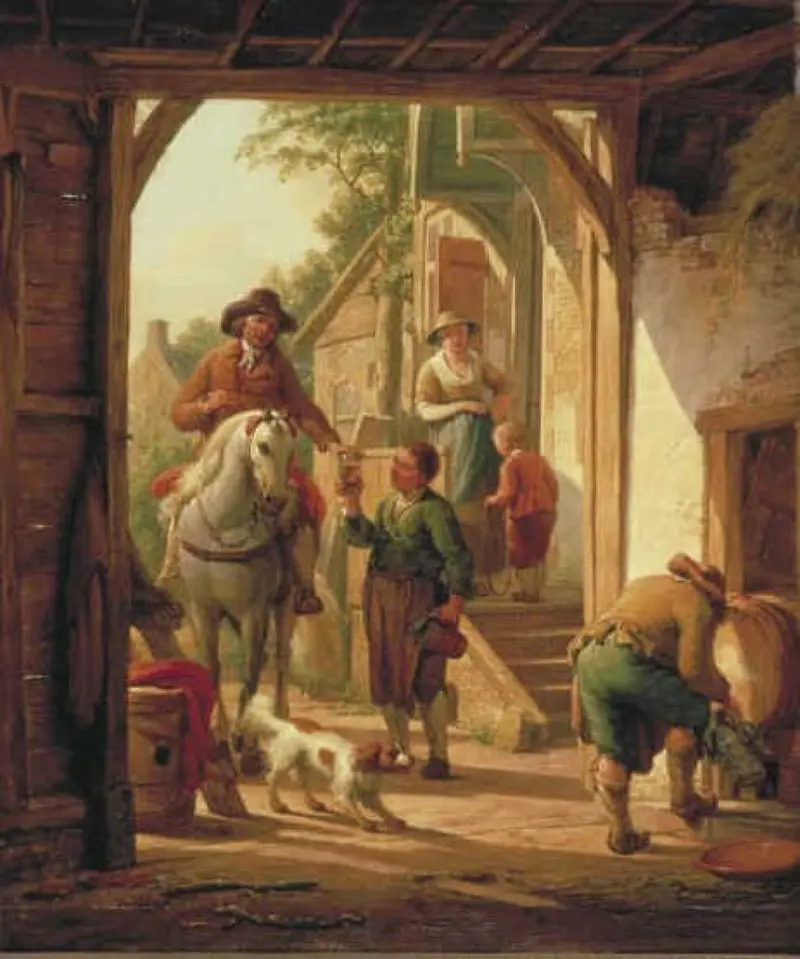
Horseman Resting near a Village Inn
Abraham van Strij (I)
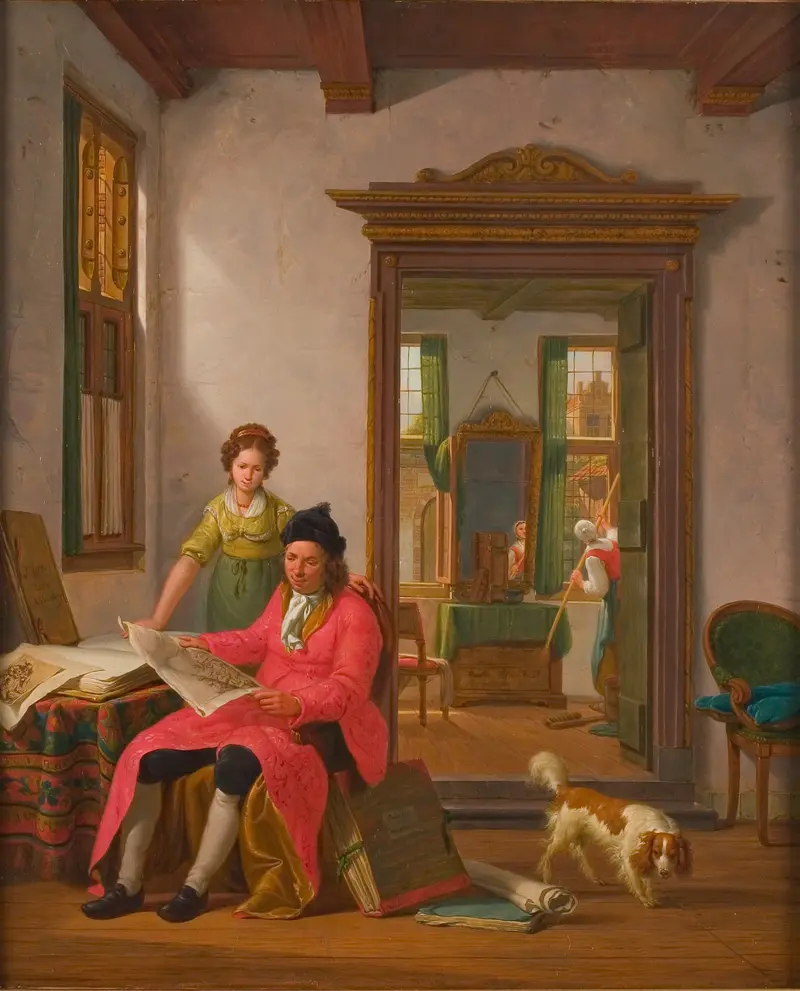
Portrait of an unknown man
Abraham van Strij (I)
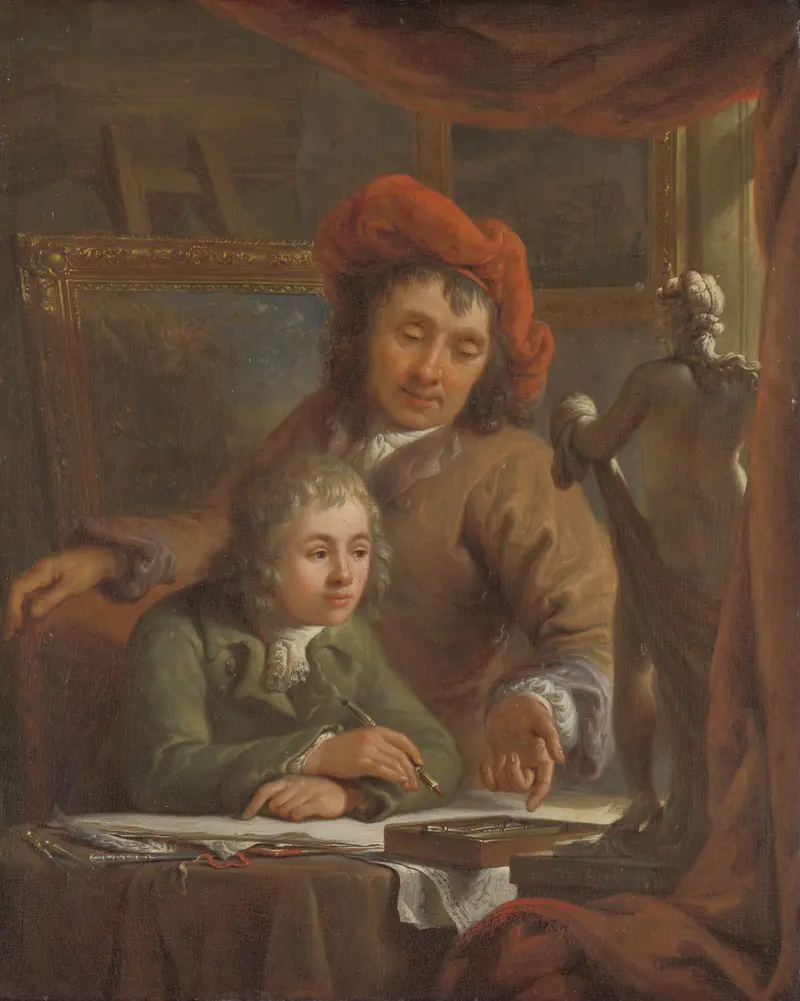
The Drawing Lesson
Abraham van Strij (I)
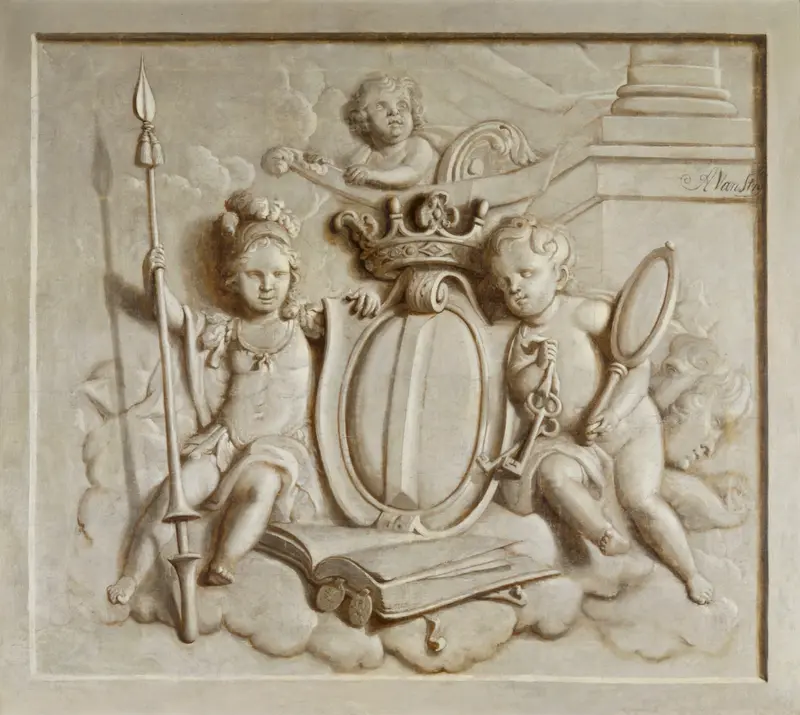
Abraham van (I) Strij Bovendeurstuk met allegorie op de stad Dordrecht DM 017 1188 Dordrechts Museum
Abraham van Strij (I)
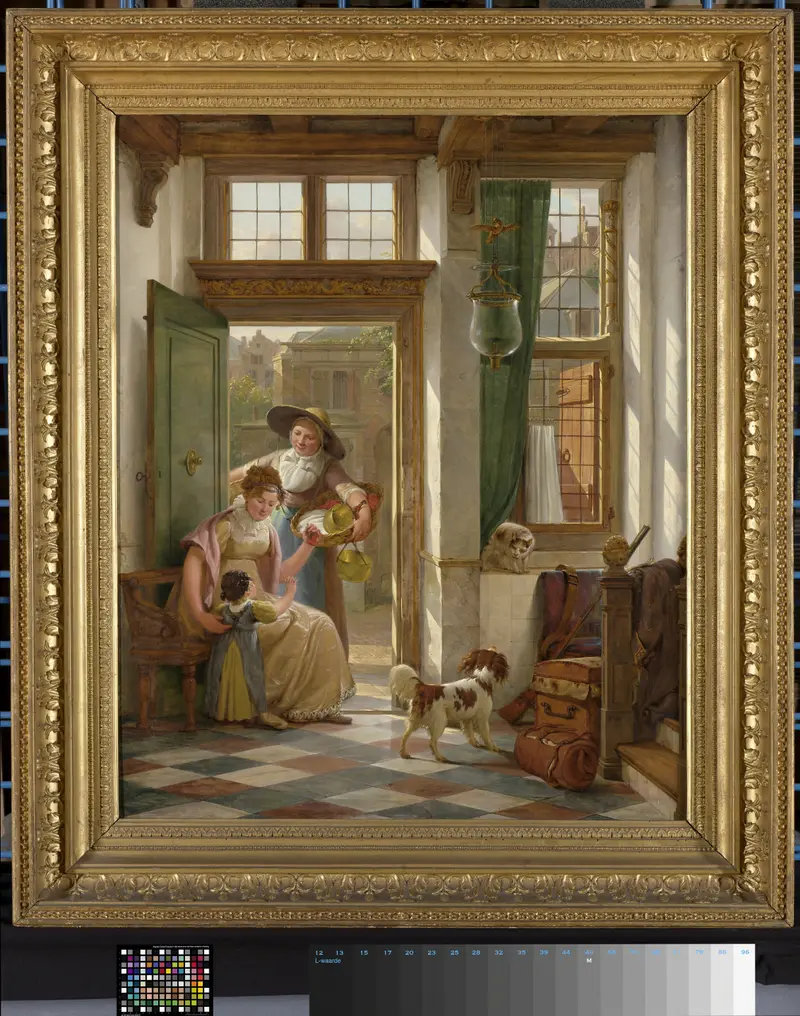
Een kersenverkoopster aan de deur
Abraham van Strij (I)
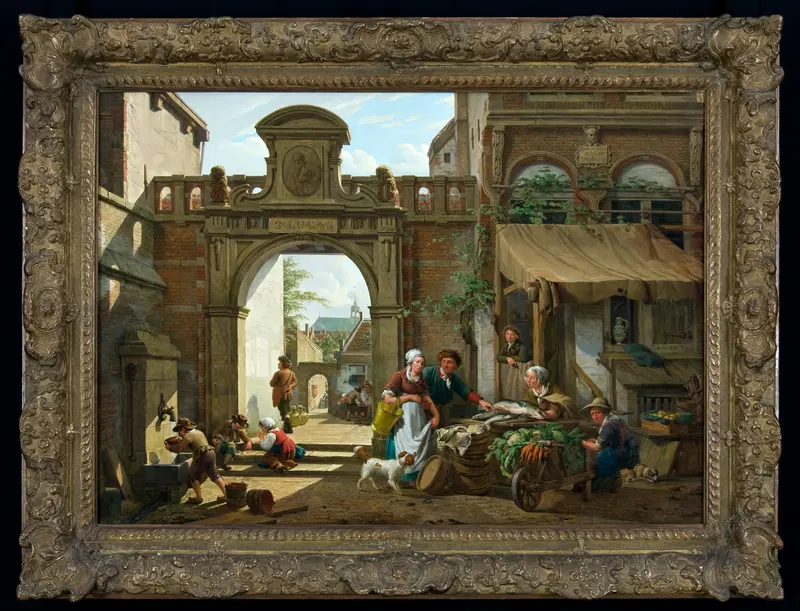
Abraham van (I) Strij Stadsgezicht met het gebouw van het St. Lucasgilde DM 010 950 Dordrechts Museum
Abraham van Strij (I)
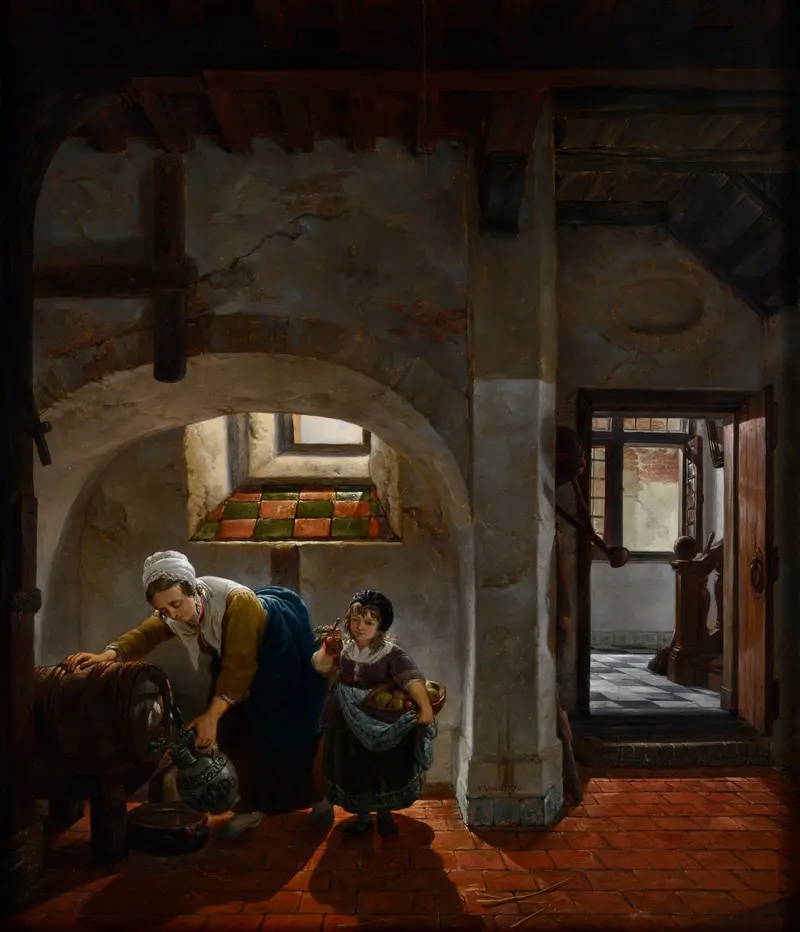
Abraham van (I) Strij Voorraadkelder met een vrouw die een stenen kruik vult en een kind DM 014 1088 Dordrechts Museum
Abraham van Strij (I)
More Genre Scene Art

Banquet of the Officers of the St George Civic Guard
Frans Hals

Rembrandt and Saskia in the Scene of the Prodigal Son
Rembrandt van Rijn

Bal du moulin de la Galette
Pierre-Auguste Renoir

Quadrille at the Moulin Rouge
Henri de Toulouse-Lautrec

A Burial at Ornans
Gustave Courbet

When Will You Marry?
Paul Gauguin