
Portrait of an unknown man — History & Facts
A shaft of golden light falls across the richly patterned tablecloth, catching the edge of a drawing and the pink folds of a dressing gown—details that speak of comfort, learning, and the quiet rituals of daily life. The man at the center, absorbed in his print, is not alone: a young woman stands at his shoulder, her hand resting gently on the table, while a small dog noses about the floor. Beyond the open doorway, another world unfolds—a woman sweeps in a sunlit back room, her presence glimpsed through a perfectly aligned series of thresholds and mirrors.
Every object seems placed to guide the eye deeper, from the stack of folios to the green-draped window, creating a sense of both intimacy and spaciousness. Painted in 1824 by Abraham van Strij (I), this scene belongs to a long Dutch tradition of interior genre painting, where the rhythms of home life become a stage for quiet drama and subtle social cues. In the early nineteenth century, such works were prized by the rising middle class, who saw their own values—order, education, domestic harmony—reflected back at them. The artist’s careful attention to light, texture, and architectural detail echoes the legacy of the seventeenth-century masters, yet the mood here is distinctly of its own time: genteel, slightly nostalgic, and attentive to the pleasures of everyday routine.
Today, the painting resides in the collection of Rijksmuseum Twenthe, inviting us to linger over its layered spaces and the unhurried pace of a world now past.
More Artworks by Abraham van Strij (I)

Abraham van (I) Strij Portret van Petronella van der Koogh (1788 89 1878), echtgenote van Jr. DM 017 1190 Dordrechts Museum
Abraham van Strij (I)

Abraham van (I) Strij Binnenhuis met vrouw en kind DM 847 42 Dordrechts Museum
Abraham van Strij (I)

Hendrik Weymans and his Family
Abraham van Strij (I)
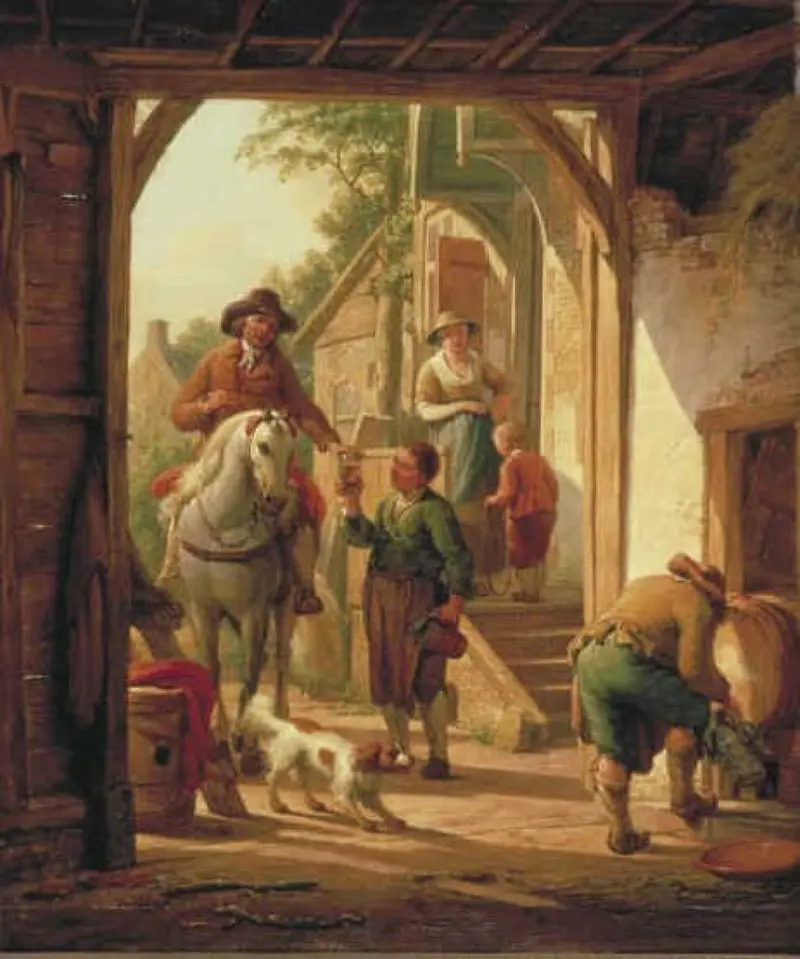
Horseman Resting near a Village Inn
Abraham van Strij (I)
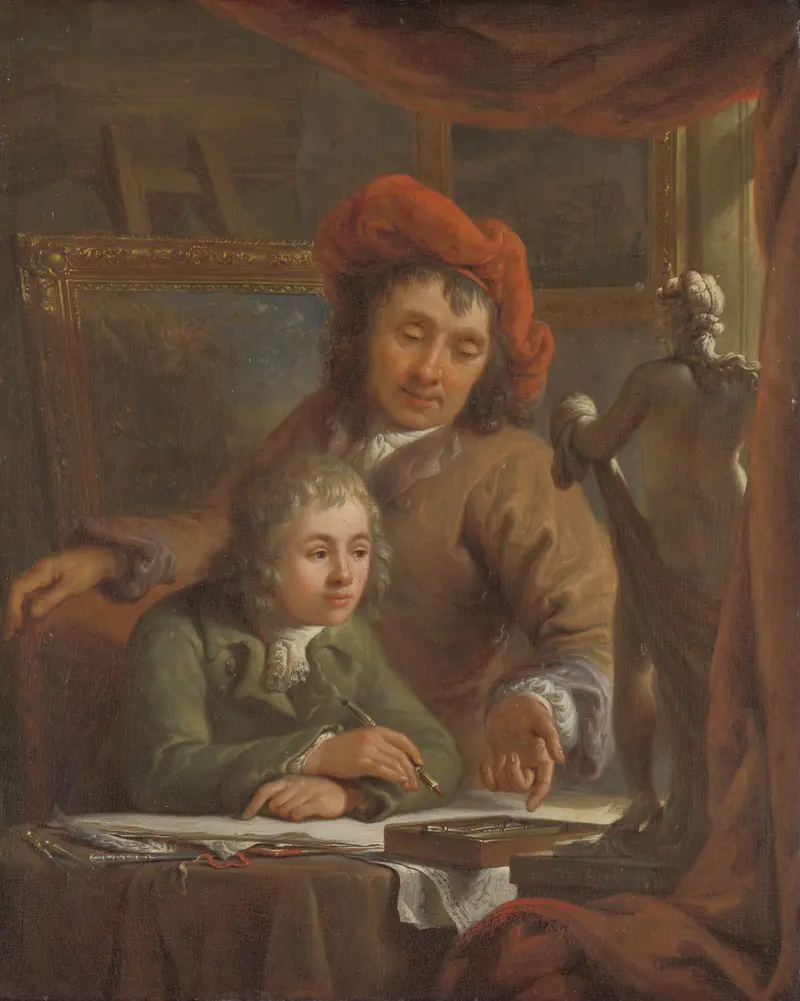
The Drawing Lesson
Abraham van Strij (I)
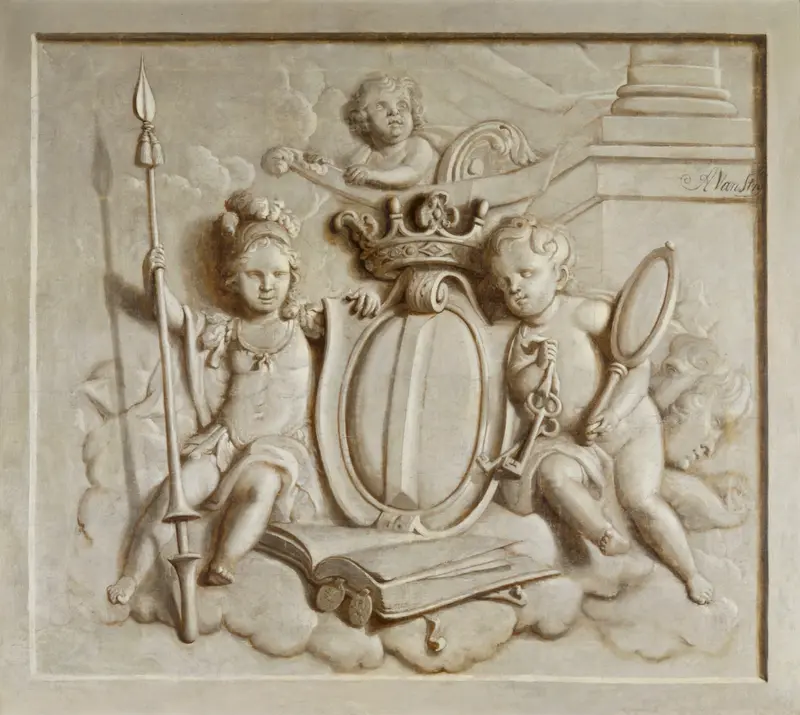
Abraham van (I) Strij Bovendeurstuk met allegorie op de stad Dordrecht DM 017 1188 Dordrechts Museum
Abraham van Strij (I)
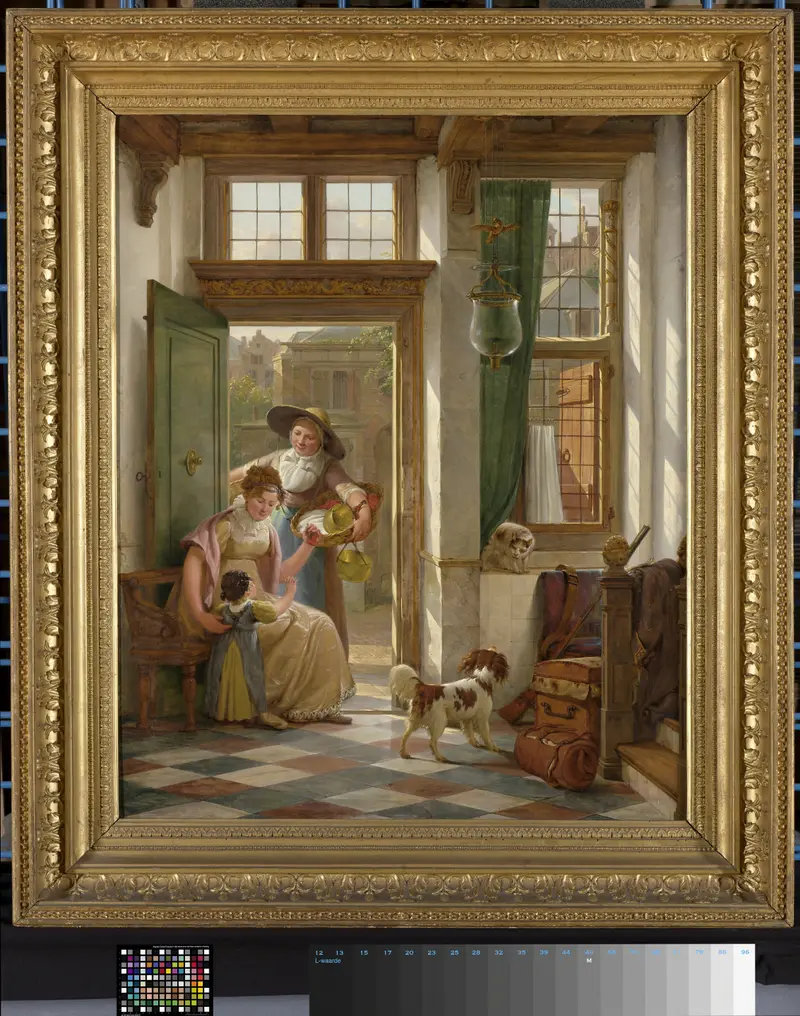
Een kersenverkoopster aan de deur
Abraham van Strij (I)
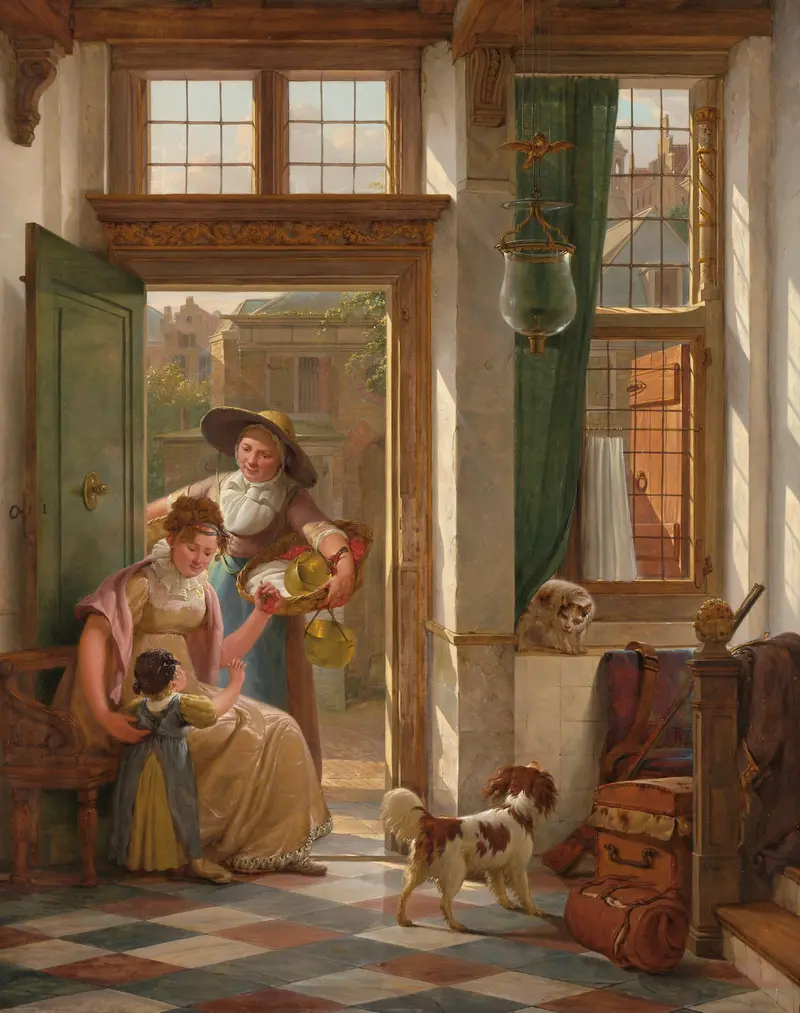
A Cherry Vendor at the Door
Abraham van Strij (I)
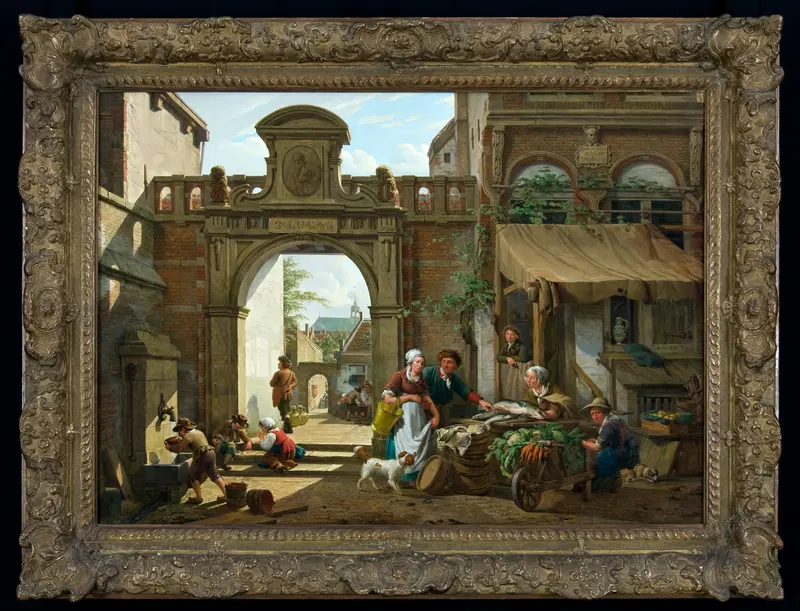
Abraham van (I) Strij Stadsgezicht met het gebouw van het St. Lucasgilde DM 010 950 Dordrechts Museum
Abraham van Strij (I)
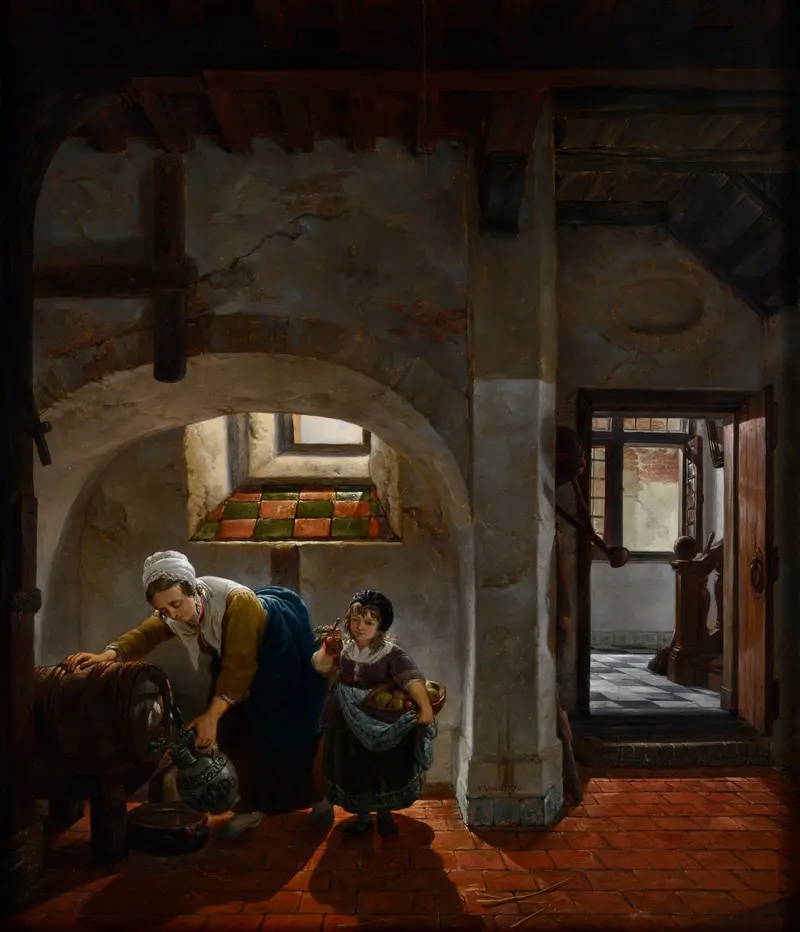
Abraham van (I) Strij Voorraadkelder met een vrouw die een stenen kruik vult en een kind DM 014 1088 Dordrechts Museum
Abraham van Strij (I)
More Genre Scene Art

Banquet of the Officers of the St George Civic Guard
Frans Hals

Rembrandt and Saskia in the Scene of the Prodigal Son
Rembrandt van Rijn

Bal du moulin de la Galette
Pierre-Auguste Renoir

Quadrille at the Moulin Rouge
Henri de Toulouse-Lautrec

A Burial at Ornans
Gustave Courbet

When Will You Marry?
Paul Gauguin