
The Drawing Lesson — History & Facts
A moment of quiet concentration draws the viewer in: a young boy, pencil poised, sits at the threshold of creation under the watchful guidance of his teacher. The pair lean in close, eyes fixed on a small plaster cast of a standing nude—an object both mysterious and instructive. The teacher’s gentle gesture, pointing toward the boy’s paper, suggests not correction but encouragement, as if inviting the child to see with new eyes.
Light spills softly over their faces, illuminating the boy’s intent expression and the delicate textures of his green coat, while the background recedes into a gentle haze of framed canvases and shadowed corners. The entire scene is wrapped in the warm embrace of drapery, giving the lesson an air of intimacy and quiet ceremony. Works like The Drawing Lesson flourished in the late eighteenth and early nineteenth centuries, when the art of teaching itself became a subject worthy of depiction. In this period, drawing from plaster casts was the foundation of academic training, a ritual repeated in studios across Europe.
Such paintings often found their place in private homes or academies, celebrating both the discipline of art and the bond between master and pupil. Painted between 1790 and 1809, this work by Abraham van Strij (I) now belongs to the Rijksmuseum collection, where it stands as a window into a world where learning was both a craft and a calling. The viewer is left to wonder: what will the boy see next, and what will he draw from the world around him?
More Artworks by Abraham van Strij (I)

Abraham van (I) Strij Portret van Petronella van der Koogh (1788 89 1878), echtgenote van Jr. DM 017 1190 Dordrechts Museum
Abraham van Strij (I)

Abraham van (I) Strij Binnenhuis met vrouw en kind DM 847 42 Dordrechts Museum
Abraham van Strij (I)

Hendrik Weymans and his Family
Abraham van Strij (I)
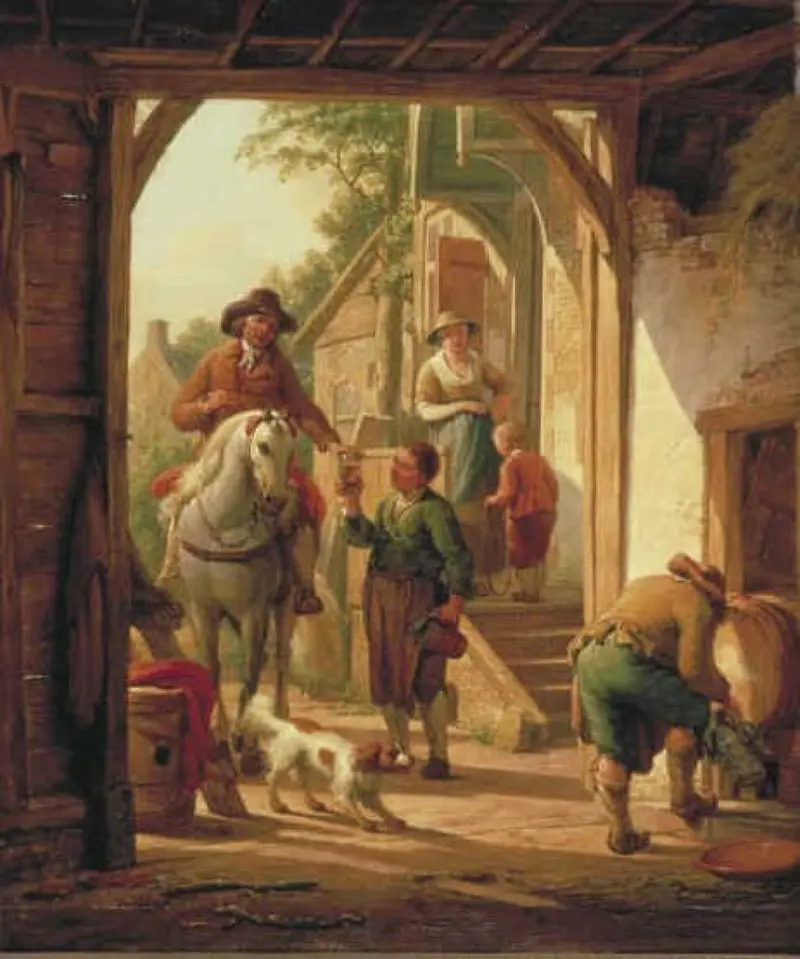
Horseman Resting near a Village Inn
Abraham van Strij (I)
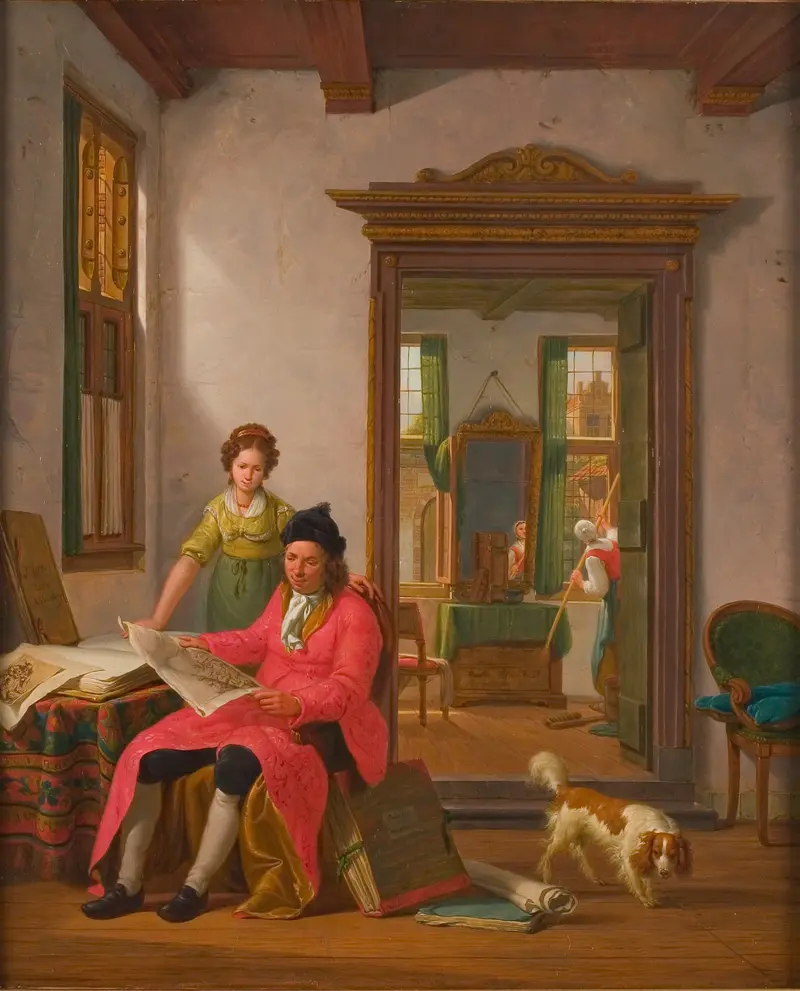
Portrait of an unknown man
Abraham van Strij (I)
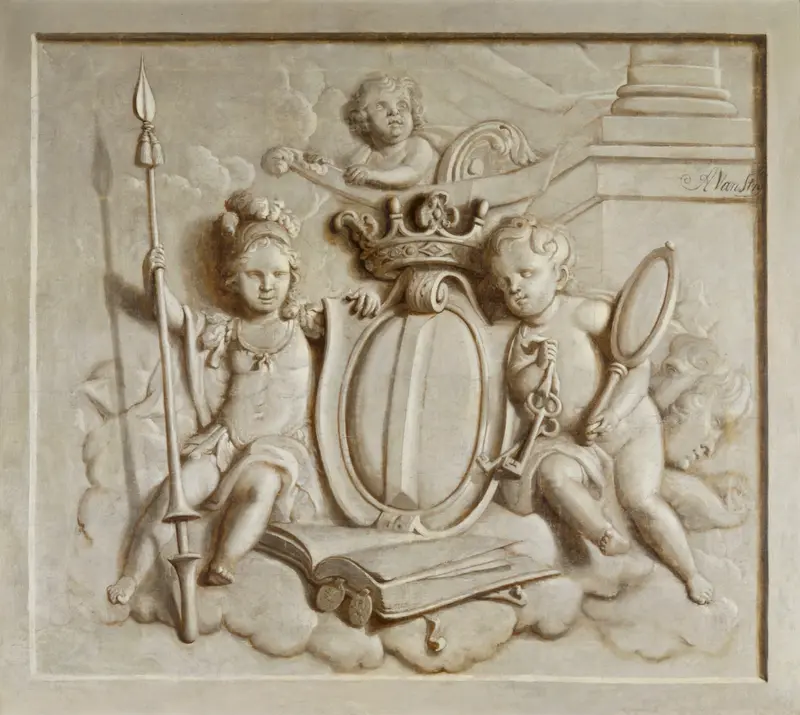
Abraham van (I) Strij Bovendeurstuk met allegorie op de stad Dordrecht DM 017 1188 Dordrechts Museum
Abraham van Strij (I)
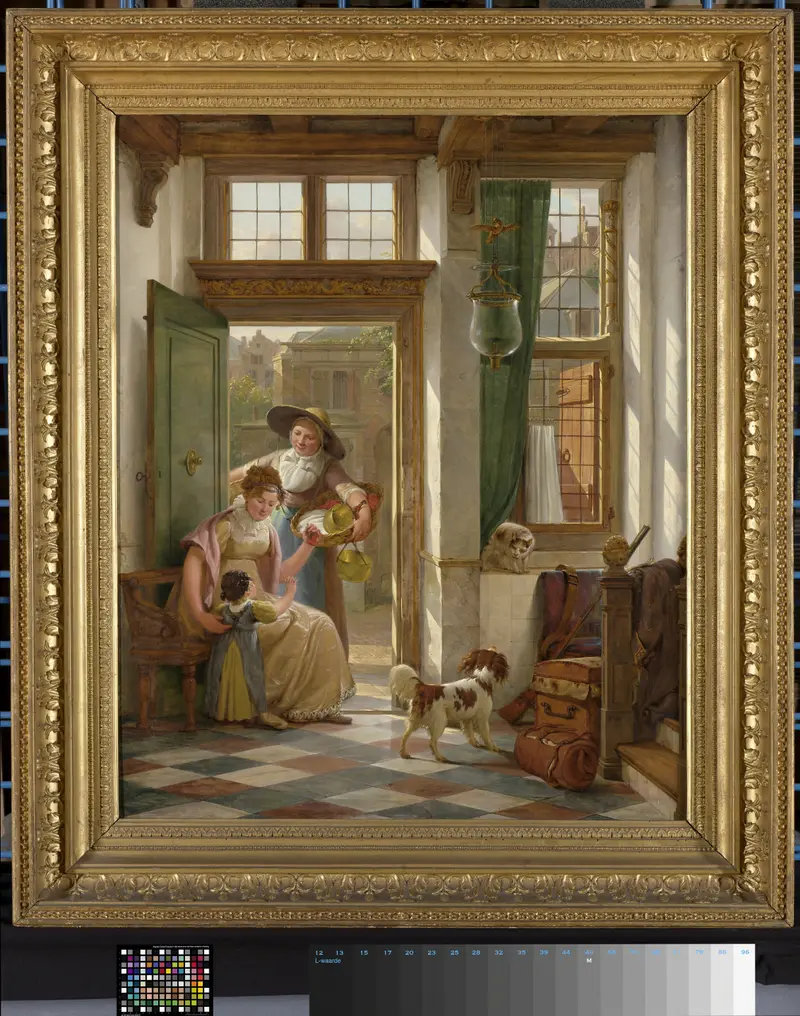
Een kersenverkoopster aan de deur
Abraham van Strij (I)
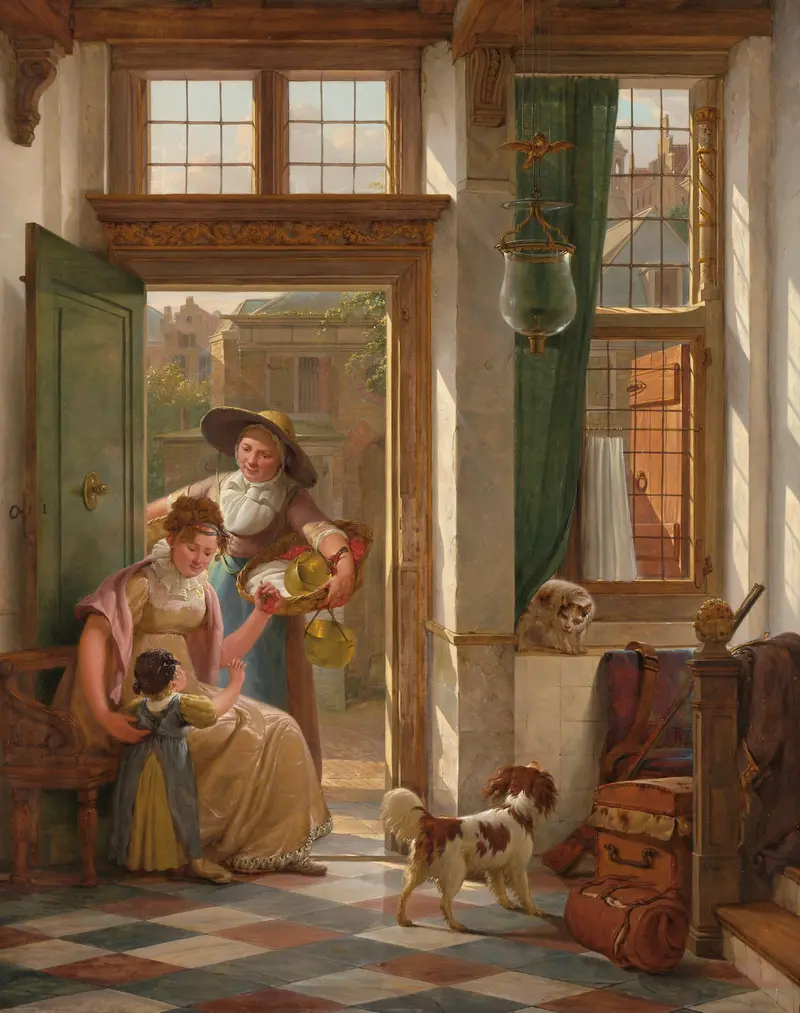
A Cherry Vendor at the Door
Abraham van Strij (I)
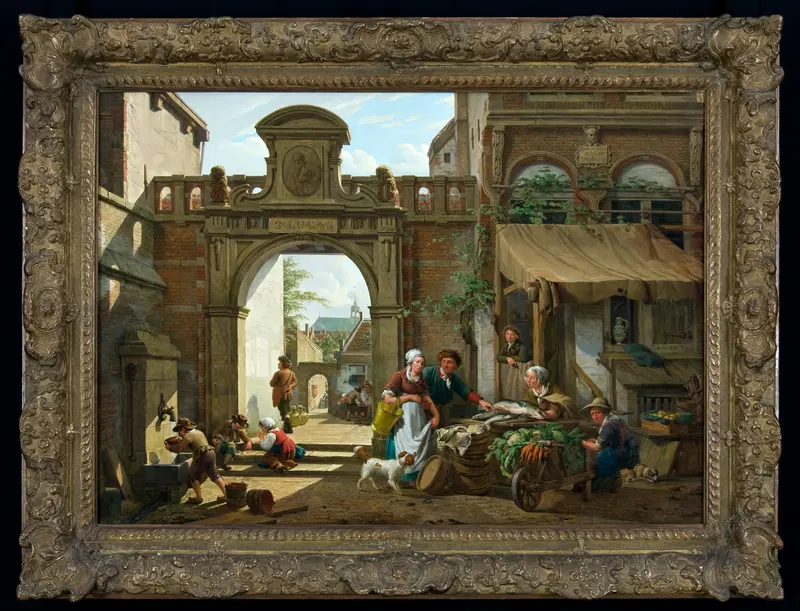
Abraham van (I) Strij Stadsgezicht met het gebouw van het St. Lucasgilde DM 010 950 Dordrechts Museum
Abraham van Strij (I)
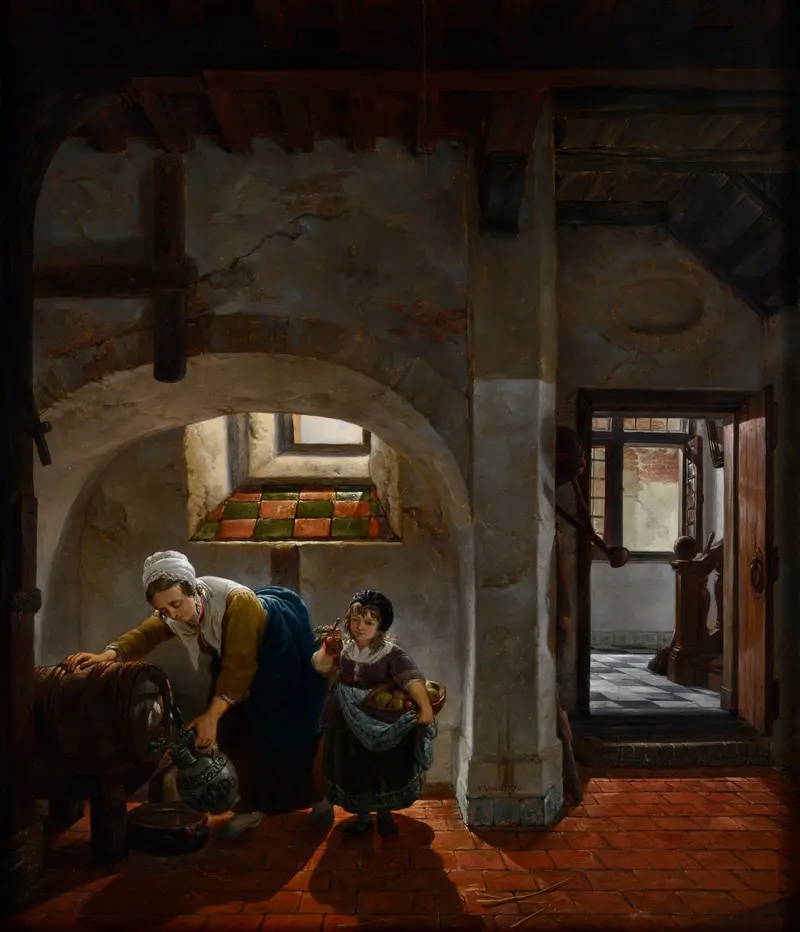
Abraham van (I) Strij Voorraadkelder met een vrouw die een stenen kruik vult en een kind DM 014 1088 Dordrechts Museum
Abraham van Strij (I)
More Genre Scene Art

Banquet of the Officers of the St George Civic Guard
Frans Hals

Rembrandt and Saskia in the Scene of the Prodigal Son
Rembrandt van Rijn

Bal du moulin de la Galette
Pierre-Auguste Renoir

Quadrille at the Moulin Rouge
Henri de Toulouse-Lautrec

A Burial at Ornans
Gustave Courbet

When Will You Marry?
Paul Gauguin