
Horseman Resting near a Village Inn — History & Facts
A shaft of warm light draws your eye through the shadowed barn, straight to the white horse and its rider—pausing, perhaps, for a welcome drink after a long road. The man on horseback leans forward, engaged with the innkeeper who offers a tankard, while a dog sniffs eagerly at the scene’s edge, as if sensing the promise of scraps or adventure. Every gesture is purposeful: the rider’s relaxed posture, the innkeeper’s outstretched arm, the woman at the doorway watching with a blend of curiosity and routine.
The palette, dominated by earthy reds and greens, sets a mood of rural comfort, while the framing beams overhead hint at shelter and community. Even the smallest detail—the red cloth draped over a barrel, the sunlight catching the inn sign—invites the viewer to linger and imagine the stories exchanged here. Painted in 1823, Horseman Resting near a Village Inn belongs to a long tradition of Dutch and Flemish genre scenes, where daily life was rendered with both affection and gentle humor. By the early nineteenth century, such scenes appealed to a growing middle class eager for images of order, prosperity, and the pleasures of country living.
Artists like Abraham van Strij (I) drew on the legacy of seventeenth-century masters, adapting their subjects to the tastes of a new age. Today, this work resides in the collection of Museum Boijmans Van Beuningen, a quiet testament to the enduring appeal of ordinary moments. Let your eyes return to the painting, and notice how the sunlight and shadows invite you to step into the world it so carefully constructs.
More Artworks by Abraham van Strij (I)

Abraham van (I) Strij Portret van Petronella van der Koogh (1788 89 1878), echtgenote van Jr. DM 017 1190 Dordrechts Museum
Abraham van Strij (I)

Abraham van (I) Strij Binnenhuis met vrouw en kind DM 847 42 Dordrechts Museum
Abraham van Strij (I)

Hendrik Weymans and his Family
Abraham van Strij (I)
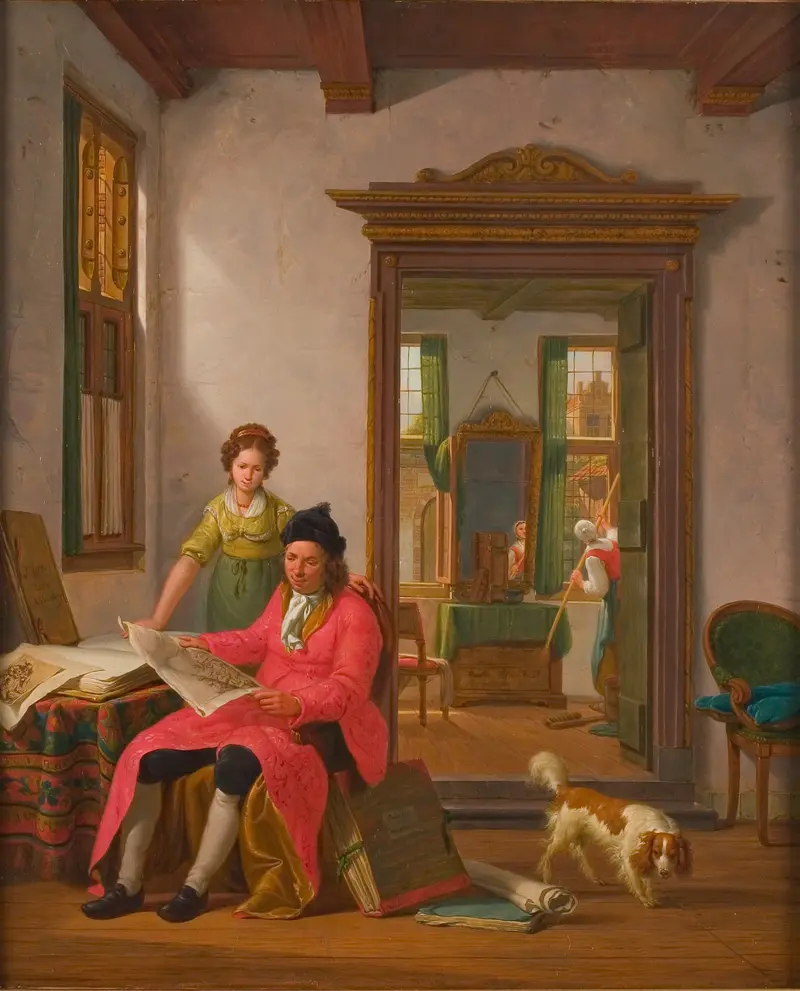
Portrait of an unknown man
Abraham van Strij (I)
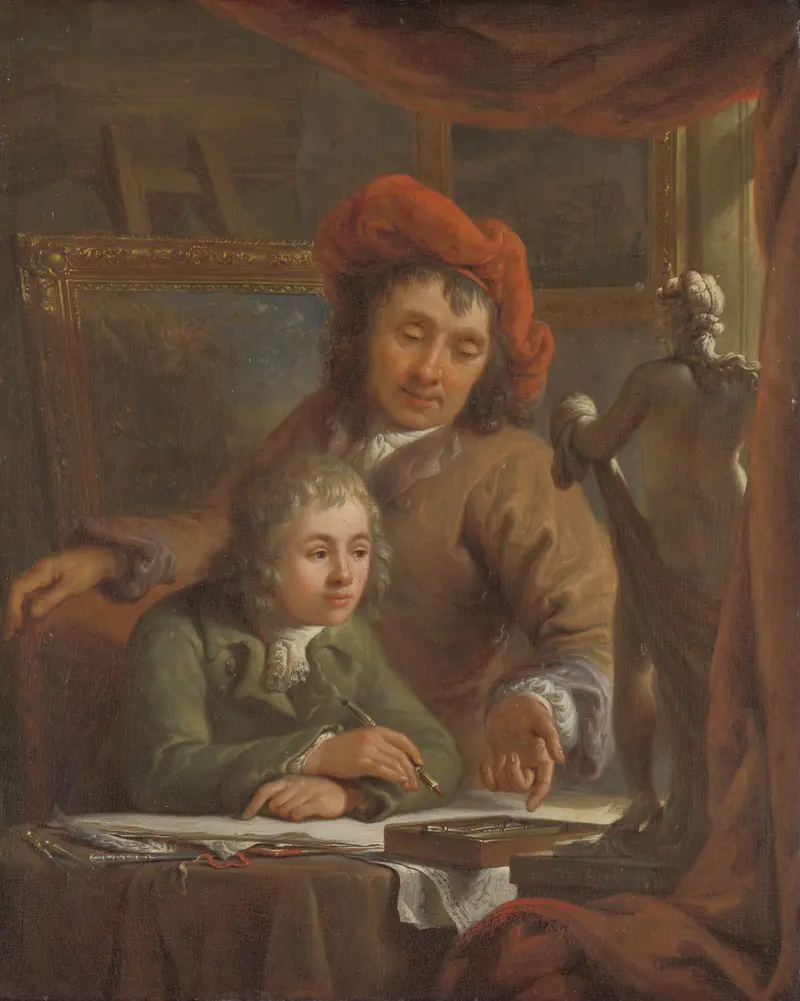
The Drawing Lesson
Abraham van Strij (I)
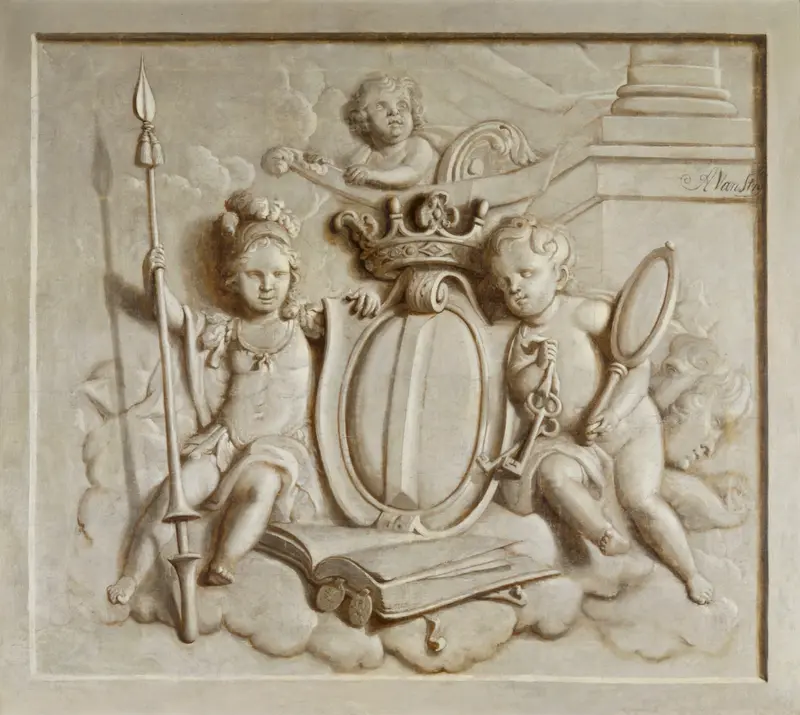
Abraham van (I) Strij Bovendeurstuk met allegorie op de stad Dordrecht DM 017 1188 Dordrechts Museum
Abraham van Strij (I)
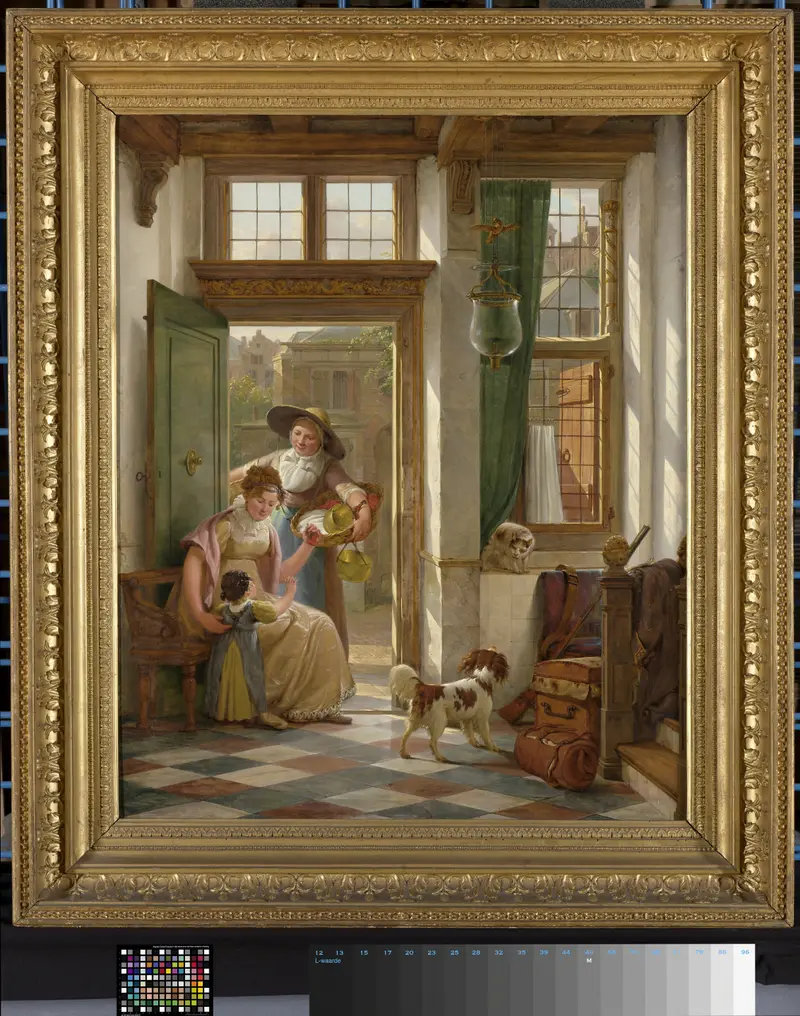
Een kersenverkoopster aan de deur
Abraham van Strij (I)
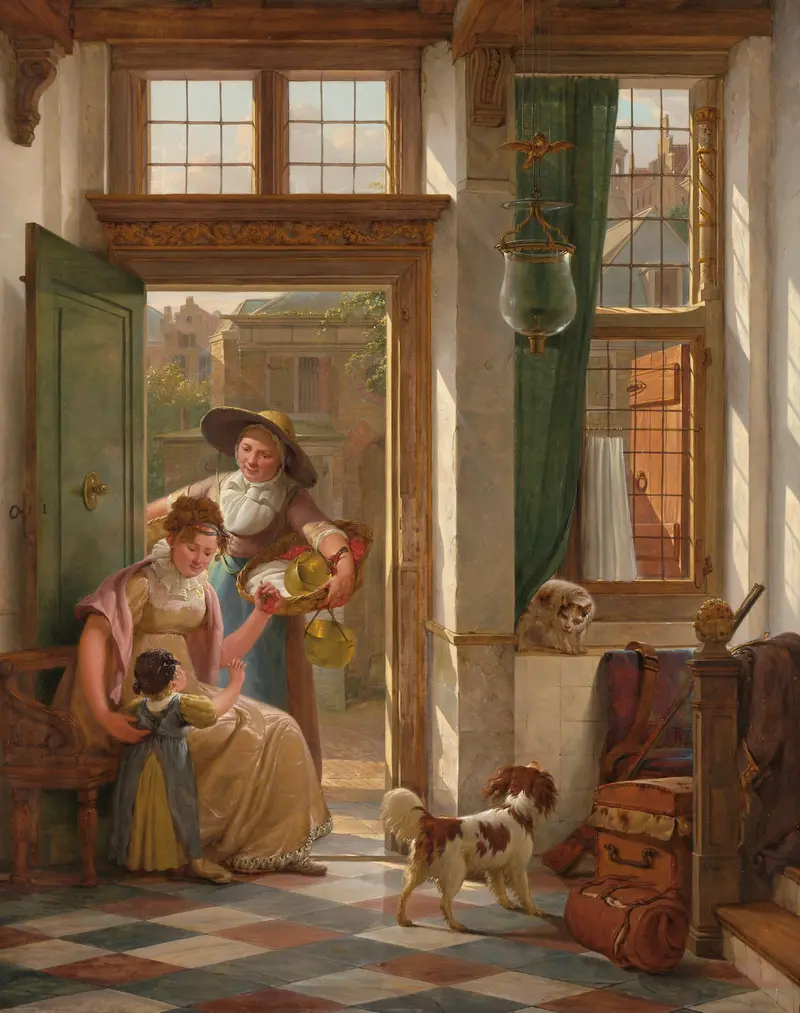
A Cherry Vendor at the Door
Abraham van Strij (I)
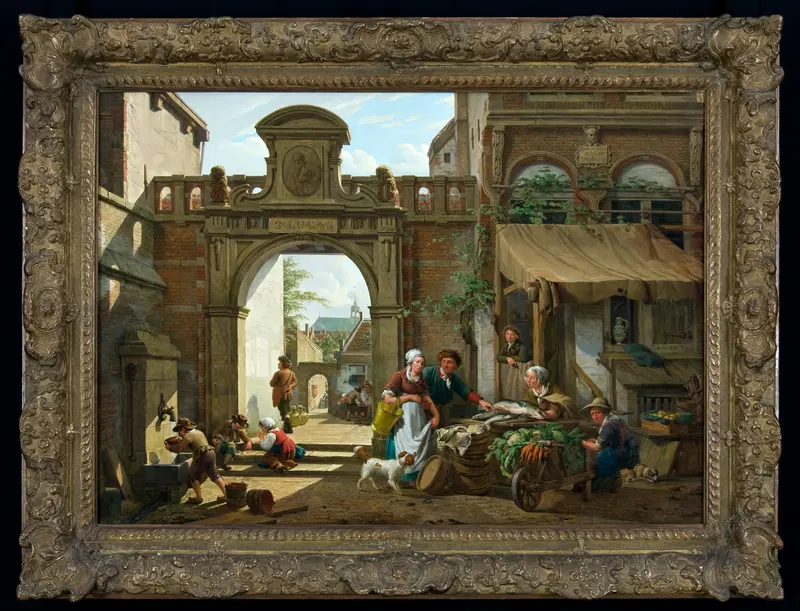
Abraham van (I) Strij Stadsgezicht met het gebouw van het St. Lucasgilde DM 010 950 Dordrechts Museum
Abraham van Strij (I)
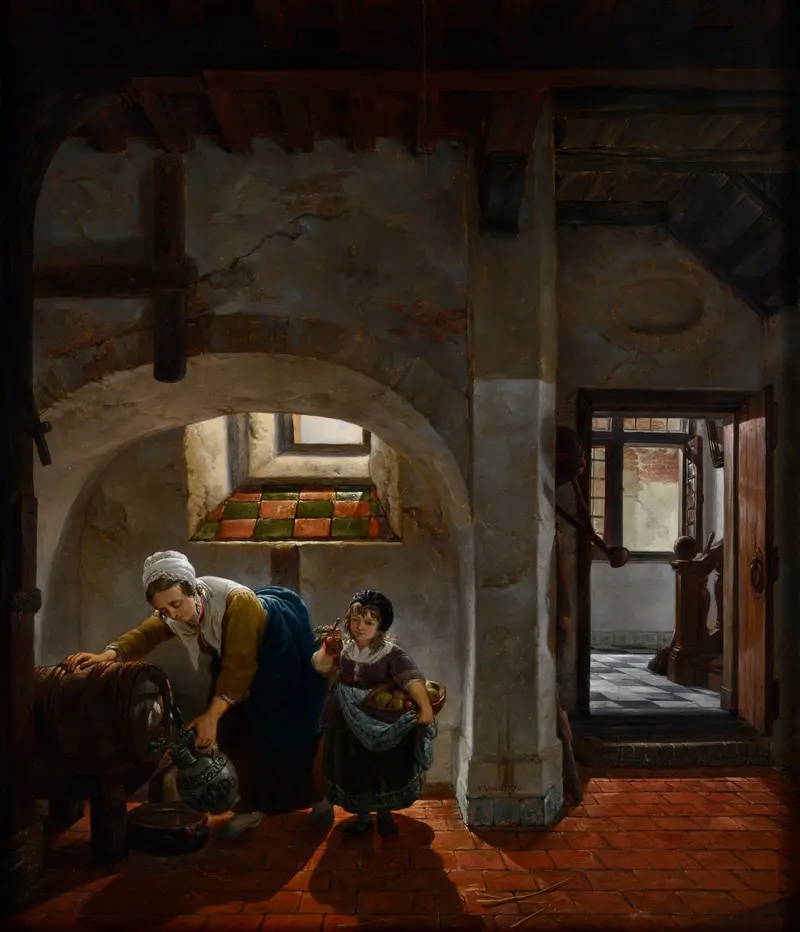
Abraham van (I) Strij Voorraadkelder met een vrouw die een stenen kruik vult en een kind DM 014 1088 Dordrechts Museum
Abraham van Strij (I)
More Genre Scene Art

Banquet of the Officers of the St George Civic Guard
Frans Hals

Rembrandt and Saskia in the Scene of the Prodigal Son
Rembrandt van Rijn

Bal du moulin de la Galette
Pierre-Auguste Renoir

Quadrille at the Moulin Rouge
Henri de Toulouse-Lautrec

A Burial at Ornans
Gustave Courbet

When Will You Marry?
Paul Gauguin