
Het geliefde plekje — History & Facts
No record survives of when or for whom Het geliefde plekje was painted, but it remains one of the most beloved works by Felix Schlesinger, a German artist celebrated for his gentle, intimate scenes of everyday life. The painting’s Dutch title—“The Beloved Spot”—has intrigued viewers and scholars alike, hinting at a personal or sentimental connection, though no direct evidence links it to a specific place or sitter. What is certain is that this work has been reproduced widely in prints and postcards since the late nineteenth century, spreading its quiet charm far beyond its original context. In the scene, a young girl sits absorbed in her own world, nestled in a sunlit corner that seems to radiate warmth and tranquility.
Her hands are busy with a simple task—perhaps mending or arranging flowers—while her gaze drifts out of the frame, inviting us to wonder what memories or hopes fill her mind. The careful placement of domestic objects—a worn chair, a vase, the soft play of light on wooden floorboards—anchors the composition in the everyday, yet elevates it with a sense of nostalgia. Unlike the bustling interiors of Jan Steen, Schlesinger’s approach is quieter, focusing on solitude and the poetry of a single moment. Little is known about the early history of Het geliefde plekje, and its provenance has not been fully traced.
Felix Schlesinger worked primarily in Hamburg and Düsseldorf, and his paintings were popular among middle-class collectors in Germany and the Netherlands during his lifetime. Today, the work is typically encountered in private collections or on the art market, rather than in major public museums. It stands as a representative example of the nineteenth-century German genre tradition, capturing the spirit of home and memory that runs through much of Schlesinger’s oeuvre.
More Artworks by Felix Schlesinger

Fleißige Helfer in der Küche
Felix Schlesinger

Die Zeitungslektüre
Felix Schlesinger
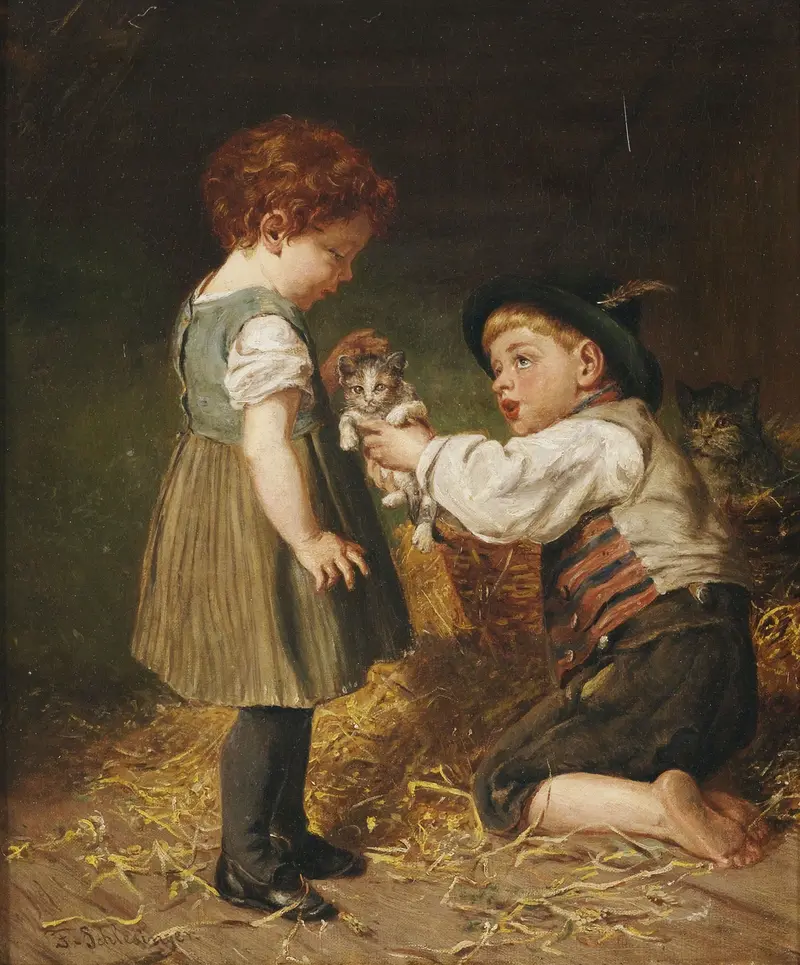
Zwei Kinder mit Kätzchen im Stall
Felix Schlesinger
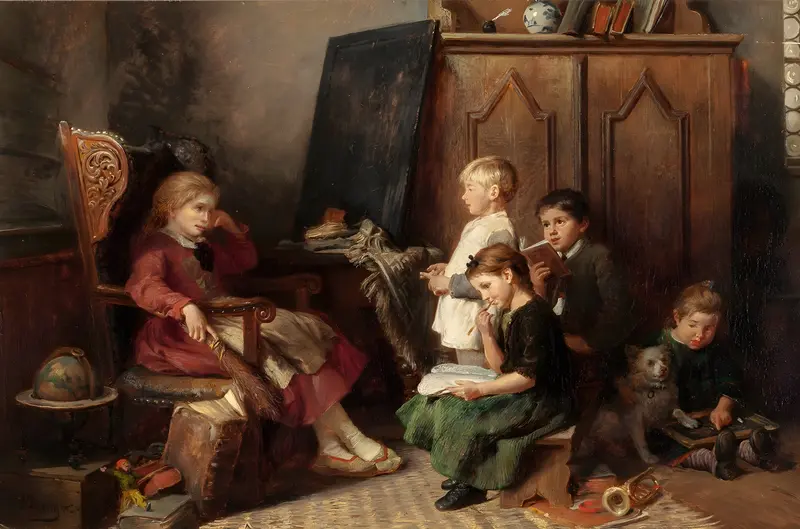
Children Reading
Felix Schlesinger
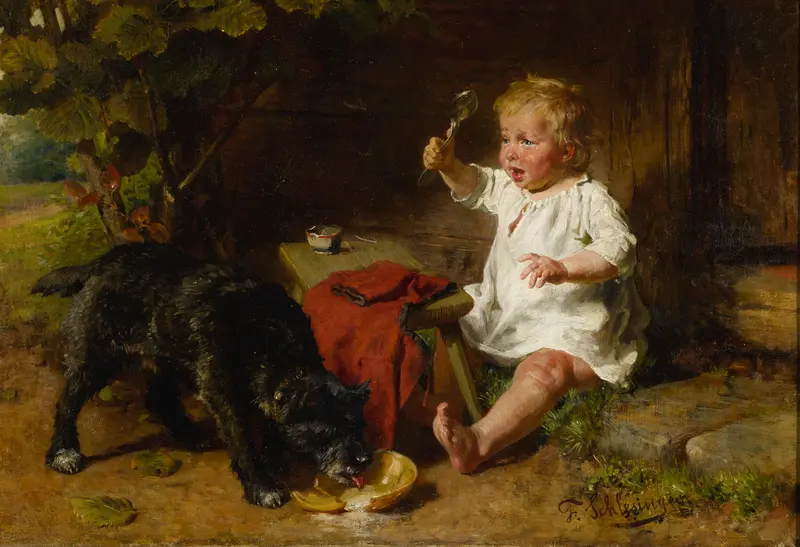
A Shared Meal
Felix Schlesinger
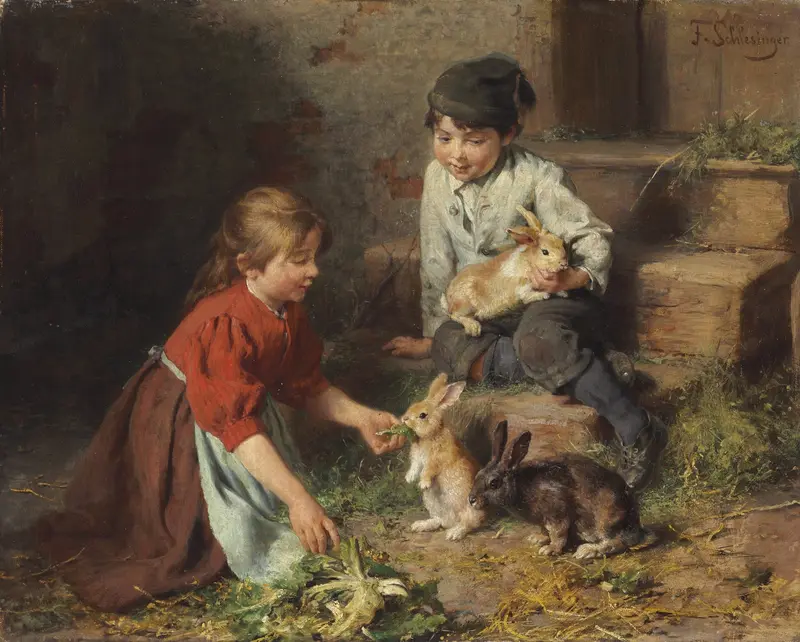
Fütterung Der Kaninchen
Felix Schlesinger
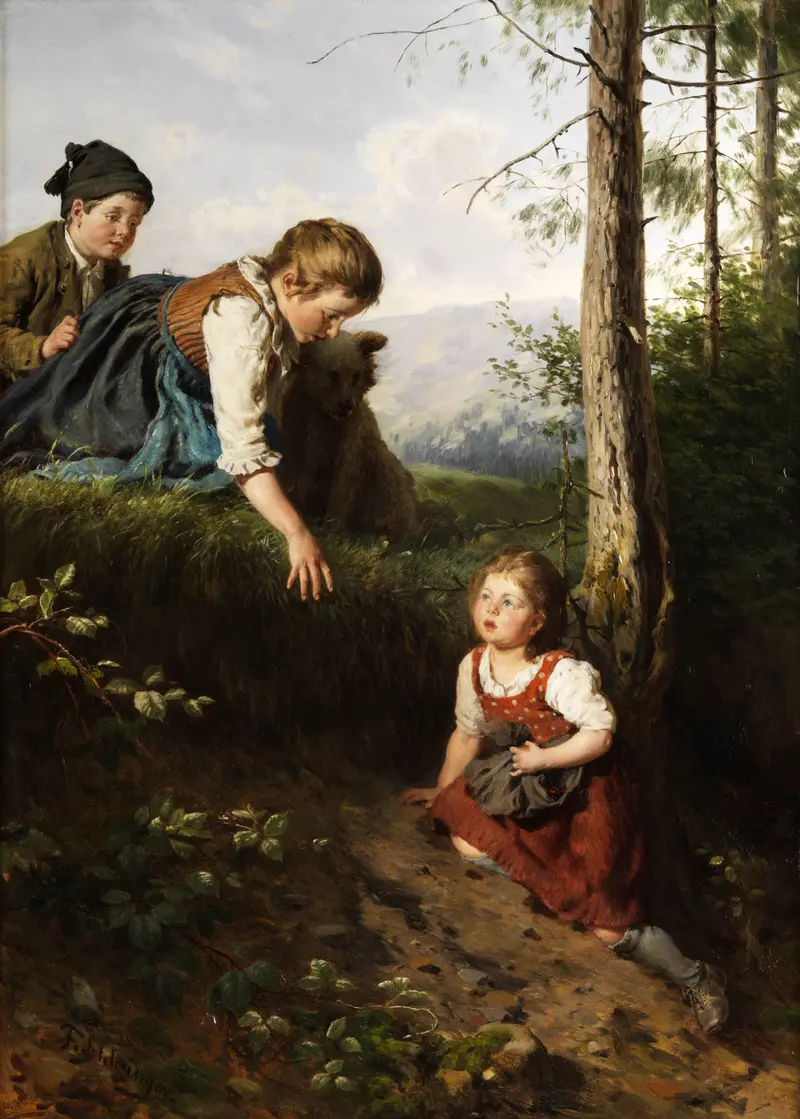
Drei Kinder im Wald beim Beerenpflücken
Felix Schlesinger
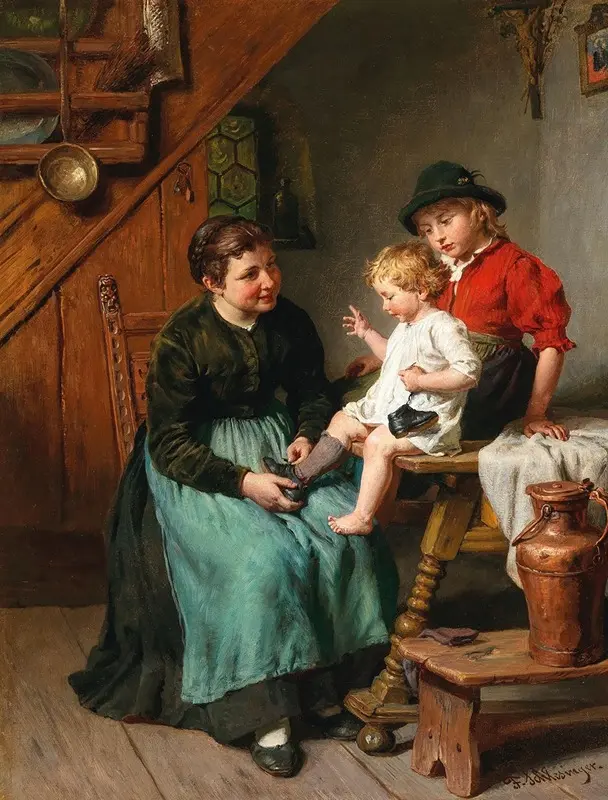
The First Shoe
Felix Schlesinger
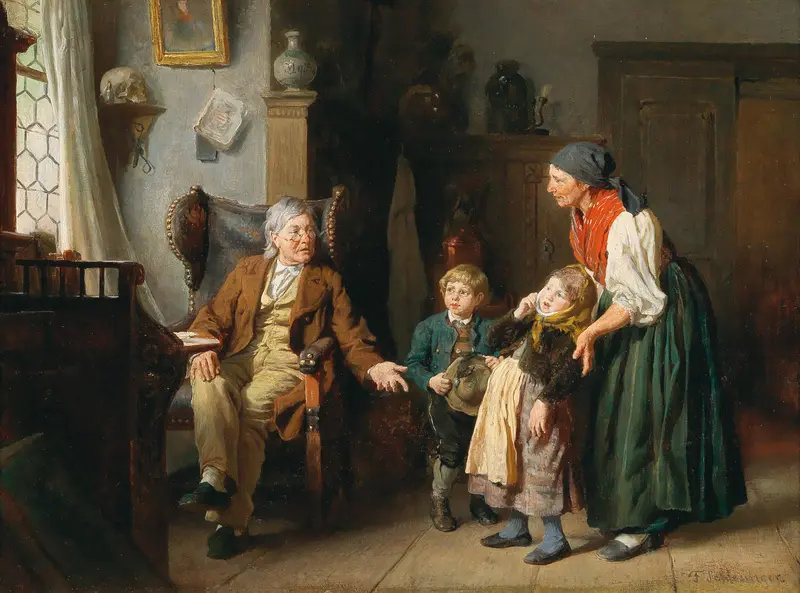
The village doctor
Felix Schlesinger
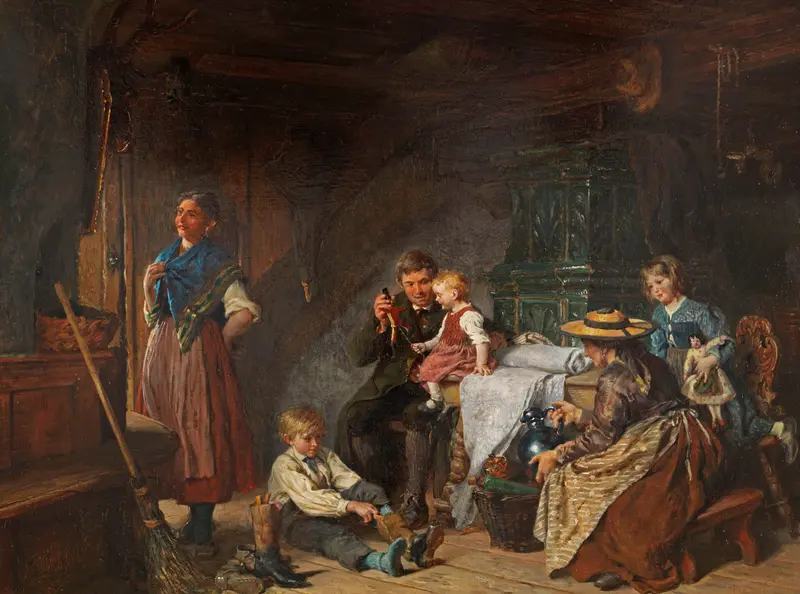
Familienszene
Felix Schlesinger
More Genre Scene Art

Banquet of the Officers of the St George Civic Guard
Frans Hals

Rembrandt and Saskia in the Scene of the Prodigal Son
Rembrandt van Rijn

Bal du moulin de la Galette
Pierre-Auguste Renoir

Quadrille at the Moulin Rouge
Henri de Toulouse-Lautrec

A Burial at Ornans
Gustave Courbet

When Will You Marry?
Paul Gauguin