
Hoffmanneske Szene — History & Facts
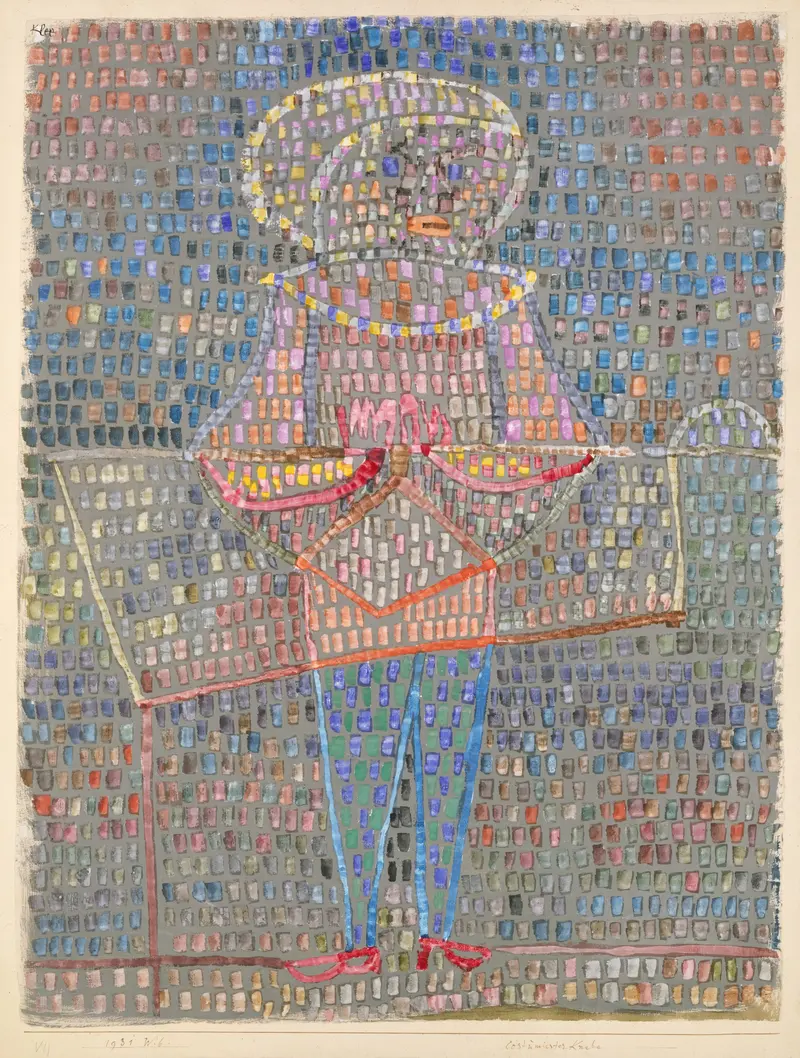
Hoffmanneske Szene by Paul Klee is a vibrant and whimsical composition filled with playful figures. The colors are bold and varied, creating a lively atmosphere. Klee's characteristic use of geometric shapes adds a sense of structure to the scene.
The overall effect is one of joy and imagination, inviting the viewer to explore the narrative within the artwork. This painting is executed in oil on canvas, a medium that allows for rich color application and texture. The dimensions are approximately 60 x 80 cm, making it a medium-sized work that can be appreciated up close. Klee's technique often involves layering colors, which can be seen in the depth of the hues used in this piece.
The playful arrangement of figures suggests a story, typical of Klee's expressive style. Paul Klee was a Swiss artist associated with the Expressionism movement, known for his unique approach to color and form. Hoffmanneske Szene reflects Klee's interest in the fantastical and the dreamlike, drawing inspiration from literature and folklore. An interesting fact about this work is that it embodies Klee's belief that art should be a reflection of the inner world, merging reality with imagination.
This piece is housed in the Kunstmuseum Basel, which holds a significant collection of Klee's works.
More Artworks by Paul Klee

More Genre Scene Art

Banquet of the Officers of the St George Civic Guard
Frans Hals

Rembrandt and Saskia in the Scene of the Prodigal Son
Rembrandt van Rijn

Bal du moulin de la Galette
Pierre-Auguste Renoir

Quadrille at the Moulin Rouge
Henri de Toulouse-Lautrec

A Burial at Ornans
Gustave Courbet

When Will You Marry?
Paul Gauguin