
Hollands landschap — History & Facts
Could a single brushstroke hold eternity? In Hollands landschap, the interplay of light and color whispers secrets of the Dutch landscape, inviting a profound reflection on nature’s permanence and transience. Look to the foreground, where a gentle rise in the land is painted with meticulous attention. The lush greens intertwine with soft browns, creating a tapestry that draws the eye slightly upward. Notice how the clouds above are rendered with delicate whites and grays, their billowing forms capturing both movement and stillness.
The artist’s technique—layering pigments in a way that allows them to breathe—creates a serene atmosphere that envelops you, inviting deeper contemplation. As you delve into the work, subtle contrasts emerge: the vibrancy of life against the calmness of the horizon. The horizon itself seems to stretch infinitely, suggesting a realm beyond the visible, while the occasional patch of sunlight hints at revelation amidst the shadows. The juxtaposition of light and dark within the clouds evokes the interplay of hope and uncertainty, echoing the complexities of existence itself. Etienne Bosch painted Hollands landschap between 1873 and 1931, a period marked by great change in the art world and his own life.
Living and working in the Netherlands, he became part of the broader movement that sought to capture the essence of local landscapes, reflecting a growing appreciation for the Dutch countryside. This work encapsulates the tranquil beauty of his surroundings while also signaling a shift towards a more introspective and emotional approach in landscape painting.
More Artworks by Etienne Bosch
Browse all →
Gezicht op de achterkant van de Notre Dame in Parijs Notre Dame
Etienne Bosch
Venetië
Etienne Bosch

Amsterdamse poort te Haarlem
Etienne Bosch

Le Palatin Rome
Etienne Bosch

Landschap bij Rome
Etienne Bosch
Boerenwoning
Etienne Bosch

Scheveningen
Etienne Bosch
Ruïne Rome
Etienne Bosch
Ruelle, Rome
Etienne Bosch
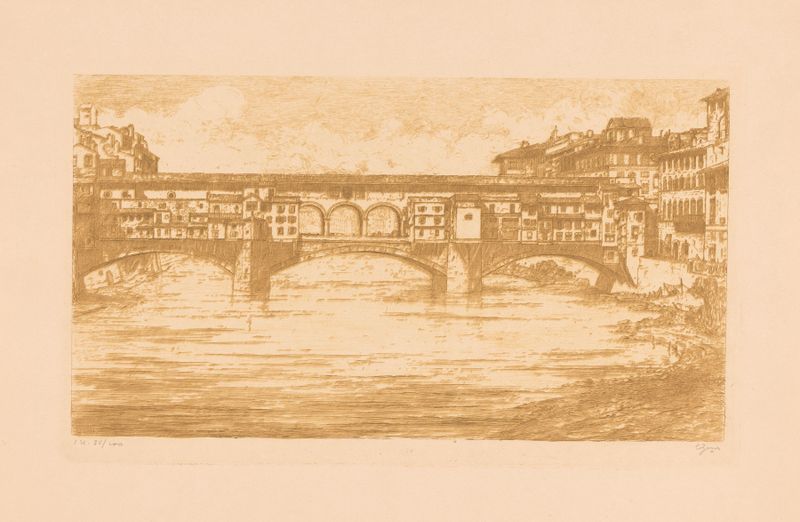
Ponte Vecchio in Florence
Etienne Bosch





