
Honfleur. Pêcheurs sur la grève — History & Facts
When did color learn to lie? The vivid hues of a seascape can deceive the heart, inviting us to feel warmth where only chill exists. In the hands of a master, illusion becomes a tool that reveals deeper truths beneath the surface. Look to the left at the gentle curve of the shoreline, where fishermen, small yet resolute, dot the expansive sandy beach. Notice how the artist uses a palette of soft blues and pastel pinks to depict the sky, imbuing the scene with a serene beauty that contrasts sharply with the muted earth tones of the sand.
The brushstrokes are lively yet deliberate, creating a sense of movement in the water that almost beckons the viewer to listen closely to its whispers. Hidden within this idyllic setting lies a tension between labor and leisure. The fishermen, focused on their task, embody a life of toil against the backdrop of nature's splendor. The juxtaposition of their hard work against the tranquil landscape prompts reflection on the complexities of existence—how beauty and struggle can coexist.
The glistening sea suggests promise, yet the fishermen’s solitary figures remind us of the struggle for sustenance, evoking a bittersweet sentiment. Eugène Boudin painted Honfleur. Pêcheurs sur la grève between 1858 and 1862 on the Normandy coast of France, during a time when he was establishing his reputation as a pioneer of plein air painting. This period marked a growing interest in capturing the effects of light on water, and Boudin was influenced by both Impressionist ideals and his own experiences as a sailor.
His focus on coastal scenes reflected a broader fascination with the interplay of nature and humanity in the changing world of 19th-century art.
More Artworks by Eugène Boudin
Browse all →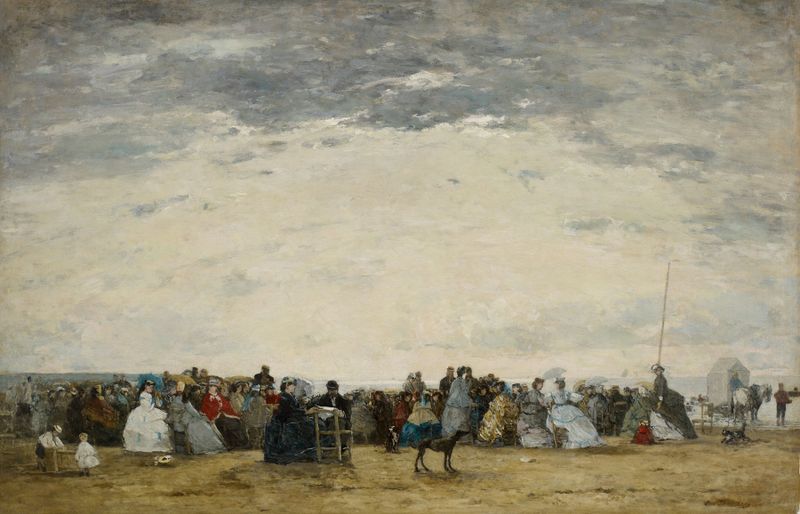
Vacationers on the Beach at Trouville
Eugène Boudin

Washerwoman near Trouville
Eugène Boudin
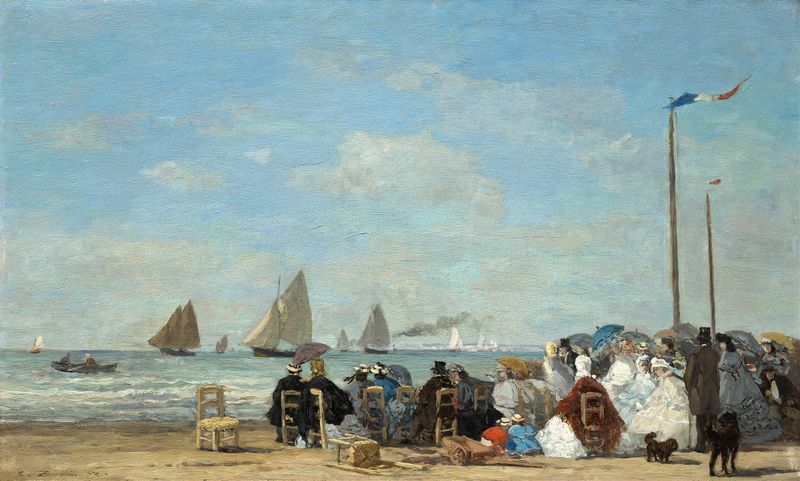
Beach Scene at Trouville
Eugène Boudin

Port aux environs d’Honfleur
Eugène Boudin

Le Faou, un coin du village
Eugène Boudin
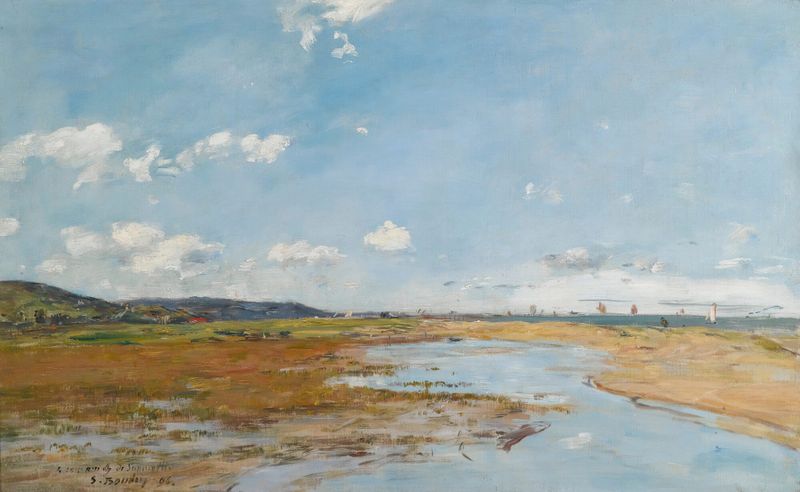
Deauville. Le Rivage
Eugène Boudin
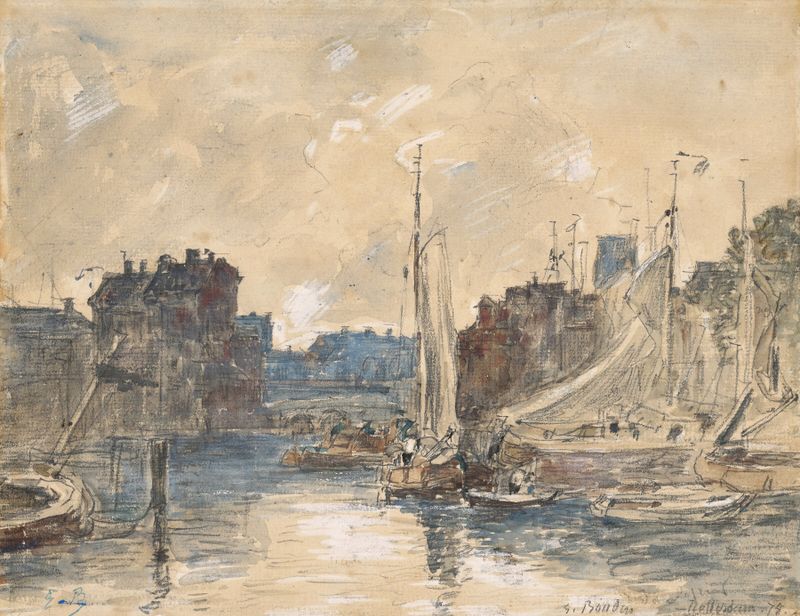
Port de Rotterdam
Eugène Boudin

View of Bordeaux, from the Quai des Chartrons
Eugène Boudin

Trouville, Scène De Plage
Eugène Boudin

Trouville, Le Port
Eugène Boudin





