
Honfleur. Voiliers — History & Facts
In Honfleur. Voiliers, the essence of decay is captured within the delicate interplay of wind, water, and time. The beauty of nature and its ephemeral state beckons us to reflect on the quiet transience of life. Look to the left, where the caress of soft pastels forms a gentle horizon, the interplay of blues and greys suggesting a late afternoon sky.
Notice how the vessels bob lightly in the harbor, their sails catching the waning light, which dances off the water's surface, transforming the scene into a shimmering tapestry. The fluid brushstrokes convey movement and a sense of fleeting moments, inviting the eye to drift over the rippling reflections that mirror both tranquility and the inevitable passage of time. Beneath this serene surface lies a tension of decay; the weathered hulls of the boats symbolize life's inevitable decline. The juxtaposition of their graceful forms against the tumultuous backdrop conveys the fragility of existence.
The artist subtly reminds us that beauty often coexists with deterioration, and within this poignant duality lies a deeper emotional resonance, evoking both nostalgia and an appreciation for the present. Eugène Boudin painted Honfleur. Voiliers in 1856 while living in France, a time when the Impressionist movement was in its infancy. He was captivated by the coastal landscapes of Normandy, and his works often celebrated the everyday moments of life.
This was a period marked by a growing fascination with the interplay of light and atmosphere, as artists began turning away from traditional academic styles to capture the immediacy and beauty of the natural world.
More Artworks by Eugène Boudin
Browse all →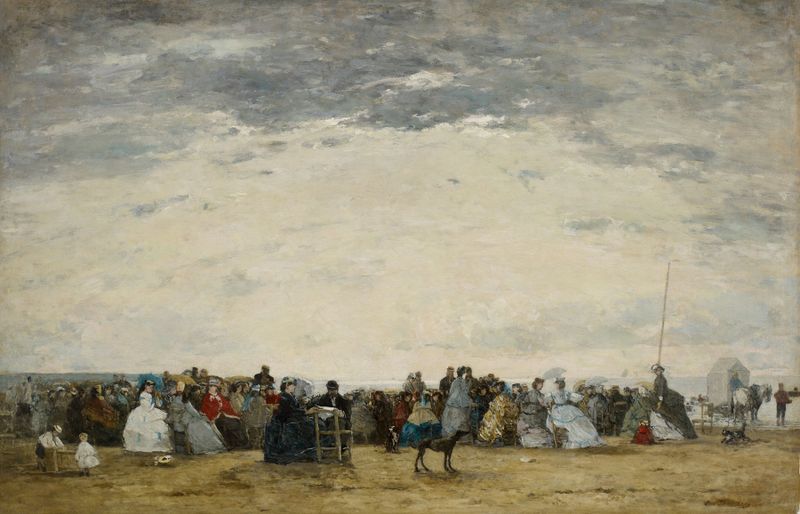
Vacationers on the Beach at Trouville
Eugène Boudin

Washerwoman near Trouville
Eugène Boudin
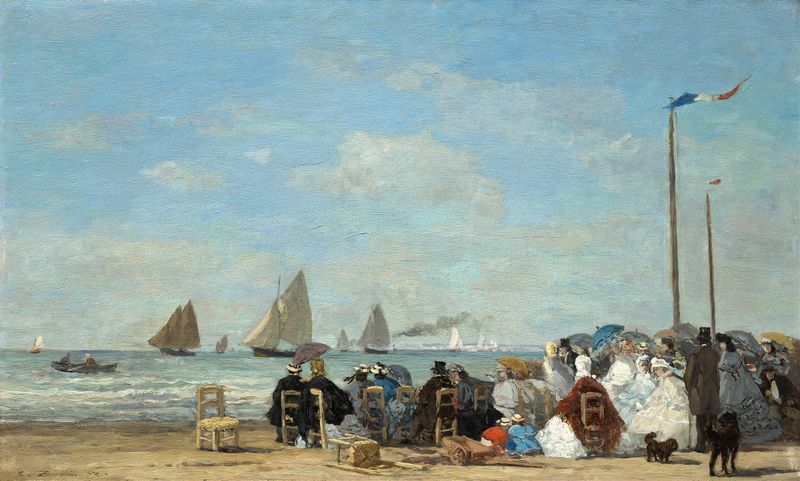
Beach Scene at Trouville
Eugène Boudin

Port aux environs d’Honfleur
Eugène Boudin

Le Faou, un coin du village
Eugène Boudin
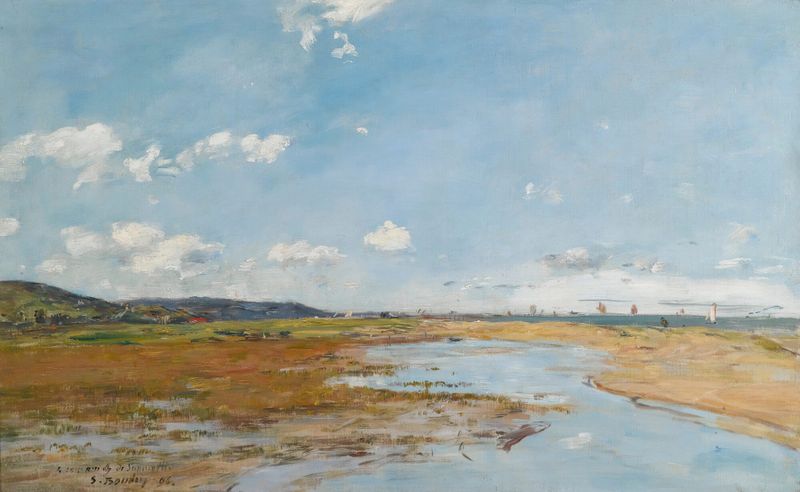
Deauville. Le Rivage
Eugène Boudin
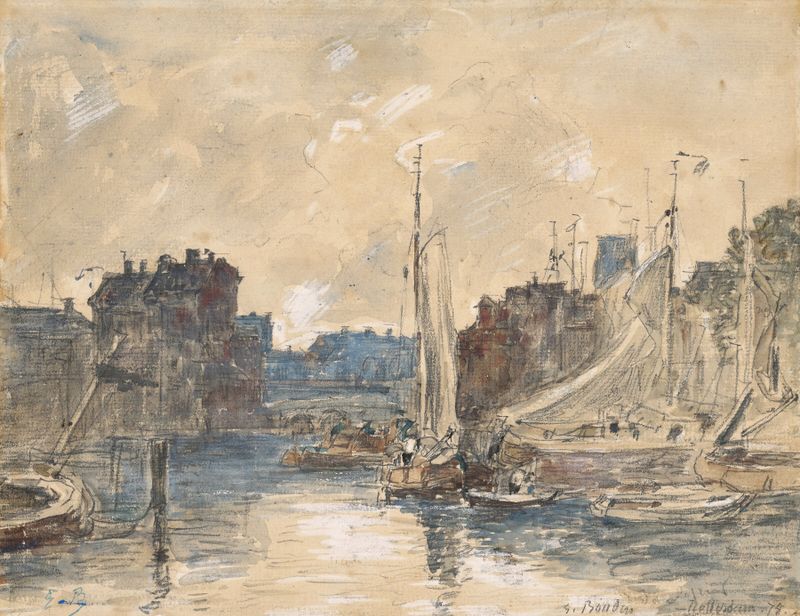
Port de Rotterdam
Eugène Boudin

View of Bordeaux, from the Quai des Chartrons
Eugène Boudin

Trouville, Scène De Plage
Eugène Boudin

Trouville, Le Port
Eugène Boudin





