
Hope — History & Facts
When Hope emerged from the studio of Raphael in 1507, it was part of a trio of allegorical figures—Faith, Hope, and Charity—created during a period of intense innovation in Florence. What sets this work apart is the ongoing debate over its medium: while most of Raphael’s paintings of the era are in oil, some scholars have argued that Hope may have been executed in tempera, or even a combination of both, making its technical origins as enigmatic as its subject. This uncertainty has fueled decades of scientific analysis and art historical discussion, with no final verdict.
The painting’s allure is thus doubled, inviting viewers to puzzle over not only its meaning but also its very making. The figure of Hope sits in quiet contemplation, her gaze lifted gently upwards, hands clasped around an anchor—the ancient Christian symbol for hope and steadfastness. The moment Raphael chose is one of poised anticipation: the stormy clouds behind her suggest recent tribulation, yet her serene expression and the soft glow illuminating her face speak of optimism and faith in what is to come. The delicate folds of her robe, rendered with a precision reminiscent of Leonardo da Vinci’s drapery studies, contrast with the solidity of the anchor, grounding her spiritual yearning in the material world.
Unlike Titian’s later allegories, which often teem with movement and drama, Raphael’s Hope is marked by restraint and inward focus, drawing the viewer into a private moment of reflection. The provenance of Hope is less well-documented than some of Raphael’s grand commissions, and it is believed to have been created for a private patron, perhaps as part of a devotional ensemble. Over the centuries, the painting’s whereabouts have sometimes been uncertain, with gaps in its recorded history and questions about its attribution arising periodically. Today, it is recognized as a key work from Raphael’s Florentine years, a period when he absorbed the lessons of Leonardo and Michelangelo while forging his own path.
Whether displayed alongside its companion allegories or on its own, Hope stands as a testament to Raphael’s technical curiosity and his ability to infuse abstract virtues with human warmth.
More Artworks by Raphael

Madonna of the Goldfinch
Raphael

Madonna with the Fish
Raphael
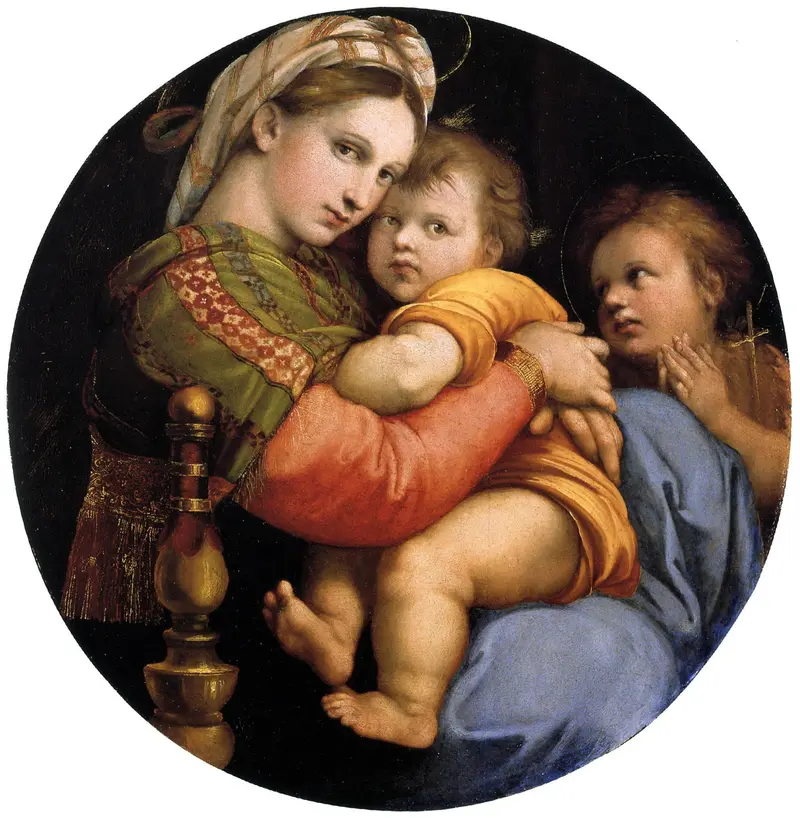
Madonna and Child (Madonna della Seggiola)
Raphael
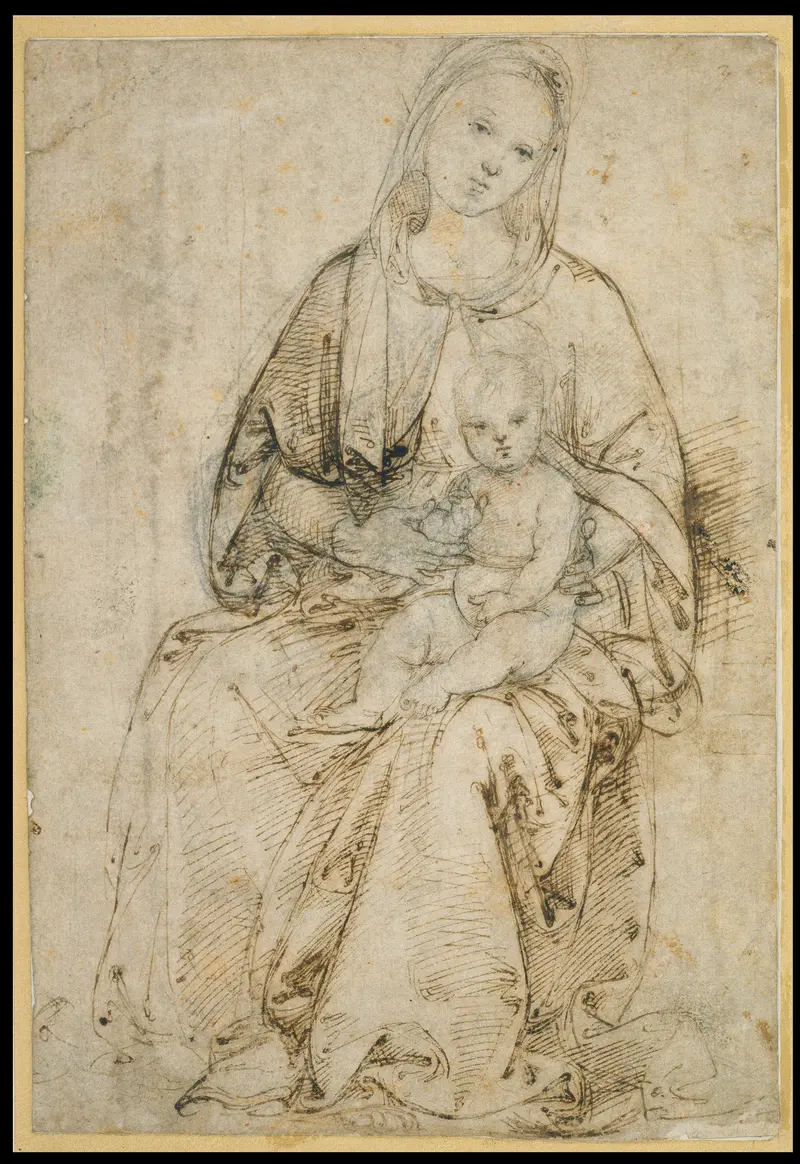
Seated Madonna and Child
Raphael
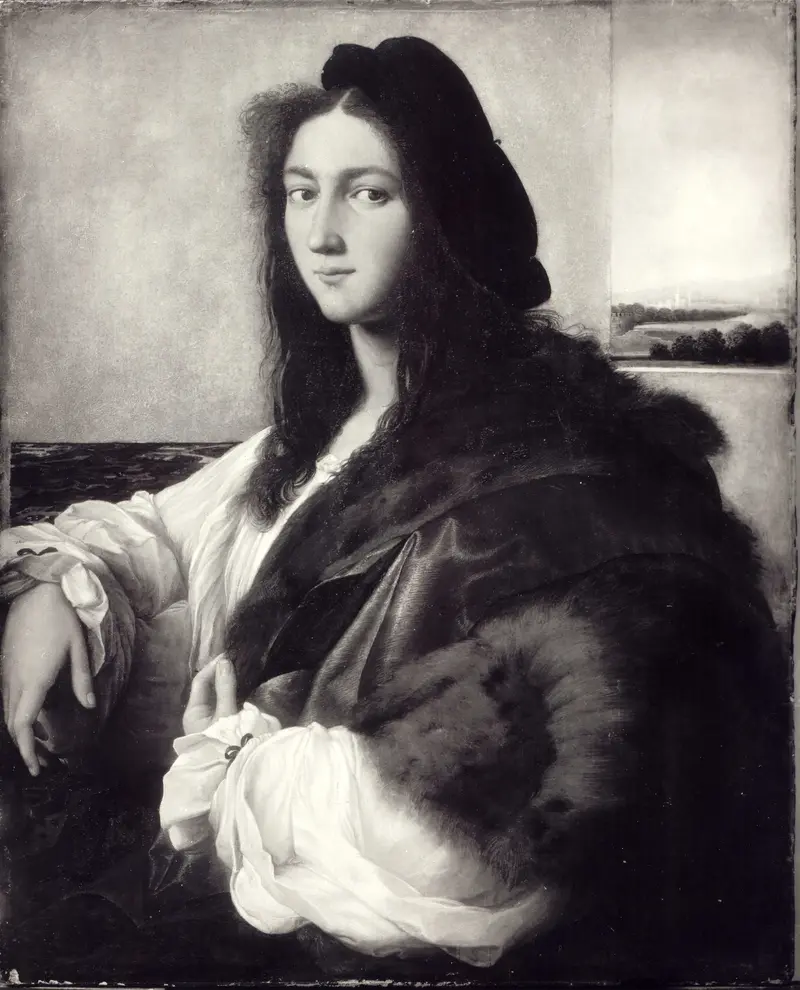
Portrait of a Young Man
Raphael
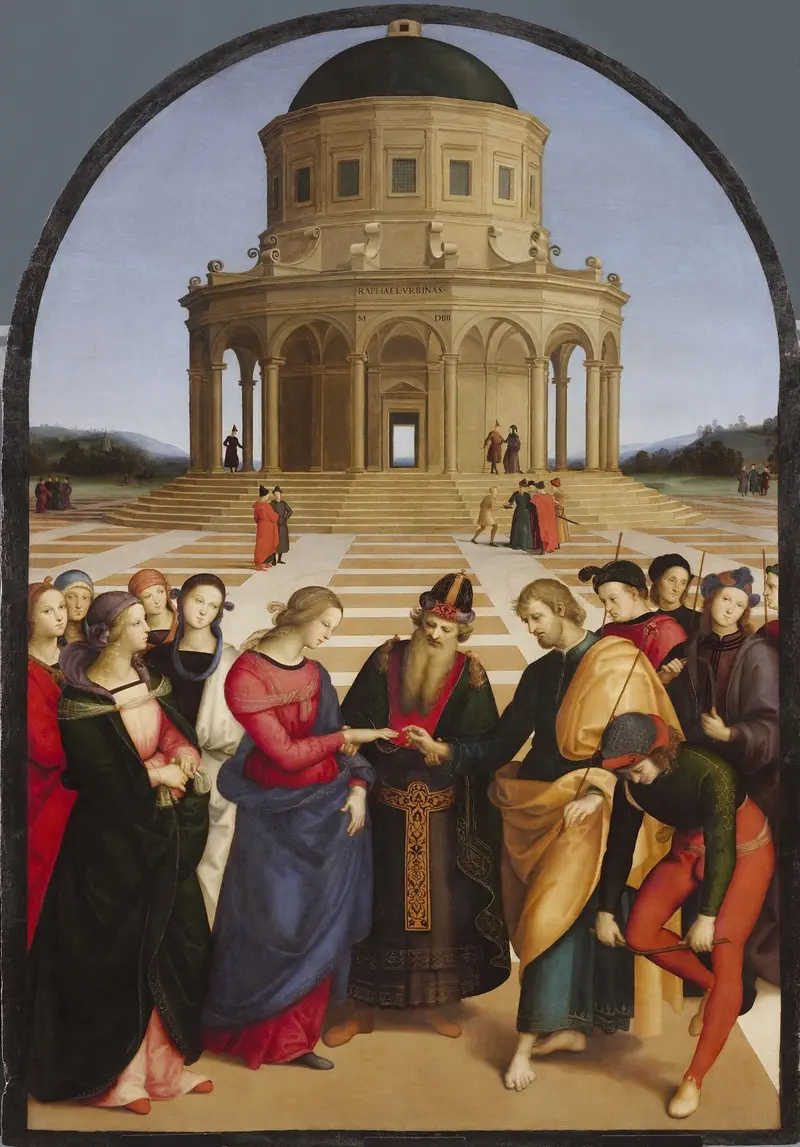
The Marriage of the Virgin
Raphael
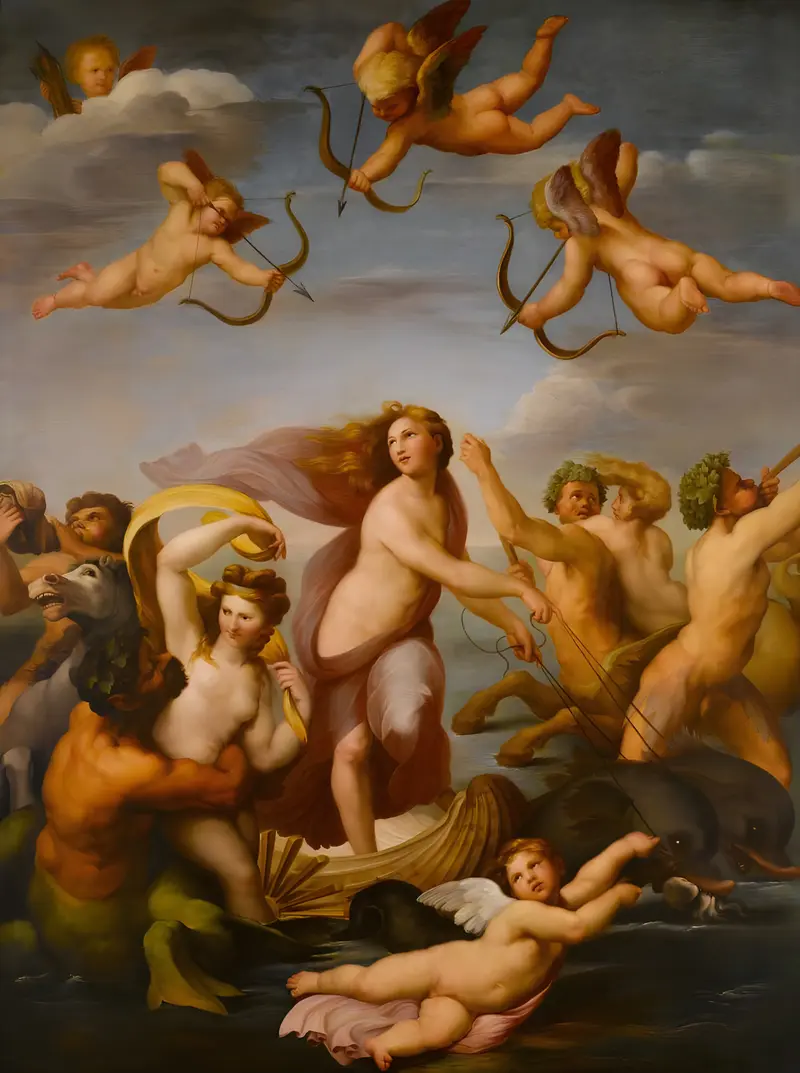
The Triumph of Galatea (copy after Raphael)
Raphael
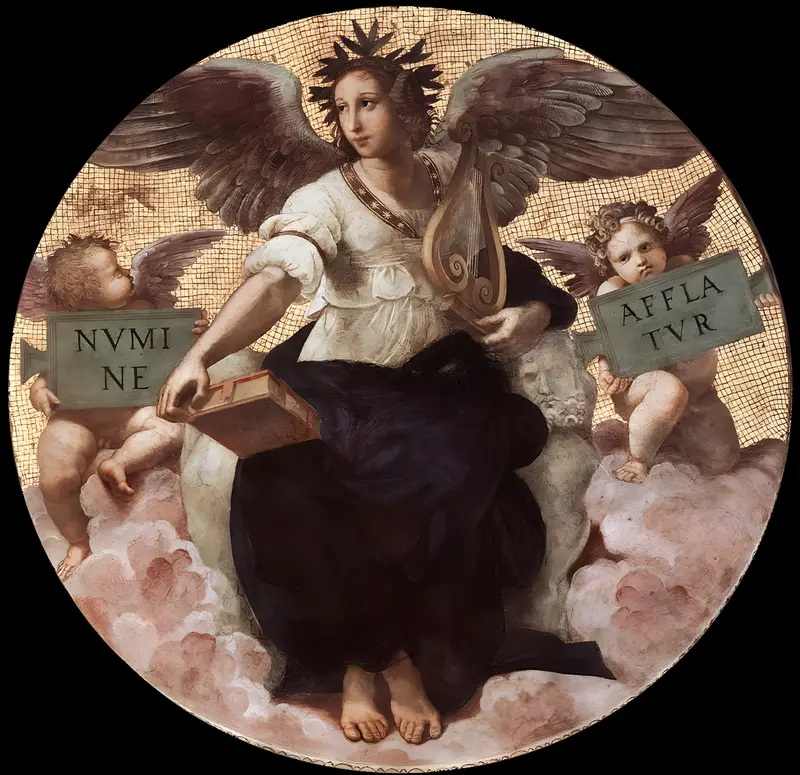
Poetry
Raphael
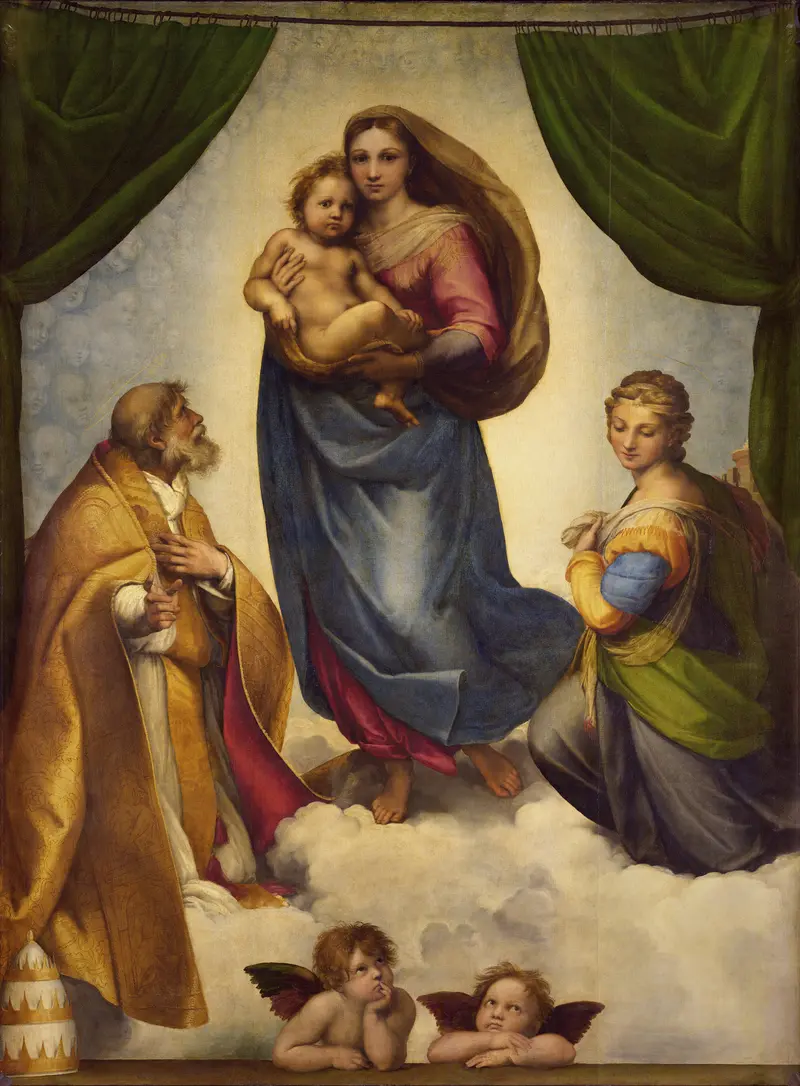
Sistine Madonna
Raphael
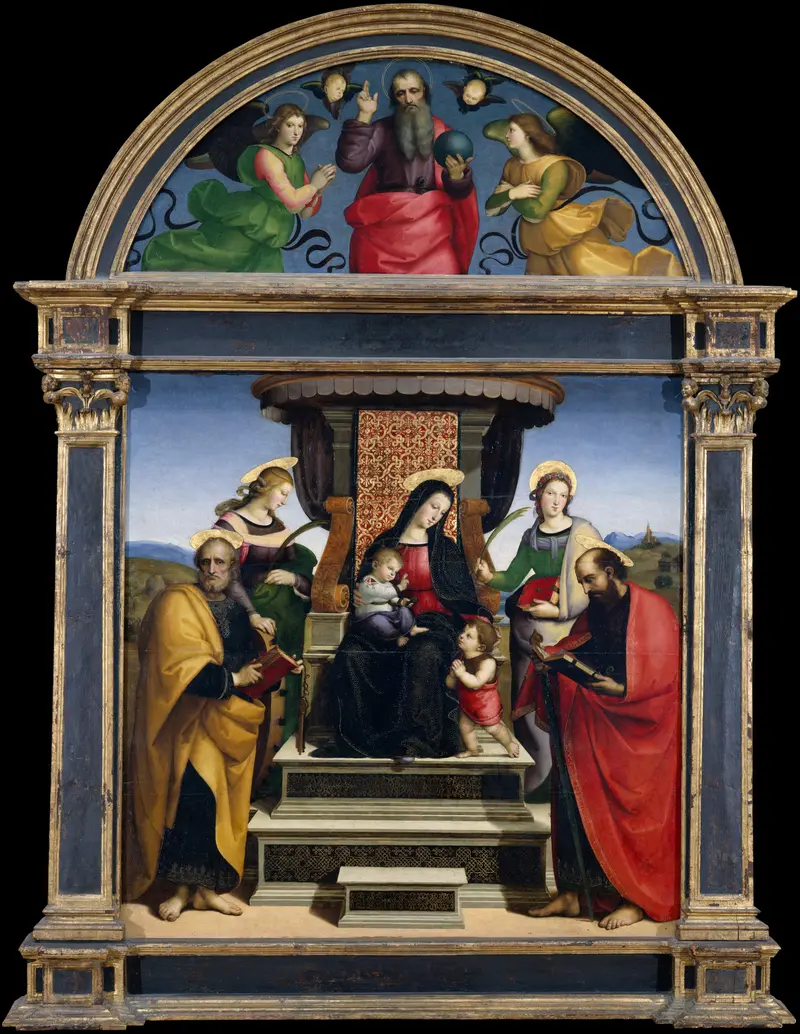
Madonna and Child Enthroned with Saints
Raphael





