
Hounds: "Fleur" and "Frogmore" — History & Facts
What draws the eye first in Hounds: "Fleur" and "Frogmore" is the quiet intimacy between the two dogs, rendered with a tenderness that feels almost whispered. The lower hound, head resting on its paws, seems lost in sleep, while the second nestles its chin gently atop its companion, half-watchful, half-drowsy. The artist, Archibald Thorburn, uses just enough color—russet, ochre, and white—to give life to fur and flesh, but leaves the background untouched, so the world seems to fall away, leaving only the warmth of shared rest.
The lines are swift and sure, suggesting movement stilled for a moment, and the soft modeling of the bodies invites the viewer to linger on the play of light along their backs. Created in 1878, this drawing belongs to a British tradition that prized both the depiction of animals and the quiet observation of domestic life. In the late nineteenth century, such studies were often commissioned by country families who valued their hounds as both working partners and beloved companions. Thorburn was celebrated for his ability to capture the spirit and individuality of animals, and works like this—now in the Yale Center for British Art—remind us how the simplest moments could be elevated to art.
History has kept few traces of these particular dogs, but their presence endures, inviting us to look again at the gentle bond between them.
More Artworks by Archibald Thorburn

The Watchful Hinds
Archibald Thorburn
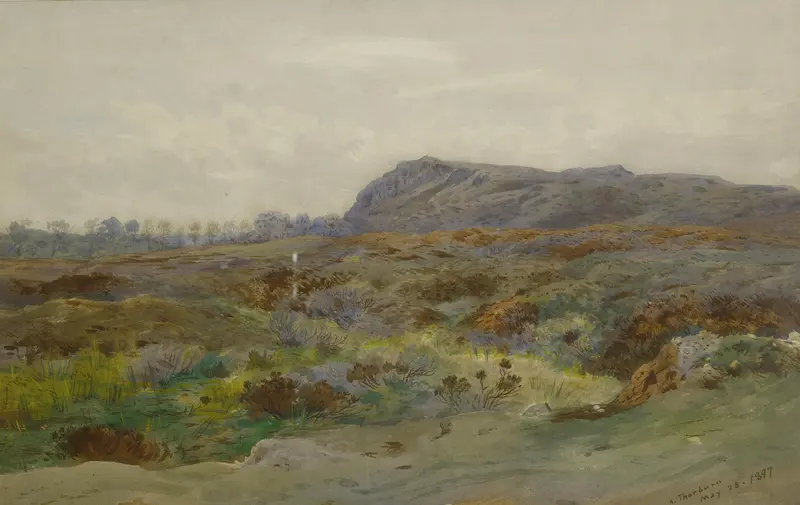
Moorland Landscape
Archibald Thorburn
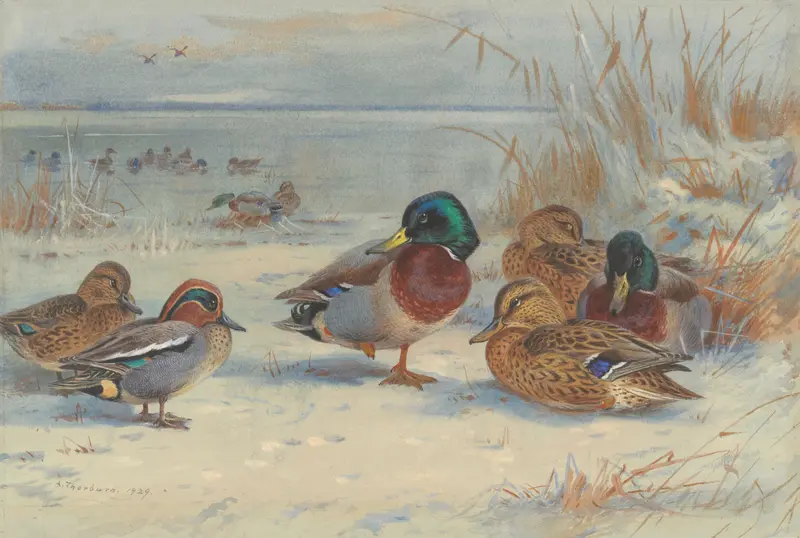
Mallard and teal in the snow
Archibald Thorburn
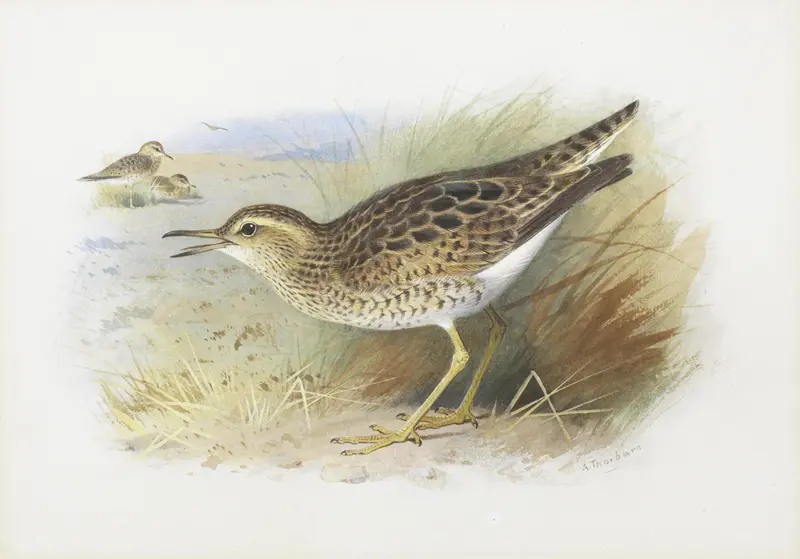
Bartram's Plover
Archibald Thorburn
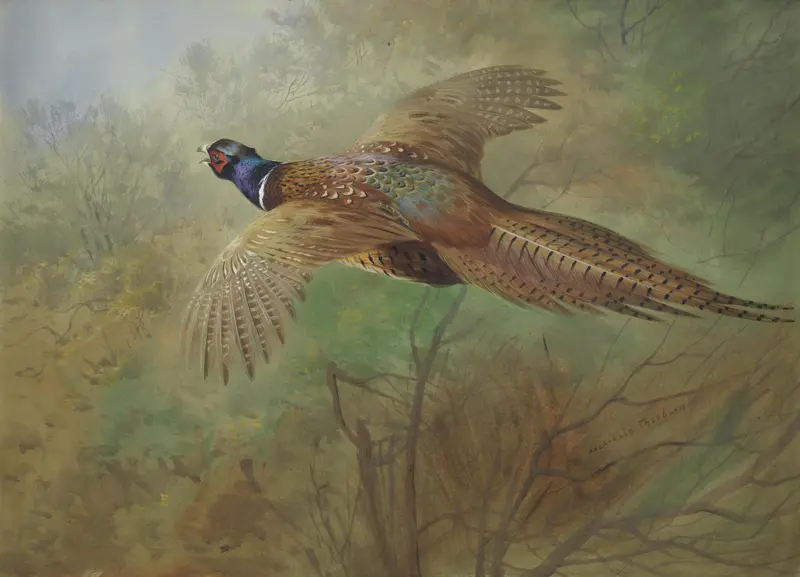
Pheasant in flight
Archibald Thorburn
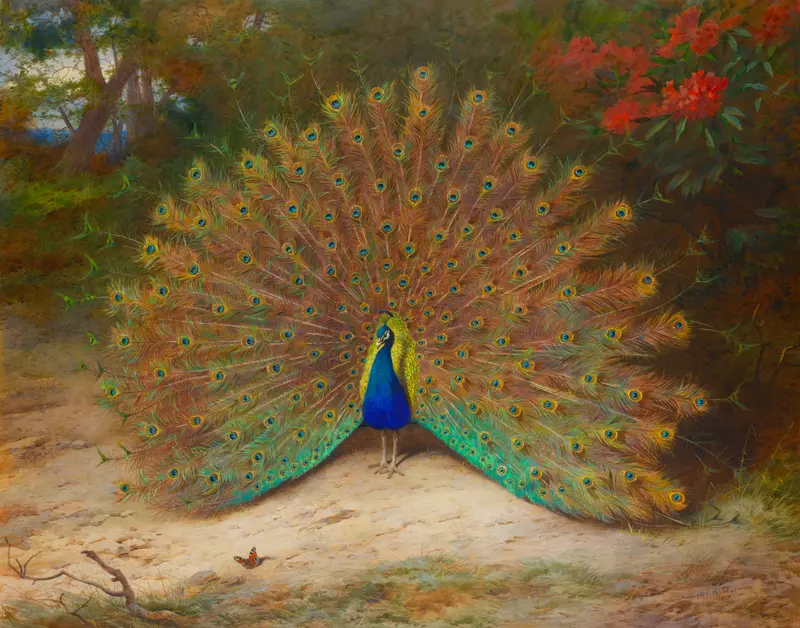
Peacock and Peacock Butterfly
Archibald Thorburn
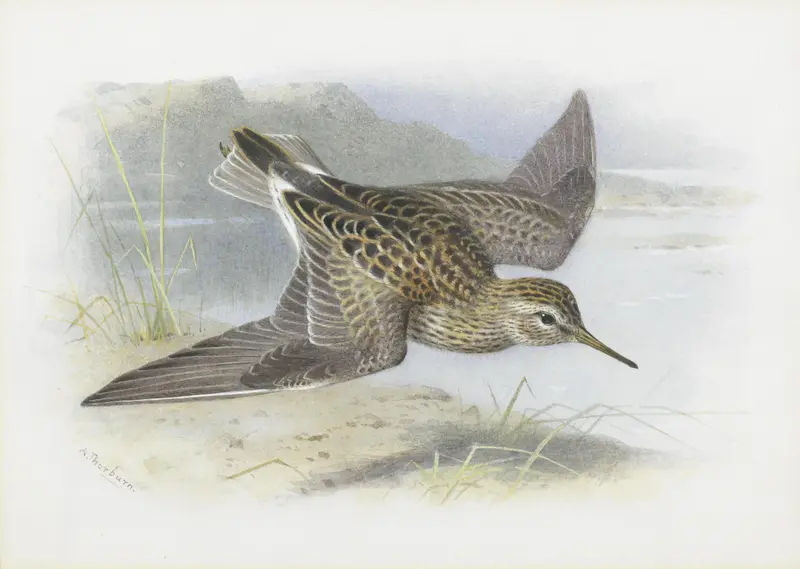
Pectoral Sandpiper
Archibald Thorburn
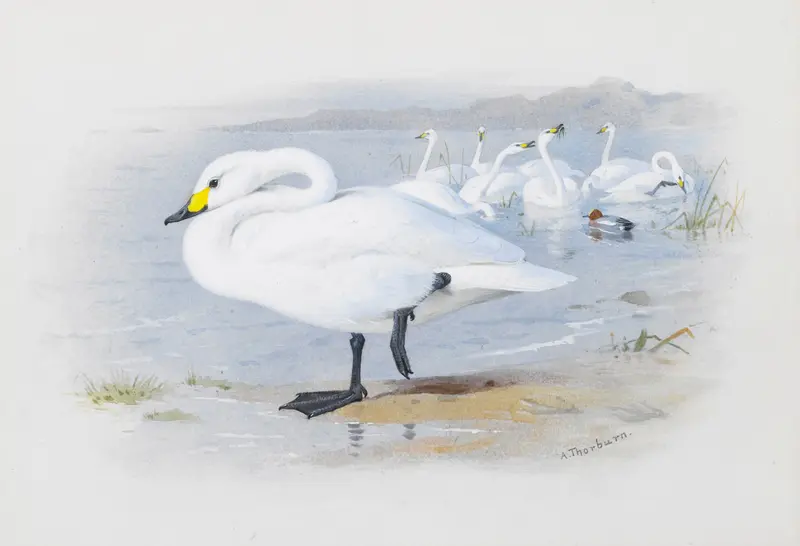
Bewick's swan.
Archibald Thorburn
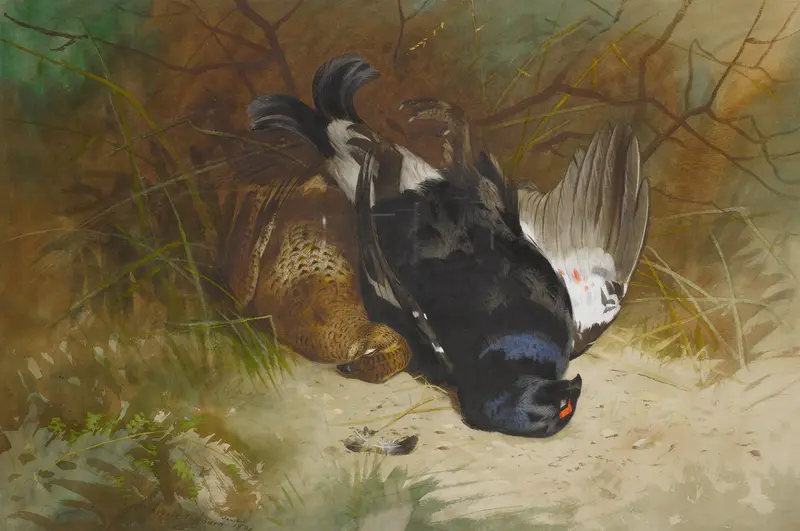
Still life of a pair of Blackgame.
Archibald Thorburn
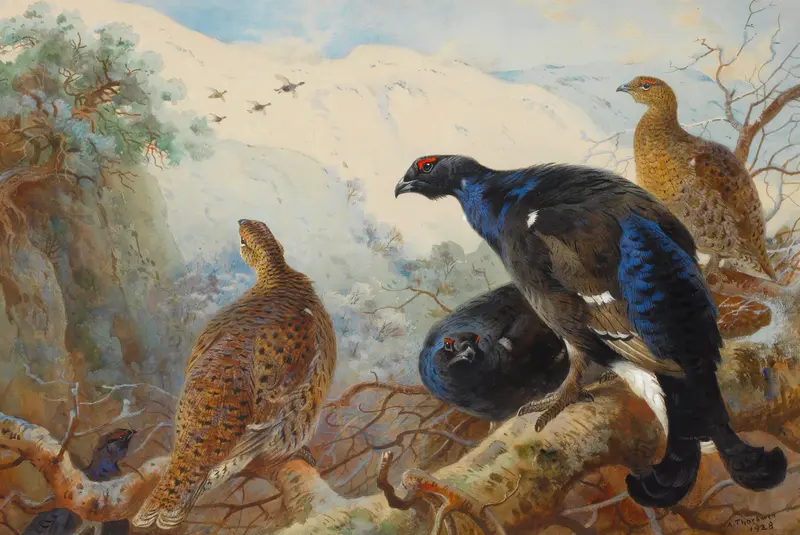
Blackgame
Archibald Thorburn





