
Hounds: "Seagull" — History & Facts
What draws the eye first in Hounds: "Seagull" by Archibald Thorburn is the quiet intimacy between two dogs, rendered with the immediacy of a moment glimpsed rather than staged. The larger hound bows its head, muzzle pressed close to the smaller, as if in a gesture of comfort or gentle watchfulness. Thorburn’s use of soft, rapid strokes in black, white, and ochre brings a sense of warmth and living texture to the scene, while the unadorned background lets the viewer linger on the dogs’ forms and their relationship.
The light falls from above and behind, catching the curve of the hound’s back and the slope of its head, guiding the gaze to the subtle play of shadow and highlight. The composition is spare but not cold; every line seems to serve the purpose of conveying the animals’ quiet companionship. Created in 1878, this drawing belongs to a world where sporting dogs were not only working animals but also beloved companions, often immortalized in studies such as this for their character as much as their utility. In Victorian Britain, artists like Thorburn were sought after by patrons eager to celebrate their prized hounds, and the genre flourished in country houses and sporting circles.
The work now resides in the Yale Center for British Art, a reminder of the era’s fascination with both the natural grace and the emotional lives of animals. History has kept few traces of this particular hound’s story, but the artist’s hand invites us to imagine it, returning us again to the gentle scene at the heart of the image.
More Artworks by Archibald Thorburn

The Watchful Hinds
Archibald Thorburn
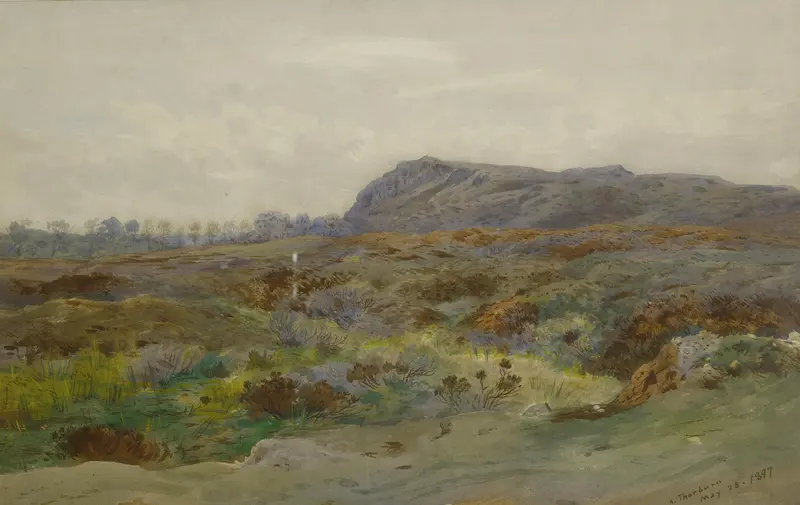
Moorland Landscape
Archibald Thorburn
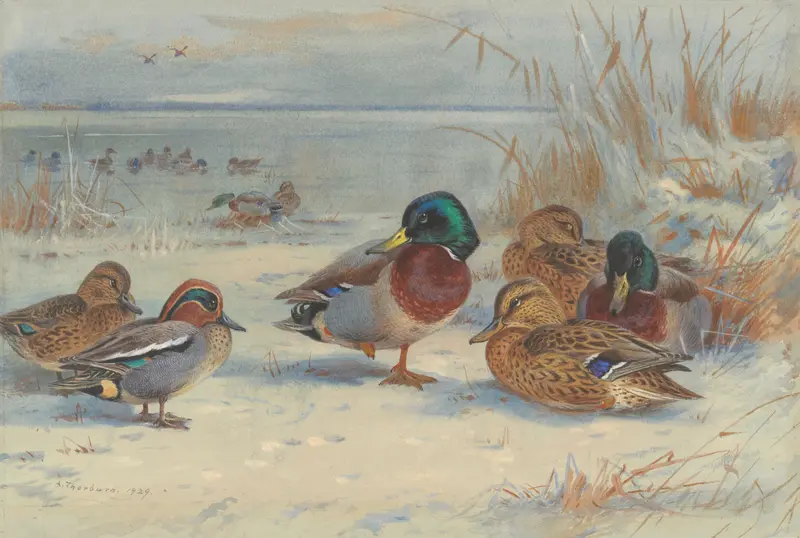
Mallard and teal in the snow
Archibald Thorburn
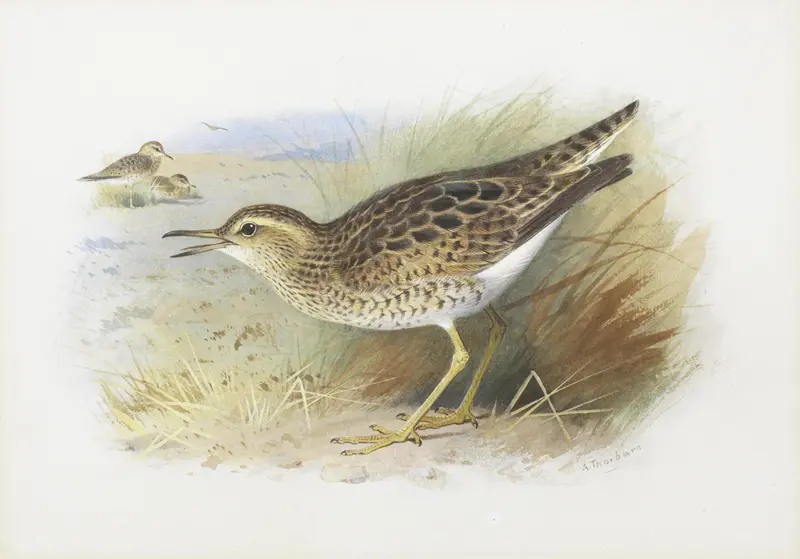
Bartram's Plover
Archibald Thorburn
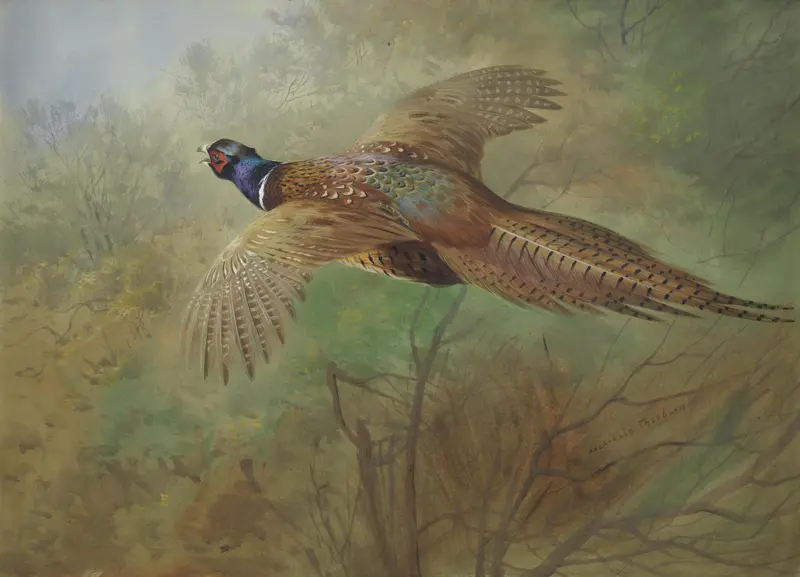
Pheasant in flight
Archibald Thorburn
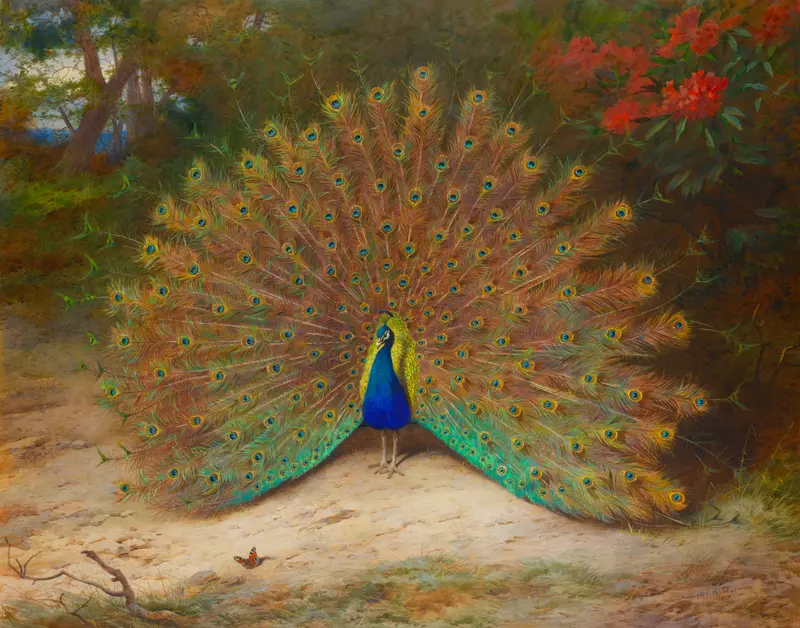
Peacock and Peacock Butterfly
Archibald Thorburn
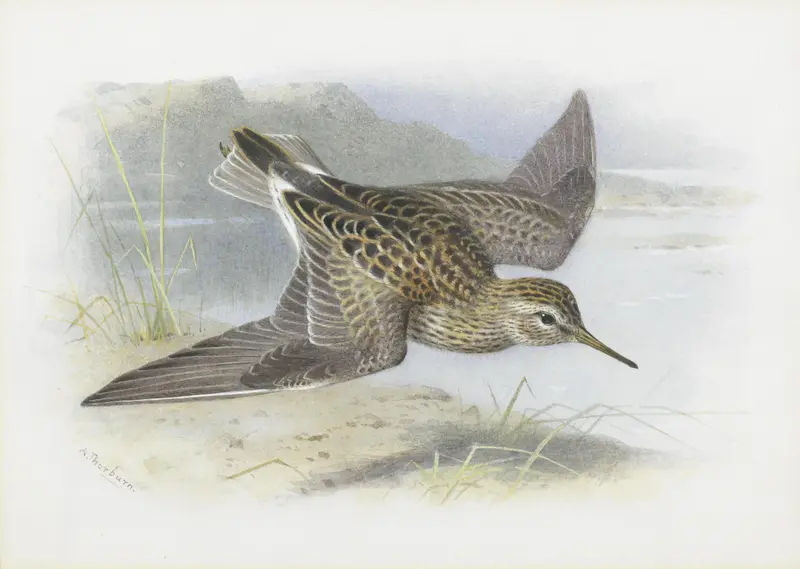
Pectoral Sandpiper
Archibald Thorburn
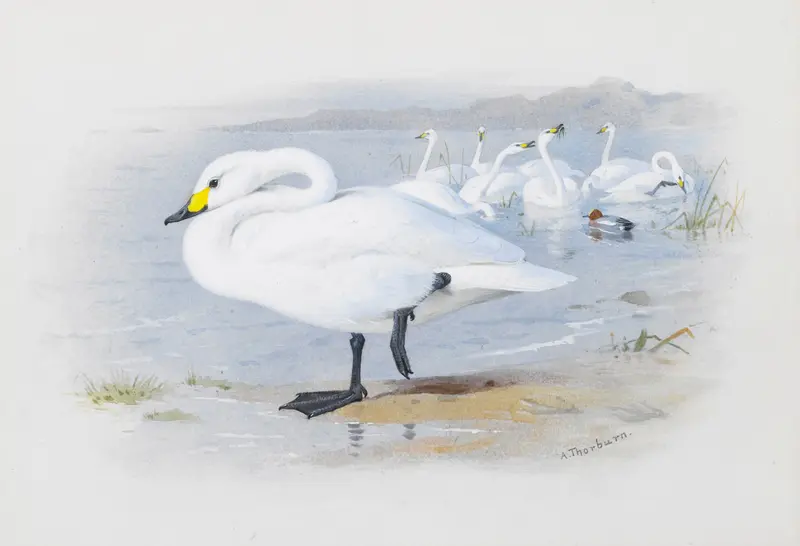
Bewick's swan.
Archibald Thorburn
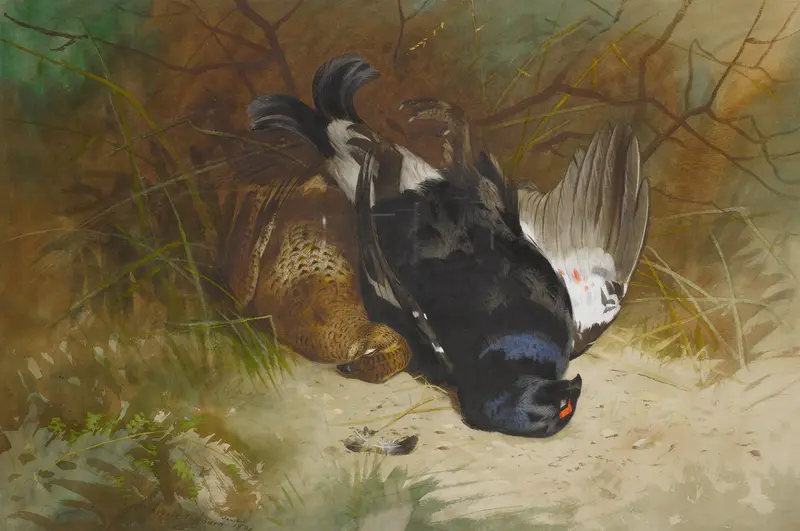
Still life of a pair of Blackgame.
Archibald Thorburn
Blackgame
Archibald Thorburn





