
House Interior — History & Facts
The hush of a well-lived room seems to linger here, long after its occupants have stepped away. In House Interior, Theodoros Ralli invites us to inhabit a space shaped by comfort and cultivated taste: the plush armchairs angled for conversation, the bookshelves brimming with promise, the gentle glow of afternoon light warming the yellow walls. The artist draws the viewer’s attention to the large, gilded mirror above the mantel—its blurred figures suggesting memories or past gatherings, a subtle reminder that rooms remember.
Every object seems chosen for both use and beauty, from the ornate clock flanked by candelabra to the patterned screen that hints at privacy and the pleasures of retreat. This is a world shaped by the late nineteenth and early twentieth centuries, when interiors became a canvas for personal identity and social aspiration. Between 1873 and 1909, when this work was painted, the rise of the bourgeoisie and the spread of new wealth across Europe encouraged artists to capture domestic life, not as a backdrop but as a subject in itself. Paintings like this were often commissioned to celebrate stability, prosperity, and the rituals of everyday comfort.
While little is recorded about the specific journey of this canvas, its careful attention to furniture, books, and art within art places it firmly in the tradition of interior portraiture—a genre that invites us to look again, and imagine the lives that once filled these rooms.
More Artworks by Theodoros Ralli

The Sleeping Concubine
Theodoros Ralli
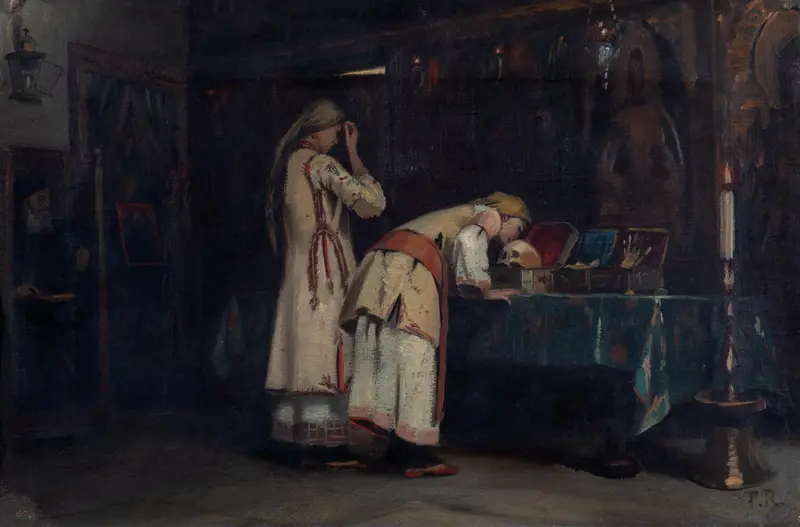
Holy Relics
Theodoros Ralli
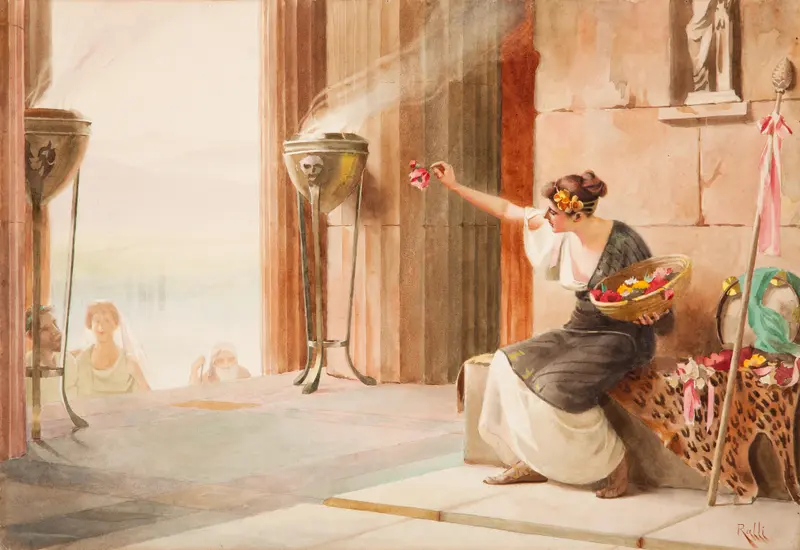
Flower Seller at the Parthenon
Theodoros Ralli
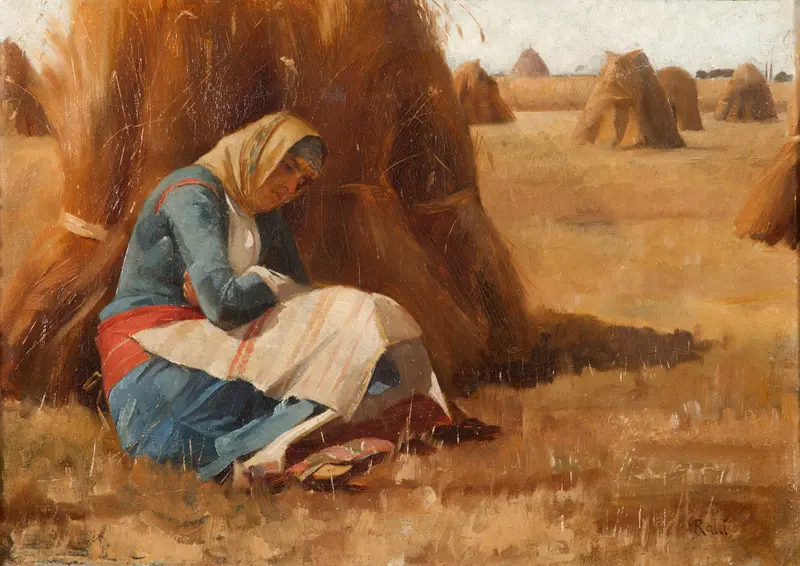
Resting by a Haystack
Theodoros Ralli
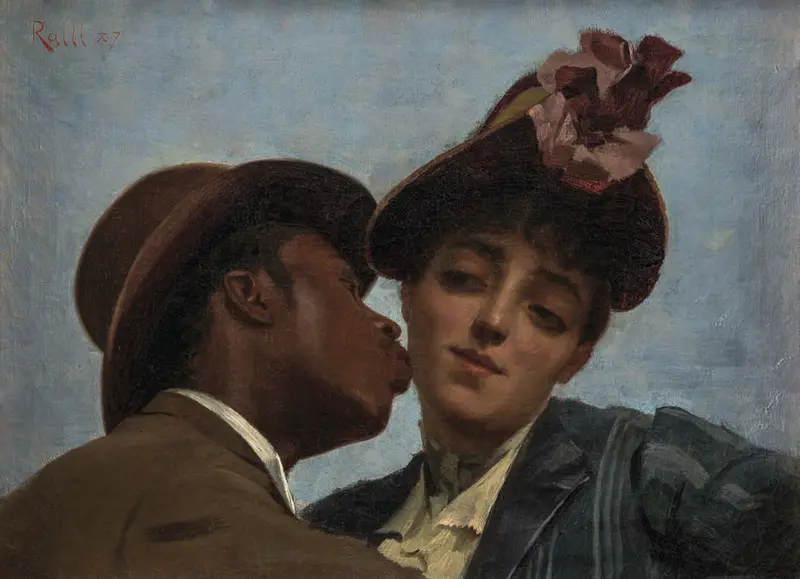
The Kiss (Ralli)
Theodoros Ralli
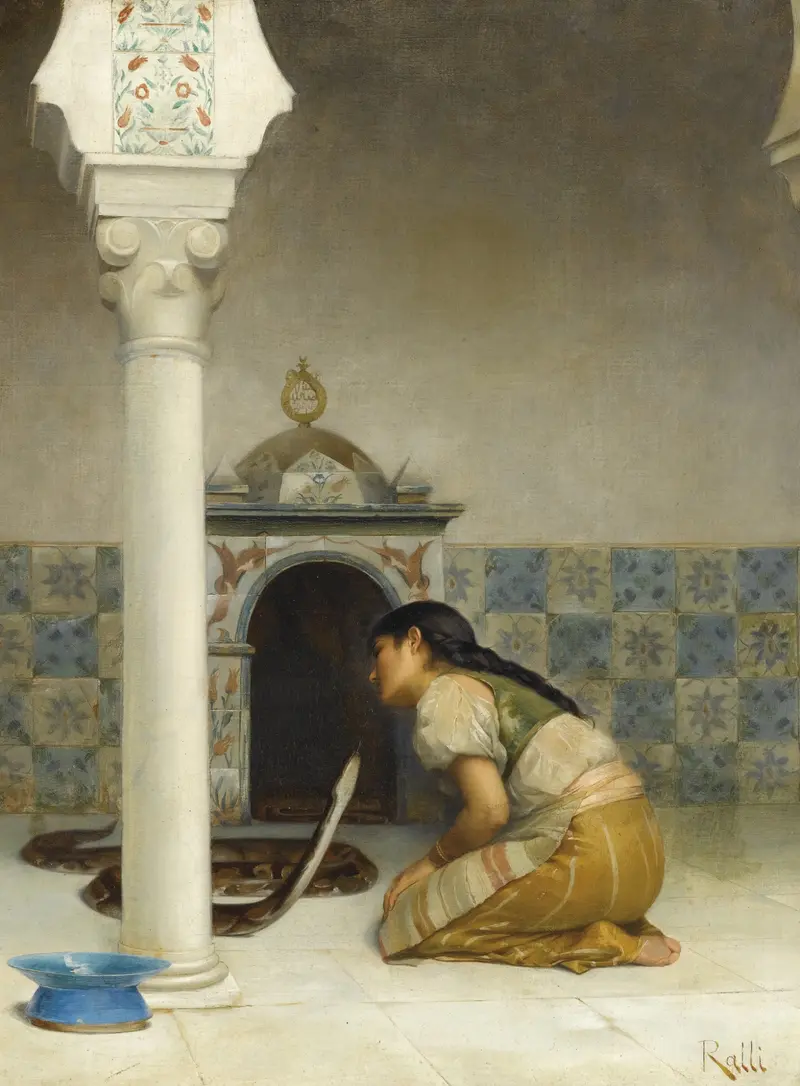
The Sacred Serpent
Theodoros Ralli
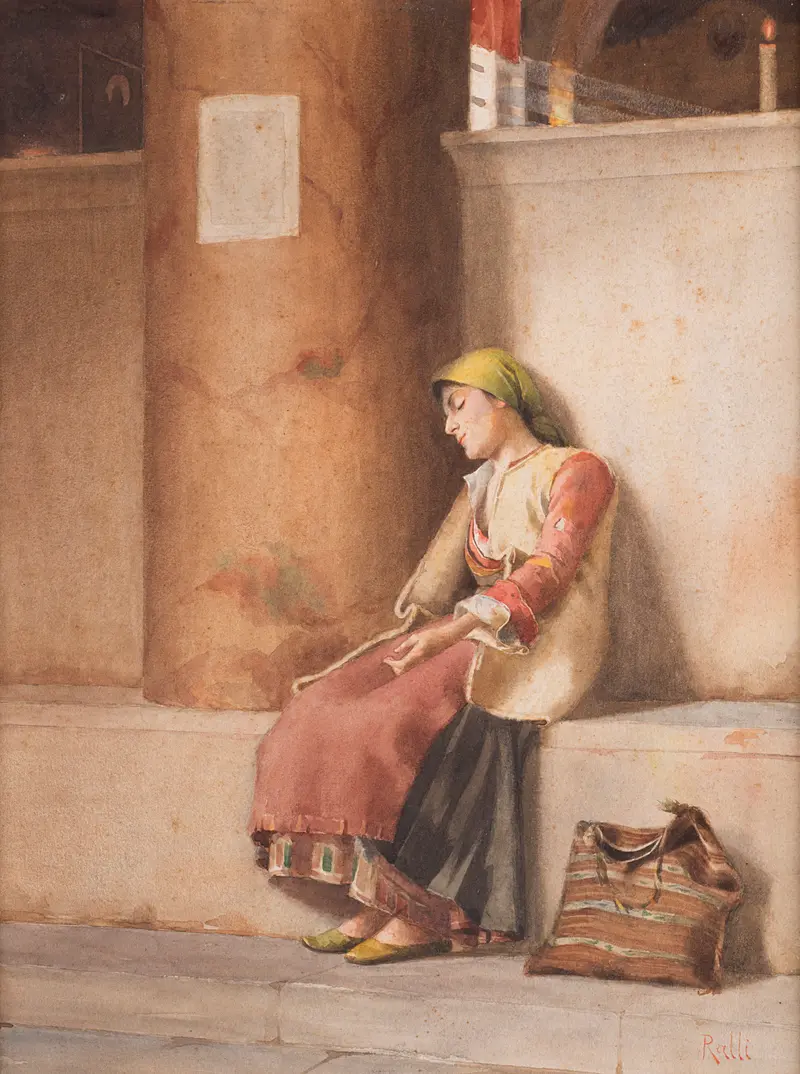
A Moment of Reflection
Theodoros Ralli
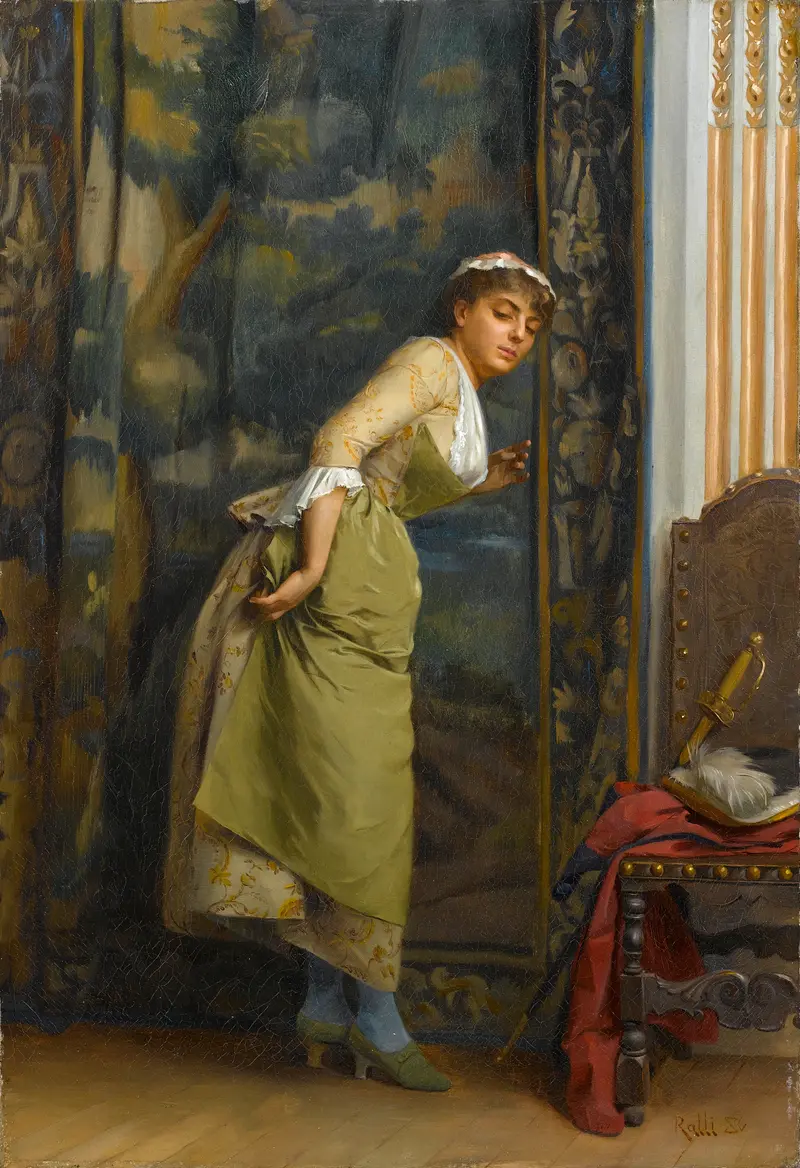
Eavesdropping (Ralli)
Theodoros Ralli
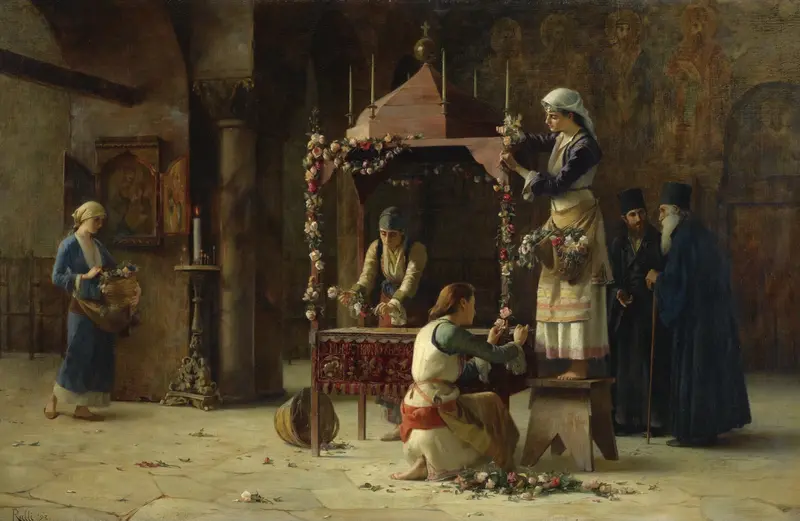
Holy Friday, Greece
Theodoros Ralli
A Moment's Rest
Theodoros Ralli





