
Hráč na cimbal — History & Facts
A man stands at the heart of this dimly lit interior, his shirt open, sleeves rolled, as he draws music from a hammered dulcimer. The children around him are caught in a moment of rapt attention: one leans in, chin on hand, utterly absorbed; another peeks from behind, wide-eyed and curious. Light falls gently on their faces, picking out the glint of the strings and the musician’s focused expression, while the rest of the room recedes into warm shadow.
The clutter above—a barrel, a hat, a hanging ladle—grounds the scene in everyday life, yet the gathering feels quietly ceremonial, as if the music has transformed this humble space into a stage. Every gesture, from the musician’s poised hands to the children’s shifting stances, is a study in listening and anticipation. Painted in 1675, Hráč na cimbal belongs to the world of Adriaen van Ostade, whose scenes of rural and village life were prized in the Dutch Golden Age for their blend of humor, empathy, and observation. Such pictures were collected by a rising urban middle class, eager for glimpses of both the familiar and the picturesque in daily existence.
In this era, genre painting flourished, turning the ordinary into a subject worthy of contemplation and delight. While little is recorded about this specific work’s early history, its presence today in the Slovak National Gallery invites us to linger over the small dramas that once filled the homes and taverns of seventeenth-century Europe—moments where music, curiosity, and community briefly eclipse the world outside.
More Artworks by Adriaen van Ostade

Dans in de herberg
Adriaen van Ostade
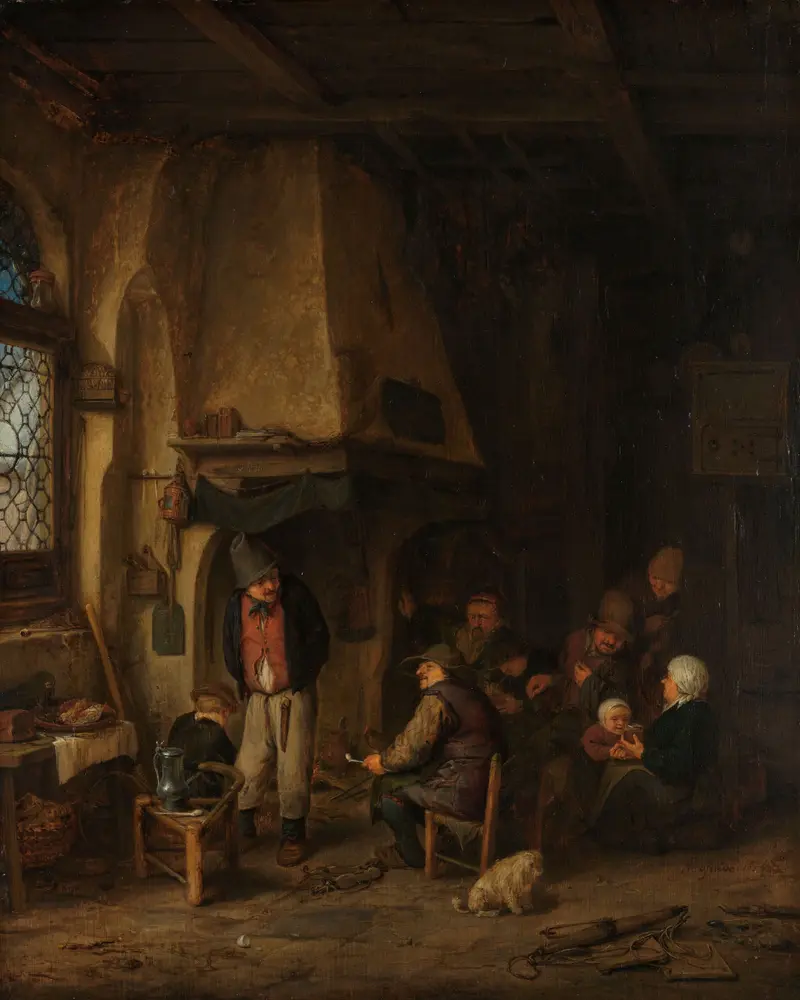
‘The Skaters’: Peasants in an Interior
Adriaen van Ostade
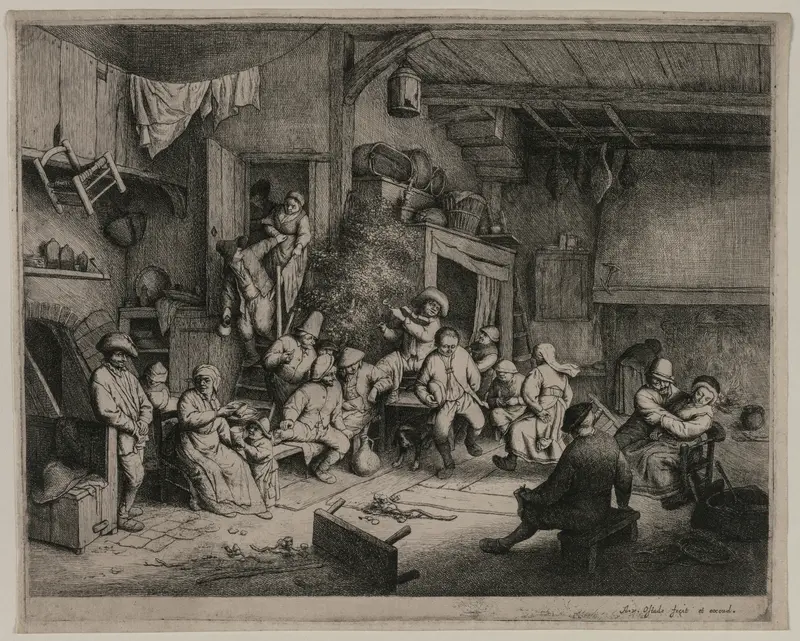
Dance at the Inn
Adriaen van Ostade
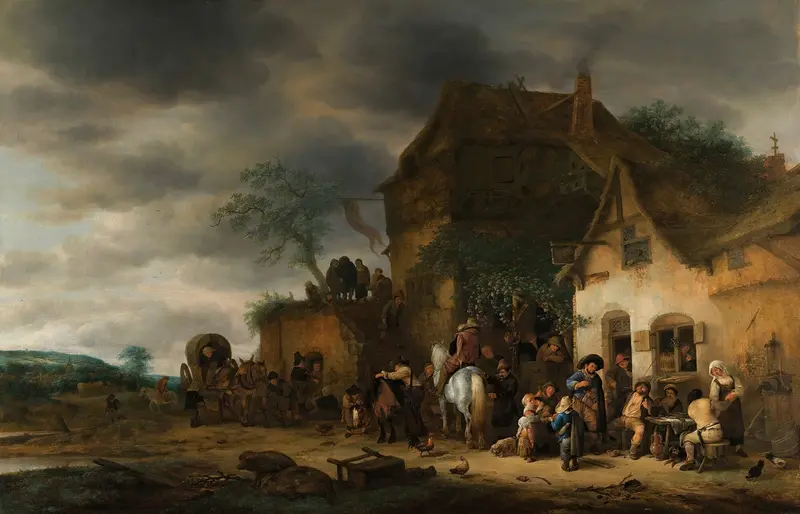
Travellers Halted At A Country Inn
Adriaen van Ostade
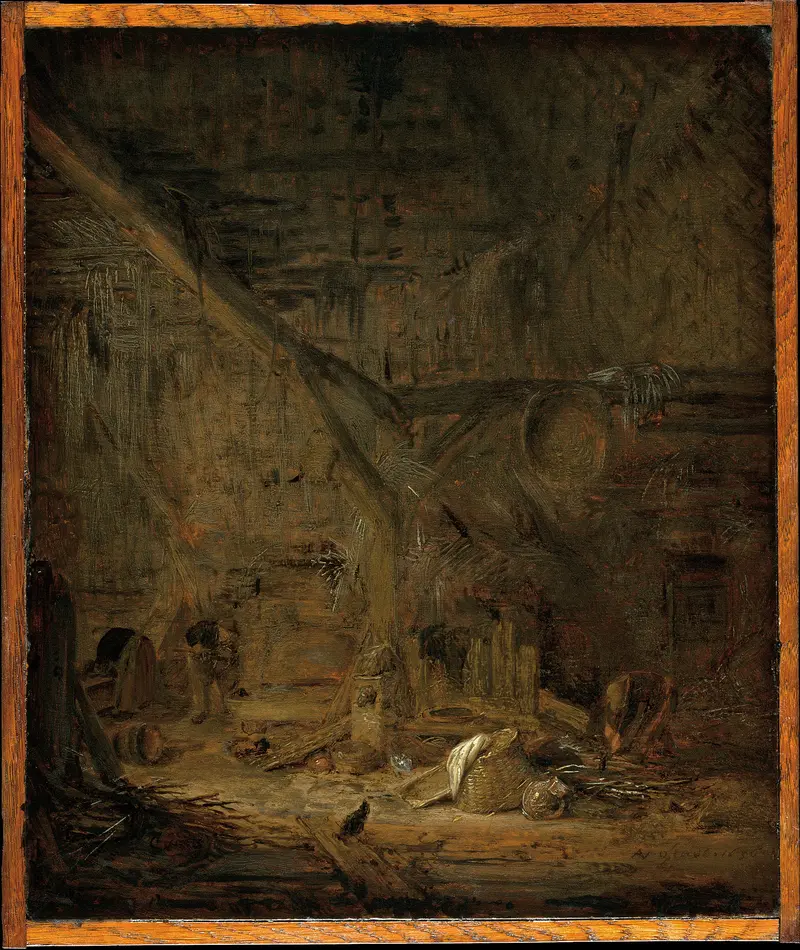
Interior of a Barn
Adriaen van Ostade
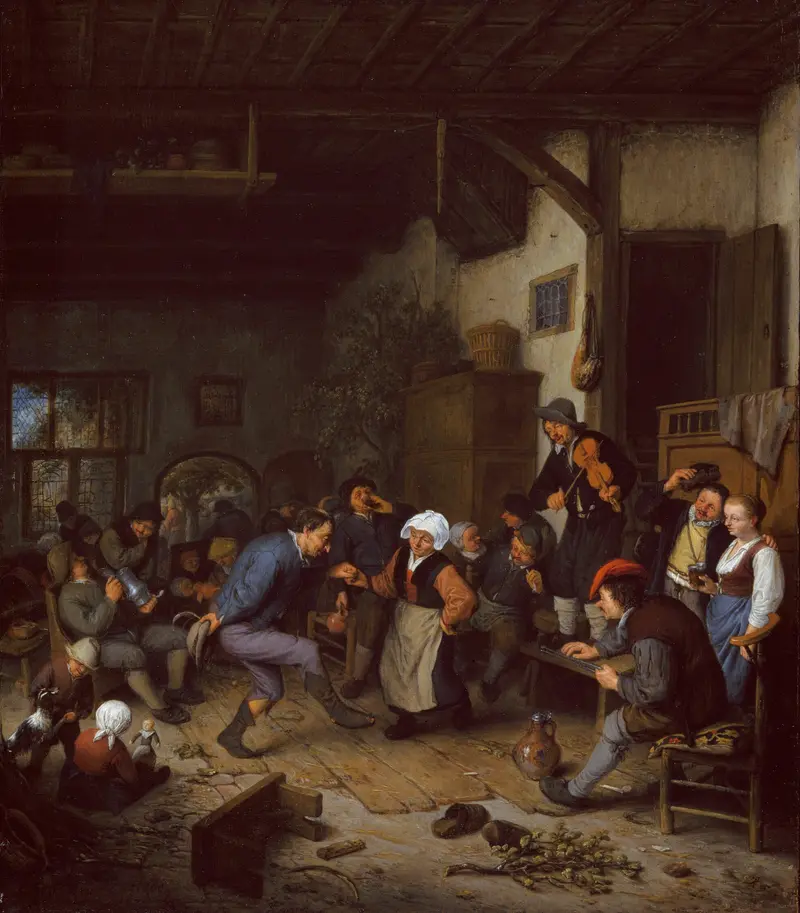
Merrymakers in an Inn
Adriaen van Ostade
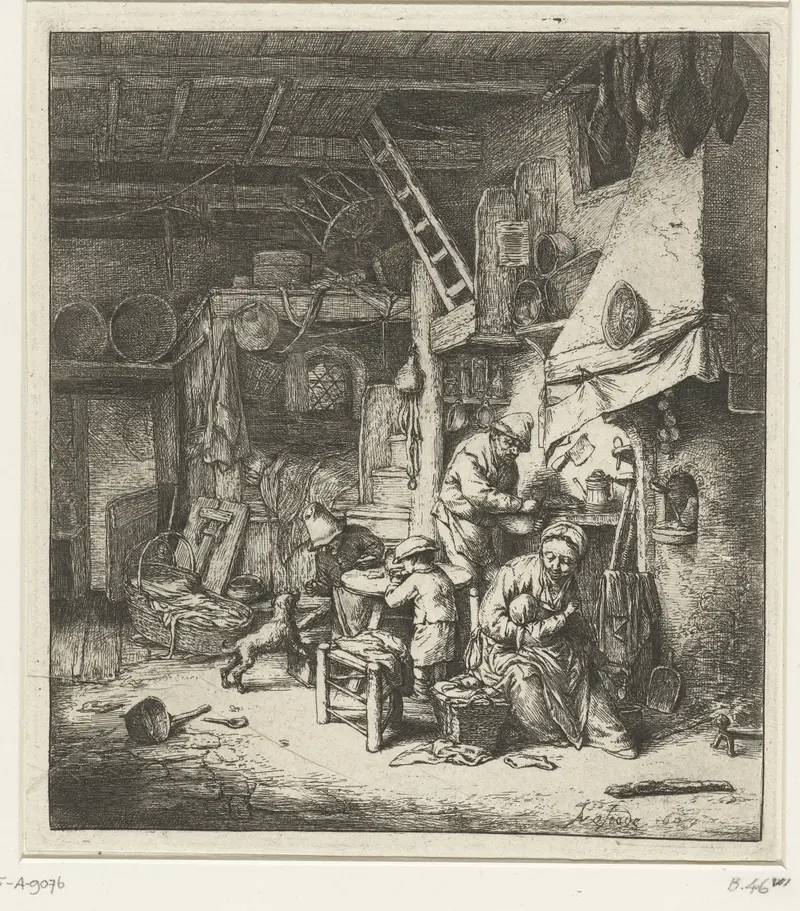
Boerengezin in interieur
Adriaen van Ostade
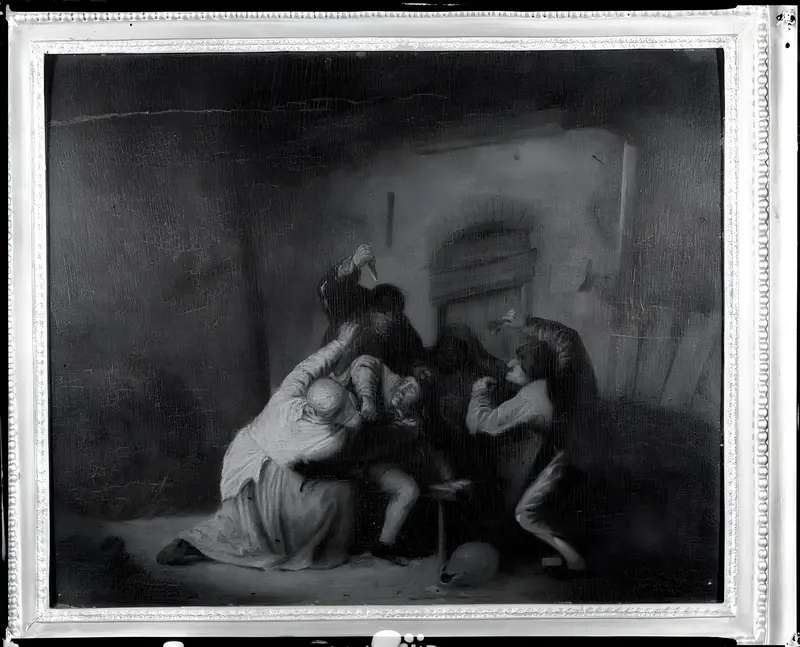
Peasants Brawling in a Tavern
Adriaen van Ostade
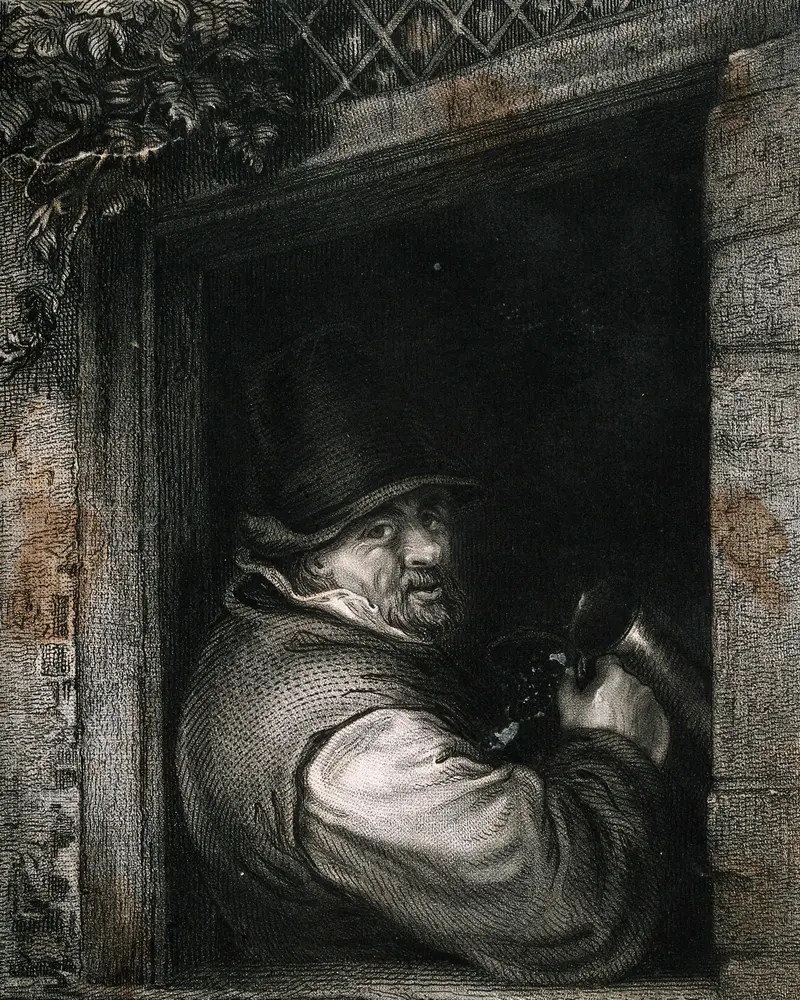
Man with a Tankard at a Window
Adriaen van Ostade
Dans in de herberg
Adriaen van Ostade
More Genre Scene Art

Banquet of the Officers of the St George Civic Guard
Frans Hals

Rembrandt and Saskia in the Scene of the Prodigal Son
Rembrandt van Rijn

Bal du moulin de la Galette
Pierre-Auguste Renoir

Quadrille at the Moulin Rouge
Henri de Toulouse-Lautrec

A Burial at Ornans
Gustave Courbet

When Will You Marry?
Paul Gauguin