Huanglong Cave (Yellow Dragon Cave) — History & Facts
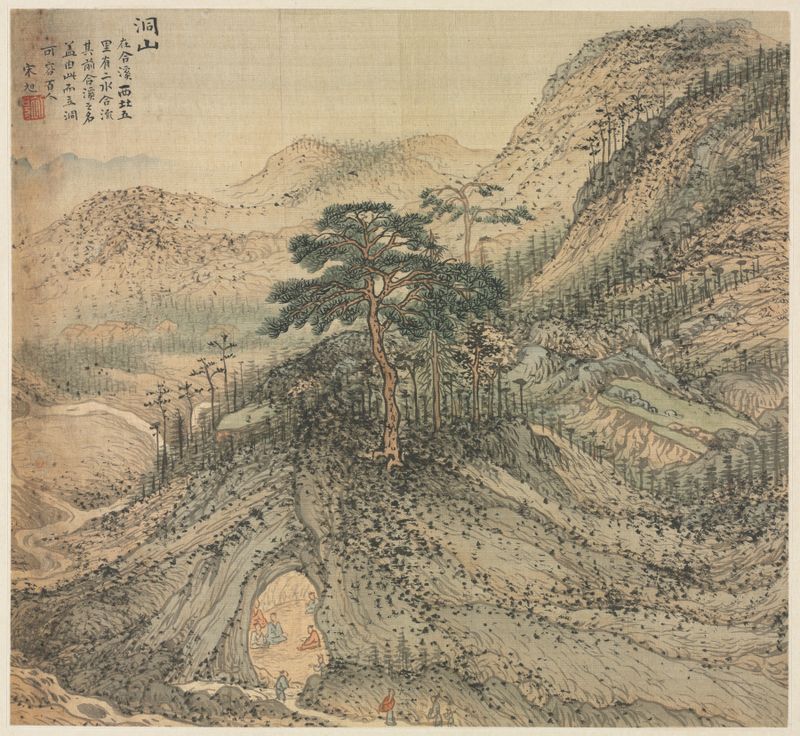
Could beauty survive in a century of chaos? In an era marked by tumult and uncertainty, Huanglong Cave emerges as a testament to the resilience of nature’s splendor, nestled within the folds of history. Look to the intricate stalactites that hang like delicate chandeliers from the cave's ceiling, each drip of water a whisper of time. Focus on the subtle interplay of light and shadow, where beams of soft illumination reveal the cave's textured surfaces, contrasting the darkness that envelops the unseen depths. The deep blues and earthy tones evoke a sense of tranquility, inviting the viewer to linger in this serene enclave, a sanctuary carved by the relentless hand of nature. Beneath the surface, the artwork encapsulates the delicate balance between chaos and serenity.
The jagged formations suggest a tumultuous past, while the calm waters reflect serene beauty, hinting at the coexistence of turmoil and tranquility. Each detail, from the smooth contours to the complex patterns, vibrates with a silent narrative of endurance, urging the observer to reflect on how beauty can thrive in the most unexpected places. In 1588, during a period of significant political and social upheaval in China, Song Xu meticulously painted Huanglong Cave. This era was characterized by the decline of the Ming Dynasty, and artists were increasingly influenced by both traditional themes and emerging individualistic expressions.
Xu’s work encapsulates this transition, blending the natural world with a profound sense of introspection, offering a glimpse into the harmonious coexistence of beauty amidst chaos.