
Huifkar in de Campagna — History & Facts
What if silence could speak through light? In Huifkar in de Campagna, the tranquil landscape captures a moment of serene movement, where time seems to hold its breath in elegance. Focus on the gentle curve of the road that leads your eyes through the composition. Look to the left, where a solitary horse-drawn carriage glides effortlessly, its muted tones contrasting with the lively greens and browns of the countryside. Notice how the light dances across the leaves, its warm hues illuminating the scene, creating a sense of calm and harmony.
The careful balance of light and shadow invites the viewer to linger, evoking a sense of peaceful wanderlust. Delve a little deeper, and you can sense the subtle tension between nature and the passage of human life. The carriage symbolizes a transient moment, a fleeting journey through vast, unchanging landscapes. Look closely at the figure seated inside; the posture suggests contemplation, perhaps highlighting the contrast between the stillness of the environment and the movement of their thoughts.
The backdrop of rolling hills and soft skies whispers of timelessness, a reminder of the ever-flowing river of life. In 1765, Hubert Robert painted this piece amidst a flourishing of neoclassicism, when artists sought to capture the beauty of nature and the nostalgia of past civilizations. Living in Paris, he was deeply influenced by his studies in Rome, where he embraced the picturesque quality of the Italian countryside. This artwork encapsulates not only a moment in time but also a burgeoning appreciation for the landscape genre in the age of Enlightenment.
More Artworks by Hubert Robert
Browse all →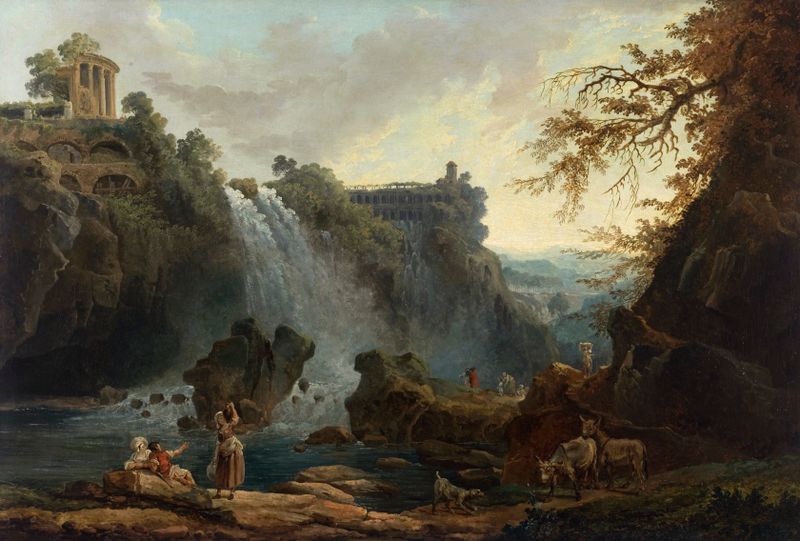
Les Cascatelles de Tivoli
Hubert Robert
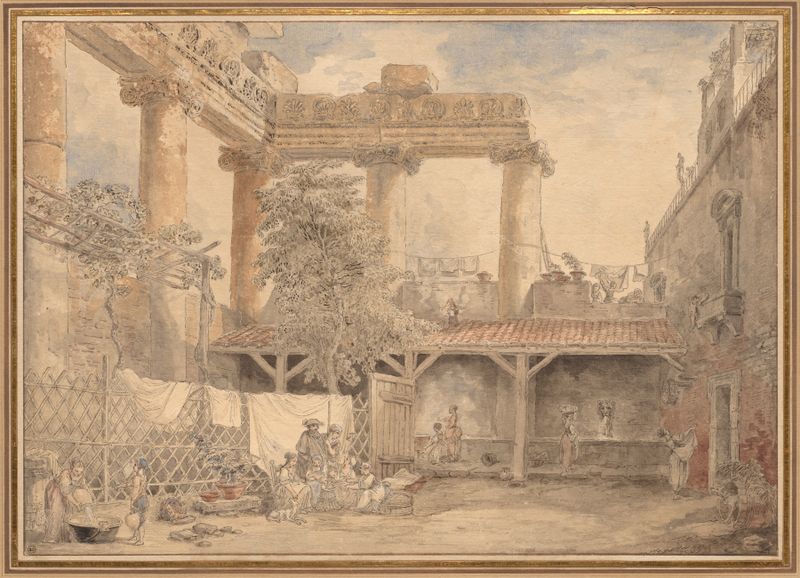
Roman Ruins, Villa Pamfili
Hubert Robert

The Rustic Bridge, Château de Méréville, France
Hubert Robert

The Portico of a Country Mansion
Hubert Robert

Architectural Capriccio
Hubert Robert

The Obelisk
Hubert Robert
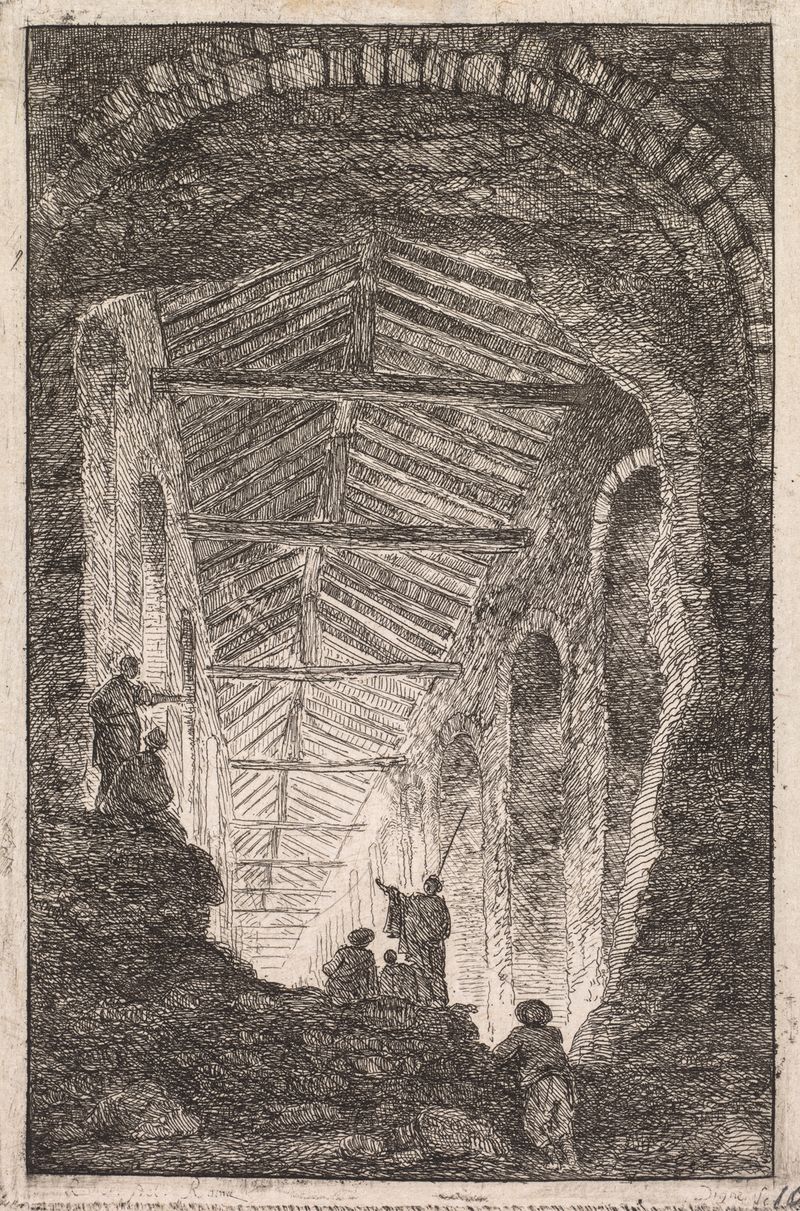
The Antique Gallery
Hubert Robert

L’incendie de l’Opéra, vu des jardins du Palais-Royal, le 8 juin 1781
Hubert Robert
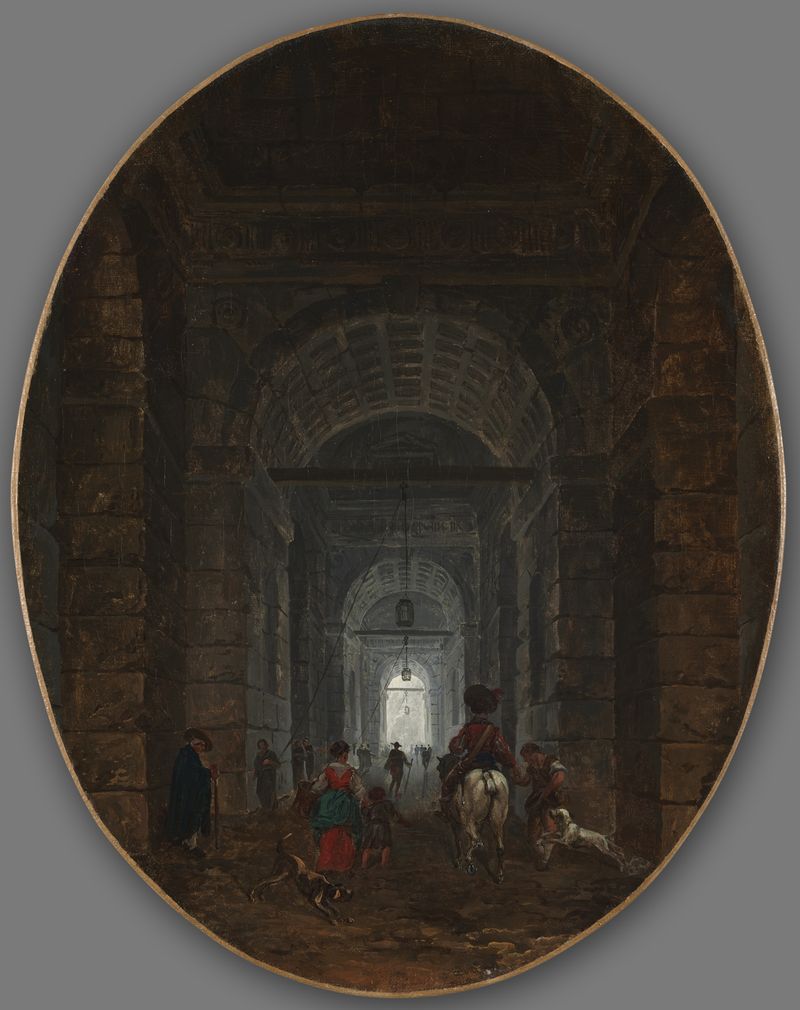
The Grotto of Posillipo
Hubert Robert

Architectural Capriccio with ruins of the Temple of Saturn and the Colosseum in the background
Hubert Robert





