
Ice Landscape with Duck Hunters — History & Facts
What first draws the eye in Ice Landscape with Duck Hunters is not the sweep of the frozen expanse, but the quiet industry at its edge: a group of men, bundled against the cold, intent on their work beside a tangle of baskets, nets, and tools. The painter, Arent Arentsz. Cabel, gives us a scene where daily labor and winter leisure meet—hunters and skaters sharing the same brittle world.
The low horizon hands most of the canvas to the sky, amplifying the sense of open air and the sharpness of the season. In the foreground, the hunters’ equipment is rendered with care, each object signaling the practical realities of life in a Dutch winter, while the ducks themselves, clustered by the reeds, hint at the promise of the hunt. Painted in 1630, this work belongs to a period when Dutch artists delighted in capturing the frozen waterways that defined their winters. These scenes were more than records of weather; they celebrated communal life and the ingenuity required to thrive in a landscape shaped by water and ice.
Such paintings were prized by a growing middle class, eager to see their world reflected with both accuracy and affection. Now part of the Deutsches Historisches Museum collection, Ice Landscape with Duck Hunters stands as a testament to a society that found beauty and meaning in the everyday, inviting us to linger over its details and imagine the cold air, the scrape of skates, and the quiet patience of the hunt.
More Artworks by Arent Arentsz. Cabel

Ice fun on a frozen river
Arent Arentsz. Cabel
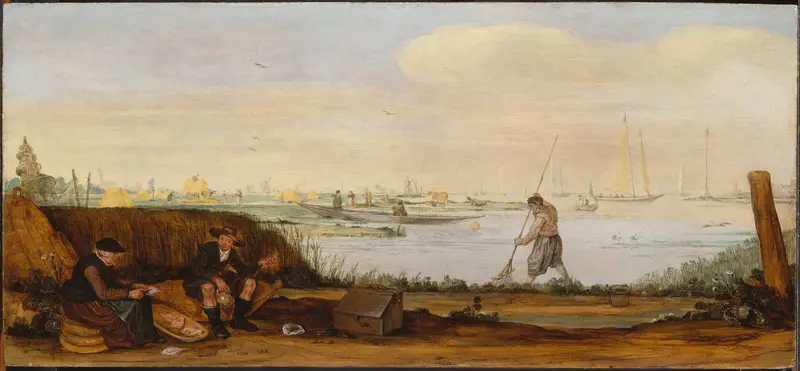
River Landscape with Boats and Fishermen
Arent Arentsz. Cabel
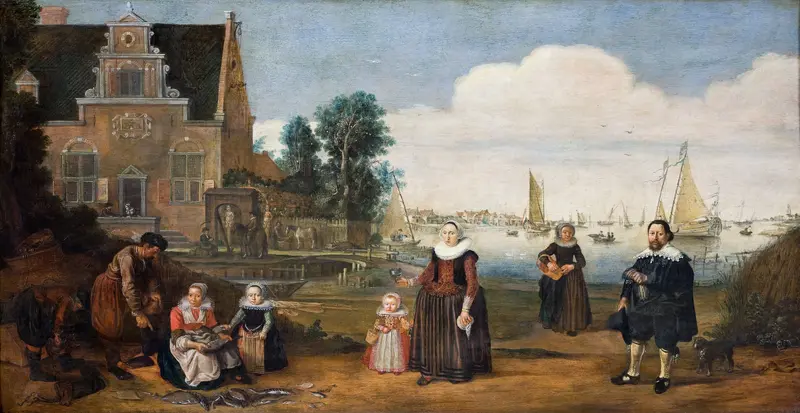
Family
Arent Arentsz. Cabel
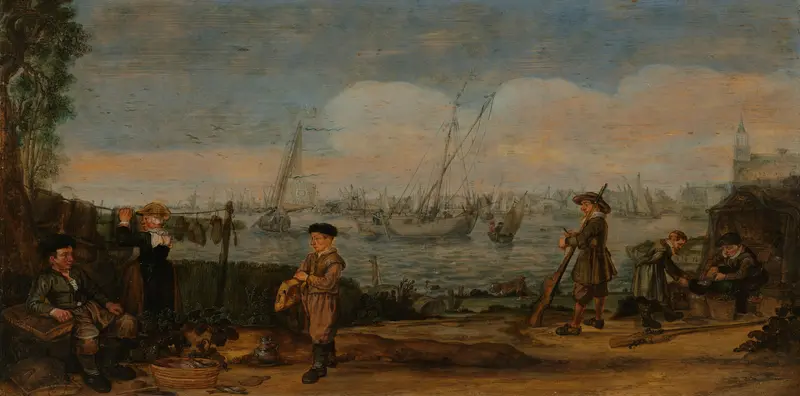
Fishermen and hunters
Arent Arentsz. Cabel
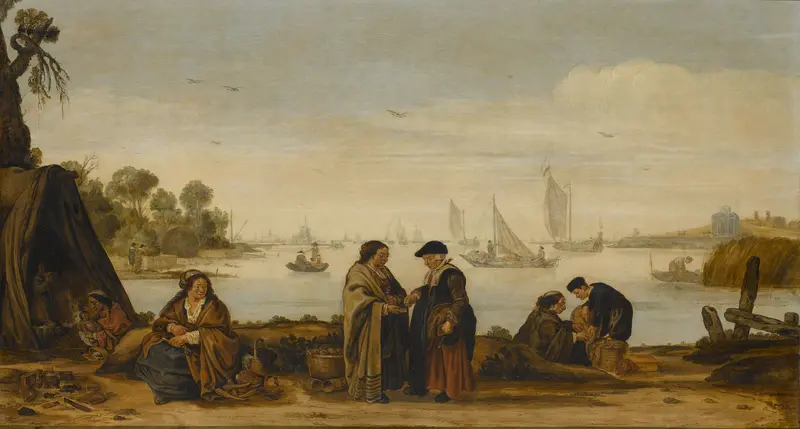
River landcape with gypsies
Arent Arentsz. Cabel
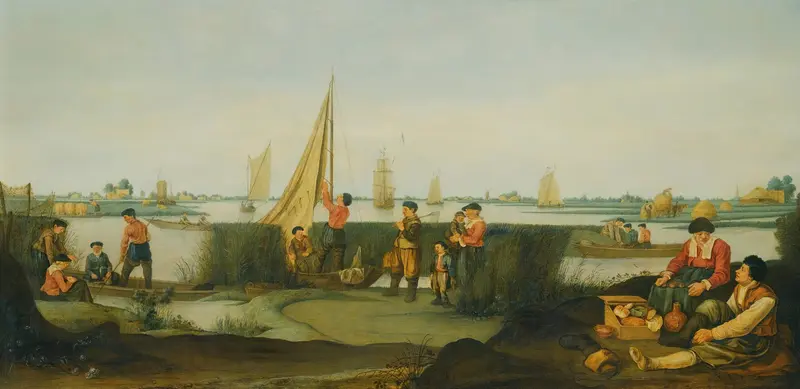
Fishermen On The Banks Of A River Estuary
Arent Arentsz. Cabel
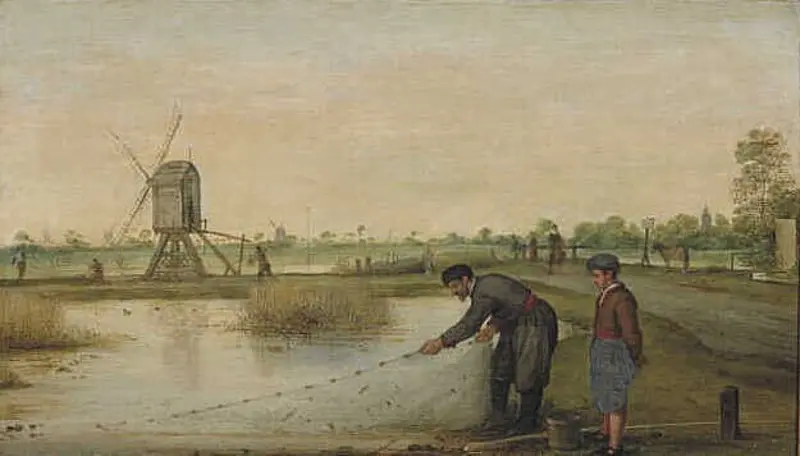
The Fisherman
Arent Arentsz. Cabel
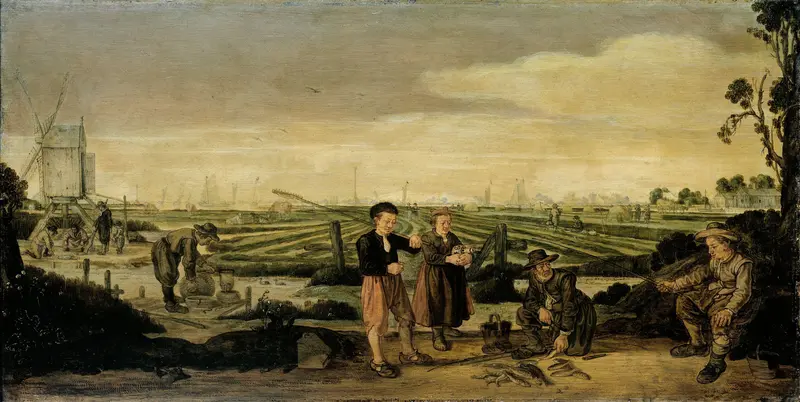
Fishermen and farmers
Arent Arentsz. Cabel
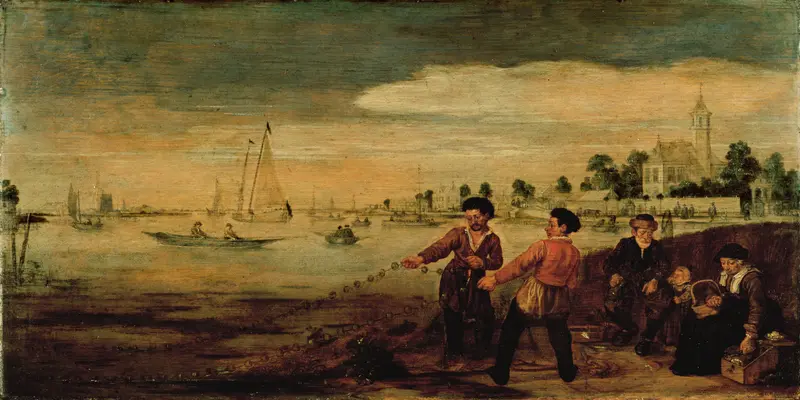
Fisherman on the bank of the Amstel near the Pauwentuin, Amsterdam
Arent Arentsz. Cabel
The summer
Arent Arentsz. Cabel
More Landscape Art

The Starry Night
Vincent van Gogh

View of Delft
Johannes Vermeer

Water Lilies
Claude Monet

The Grand Canal, Venice, looking north-west from the Ca' Corner to the Ca' Contarini degli Scrigni, with the campanile of Santa Maria della Carità
Canaletto

Windsor Castle
Canaletto

The Grand Canal looking North-East from the Palazzo Dolfin-Manin to the Rialto Bridge
Canaletto