
The Fisherman — History & Facts
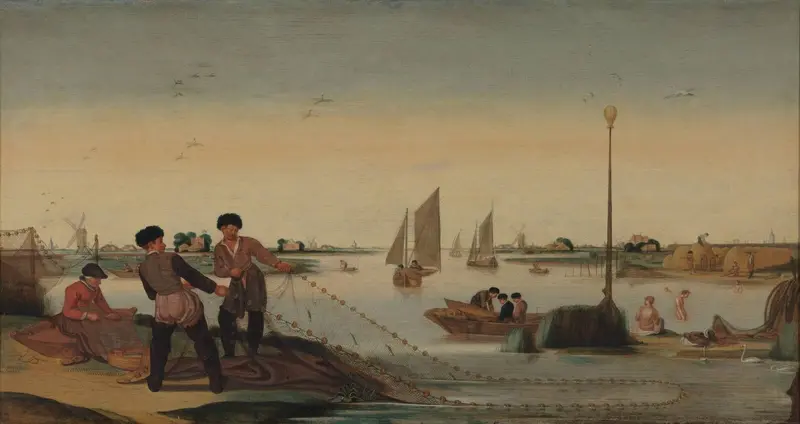
What draws the eye first in The Fisherman by Arent Arentsz. Cabel is the quiet choreography between man and landscape—a fisherman stoops intently over his net, while a boy stands nearby, hands tucked behind his back, as if learning by watching. The sweep of the net is echoed by the gentle arc of the riverbank, guiding the viewer’s gaze into the calm, glassy water where the day’s catch glimmers faintly.
A windmill anchors the horizon, its sails motionless, suggesting a pause in both industry and time. Every detail, from the muted palette to the stillness of the figures in the distance, works to create a world where daily labor and the rhythms of nature are inseparable. The low horizon gives the sky a vast, almost weightless presence, inviting the viewer to linger in this moment of rural routine. Painted between 1600 and 1631, this work belongs to a period when Dutch artists were redefining landscape painting—not as mere backdrop, but as a subject worthy of close attention and pride.
Scenes like this, with their focus on ordinary people and local scenery, were often commissioned by prosperous townsfolk eager to celebrate the land and livelihoods that shaped their identity. While little is recorded about the specific journey of this canvas, its presence today in the Boijmans collection is a testament to the enduring appeal of such images, which offered both a window onto the familiar and a quiet meditation on the passage of time. Look again at the fisherman’s careful gesture, and the boy’s patient stance; here, the everyday becomes quietly monumental.
More Artworks by Arent Arentsz. Cabel

Ice fun on a frozen river
Arent Arentsz. Cabel
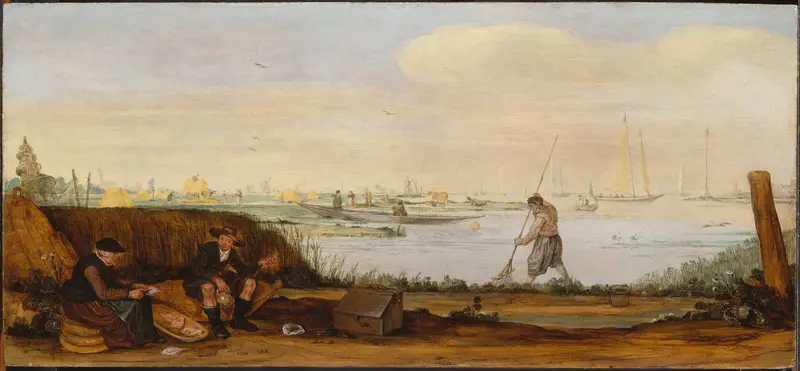
River Landscape with Boats and Fishermen
Arent Arentsz. Cabel
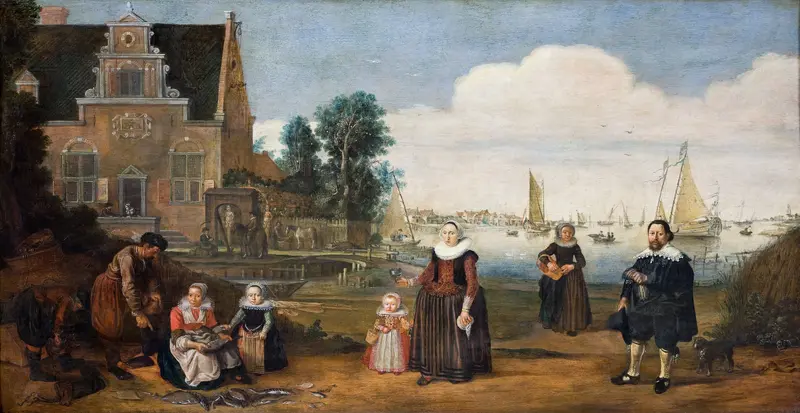
Family
Arent Arentsz. Cabel
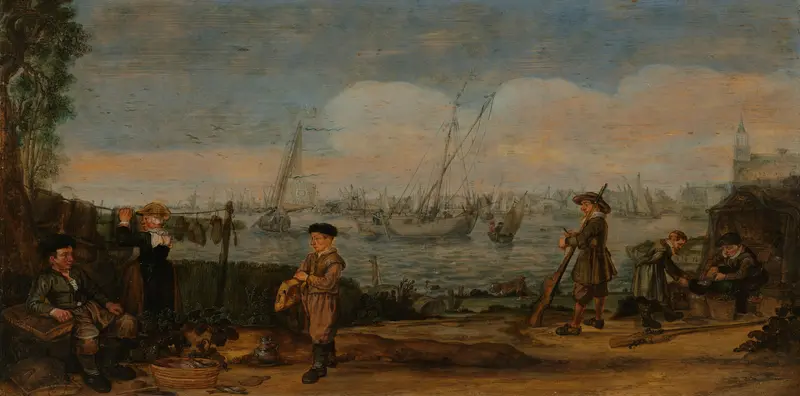
Fishermen and hunters
Arent Arentsz. Cabel
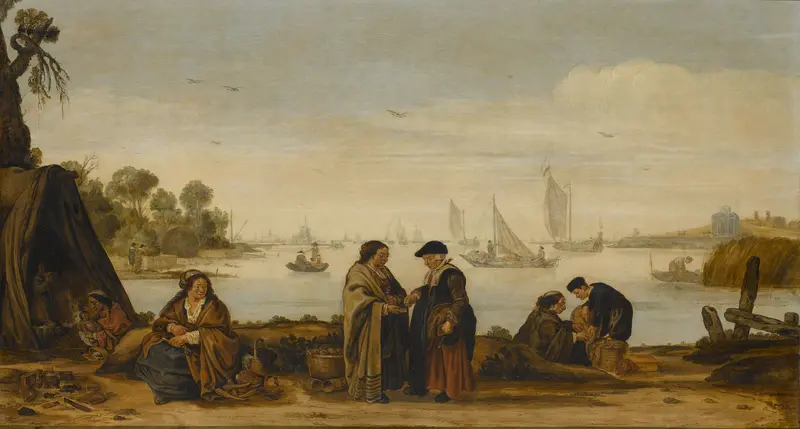
River landcape with gypsies
Arent Arentsz. Cabel
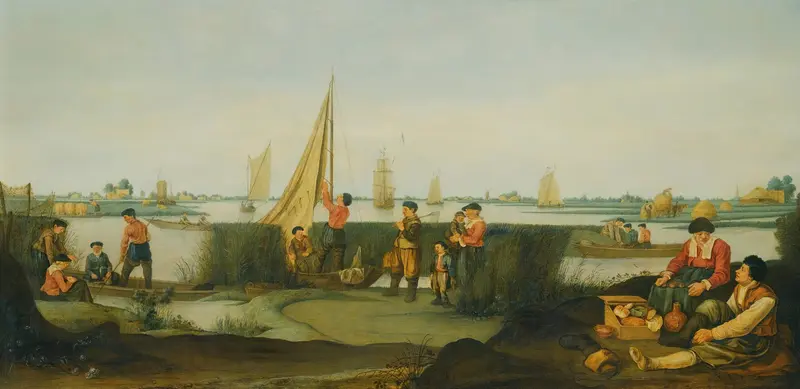
Fishermen On The Banks Of A River Estuary
Arent Arentsz. Cabel
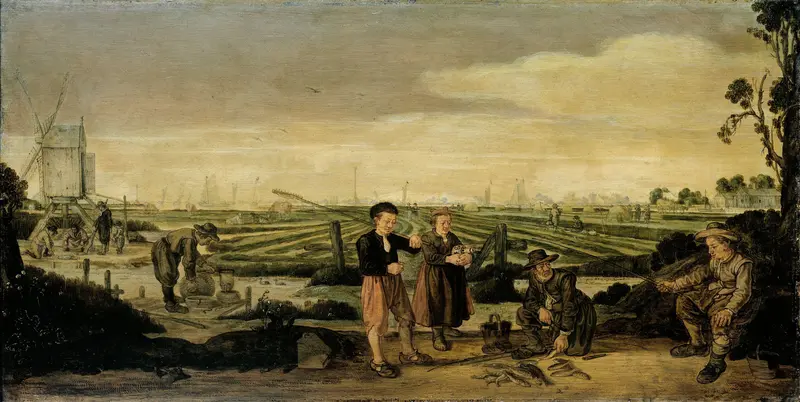
Fishermen and farmers
Arent Arentsz. Cabel
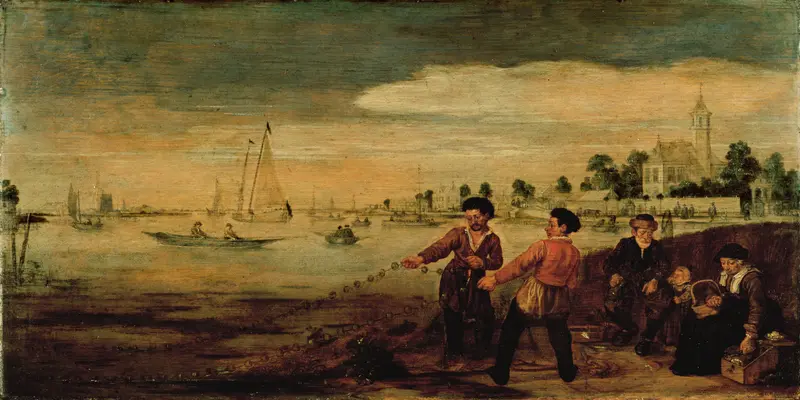
Fisherman on the bank of the Amstel near the Pauwentuin, Amsterdam
Arent Arentsz. Cabel
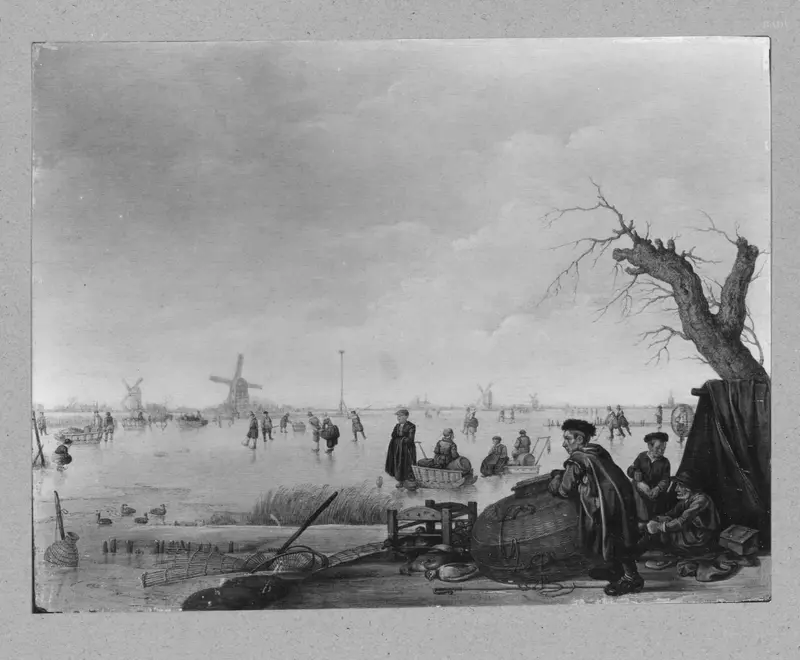
Ice Landscape with Duck Hunters
Arent Arentsz. Cabel
The summer
Arent Arentsz. Cabel
More Landscape Art

The Starry Night
Vincent van Gogh

View of Delft
Johannes Vermeer

Water Lilies
Claude Monet

The Grand Canal, Venice, looking north-west from the Ca' Corner to the Ca' Contarini degli Scrigni, with the campanile of Santa Maria della Carità
Canaletto

Windsor Castle
Canaletto

The Grand Canal looking North-East from the Palazzo Dolfin-Manin to the Rialto Bridge
Canaletto