
Fishermen and hunters — History & Facts
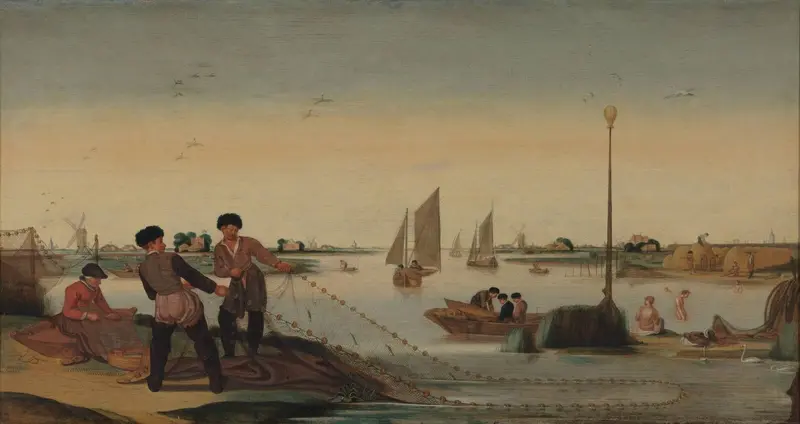
What first catches the eye in Fishermen and hunters by Arent Arentsz. Cabel is the delicate balance between land and water, work and leisure, all unfolding under a sky that seems to stretch forever. The painter draws us into a world where daily life is both ordinary and quietly theatrical.
Your gaze is led from the shaded figures in the foreground—some resting, some busy with their catch or their rifles—out toward a bustling waterway, alive with ships whose sails punctuate the horizon. The gestures speak volumes: a woman hangs fish with practiced ease, while a hunter leans on his musket, pausing in thought or perhaps in conversation. The palette is earthy and subdued, lending the scene a calm, measured rhythm, while the low horizon gives the sky and ships the stage, hinting at the wider world beyond this patch of shore. This painting belongs to the early seventeenth-century Dutch tradition, a time when scenes of everyday labor and landscape were finding new favor among collectors and citizens alike.
Works like this, painted between 1625 and 1631, were often destined for the homes of prosperous burghers who found pride and comfort in images of domestic industry and the bounty of their land and waters. The presence of both fishermen and hunters hints at a society deeply attuned to the cycles of nature and commerce, with the busy harbor beyond underscoring the era’s maritime ambitions. Though history has kept few traces of this particular painting’s journey, its home today in the Rijksmuseum collection invites us to linger, to search the faces and gestures for echoes of a world both distant and familiar.
More Artworks by Arent Arentsz. Cabel

Ice fun on a frozen river
Arent Arentsz. Cabel
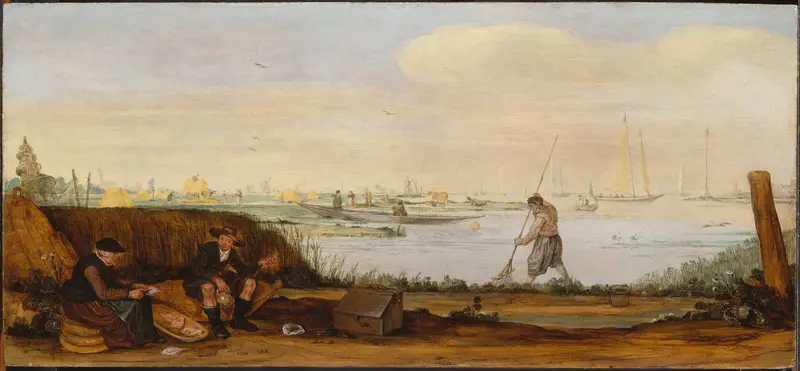
River Landscape with Boats and Fishermen
Arent Arentsz. Cabel
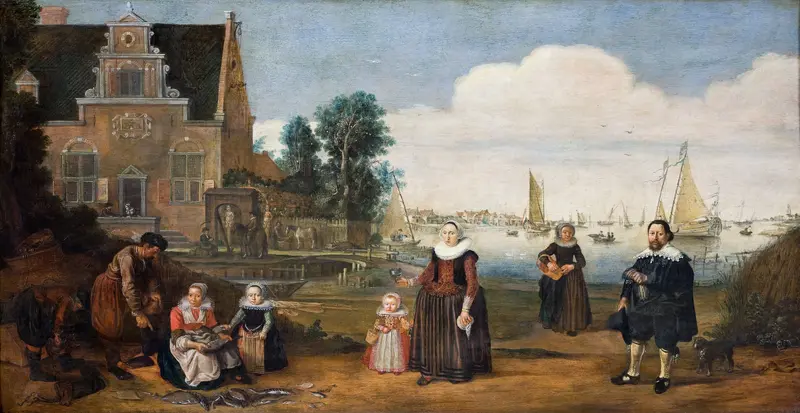
Family
Arent Arentsz. Cabel
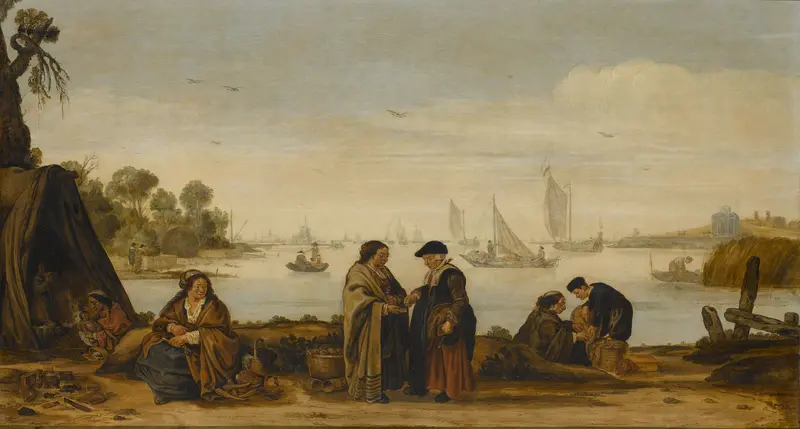
River landcape with gypsies
Arent Arentsz. Cabel
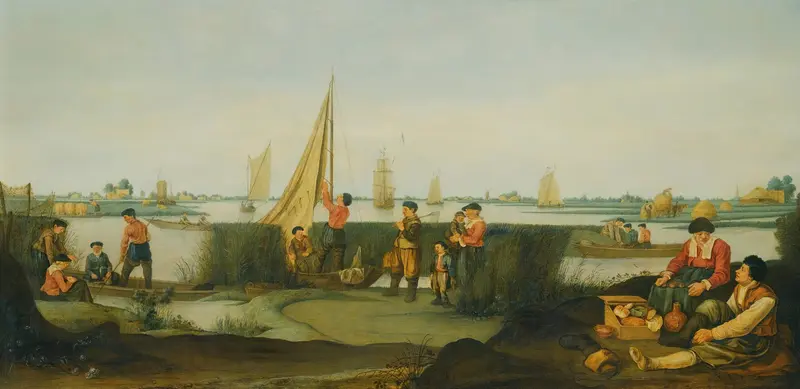
Fishermen On The Banks Of A River Estuary
Arent Arentsz. Cabel
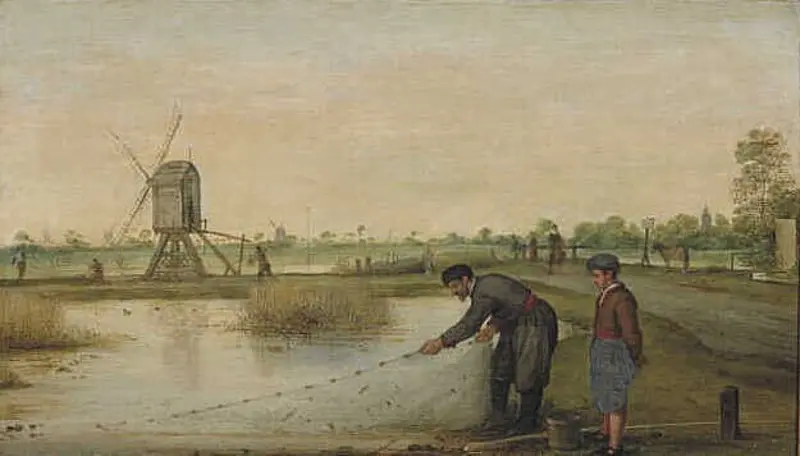
The Fisherman
Arent Arentsz. Cabel
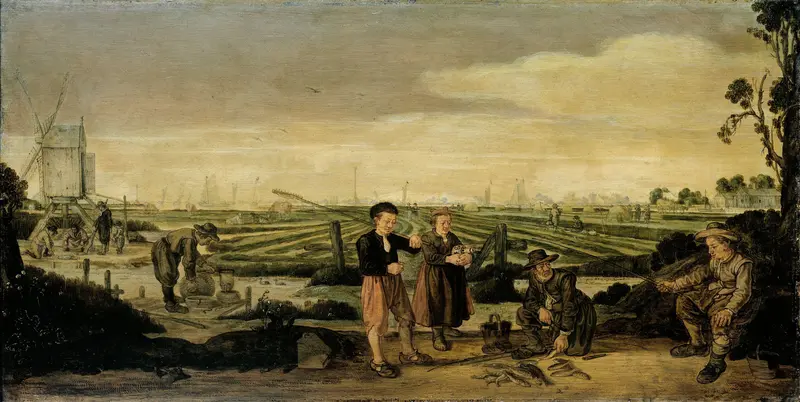
Fishermen and farmers
Arent Arentsz. Cabel
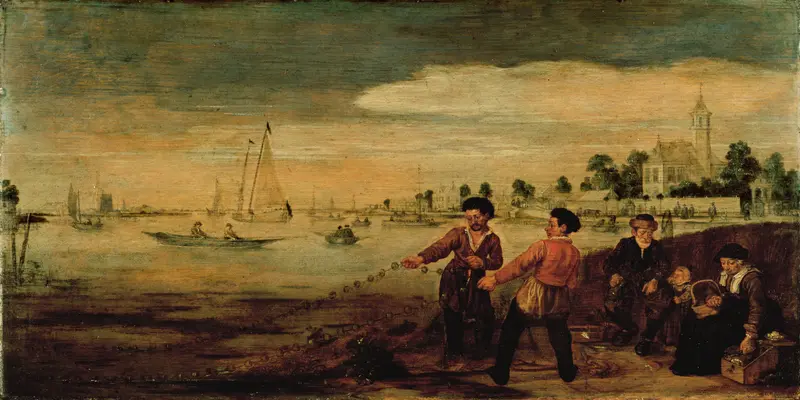
Fisherman on the bank of the Amstel near the Pauwentuin, Amsterdam
Arent Arentsz. Cabel
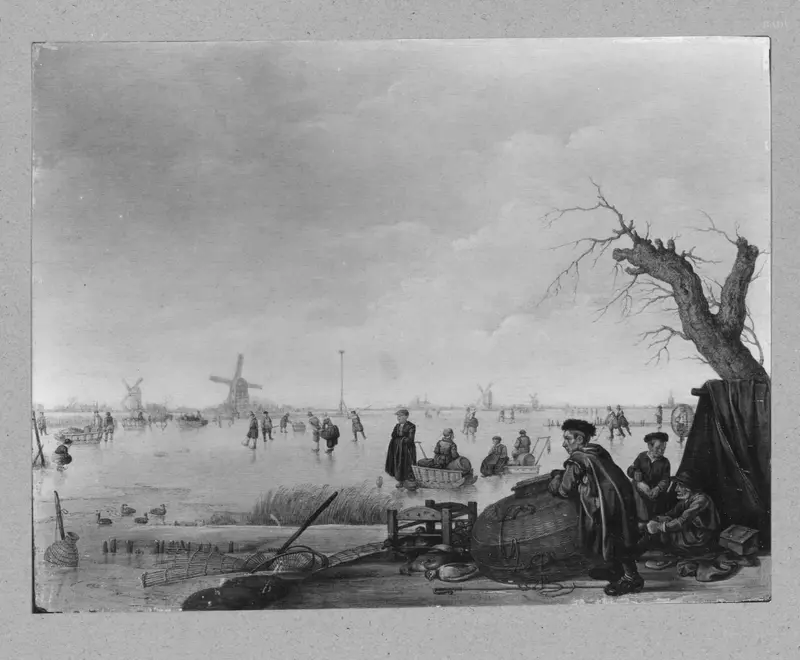
Ice Landscape with Duck Hunters
Arent Arentsz. Cabel
The summer
Arent Arentsz. Cabel
More Genre Scene Art

Banquet of the Officers of the St George Civic Guard
Frans Hals

Rembrandt and Saskia in the Scene of the Prodigal Son
Rembrandt van Rijn

Bal du moulin de la Galette
Pierre-Auguste Renoir

Quadrille at the Moulin Rouge
Henri de Toulouse-Lautrec

A Burial at Ornans
Gustave Courbet

When Will You Marry?
Paul Gauguin