
Fishermen and farmers — History & Facts
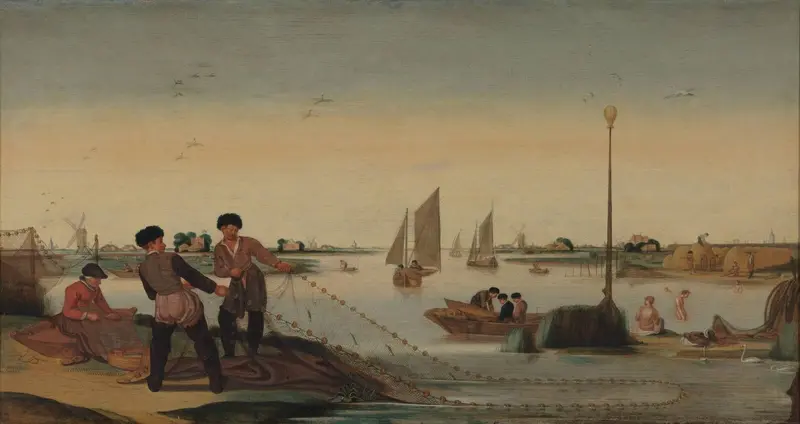
What draws the eye first in Fishermen and farmers by Arent Arentsz. Cabel is the quiet choreography of daily labor, stretched beneath a sky that seems to promise both work and rest. The scene is alive with figures absorbed in their tasks—children and adults alike—each gesture carefully observed and rendered.
Notice how the soft, golden light picks out the faces and hands of those in the foreground, guiding you from the fisherman displaying his catch to the farmer bent over his tools. The windmill, poised delicately on stilts, anchors the left edge of the painting, its sails echoing the distant masts on the horizon and drawing the viewer’s gaze into the depth of the Dutch landscape. Every detail, from the baskets of fish to the careful division of fields, signals a world where land and water, labor and leisure, are intimately entwined. Painted between circa 1625 and circa 1631, this work belongs to a period when Dutch artists were inventing new ways to celebrate the ordinary.
Scenes like this were not grand commissions for palaces, but rather intimate records of a rapidly changing society—one where the prosperity of the Dutch Republic was built on the backs of those who tilled the earth and fished its waters. Collectors of the era prized such paintings for their realism and their subtle moral lessons: diligence, cooperation, and the honest pleasures of rural life. Today, Fishermen and farmers resides in the Rijksmuseum, a quiet testament to the everyday heroism of the seventeenth-century countryside.
Let your eyes wander across the canvas, and you may find yourself stepping into the rhythm of another time.
More Artworks by Arent Arentsz. Cabel

Ice fun on a frozen river
Arent Arentsz. Cabel
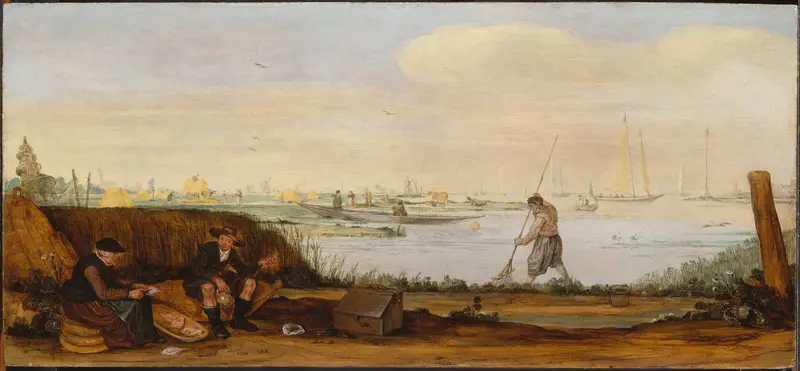
River Landscape with Boats and Fishermen
Arent Arentsz. Cabel
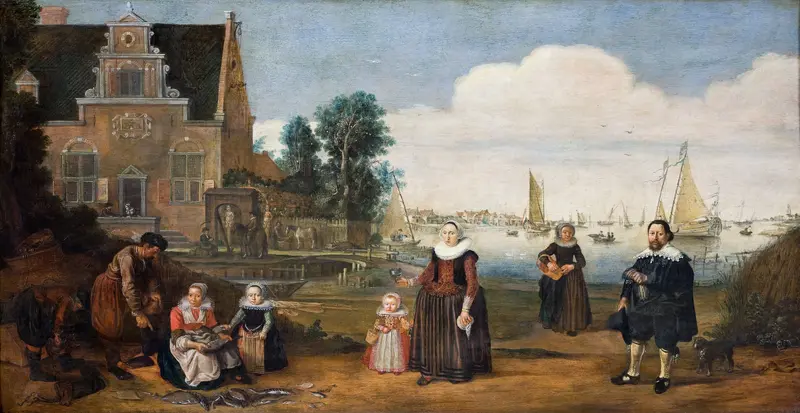
Family
Arent Arentsz. Cabel
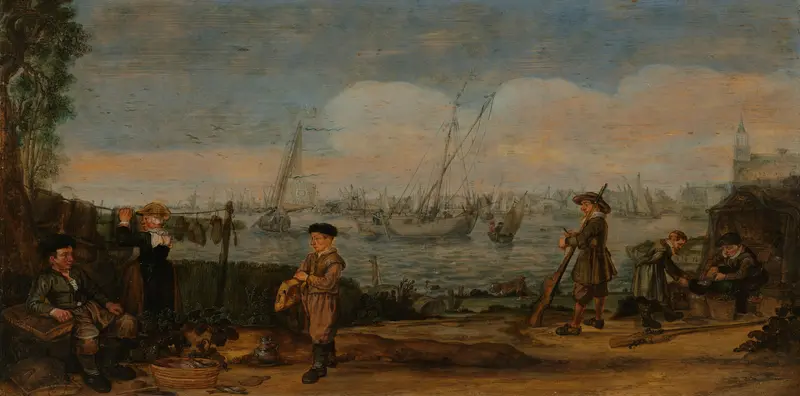
Fishermen and hunters
Arent Arentsz. Cabel
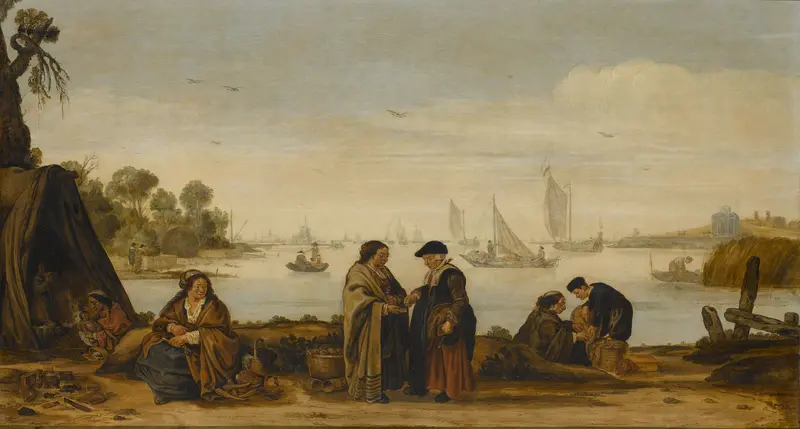
River landcape with gypsies
Arent Arentsz. Cabel
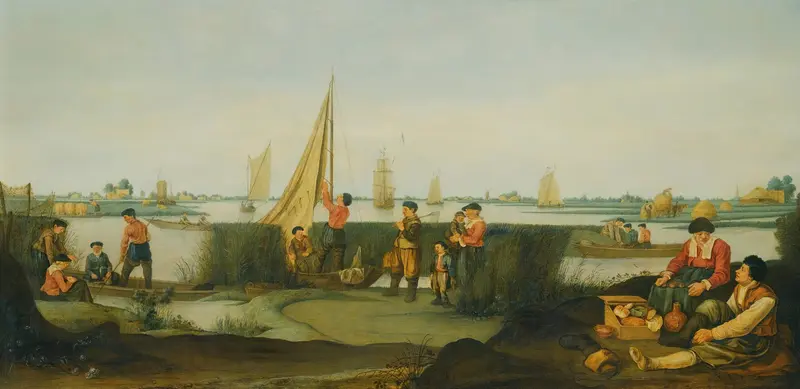
Fishermen On The Banks Of A River Estuary
Arent Arentsz. Cabel
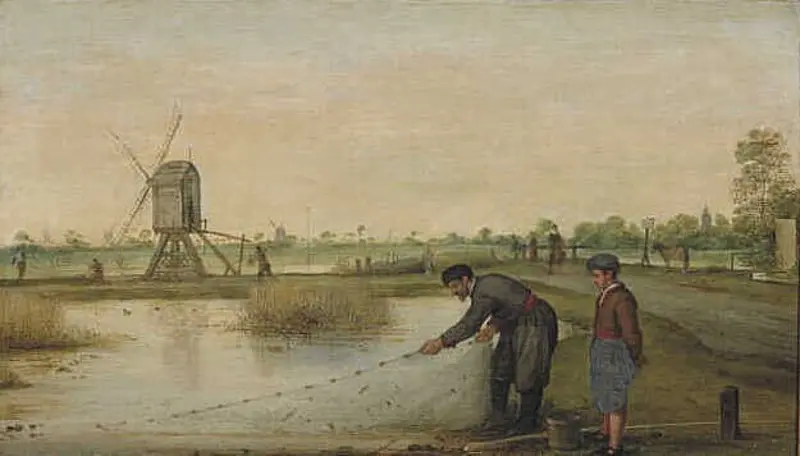
The Fisherman
Arent Arentsz. Cabel
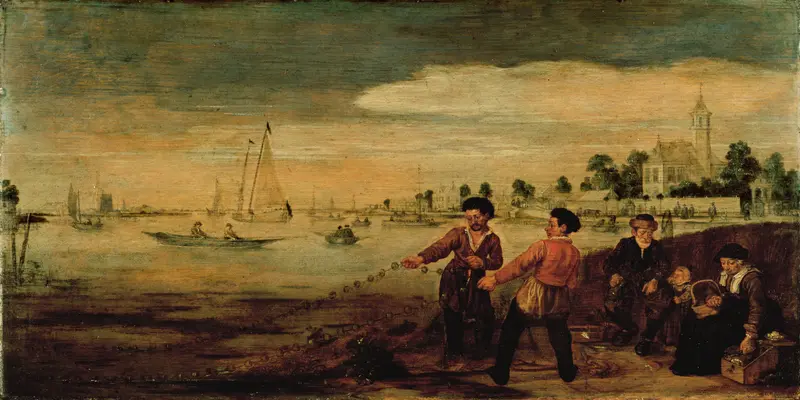
Fisherman on the bank of the Amstel near the Pauwentuin, Amsterdam
Arent Arentsz. Cabel
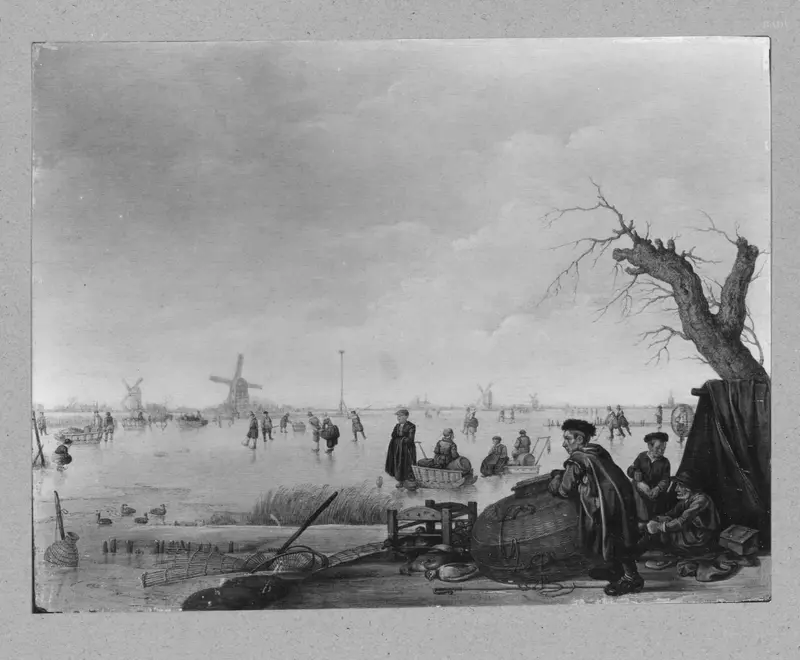
Ice Landscape with Duck Hunters
Arent Arentsz. Cabel
The summer
Arent Arentsz. Cabel
More Genre Scene Art

Banquet of the Officers of the St George Civic Guard
Frans Hals

Rembrandt and Saskia in the Scene of the Prodigal Son
Rembrandt van Rijn

Bal du moulin de la Galette
Pierre-Auguste Renoir

Quadrille at the Moulin Rouge
Henri de Toulouse-Lautrec

A Burial at Ornans
Gustave Courbet

When Will You Marry?
Paul Gauguin