
Fisherman on the bank of the Amstel near the Pauwentuin, Amsterdam — History & Facts
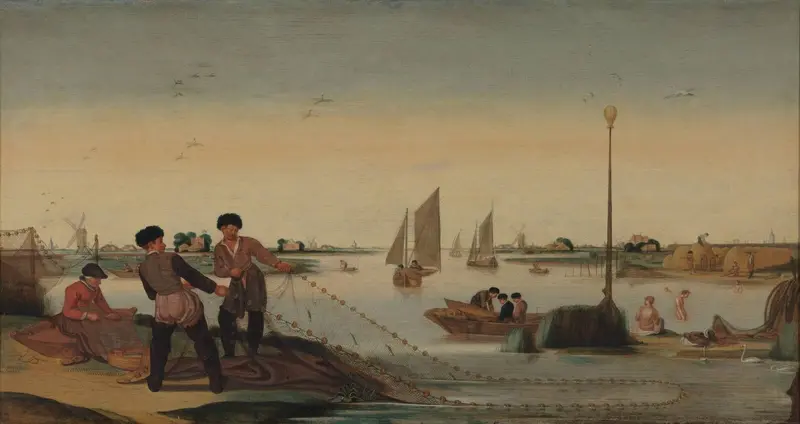
The first thing that draws the eye in Fisherman on the bank of the Amstel near the Pauwentuin, Amsterdam is the quiet choreography of daily life, set against a river that seems to breathe with the city itself. Two men, sleeves rolled, haul in a heavy net, their bodies angled in the effort of shared labor; the rhythm of their movement is echoed by the gentle curve of the net, which leads the viewer’s gaze toward the water’s edge. Nearby, a family sits on the bank—one woman tending to a child, another figure lost in thought—while behind them, the elegant silhouette of the Pauwentuin estate rises, its neat geometry softened by trees.
The palette is warm, the sky a muted wash of peach and blue, and the light falls evenly, giving every figure and boat a sense of belonging to the same gentle afternoon. Even the distant boats and the tiny figures along the shore are given careful attention, inviting the viewer to linger and wander through this riverside scene. Painted between 1625 and 1630, this work by Arent Arentsz. Cabel belongs to a period when Dutch artists turned their eyes to the landscapes and everyday labors that defined their world.
The Amstel was not just a setting but a lifeline for Amsterdam, and paintings like this one offered city dwellers a mirror of their own surroundings, sometimes commissioned for private homes or local guilds. History has kept few traces of the specific patrons or journeys of this painting, now in the Rijksmuseum collection, but its subject and style speak to a broader movement in early seventeenth-century Dutch art: the celebration of ordinary work, the pleasures of leisure, and the subtle interplay between city and countryside. Look again at the scene, and notice how every gesture and glance is a thread in the larger tapestry of Amsterdam’s river life.
More Artworks by Arent Arentsz. Cabel

Ice fun on a frozen river
Arent Arentsz. Cabel
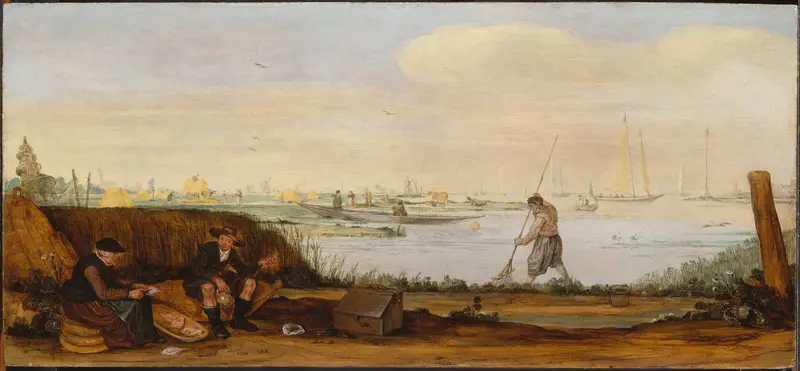
River Landscape with Boats and Fishermen
Arent Arentsz. Cabel
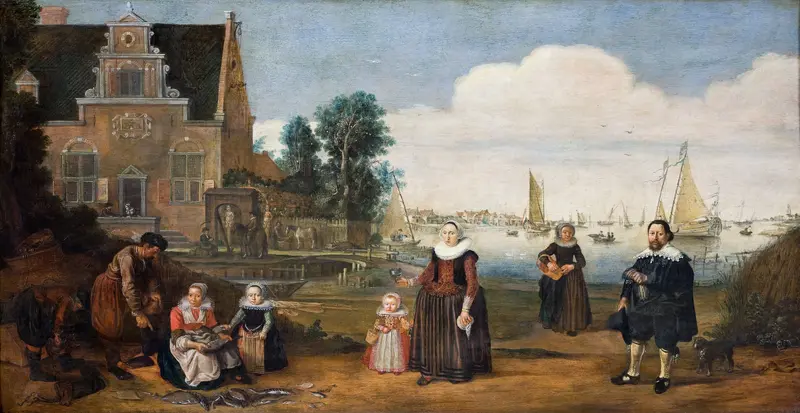
Family
Arent Arentsz. Cabel
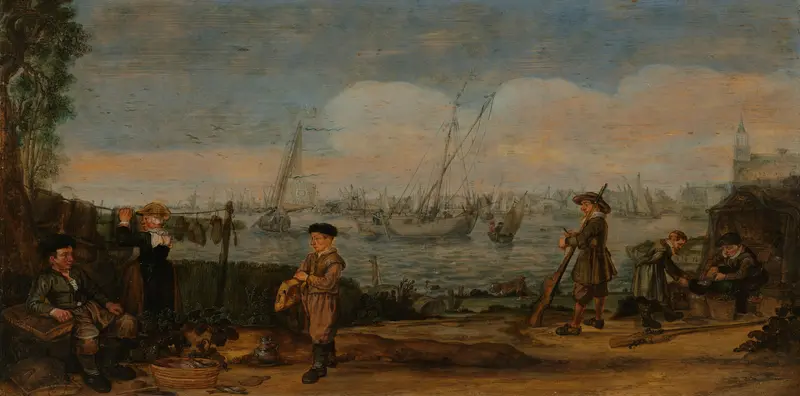
Fishermen and hunters
Arent Arentsz. Cabel
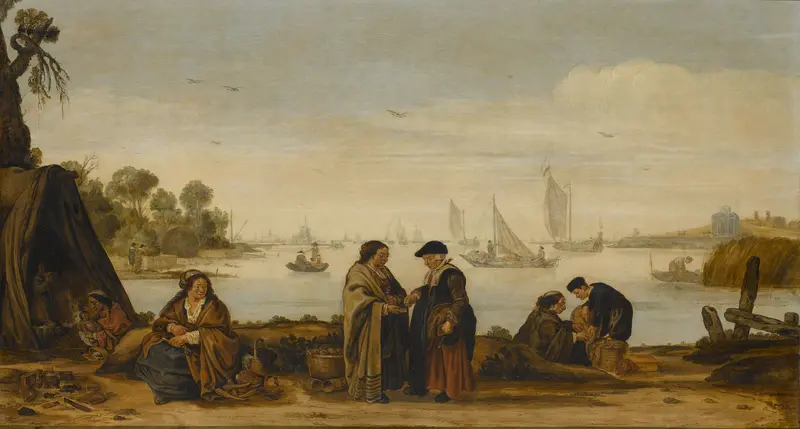
River landcape with gypsies
Arent Arentsz. Cabel
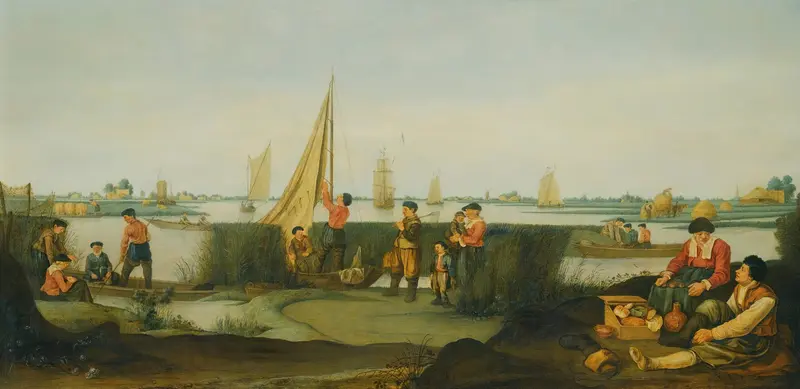
Fishermen On The Banks Of A River Estuary
Arent Arentsz. Cabel
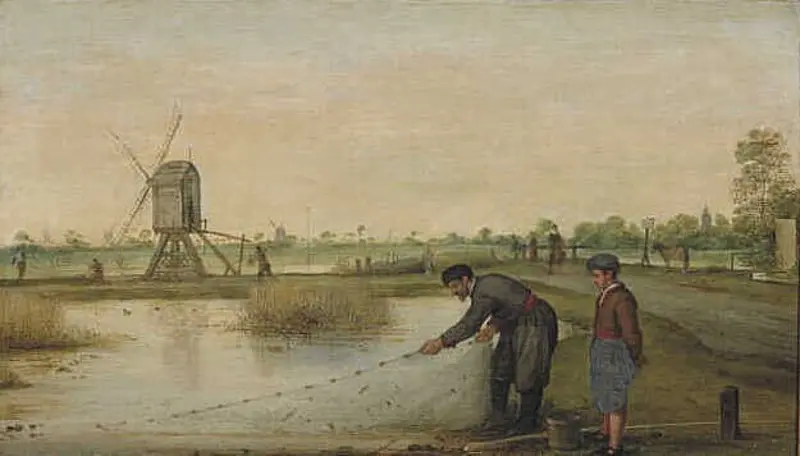
The Fisherman
Arent Arentsz. Cabel
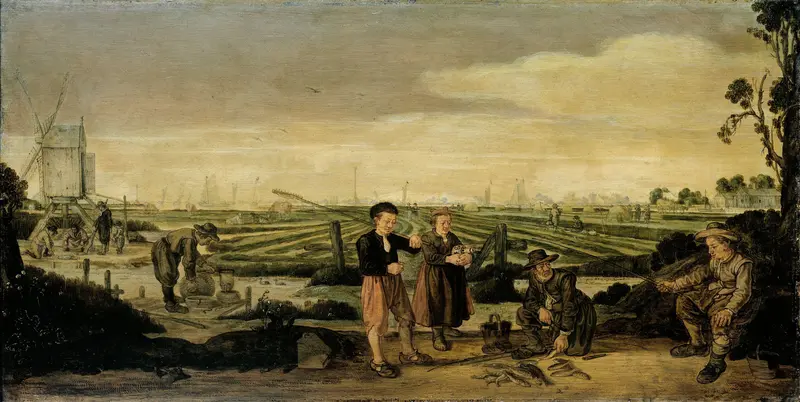
Fishermen and farmers
Arent Arentsz. Cabel
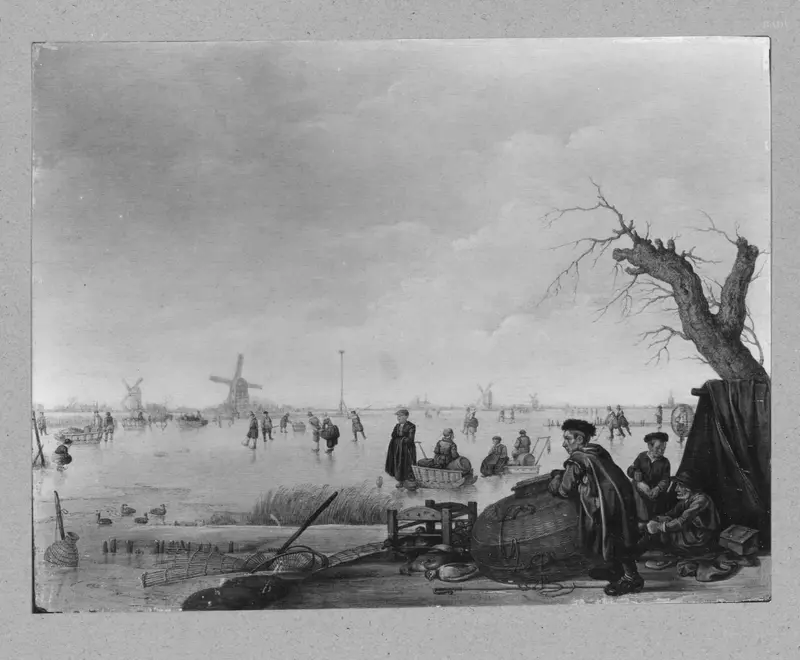
Ice Landscape with Duck Hunters
Arent Arentsz. Cabel
The summer
Arent Arentsz. Cabel
More Genre Scene Art

Banquet of the Officers of the St George Civic Guard
Frans Hals

Rembrandt and Saskia in the Scene of the Prodigal Son
Rembrandt van Rijn

Bal du moulin de la Galette
Pierre-Auguste Renoir

Quadrille at the Moulin Rouge
Henri de Toulouse-Lautrec

A Burial at Ornans
Gustave Courbet

When Will You Marry?
Paul Gauguin