
In Collingwood district — History & Facts
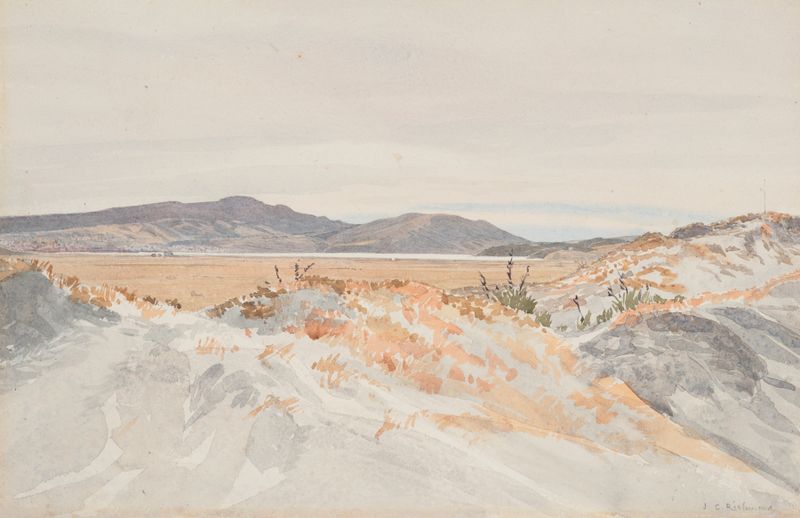
When did color learn to lie? In the quiet beauty of James Crowe Richmond’s work, hues veil deeper sorrows, whispering secrets of loss that linger long after the eye has wandered. Look to the left at the soft greens of the trees, their leaves dappled with sunlight, juxtaposed against the muted browns of the earth below. The gentle strokes create an atmosphere of tranquility, yet there is an undercurrent of stillness that hints at something unspoken. The composition draws one’s gaze toward the horizon, where the sky, bathed in pale blues and soft golds, merges effortlessly with the landscape, inviting contemplation of what lies beyond. Beneath this idyllic scene, a tension resides—between the vibrant life of nature and the quiet desolation of human absence.
The clarity of the colors stands in stark contrast to the emptiness of the foreground, evoking a longing for connection that has been interrupted. One can sense a narrative of loss that unfolds in the delicate balance between serenity and solitude, capturing a world both alive and painfully distant. Richmond painted this piece in 1869, during a transformative period in art influenced by the rise of Impressionism. Living in Australia at the time, he was immersed in the exploration of natural landscapes, seeking to express both beauty and emotional depth.
As he navigated personal challenges, these landscapes became a canvas for his reflections on the ephemeral nature of life, echoing the complexities of the human experience.
More Artworks by James Crowe Richmond
Browse all →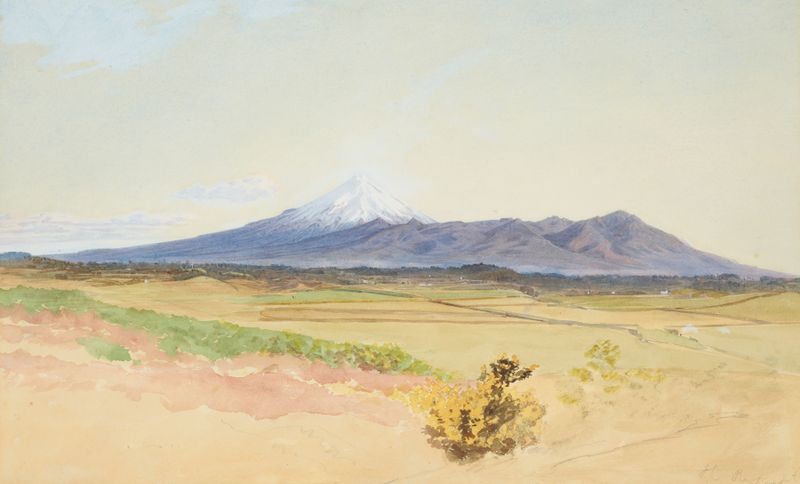
Mount Egmont and Pouakai, from New Plymouth
James Crowe Richmond
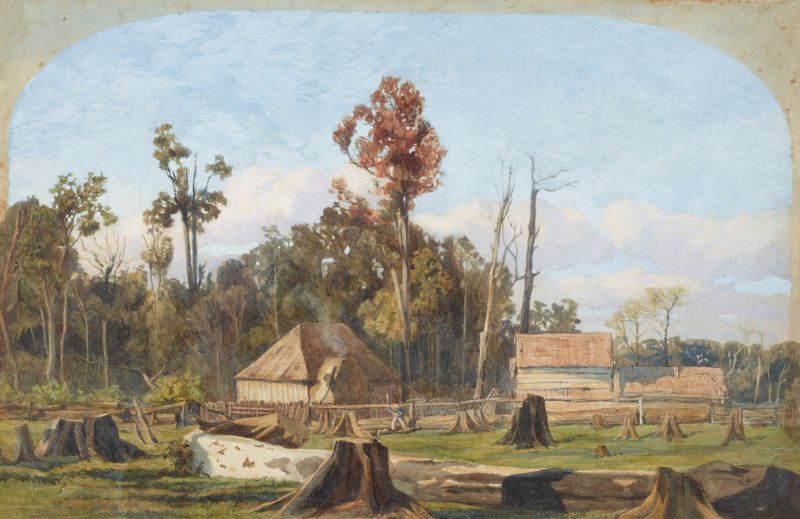
Settler’s home, Merton, near New Plymouth
James Crowe Richmond
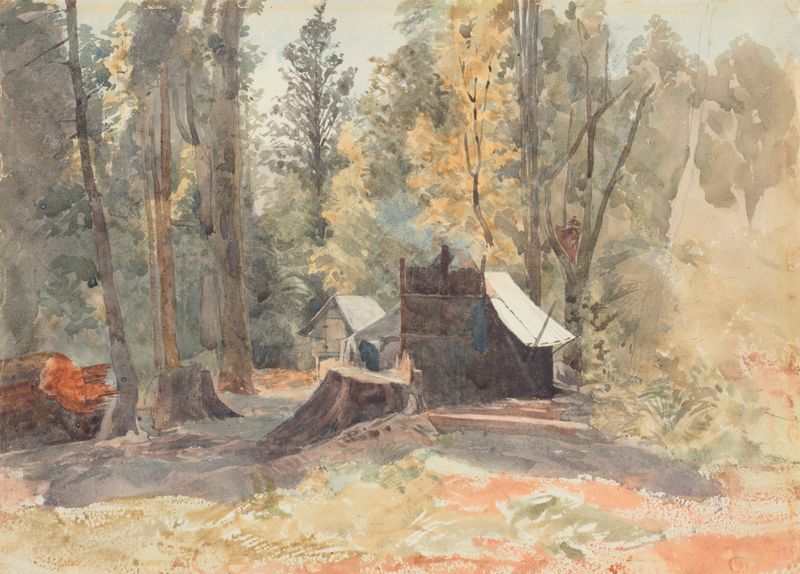
Hut of the ‘Italian party’, old diggings on Buller
James Crowe Richmond

Mosque at Tlemcen
James Crowe Richmond

Ngatapa, Te Kooti’s Pa
James Crowe Richmond

Dividing Range, Riwaka and Takaka
James Crowe Richmond
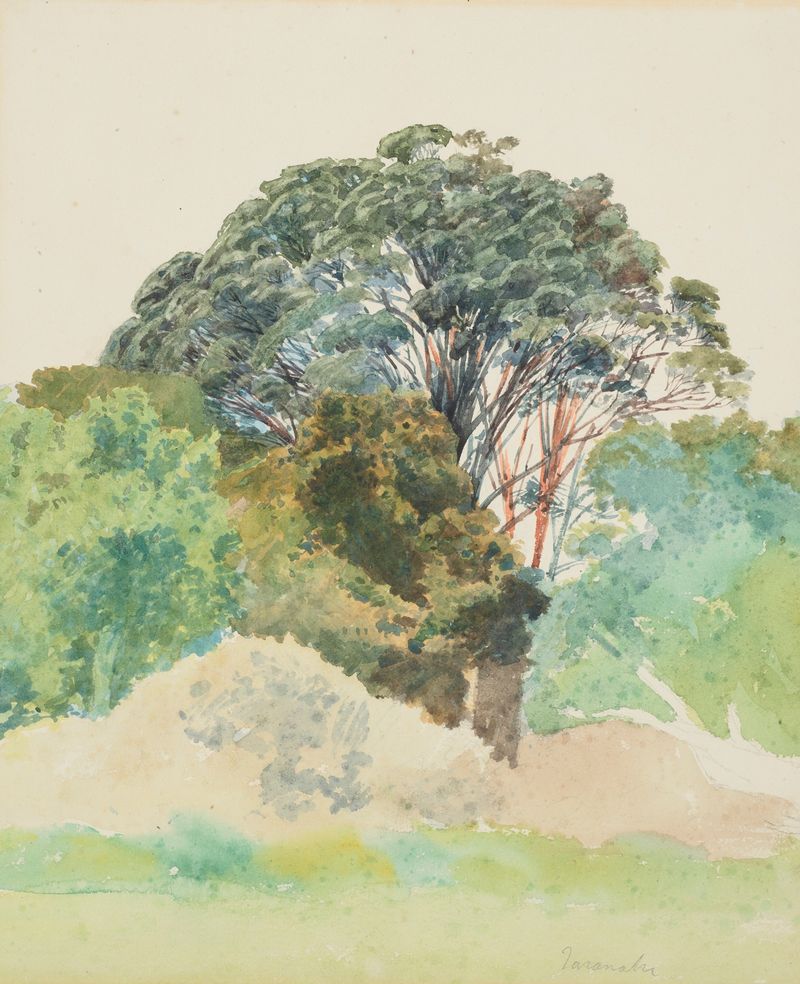
Rata, Taranaki
James Crowe Richmond

Grey River, on the beach
James Crowe Richmond
Dunedin from the Ocean Beach
James Crowe Richmond

On Collingwood Goldfields
James Crowe Richmond





