
In the Mosque — History & Facts
A hush of exhaustion and waiting fills the air, as if the very stones of the mosque floor have absorbed the burdens of those who rest upon them. The viewer’s eye is drawn first to the figure in the foreground, seated with hands pressed to face, wrapped in a pale cloth that catches the only shaft of warm light. Around this figure, the world recedes into shadow: men slumped in sleep or reverie, pigeons pecking at the patterned floor, belongings gathered in humble bundles.
The marble columns rise like witnesses, their surfaces marbled and worn, separating each person into a small, private world. The palette is sun-bleached and muted, the light falling not to glorify but to reveal the quiet reality of fatigue, prayer, or despair. Painted in 1891, In the Mosque by Theodoros Ralli belongs to a moment when European artists were fascinated by the cultures and interiors of the Eastern Mediterranean. Such works, often termed Orientalist, were shaped by both curiosity and the colonial gaze, and they found eager audiences in the salons and academies of the West.
Ralli, a Greek painter who traveled widely, was known for his careful observation and for scenes that linger on the everyday rather than the spectacular. The painting’s current obscurity is typical for many such works, which were collected by travelers or local patrons, then scattered across private hands or lesser-known collections. Yet its quiet humanity endures, inviting us to look again at the faces and gestures, and to imagine the stories that fill the silence between the columns.
More Artworks by Theodoros Ralli

The Sleeping Concubine
Theodoros Ralli
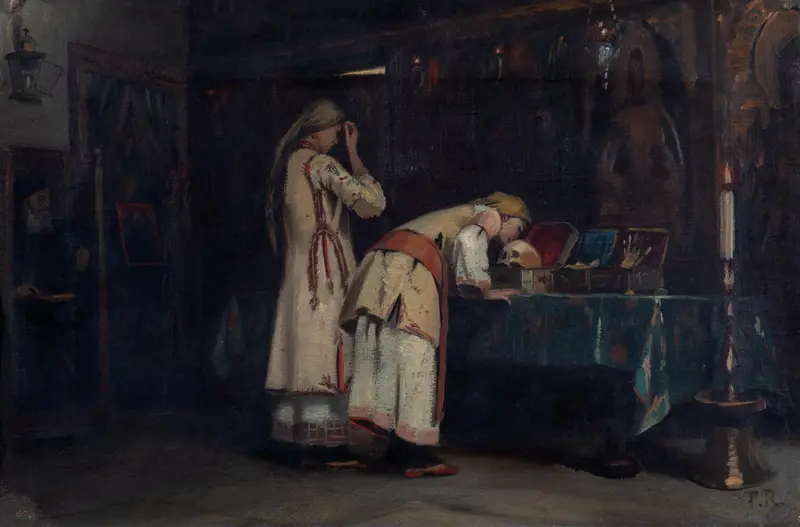
Holy Relics
Theodoros Ralli
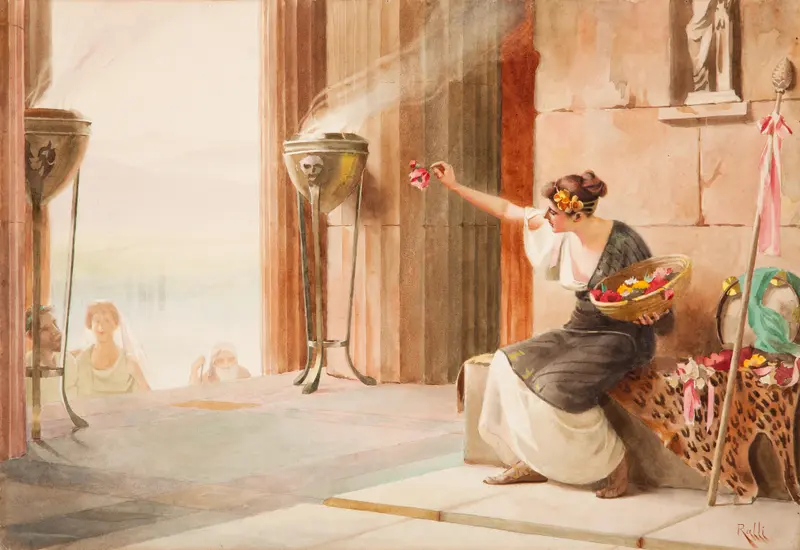
Flower Seller at the Parthenon
Theodoros Ralli
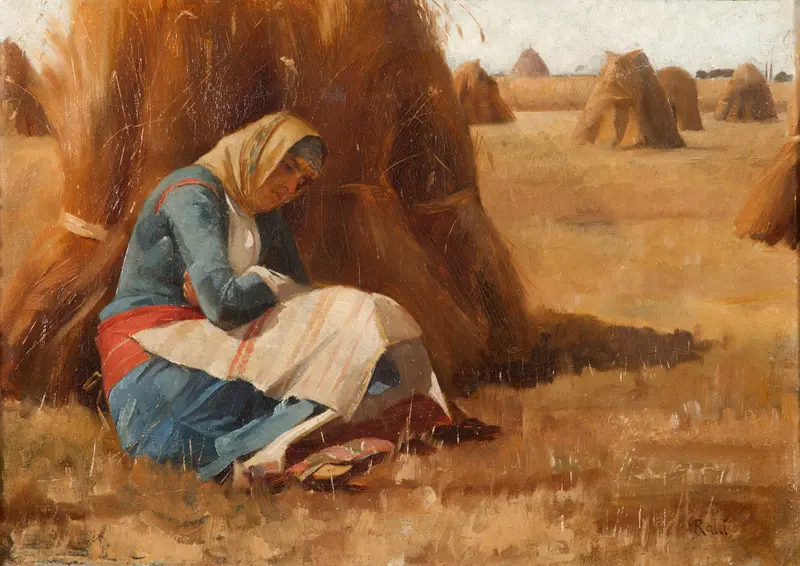
Resting by a Haystack
Theodoros Ralli
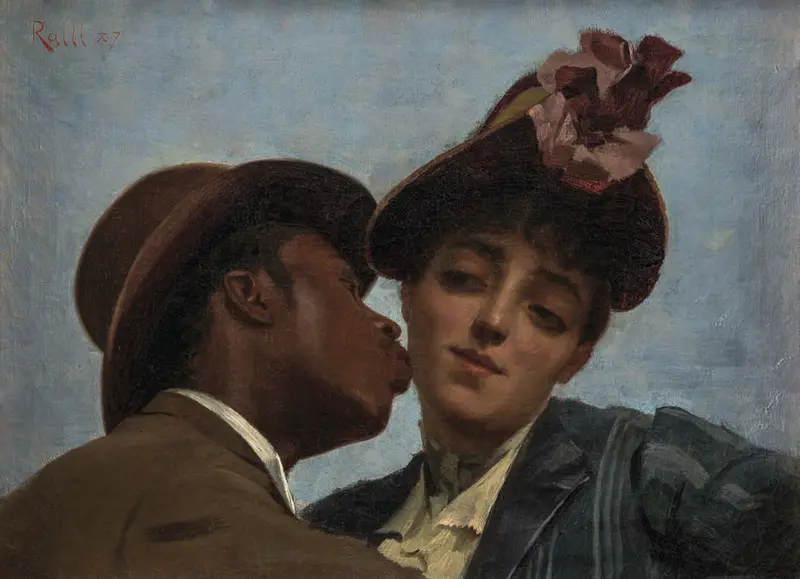
The Kiss (Ralli)
Theodoros Ralli
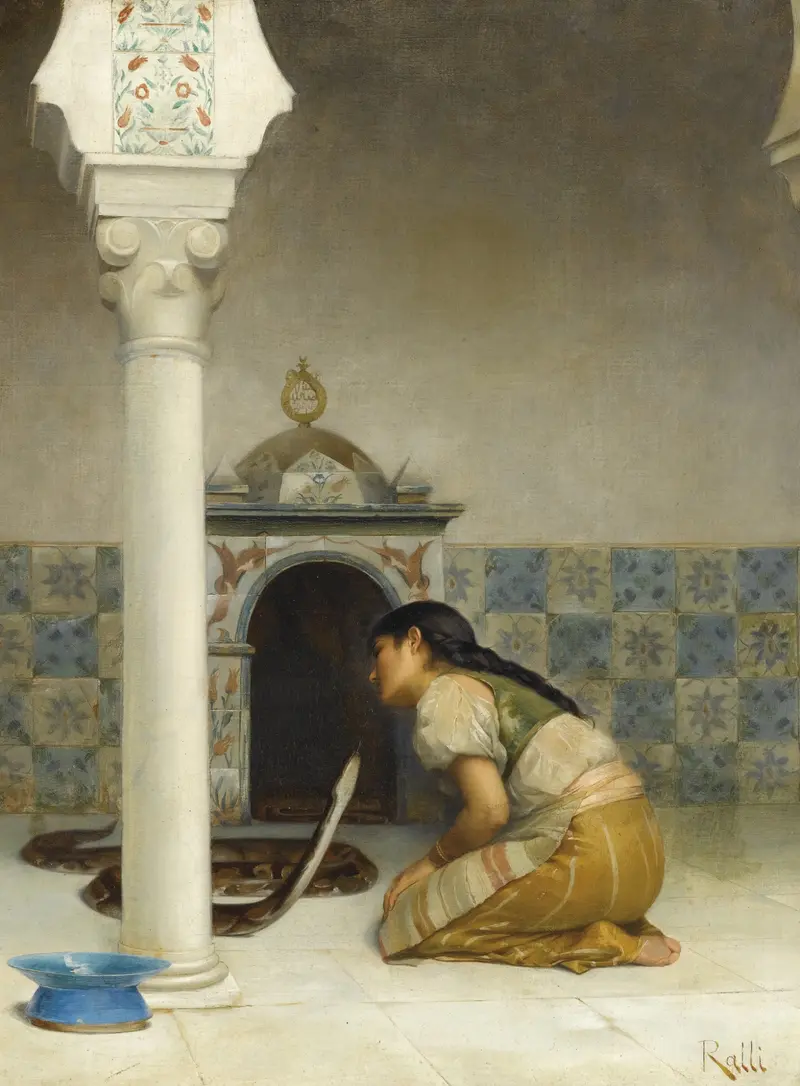
The Sacred Serpent
Theodoros Ralli
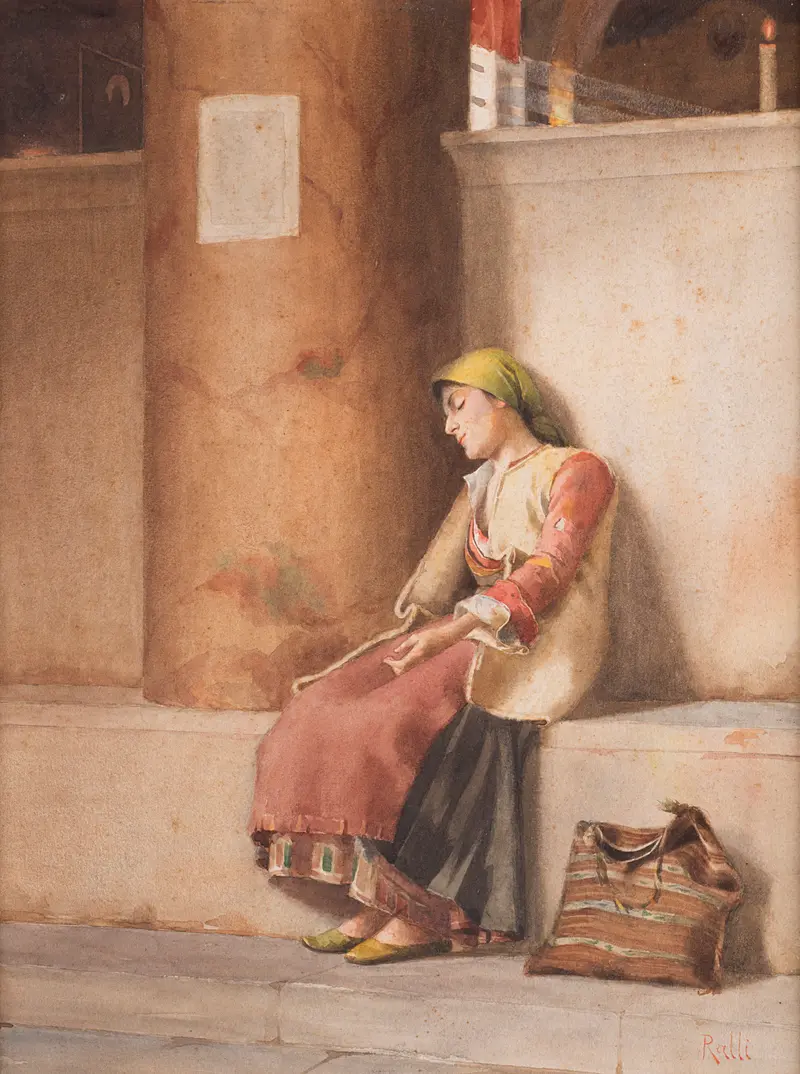
A Moment of Reflection
Theodoros Ralli
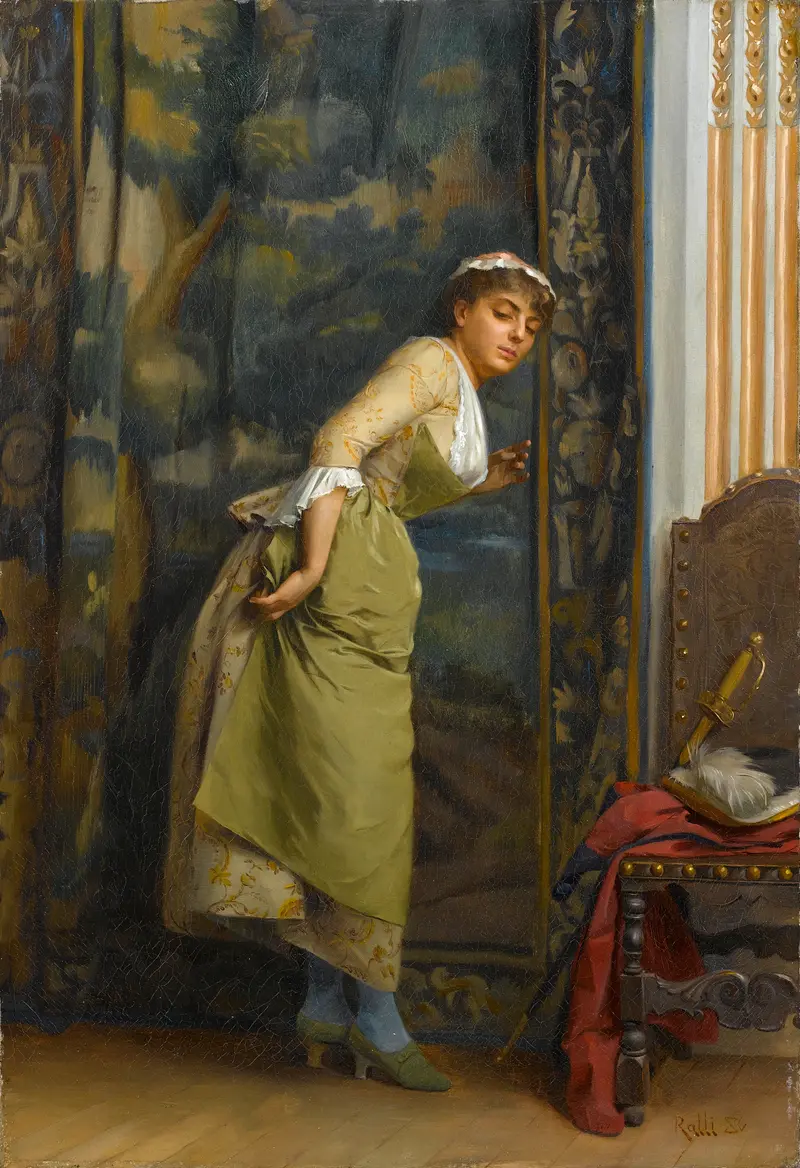
Eavesdropping (Ralli)
Theodoros Ralli
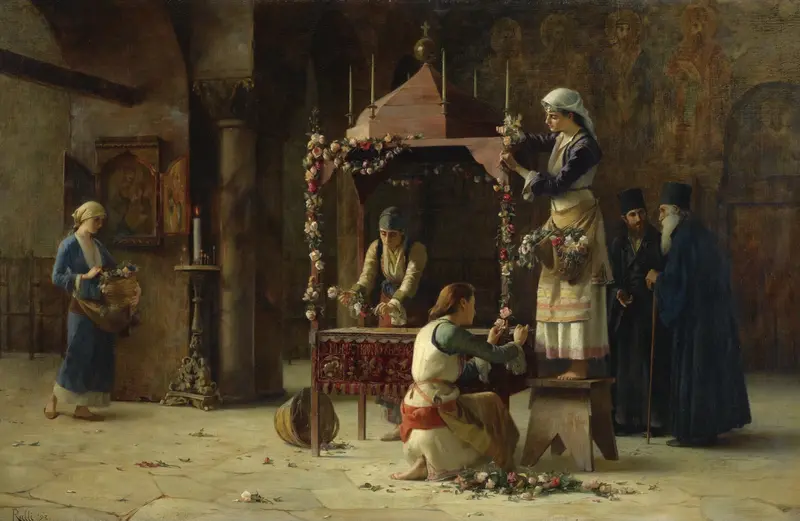
Holy Friday, Greece
Theodoros Ralli
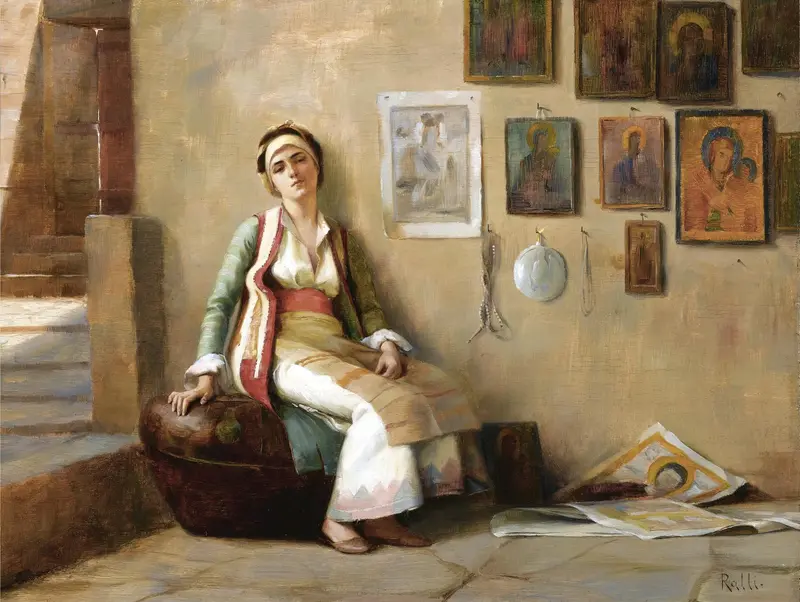
A Moment's Rest
Theodoros Ralli





