
In the Rockies — History & Facts
What first catches the eye in In the Rockies is not the travelers, but the sheer sweep of cloud and snow, as if the mountains themselves have drawn the sky down to their shoulders. The figures on horseback—small, nearly lost in the lower right—invite you to measure your own scale against the vastness above. The artist leads your gaze from the shadowed foreground, up the sloping ridge, and into the luminous, jagged peaks, where sunlight breaks through the clouds in cold, sharp relief.
The palette is cool and spare, dominated by whites, greys, and blues, with just enough green and brown to ground the scene in earth rather than dream. The placement of the riders, facing into the wilderness, is a quiet signal of both awe and resolve. Painted in the 1860s, this work belongs to a moment when American artists like Albert Bierstadt turned westward, drawn by the promise and peril of uncharted landscapes. Such paintings were often created for audiences back east, eager to imagine the scale and drama of the Rocky Mountains—places most would never see for themselves.
The Harvard Art Museums now hold this piece, a reminder of how the American West was both documented and mythologized in art. History has kept few traces of the specific journey behind this painting, but its drama lies in what it withholds: the sense of a world still unfolding, waiting for the viewer to enter.
More Artworks by Albert Bierstadt

A Storm in the Rocky Mountains, Mt. Rosalie
Albert Bierstadt
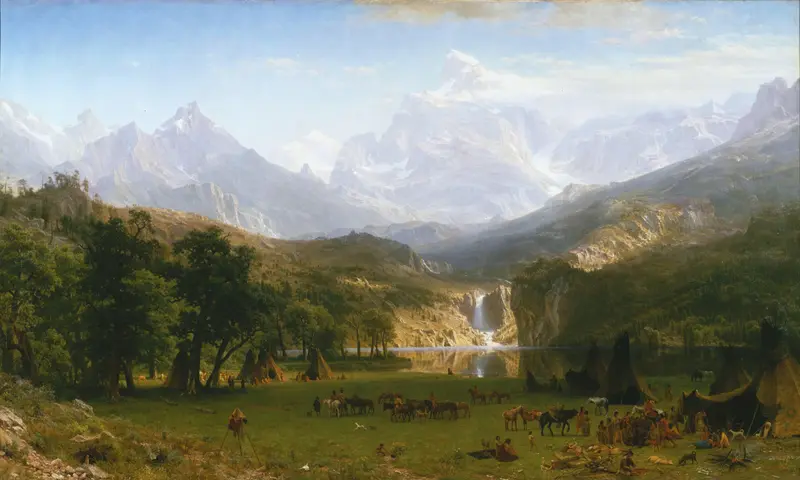
The Rocky Mountains, Lander's Peak
Albert Bierstadt
Niagara from the American Side
Albert Bierstadt
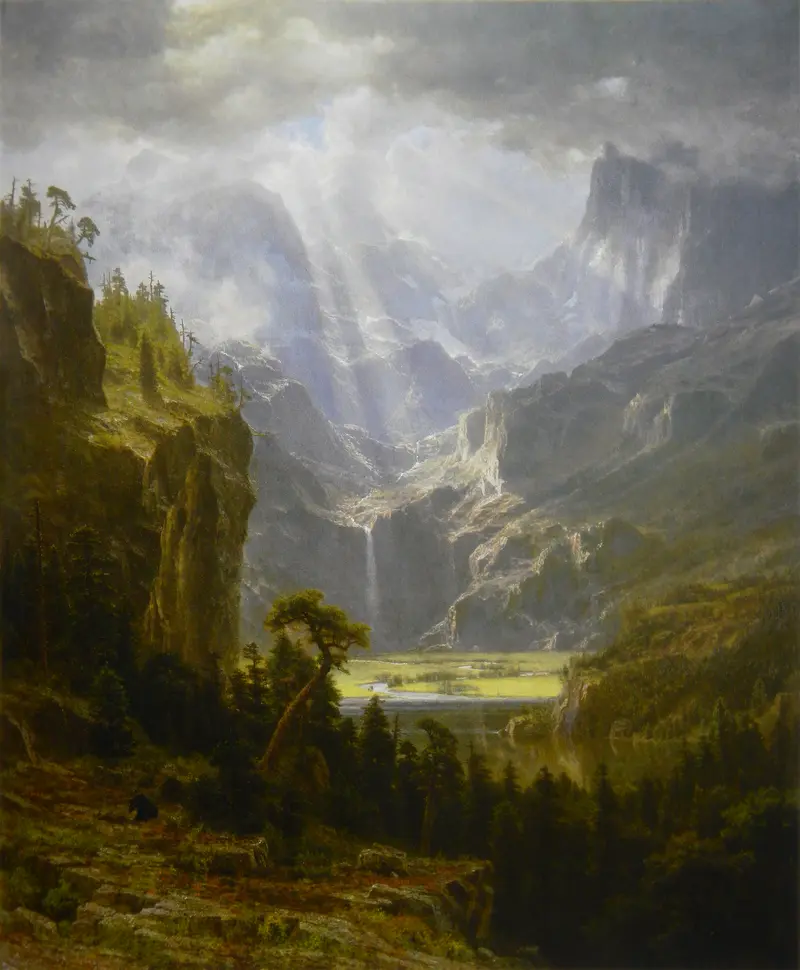
Rocky Mountains, Lander’s Peak
Albert Bierstadt

Valley of the Yosemite
Albert Bierstadt
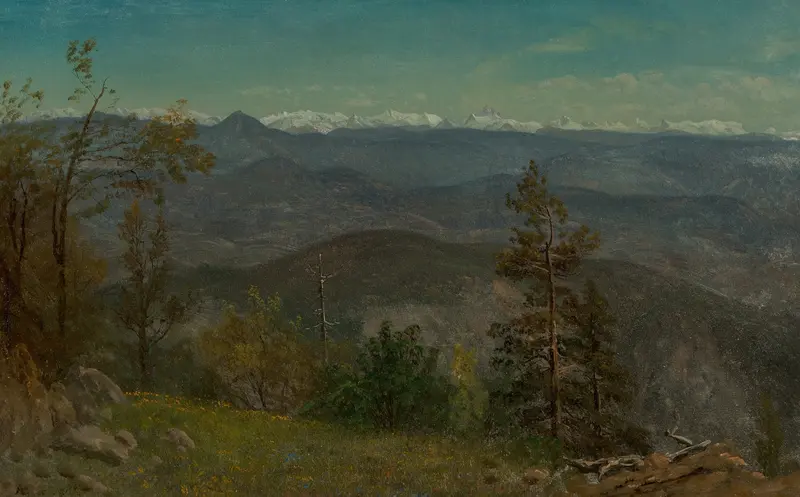
Yosemite Valley, California
Albert Bierstadt
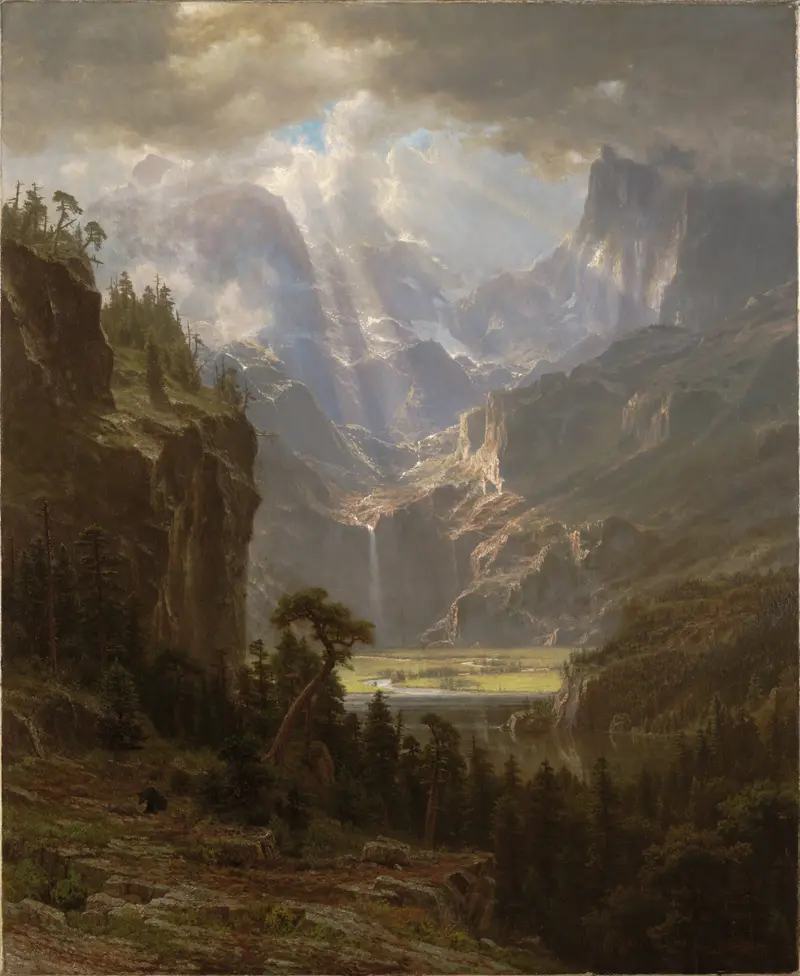
Rocky Mountains, "Lander's Peak"
Albert Bierstadt

Laramie Peak
Albert Bierstadt
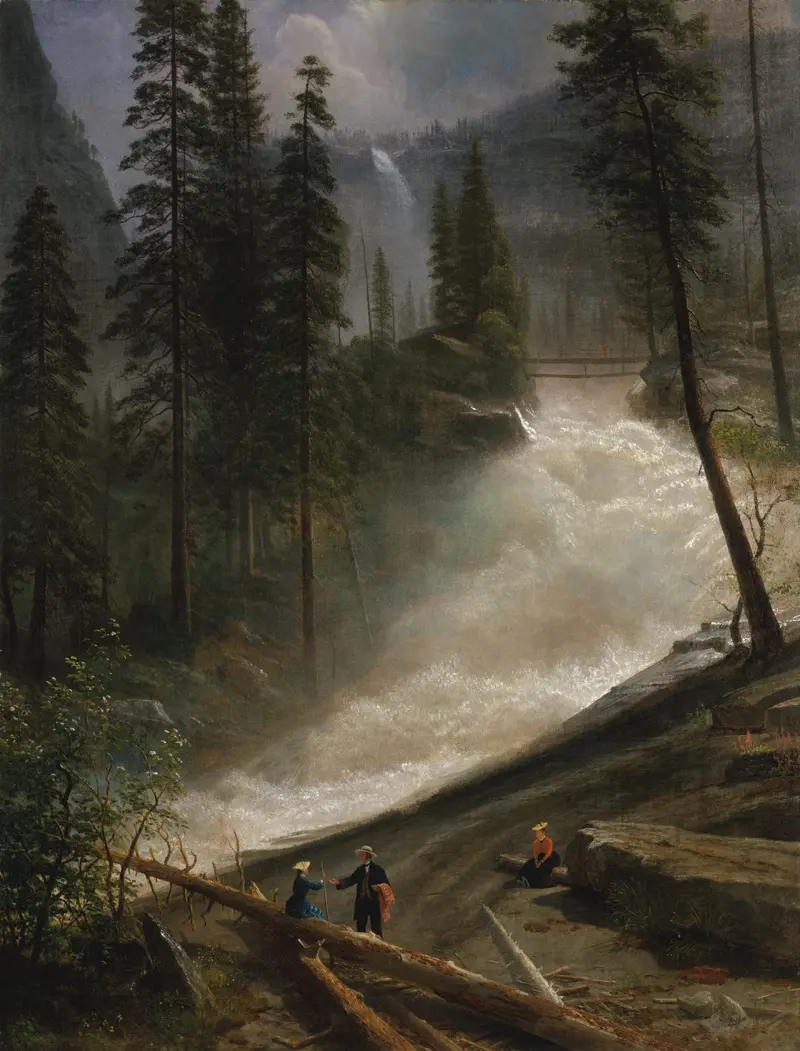
Nevada Falls, Yosemite
Albert Bierstadt
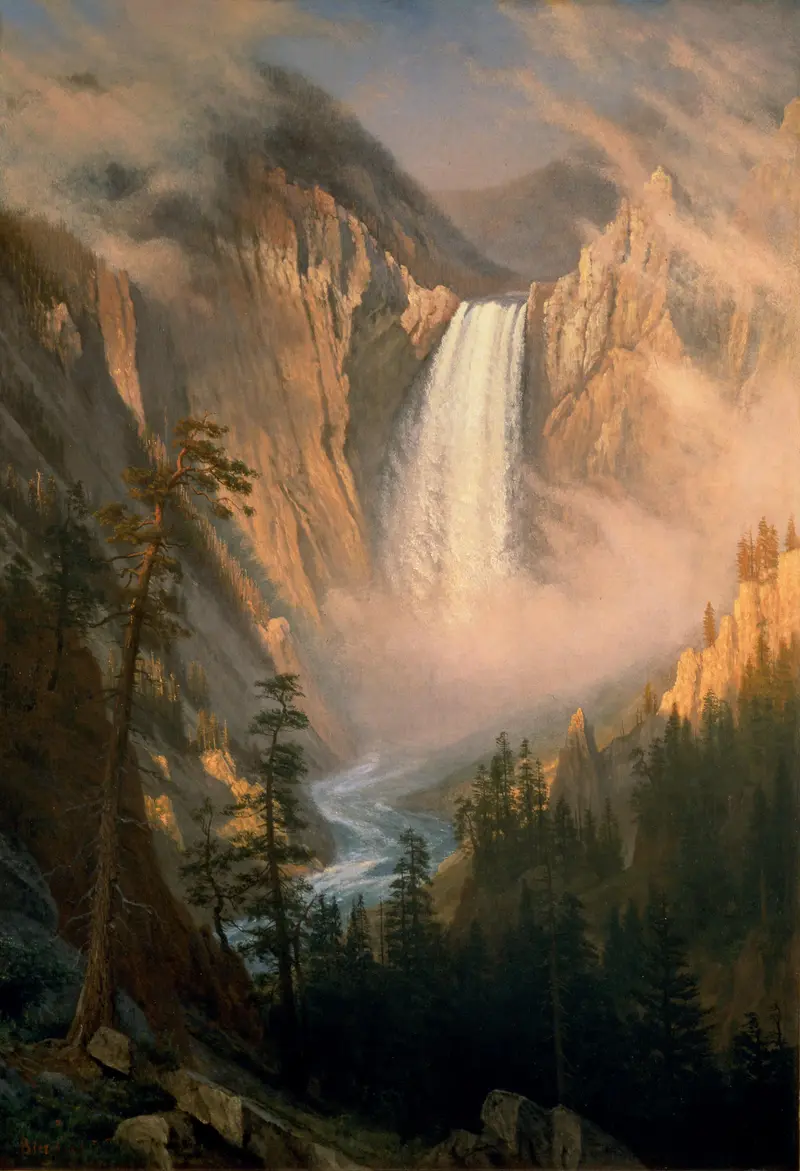
Yellowstone Falls
Albert Bierstadt
More Landscape Art

The Starry Night
Vincent van Gogh

View of Delft
Johannes Vermeer

Water Lilies
Claude Monet

The Grand Canal, Venice, looking north-west from the Ca' Corner to the Ca' Contarini degli Scrigni, with the campanile of Santa Maria della Carità
Canaletto

Windsor Castle
Canaletto

The Grand Canal looking North-East from the Palazzo Dolfin-Manin to the Rialto Bridge
Canaletto