
In the Skirts of the Forest — History & Facts
This haunting reflection resonates deeply within the layered nuances of nature's embrace, inviting us to delve into the fragile balance between allure and sorrow. Look to the center of the canvas, where a lone figure, draped in shadow, stands beneath the heavy canopy of trees. The verdant greens and browns create a tapestry of life, yet the dim light filtering through leaves hints at secrets lurking just beyond the surface. The brushwork is deliberate, each stroke building an intricate depth that draws the viewer’s eye toward the somber expression of the figure, emphasizing isolation within the vibrant surroundings. The contrast between the vivid foliage and the muted tones of the figure speaks volumes about existence—the interplay of life and melancholy.
The forest, while lush and inviting, suggests an oppressive weight, a reminder of the struggles embedded in nature's beauty. Look closer, and you’ll notice delicate tendrils of light catching the edges of leaves, illuminating the tension between the enchanting scenery and the underlying sense of solitude, mirroring our complex human experiences. In 1880, while residing in England, Alphonse Legros crafted this poignant work against the backdrop of an evolving art scene, influenced by the Pre-Raphaelite fascination with nature and realism. He was seeking to capture the raw, unfiltered essence of life, often portraying themes of introspection and the human condition.
This period of his career marked a profound exploration of both personal and societal struggles, encapsulating the duality of beauty intertwined with pain.
More Artworks by Alphonse Legros
Browse all →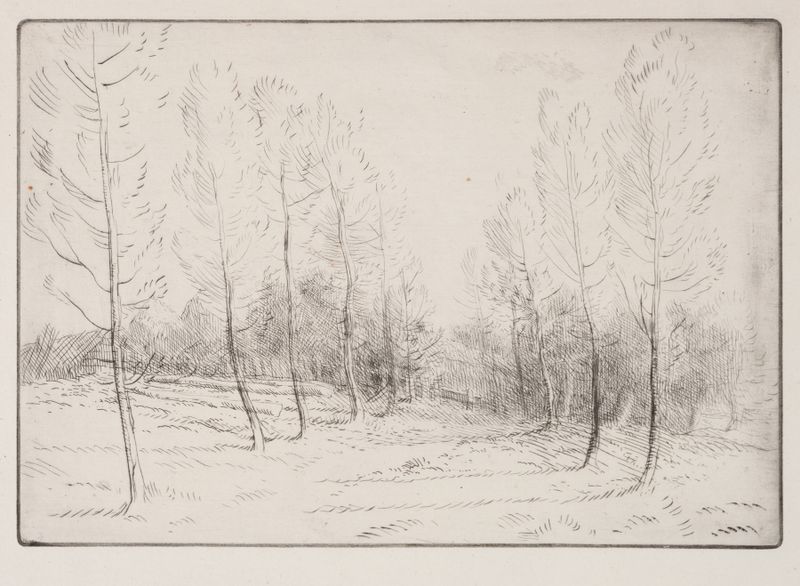
Avenue of Poplars
Alphonse Legros
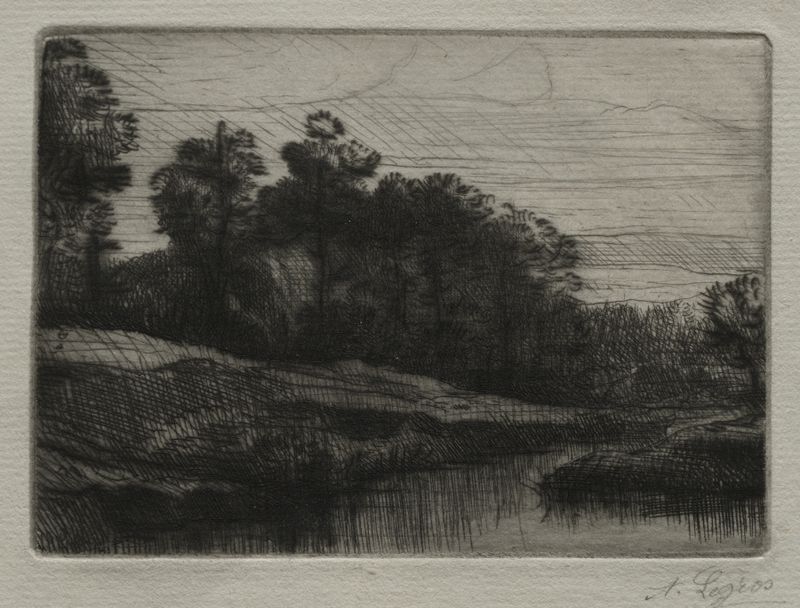
Evening
Alphonse Legros

The Fish in the Hoop Net
Alphonse Legros

The Little Beggar
Alphonse Legros
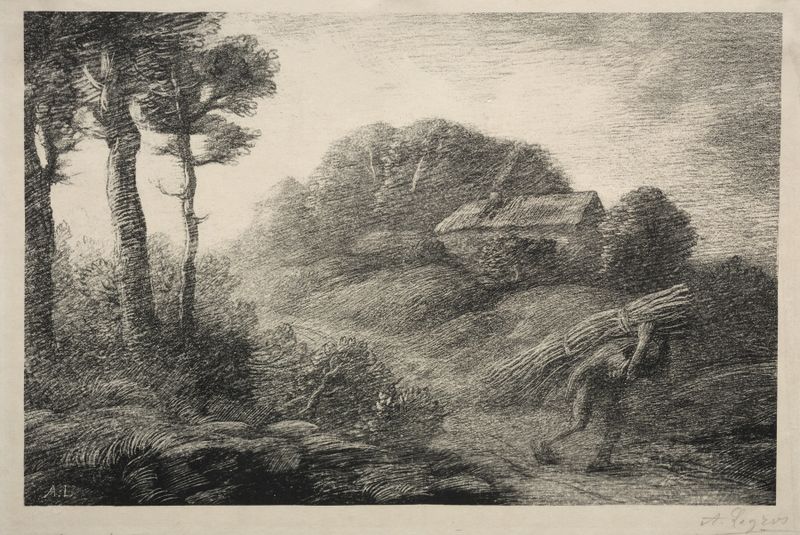
The Return of the Fagot Gatherer
Alphonse Legros

Storm
Alphonse Legros
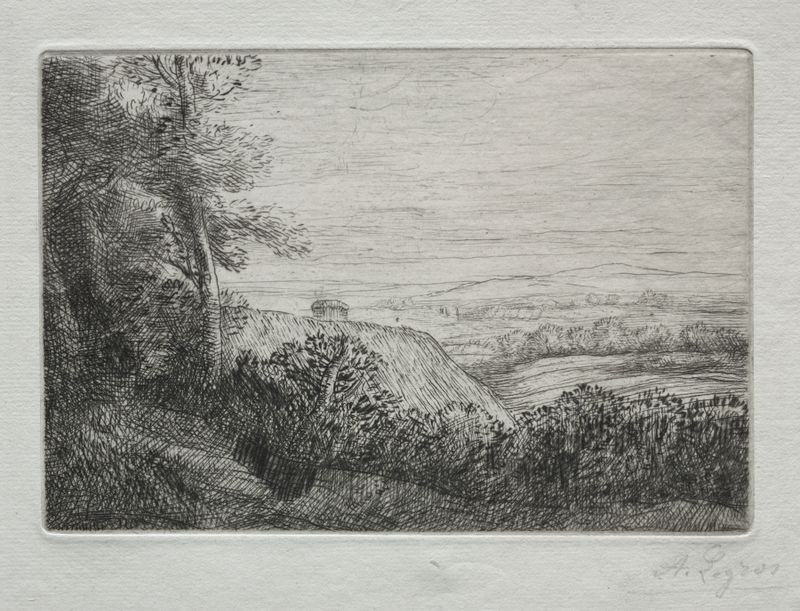
Les dernière Rayons de Soleil
Alphonse Legros
The Traveler Stretched out on the Grass
Alphonse Legros
Guard House
Alphonse Legros

Death of a Vagabond
Alphonse Legros





