
Inn Scene — History & Facts
A burst of laughter, a toppled chair, and the rough glow of firelight draw the eye immediately to the heart of this scene. In Inn Scene, Adriaen van Ostade captures a moment of raucous energy and everyday chaos in a 17th-century tavern. The composition pulls the viewer into the circle of figures: a man in blue tumbles backward, arm flailing, while others lean in over a table, absorbed in their own amusements.
The palette is earthy and warm, the light catching on faces and hands, guiding us from the slumped drinker at left to the animated gestures at center, and finally to the fallen figure whose sprawl breaks the otherwise crowded intimacy. Every detail—the clay jug, the battered hats, the straw overhead—grounds the scene in lived experience, hinting at the pleasures and perils of communal life. Works like this flourished in the Dutch Republic of the 17th century, when artists such as van Ostade found eager patrons among the burgeoning middle class. These genre paintings, often small in scale, were not grand commissions for churches or courts, but intimate glimpses of daily existence, sometimes moralizing, sometimes simply observant.
Inn Scene, now in the Royal Museum of Fine Arts Antwerp and dated to around 1650, belongs to a tradition that delighted in the rough-and-tumble realities of peasant life. History has kept few traces of the specific lives or stories behind such images, but the painting’s energy and detail invite us to linger, piecing together the noisy, smoky world it so vividly conjures.
More Artworks by Adriaen van Ostade

Dans in de herberg
Adriaen van Ostade
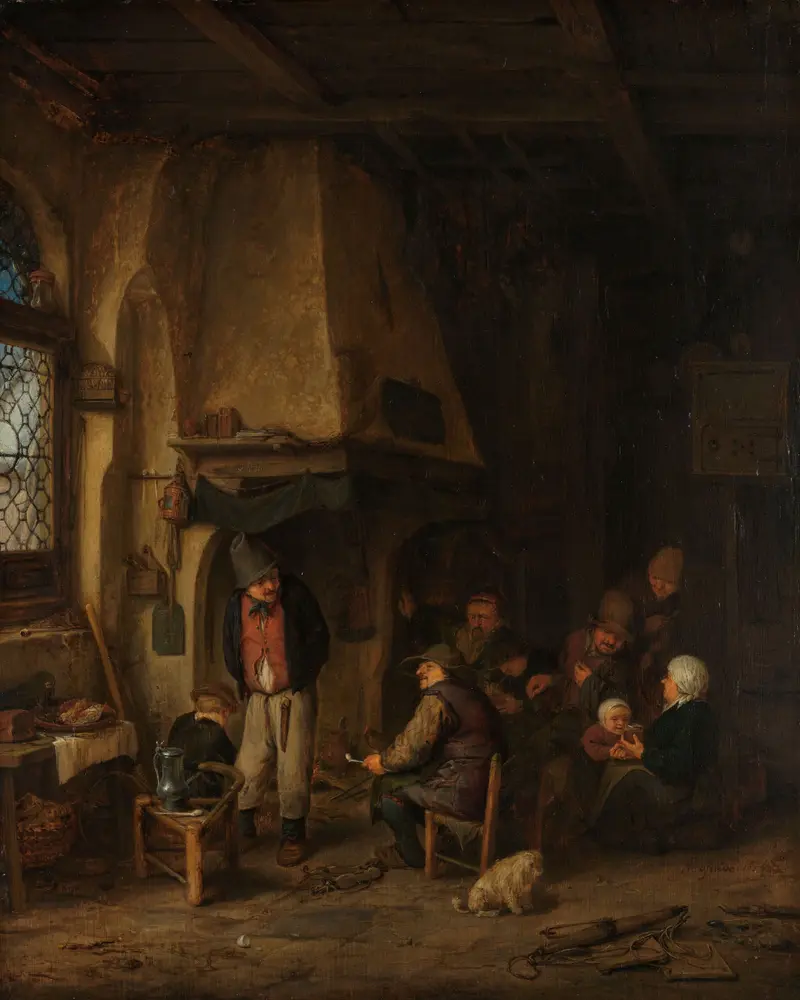
‘The Skaters’: Peasants in an Interior
Adriaen van Ostade
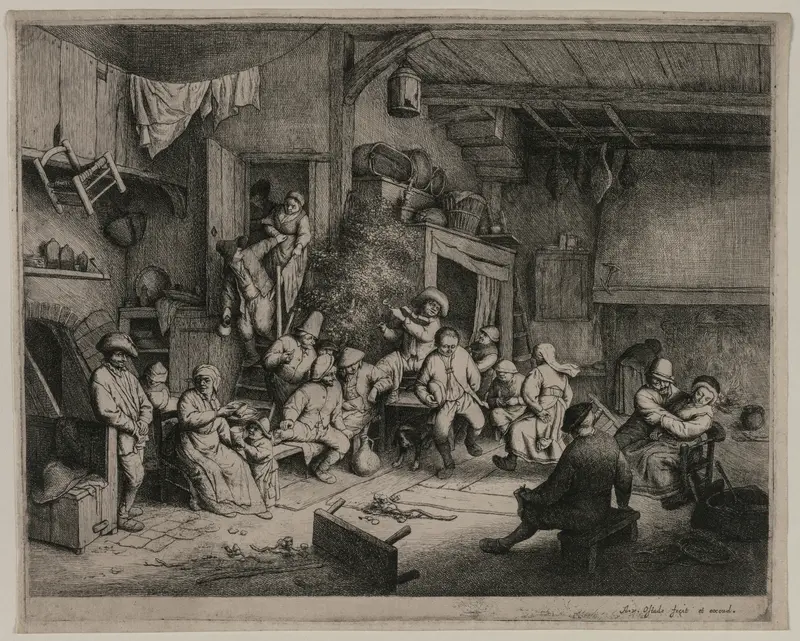
Dance at the Inn
Adriaen van Ostade
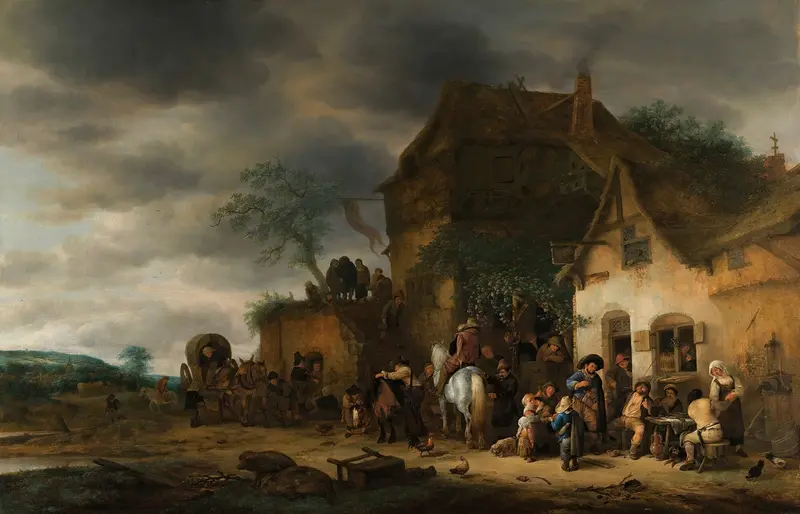
Travellers Halted At A Country Inn
Adriaen van Ostade
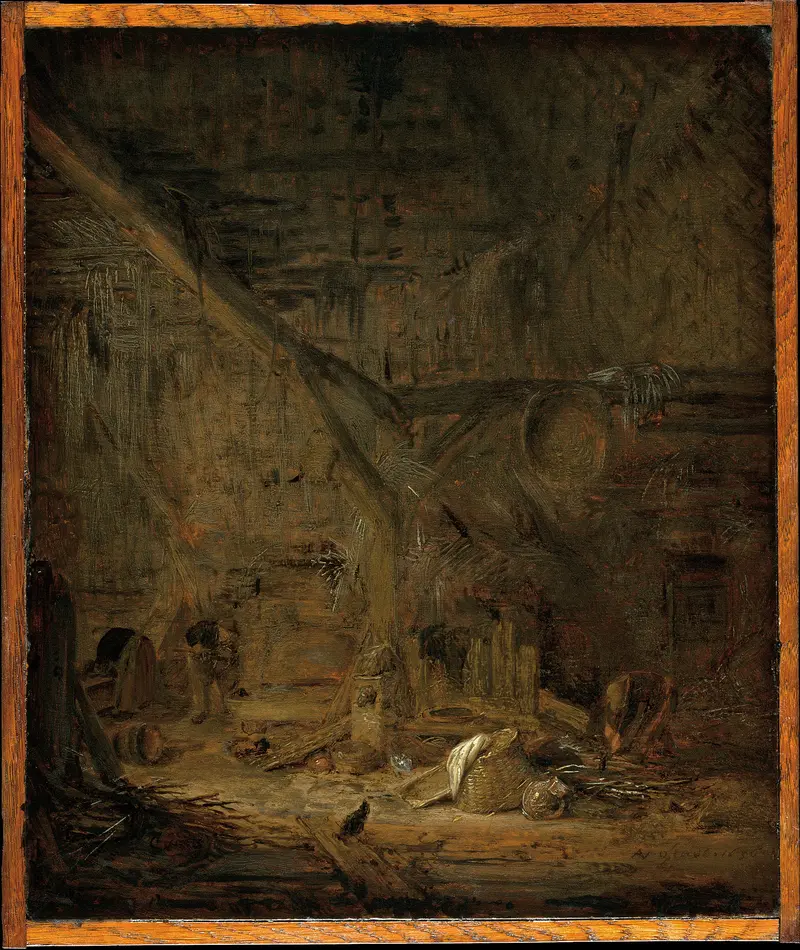
Interior of a Barn
Adriaen van Ostade
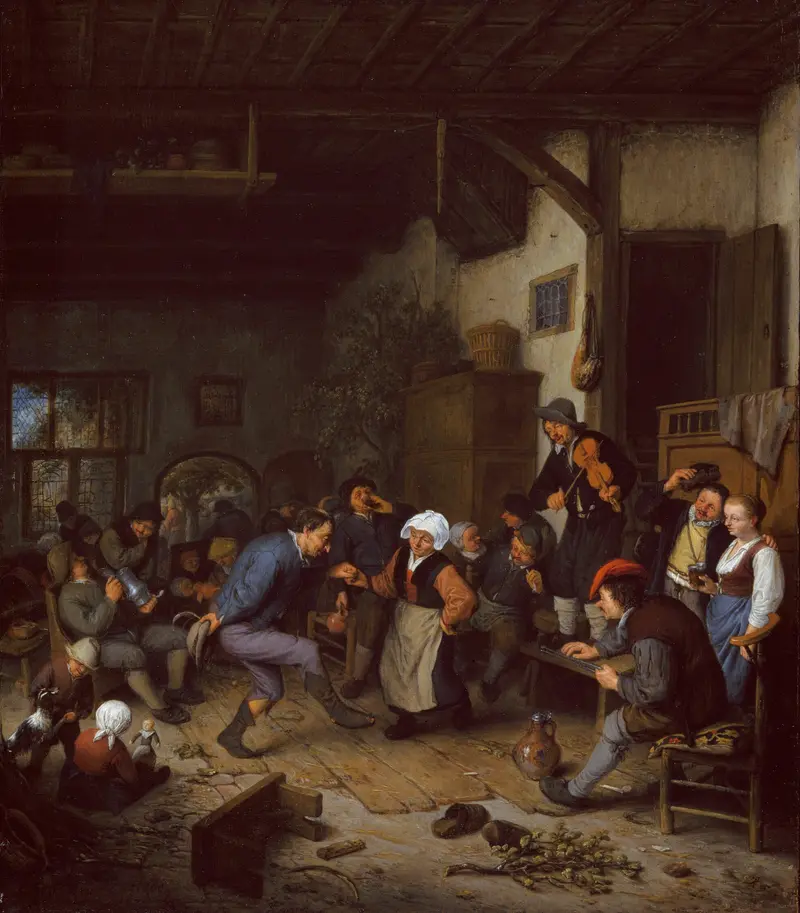
Merrymakers in an Inn
Adriaen van Ostade
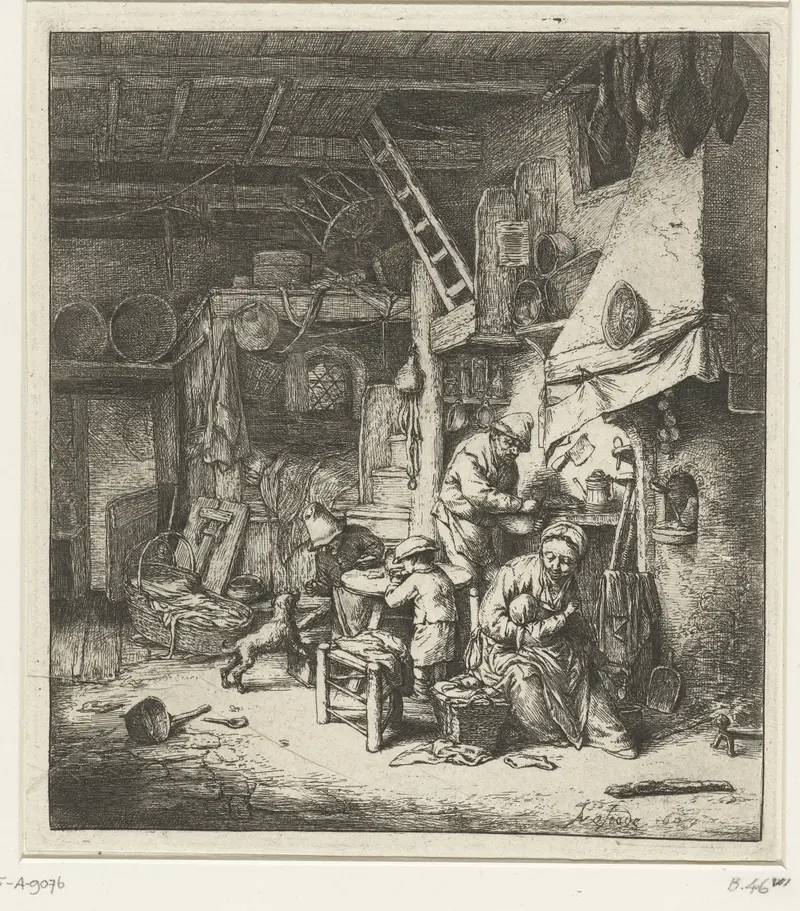
Boerengezin in interieur
Adriaen van Ostade
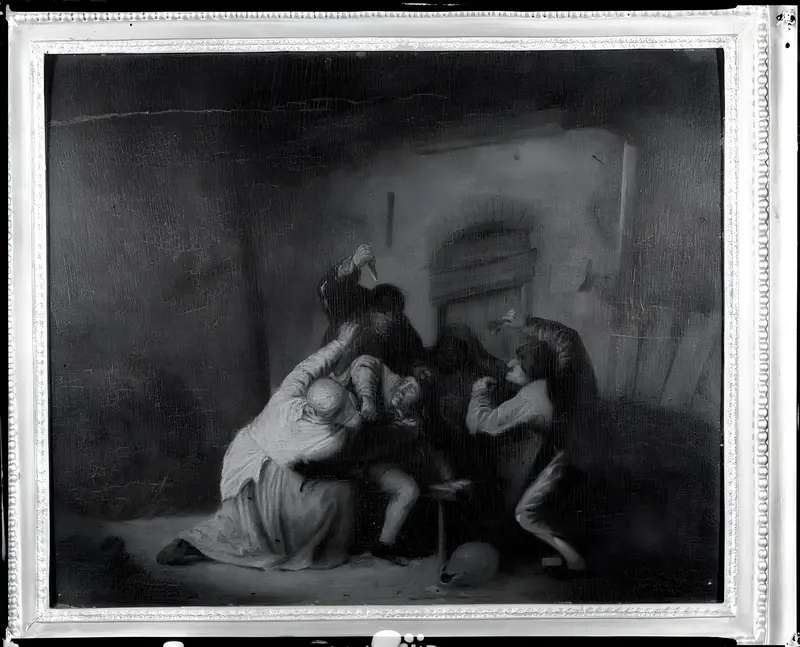
Peasants Brawling in a Tavern
Adriaen van Ostade
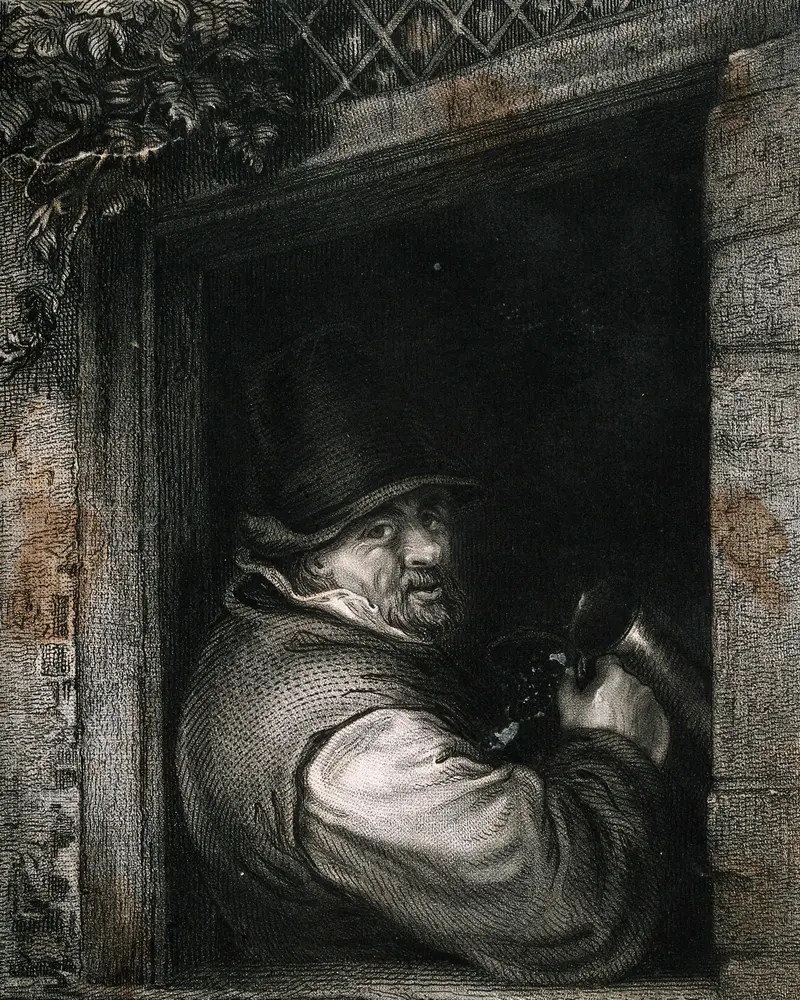
Man with a Tankard at a Window
Adriaen van Ostade
Dans in de herberg
Adriaen van Ostade
More Genre Scene Art

Banquet of the Officers of the St George Civic Guard
Frans Hals

Rembrandt and Saskia in the Scene of the Prodigal Son
Rembrandt van Rijn

Bal du moulin de la Galette
Pierre-Auguste Renoir

Quadrille at the Moulin Rouge
Henri de Toulouse-Lautrec

A Burial at Ornans
Gustave Courbet

When Will You Marry?
Paul Gauguin