
Inside the yard — History & Facts
In the hush of a moment, hope lingers like the softest echo, waiting to be unveiled. First, turn your attention to the central figure, an old wooden bench that invites contemplation. Notice how the muted earth tones wrap around the scene, creating a serene atmosphere. The warm light cascading through the leaves overhead paints dappled patterns on the ground, guiding your gaze to the gentle shadows that cradle the space.
Every brushstroke, deliberate and soft, reflects a moment captured in stillness. Beneath the surface, a poignant interplay of solitude and connection emerges. The bench, though unoccupied, speaks to the lives once shared, embodying dreams of conversation and laughter. The surrounding greenery, lush yet restrained, symbolizes the resilience of life; it thrives even in a seemingly abandoned yard.
There’s a subtle tension between the vibrancy of nature and the echoes of absence, a reminder that hope often flourishes in the quietest corners of existence. Created between 1925 and 1930, this piece reflects the artist's evolving vision during a period marked by introspection. Living in Europe between the world wars, Halász-Hradil sought to reconcile the turmoil of the time with the permanence of nature's cycles. His work during these years often delved into the essence of human experience, illustrating how even silent spaces can resonate with profound meaning.
More Artworks by Elemír Halász-Hradil
Browse all →
Self-Portrait
Elemír Halász-Hradil
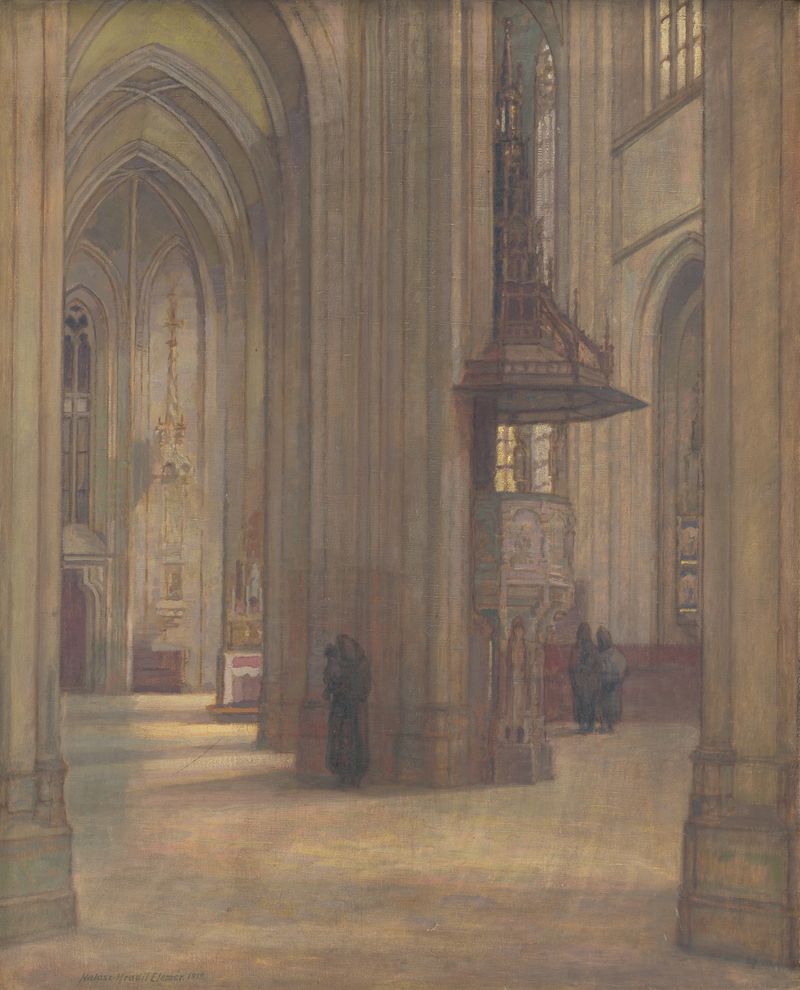
Interior of St. Elisabeth Cathedral
Elemír Halász-Hradil
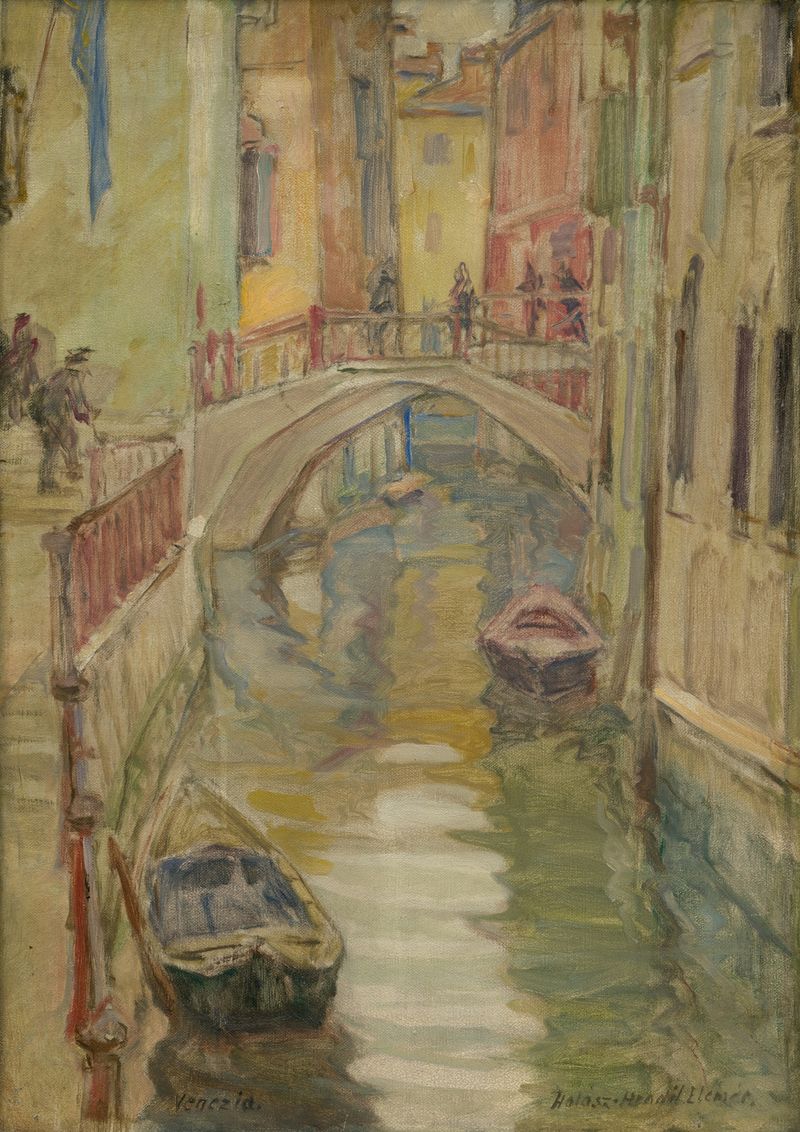
Venice
Elemír Halász-Hradil
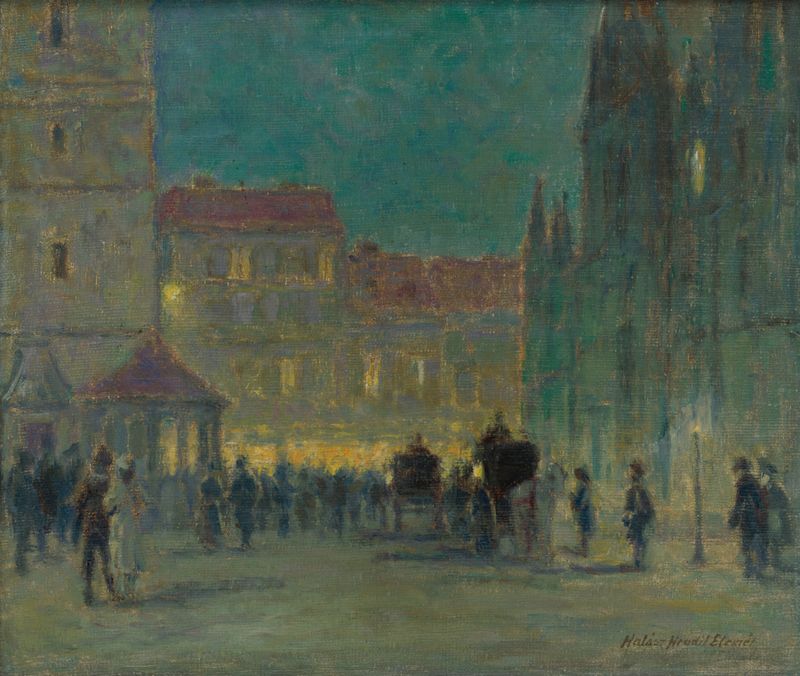
Evening in front of the St. Elisabeth Cathedral
Elemír Halász-Hradil
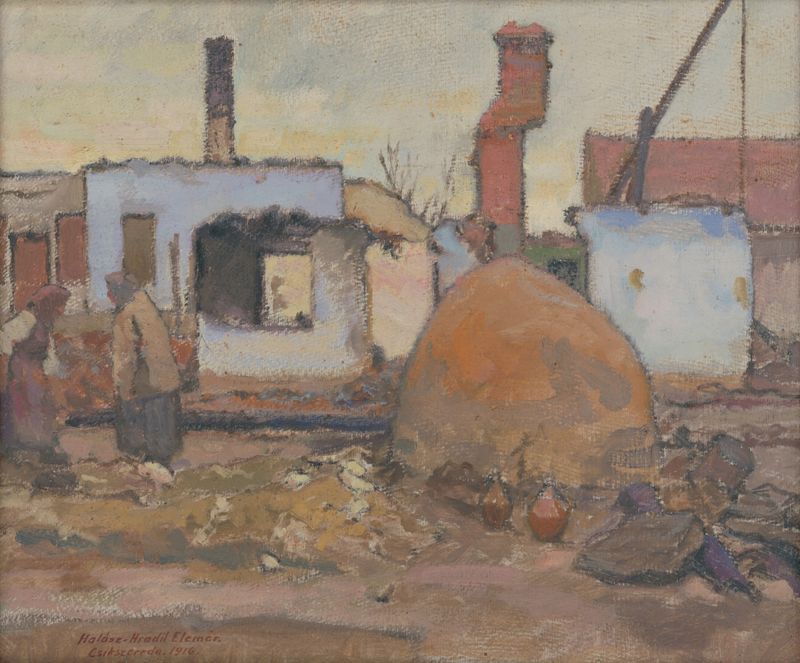
After the Passage of the Front
Elemír Halász-Hradil
Landscape with Hills in the Background
Elemír Halász-Hradil
Venice
Elemír Halász-Hradil

To the mountains
Elemír Halász-Hradil

Margecany Mill
Elemír Halász-Hradil

At the Market
Elemír Halász-Hradil





