
Interior of a Cottage — History & Facts
What draws the viewer in first is the hush that fills this humble room, where the warm glow of daylight slips through a leaded window and lands quietly on two figures deep in their own world. The man, pipe in hand, leans back in his chair, his hat casting a gentle shadow over his face as he contemplates the moment. Across from him, a woman sits poised with a jug and a cup, her white hair and red bodice catching the light, suggesting both the passage of years and the enduring rituals of daily life.
The rough plaster walls and sturdy wooden furniture speak of modest means, yet the painter’s attention to the play of light and the intimacy of gesture transforms this cottage interior into a stage for quiet companionship. Every detail—the glint of pewter, the dappled tree glimpsed through the window—serves to anchor the viewer in a scene that is both ordinary and quietly absorbing. Painted around 1670, this work belongs to the world of Adriaen van Ostade, a Dutch artist known for his sympathetic renderings of rural interiors and peasant life. In the Dutch Republic of the seventeenth century, such scenes were cherished by a rising middle class eager for images of everyday virtue and comfort, often displayed in their own homes as reminders of domestic order and simple pleasures.
Genre paintings like this one were rarely grand commissions; instead, they were traded in bustling art markets, their subjects drawn from the rhythms of village life rather than the courts or cathedrals. While history has kept few traces of this particular painting’s journey, its survival in a digital collection today invites us to linger over the small dramas of ordinary existence, and to notice how light, gesture, and space still shape the stories we find in a room.
More Artworks by Adriaen van Ostade

Dans in de herberg
Adriaen van Ostade
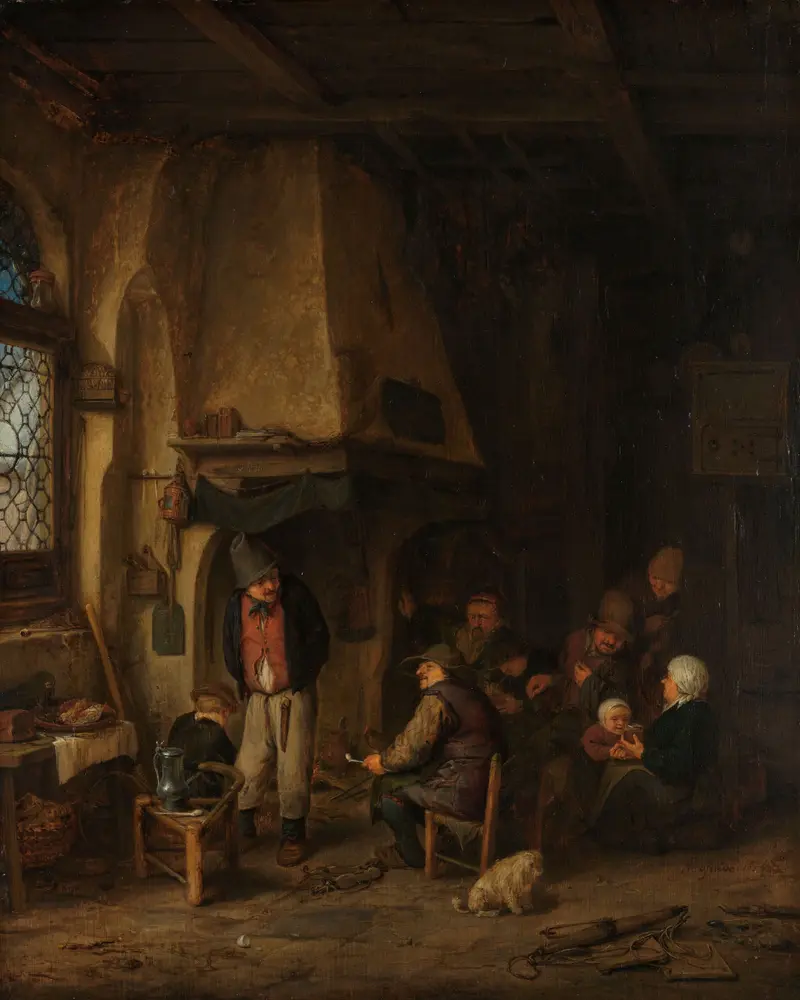
‘The Skaters’: Peasants in an Interior
Adriaen van Ostade
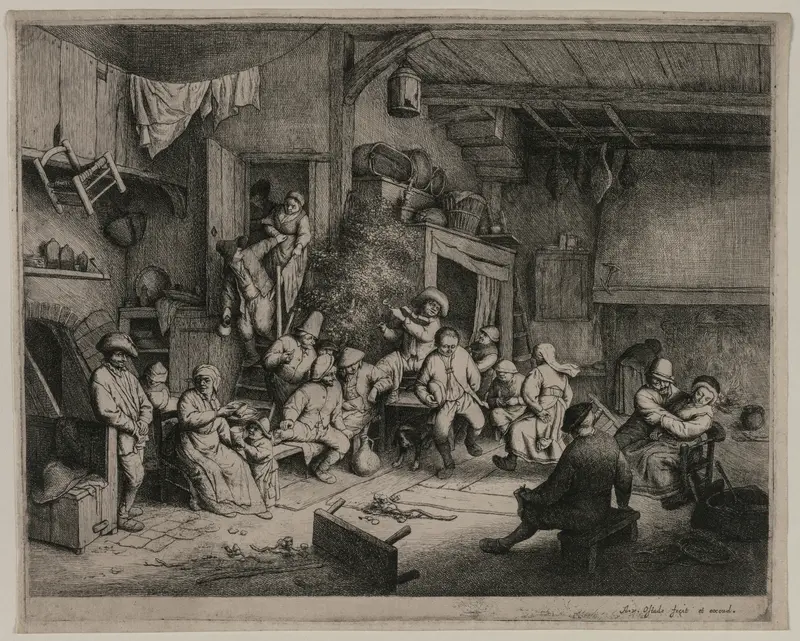
Dance at the Inn
Adriaen van Ostade
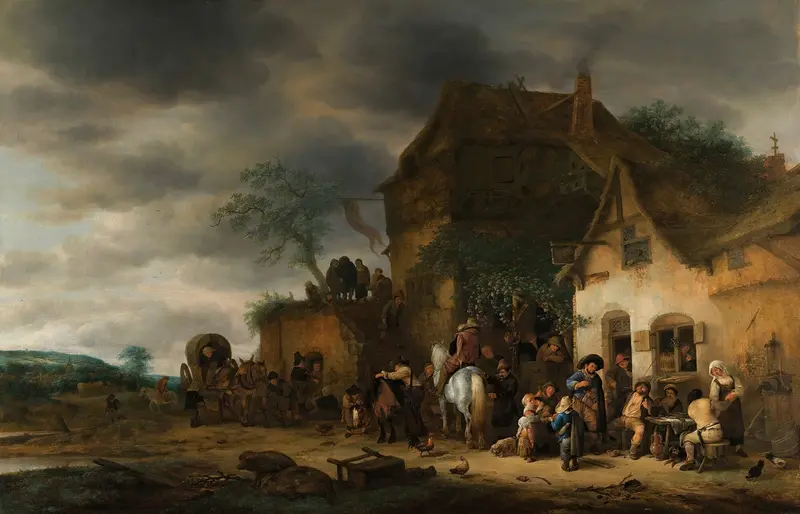
Travellers Halted At A Country Inn
Adriaen van Ostade
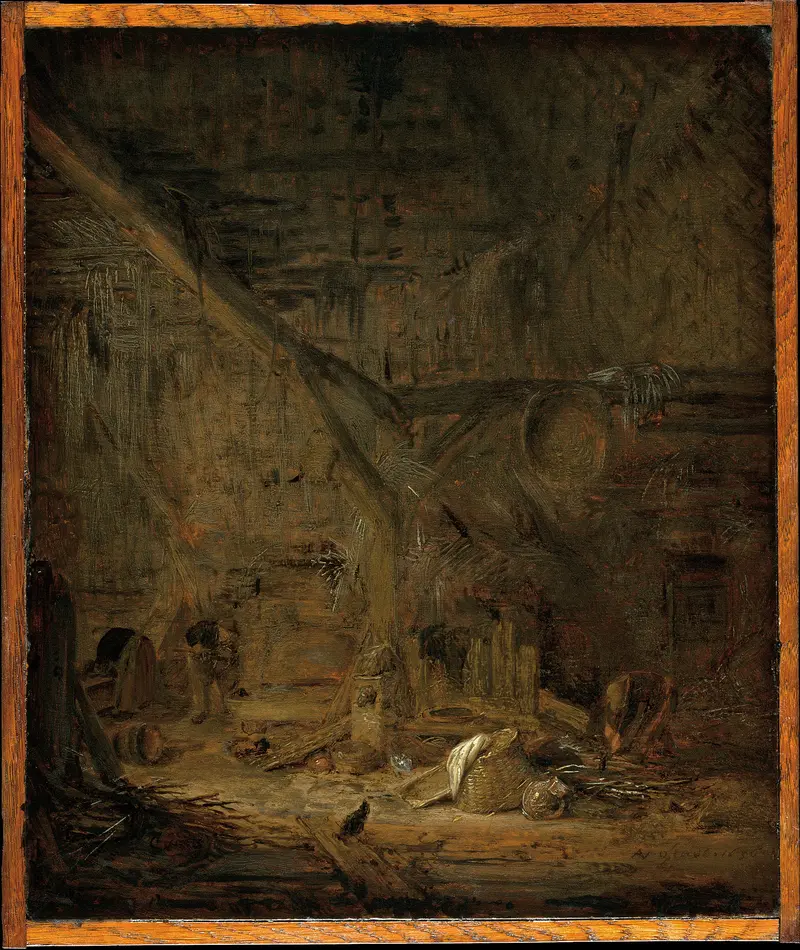
Interior of a Barn
Adriaen van Ostade
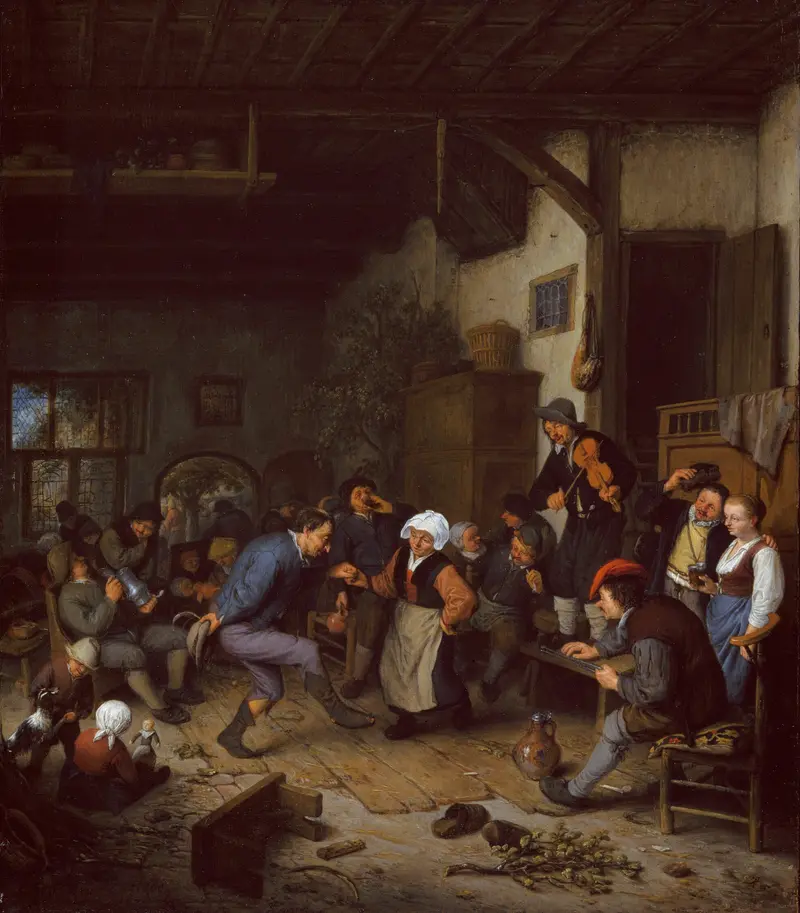
Merrymakers in an Inn
Adriaen van Ostade
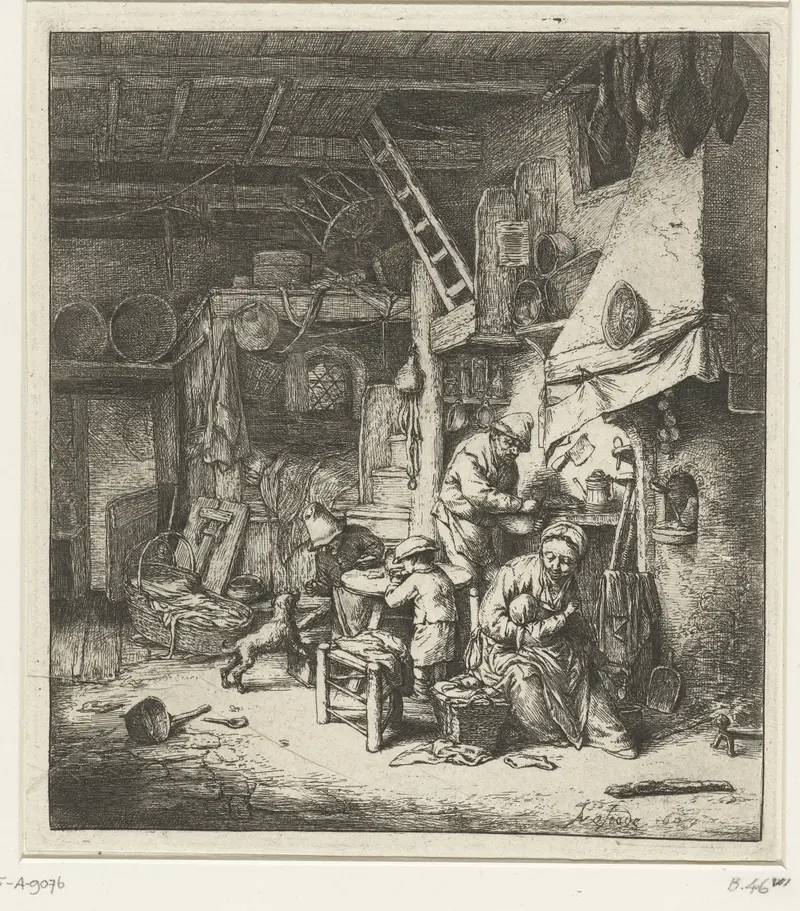
Boerengezin in interieur
Adriaen van Ostade
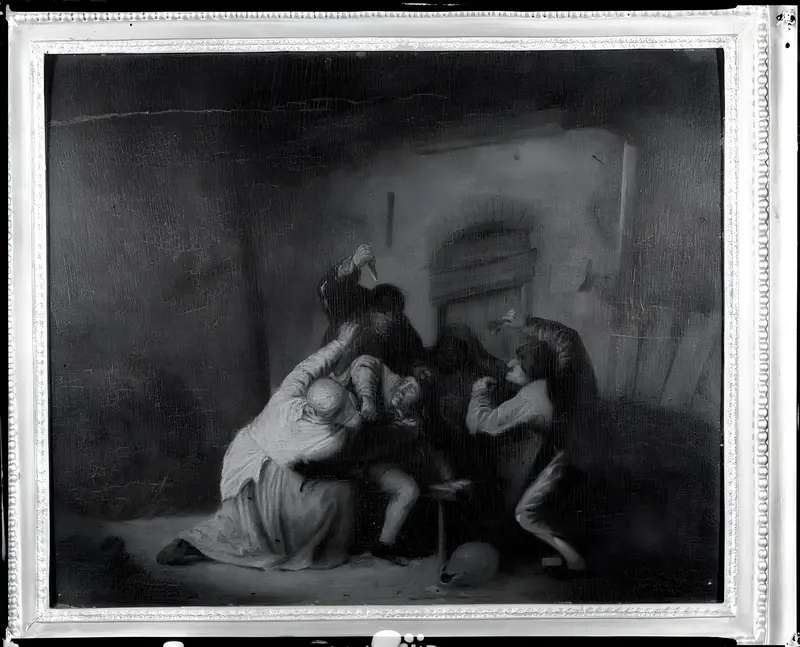
Peasants Brawling in a Tavern
Adriaen van Ostade
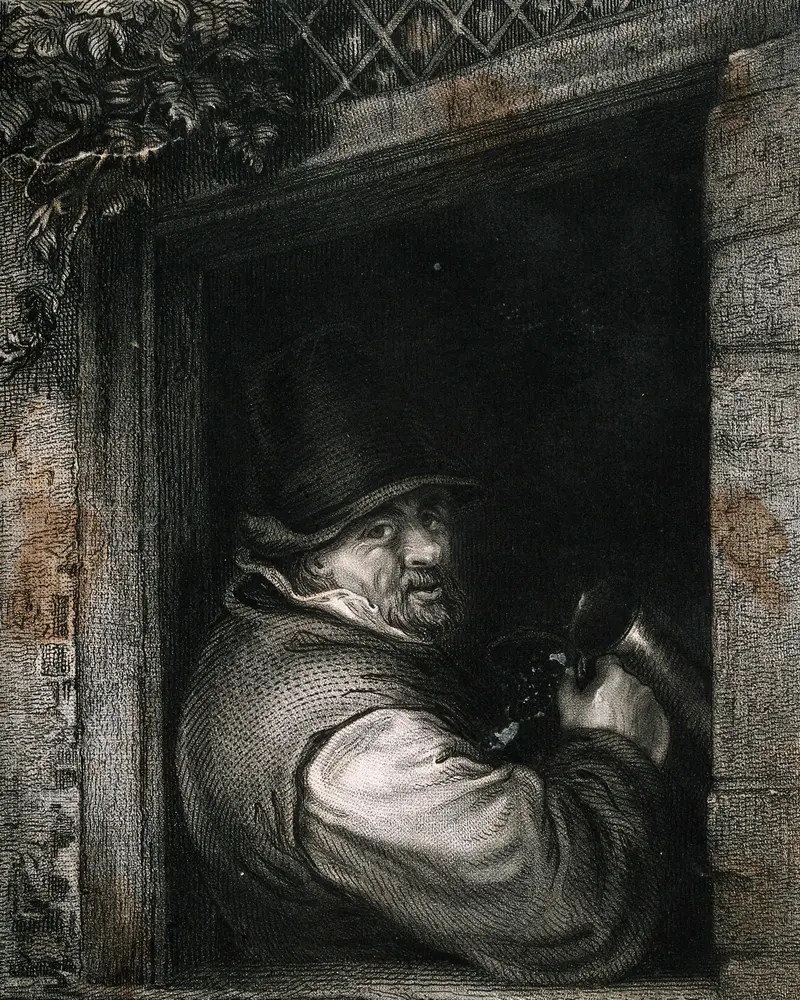
Man with a Tankard at a Window
Adriaen van Ostade
Dans in de herberg
Adriaen van Ostade
More Genre Scene Art

Banquet of the Officers of the St George Civic Guard
Frans Hals

Rembrandt and Saskia in the Scene of the Prodigal Son
Rembrandt van Rijn

Bal du moulin de la Galette
Pierre-Auguste Renoir

Quadrille at the Moulin Rouge
Henri de Toulouse-Lautrec

A Burial at Ornans
Gustave Courbet

When Will You Marry?
Paul Gauguin