
Interior of a Peasant's Cottage with a Child about to be Fed — History & Facts
What draws the eye first is not the act of feeding, but the quiet theater of anticipation: the child, nestled in its mother’s arms, leans toward the spoon with a drowsy trust, while the adults gather close, each face lit with a different shade of amusement. The painter, Adriaen van Ostade, orchestrates the moment with a shaft of window light that falls across the mother’s white cap and the child’s soft cheek, guiding the viewer to the heart of the scene. The father, bowl in hand, hovers on the edge of laughter, his posture relaxed and familiar.
Behind them, another figure leans in, drawn by the intimacy of the ritual, his red cap a flash of color against the muted browns and greys of the cottage interior. Every gesture is weighted with affection, every glance exchanged a thread in the fabric of daily life. Works like this, painted in 1651, belong to a Dutch tradition that found dignity and warmth in the lives of ordinary people. In the bustling seventeenth-century Netherlands, scenes of peasant interiors were prized by a new class of collectors who saw in them both moral lessons and a celebration of domestic comfort.
Van Ostade was a master of this genre, his brush capturing the textures of rough wood, worn clothing, and the play of light on humble faces. While history has kept few traces of this painting’s early journey, it now rests in the Royal Collection, a quiet testament to the enduring appeal of the everyday. Look again at the mother’s smile—there is the whole world of the cottage, distilled into a single, fleeting exchange.
More Artworks by Adriaen van Ostade

Dans in de herberg
Adriaen van Ostade
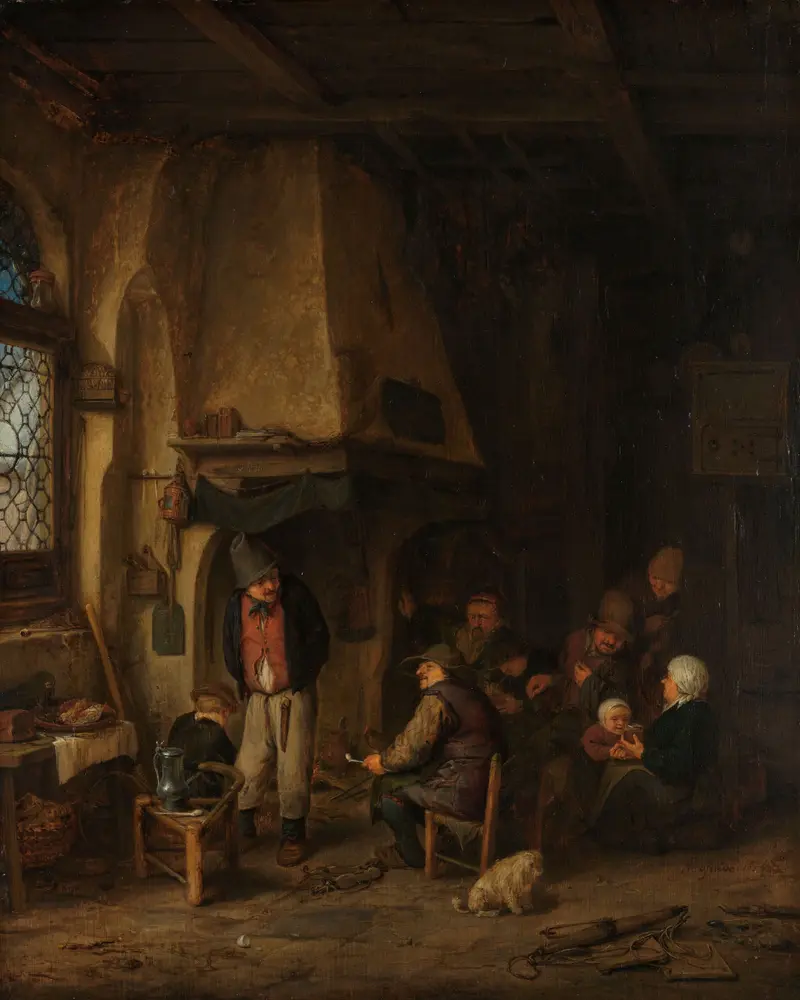
‘The Skaters’: Peasants in an Interior
Adriaen van Ostade
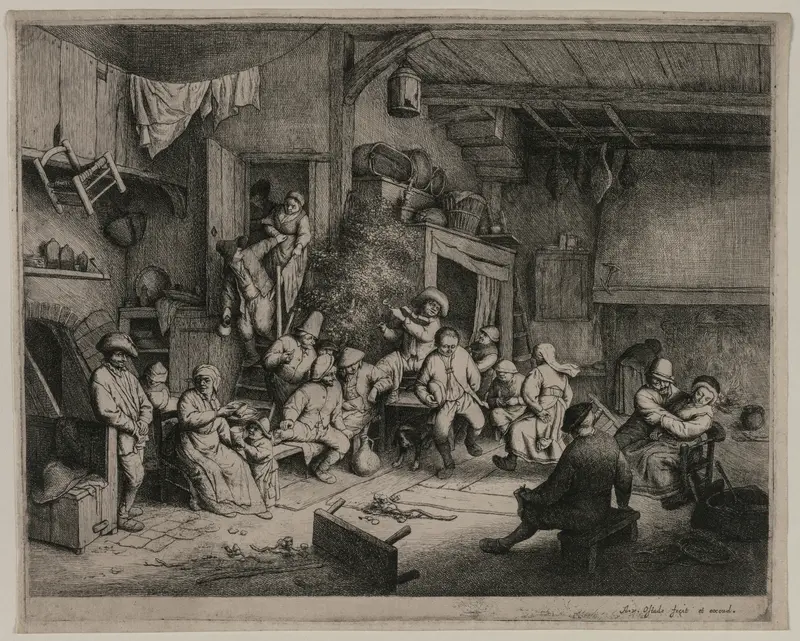
Dance at the Inn
Adriaen van Ostade
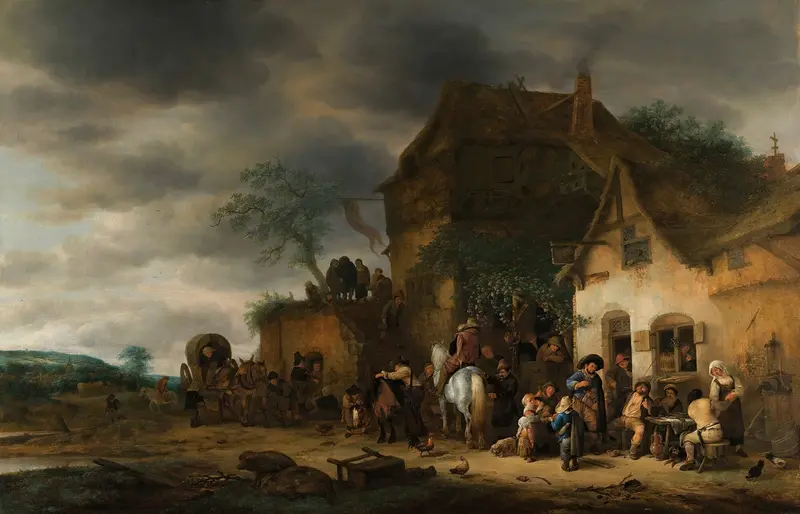
Travellers Halted At A Country Inn
Adriaen van Ostade
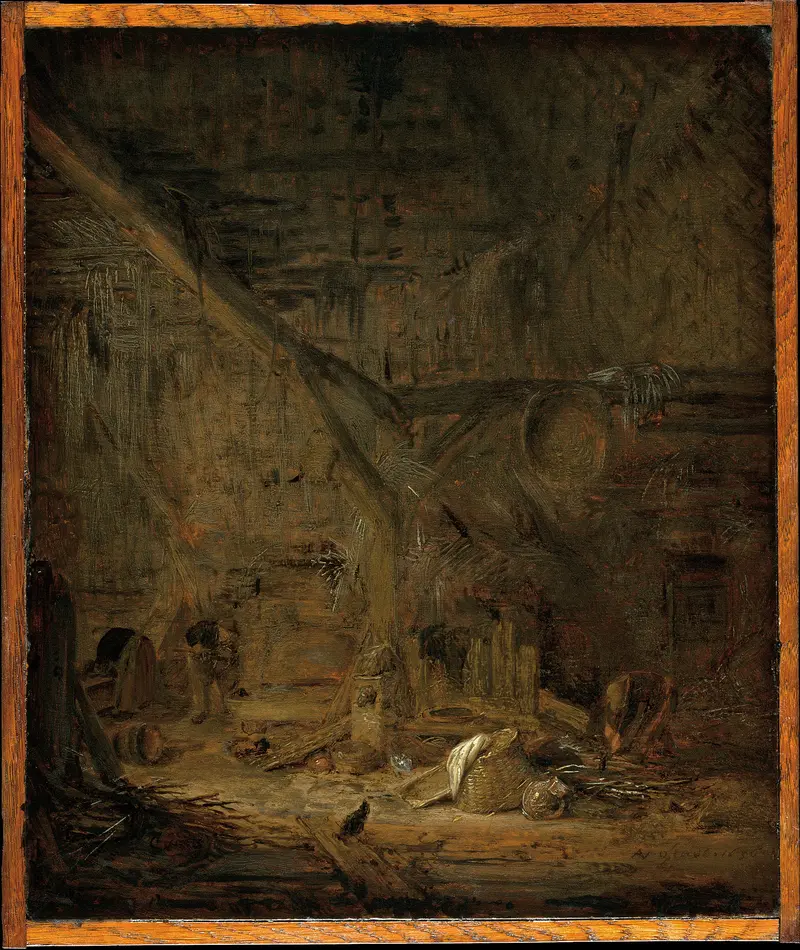
Interior of a Barn
Adriaen van Ostade
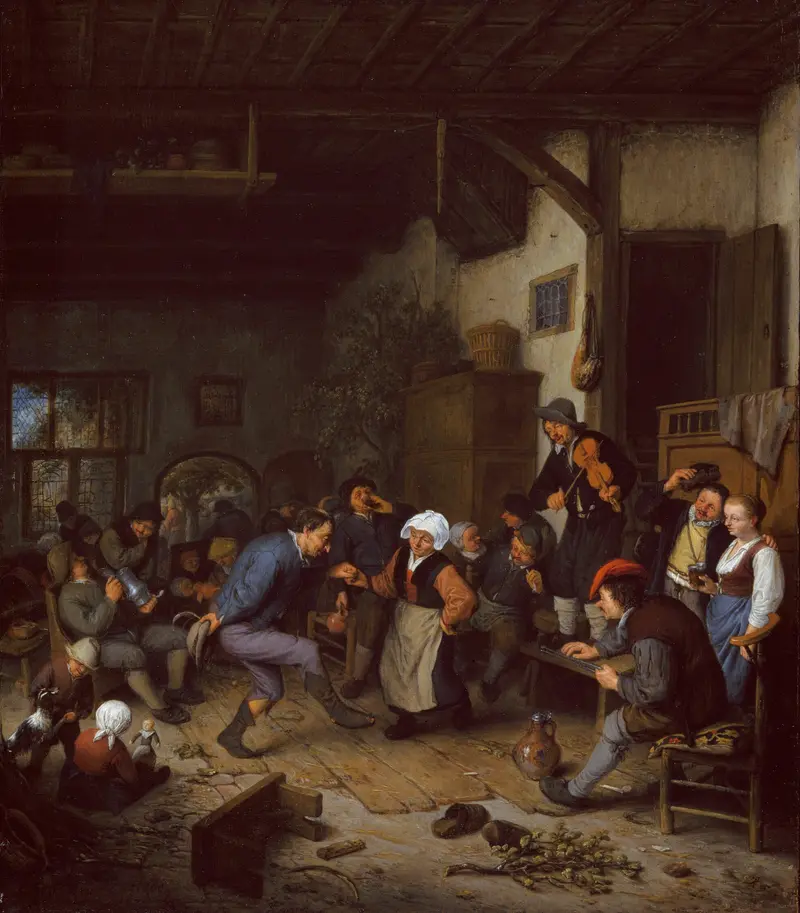
Merrymakers in an Inn
Adriaen van Ostade
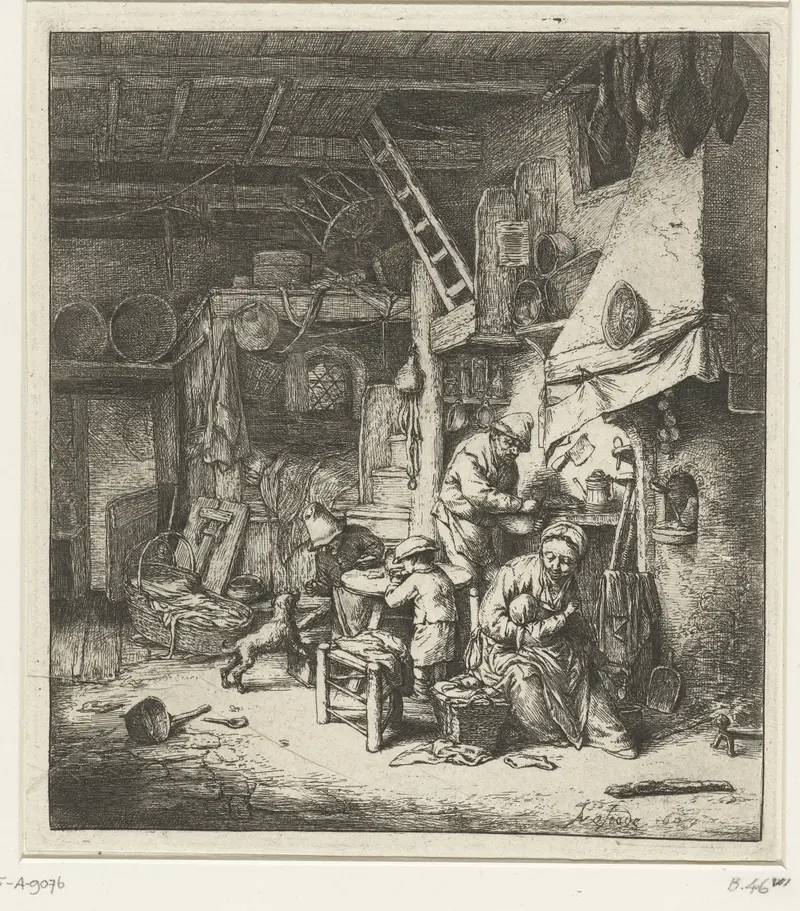
Boerengezin in interieur
Adriaen van Ostade
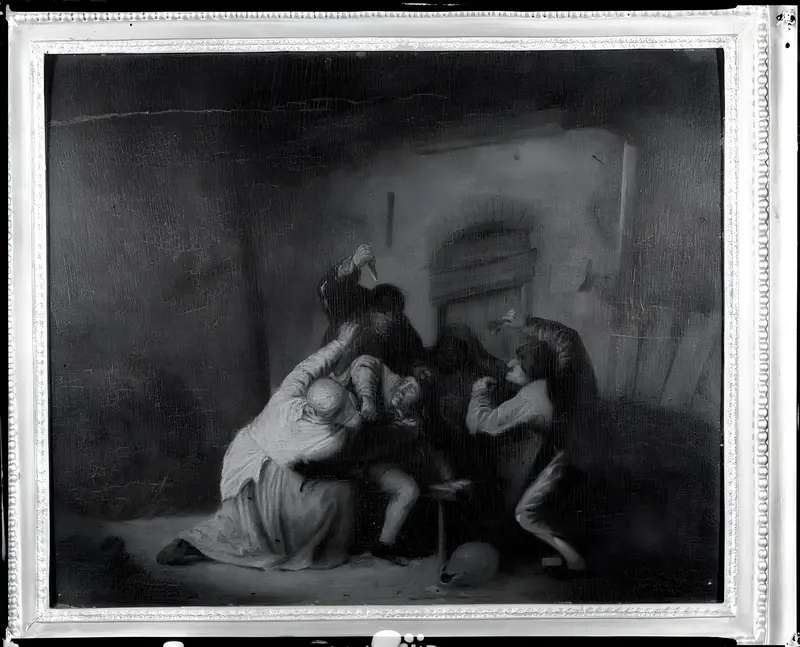
Peasants Brawling in a Tavern
Adriaen van Ostade
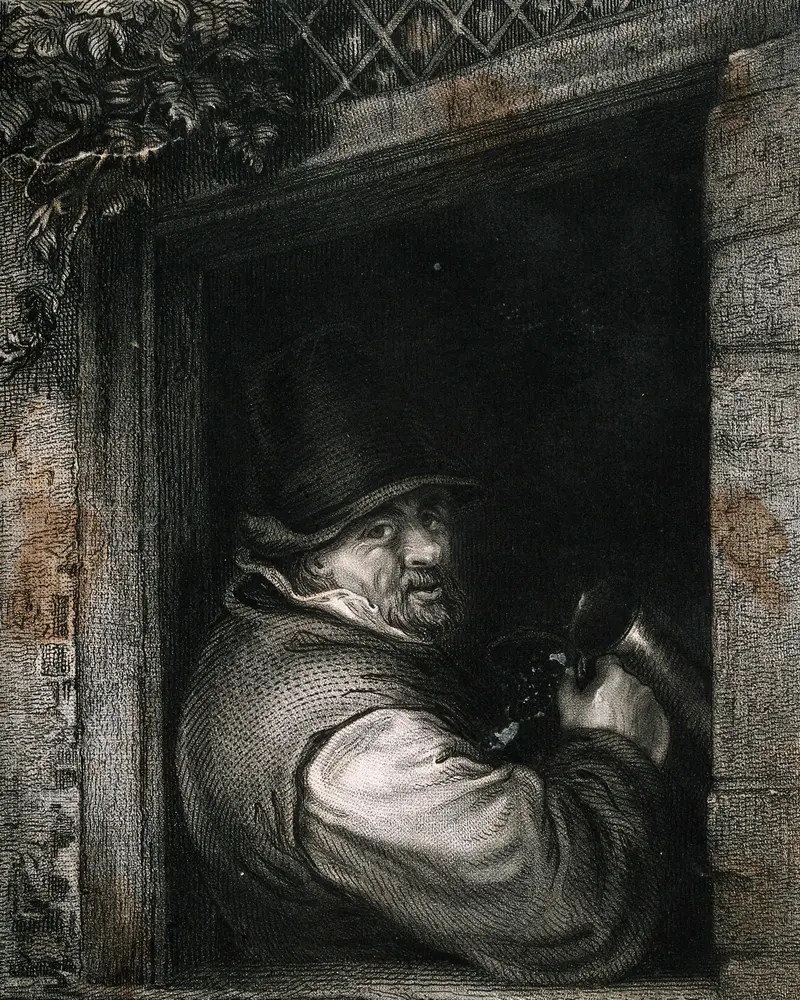
Man with a Tankard at a Window
Adriaen van Ostade
Dans in de herberg
Adriaen van Ostade
More Genre Scene Art

Banquet of the Officers of the St George Civic Guard
Frans Hals

Rembrandt and Saskia in the Scene of the Prodigal Son
Rembrandt van Rijn

Bal du moulin de la Galette
Pierre-Auguste Renoir

Quadrille at the Moulin Rouge
Henri de Toulouse-Lautrec

A Burial at Ornans
Gustave Courbet

When Will You Marry?
Paul Gauguin