
Interior of a stable with two dapple-greys — History & Facts
What first strikes the viewer in Interior of a stable with two dapple-greys by Abraham Van Calraet is the quiet choreography of animal and human life, caught in a moment of tranquil routine. The two dapple-grey horses, rendered with a remarkable sensitivity to the play of light across their muscular bodies, dominate the scene, their forms almost luminous against the dark stable interior. A dog sniffs the ground, its russet coat a warm note amid the cooler tones, while a goat lingers in the shadows, half-hidden but still present in the drama of daily labor.
The figures of two men, their faces obscured by hats and shadow, are reduced to flashes of red and brown, suggesting the anonymous, cyclical work that sustains such a scene. Every detail, from the sweep of the horses’ tails to the broom leaning against the wall, is placed to guide the eye in a slow, looping circuit—inviting the viewer to linger over the textures and relationships that animate this quiet corner of seventeenth-century life. Works like this flourished in the Dutch Republic during the late seventeenth and early eighteenth centuries, a period when scenes of stables, livestock, and rural labor found eager audiences among urban collectors. The era prized paintings that celebrated both the beauty and the utility of animals, often as emblems of prosperity or the quiet dignity of work.
Abraham Van Calraet was active during this time, and his attention to the sheen of horsehair and the weight of shadow places him firmly within the tradition of Dutch animal painting, which valued naturalistic observation and a subdued, earthy palette. This particular work, now in the collection of Museum Boijmans Van Beuningen, dates from between 1657 and 1722, a span that saw both the height and the gradual transformation of the Dutch Golden Age. History has kept few traces of this painting’s journey, but its silent, absorbing world remains—waiting for each new visitor to step inside.
More Artworks by Abraham Van Calraet
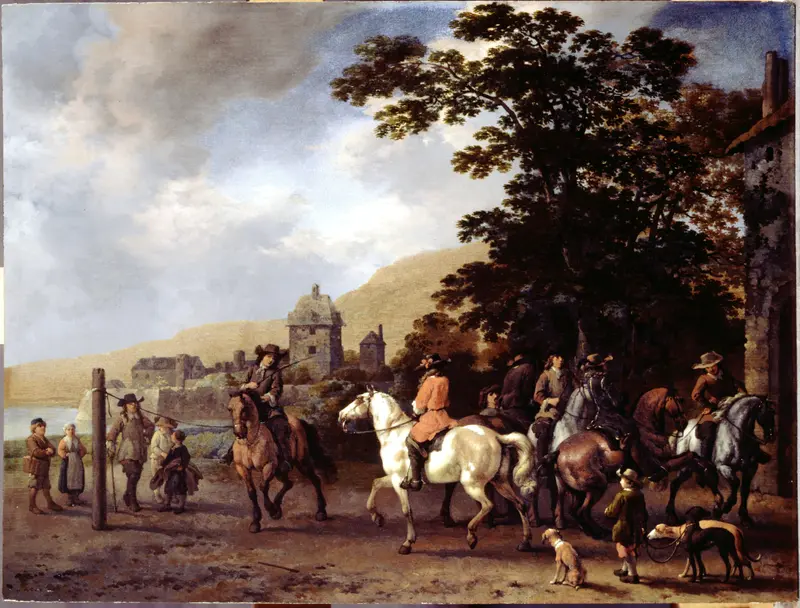
A Riding School in the Open Air
Abraham Van Calraet
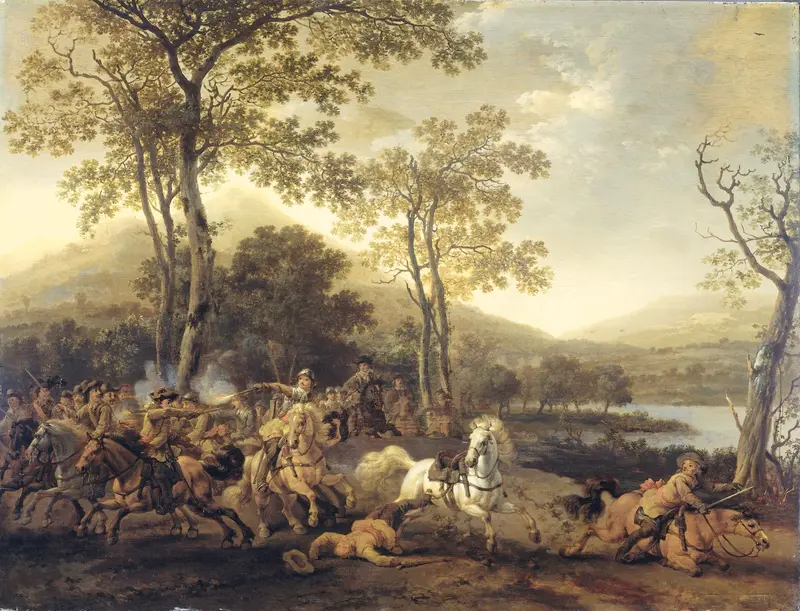
Cavalry Skirmish
Abraham Van Calraet
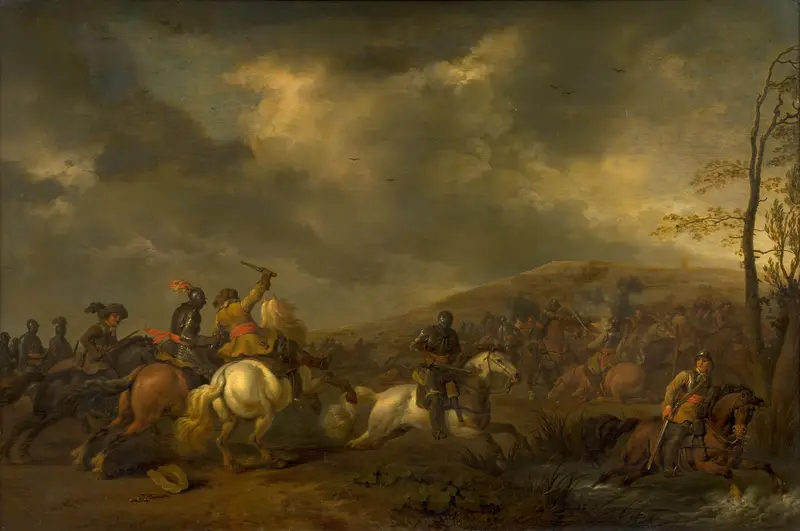
Choc de cavalerie
Abraham Van Calraet
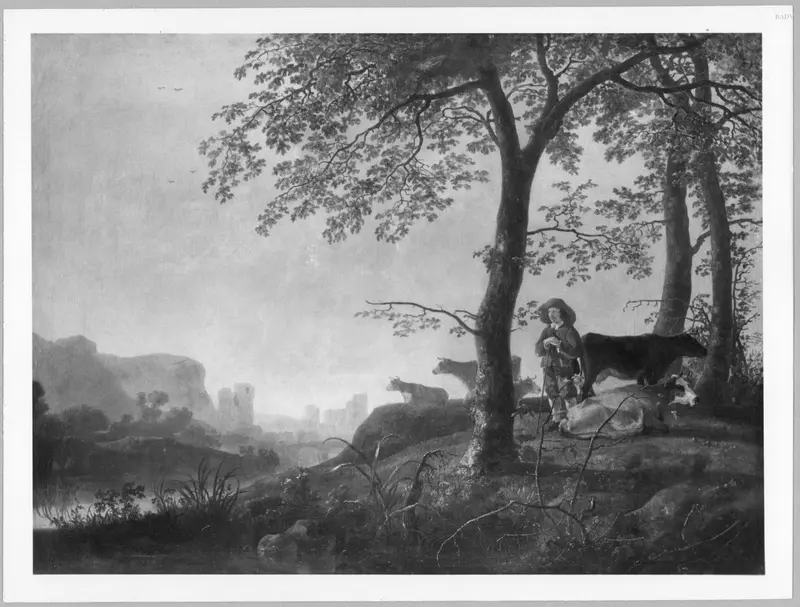
Herder and Cattle under Trees
Abraham Van Calraet
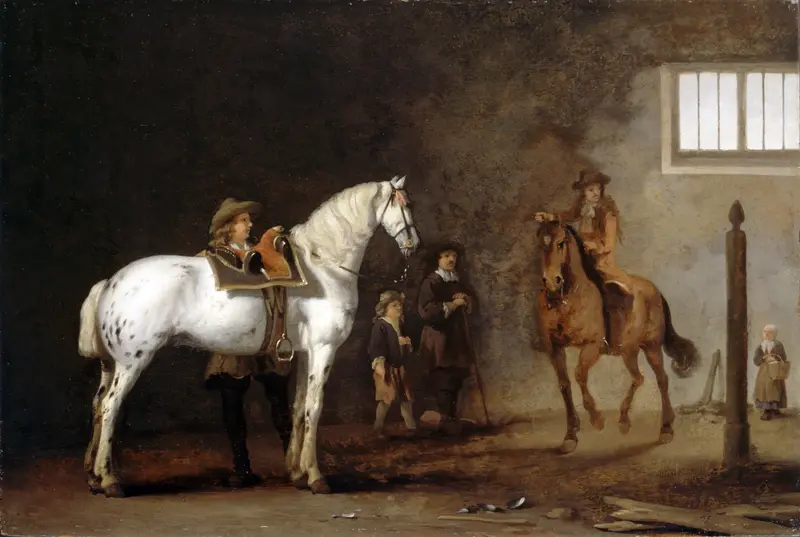
White Horse in a Riding School
Abraham Van Calraet
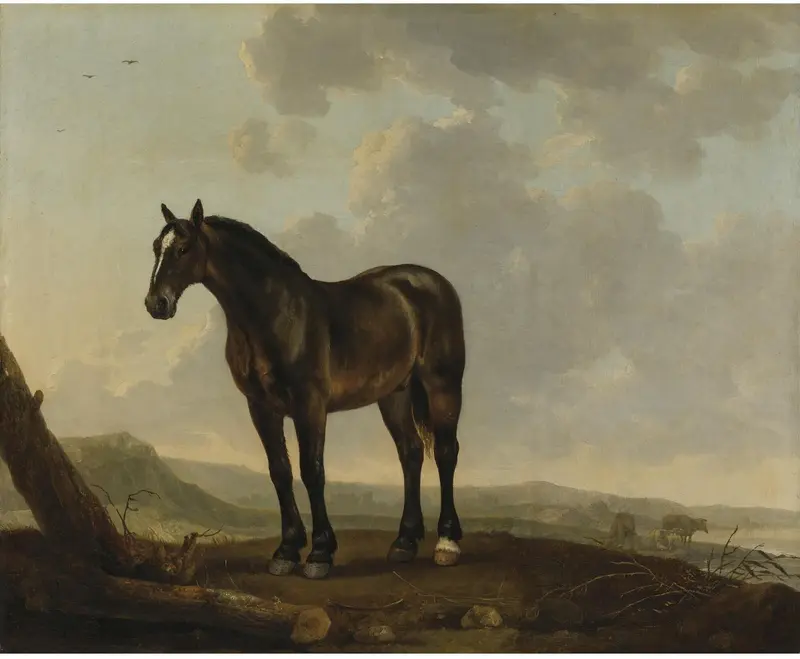
Landscape with a brown horse
Abraham Van Calraet
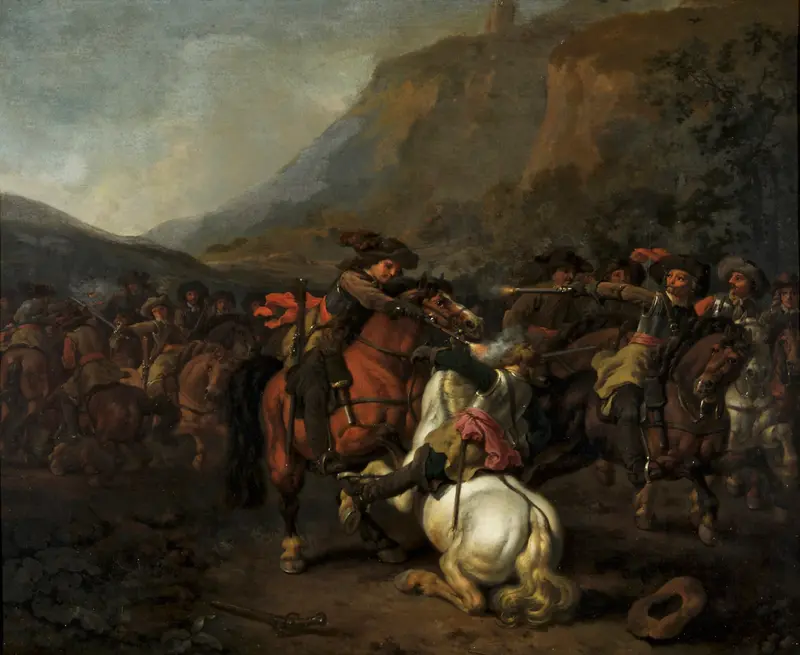
Ruitergevecht DM 016 1163 Dordrechts Museum
Abraham Van Calraet
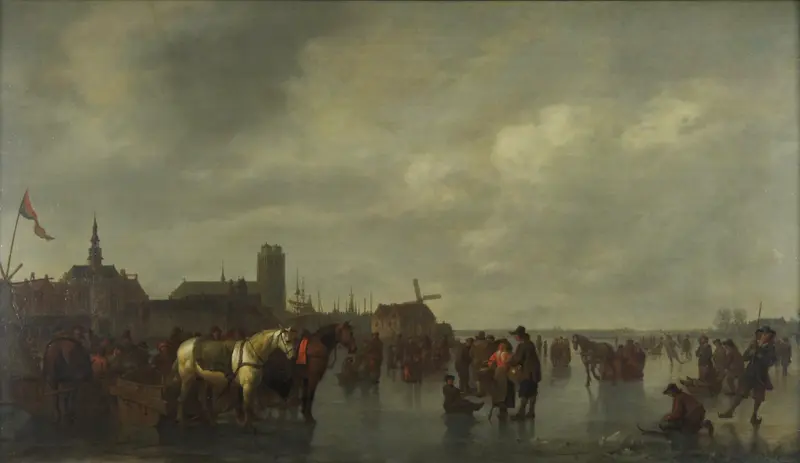
Scene on the Ice outside Dordrecht
Abraham Van Calraet
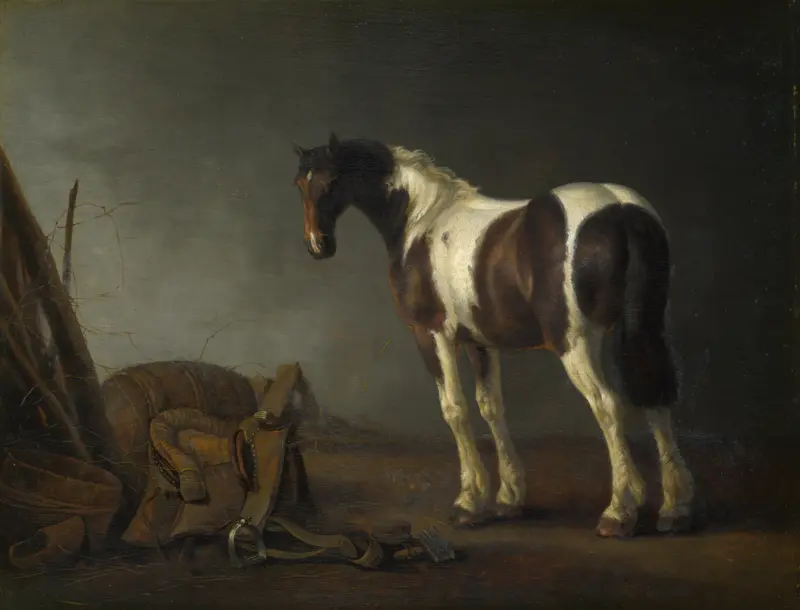
A Horse with a Saddle Beside it
Abraham Van Calraet
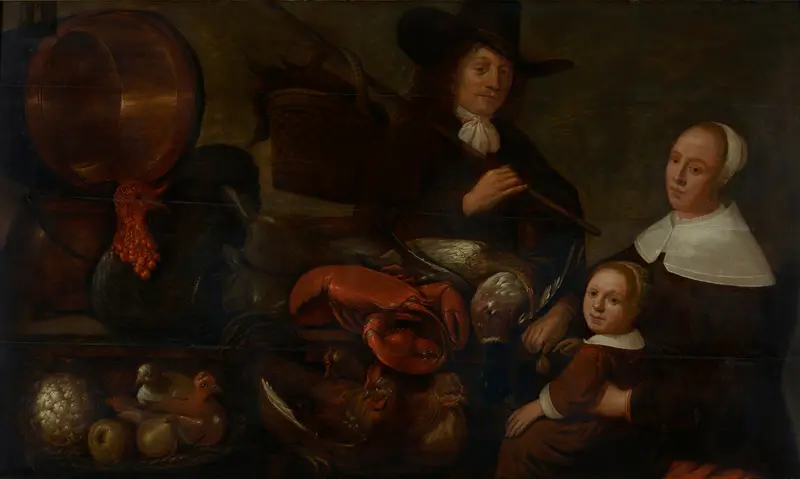
Portrait of a family
Abraham Van Calraet





