
Interior of a Tavern with a Five Peasants and a Woman — History & Facts
A shaft of golden light falls across the rough wooden table, catching on the battered jug and the animated faces of peasants deep in their cups. The eye is drawn first to the laughter—one man, mouth open in mid-joke, gestures with a hand as if to pull his companions into the moment. Around him, each figure is caught in their own rhythm: a man slouches with a tankard, another leans in, intent on the conversation, while a woman stands behind, pouring more drink into the gathering.
The clutter of daily life—baskets, a low-hanging birdcage, a sleeping dog—grounds the scene in the everyday, yet the careful play of light and shadow gives it a quiet dignity. The palette, all warm browns and ochres, wraps the room in a sense of smoky intimacy, hinting at the comfort and camaraderie found in such humble spaces. Painted in 1646, this work belongs to the world of the Dutch Golden Age, when scenes of peasant life became a favored subject for collectors in prosperous cities. Artists like Adriaen van Ostade specialized in these lively interiors, offering a window onto the pleasures and hardships of rural existence.
Such paintings were often acquired by burghers who saw in them both a moral lesson and a celebration of simple joys. Today, Interior of a Tavern with Five Peasants and a Woman resides in the Royal Collection, its quiet drama still unfolding for new viewers. Look again at the way the light lingers on the faces, and consider how much of seventeenth-century life was lived in rooms just like this.
More Artworks by Adriaen van Ostade

Dans in de herberg
Adriaen van Ostade
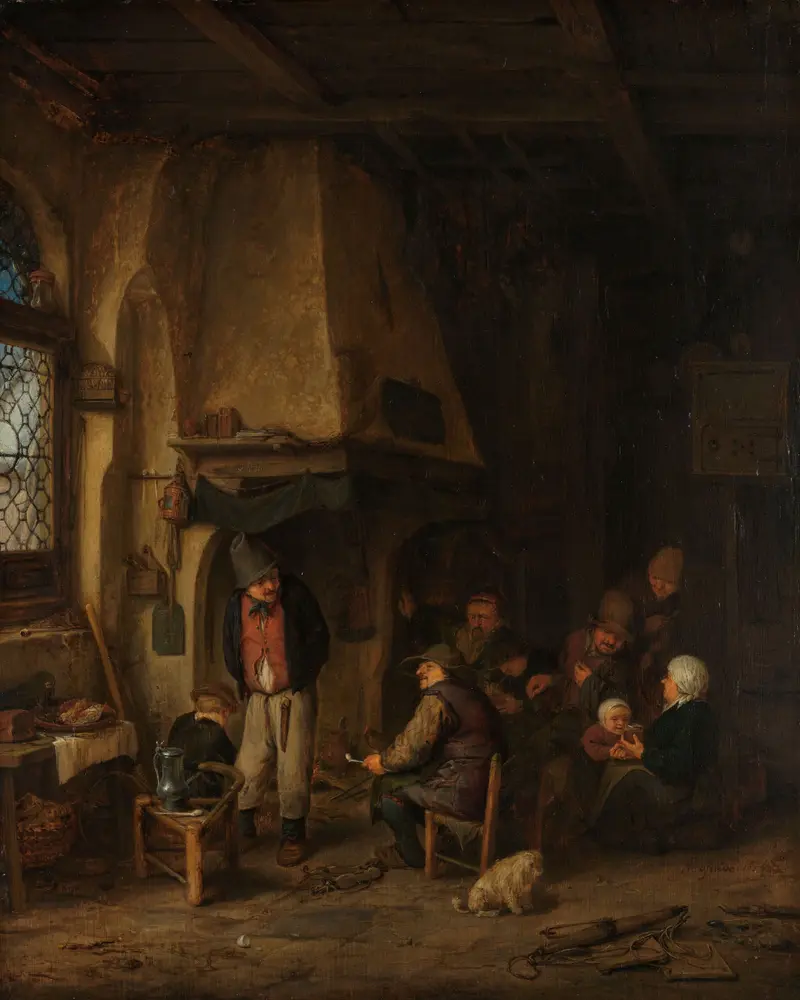
‘The Skaters’: Peasants in an Interior
Adriaen van Ostade
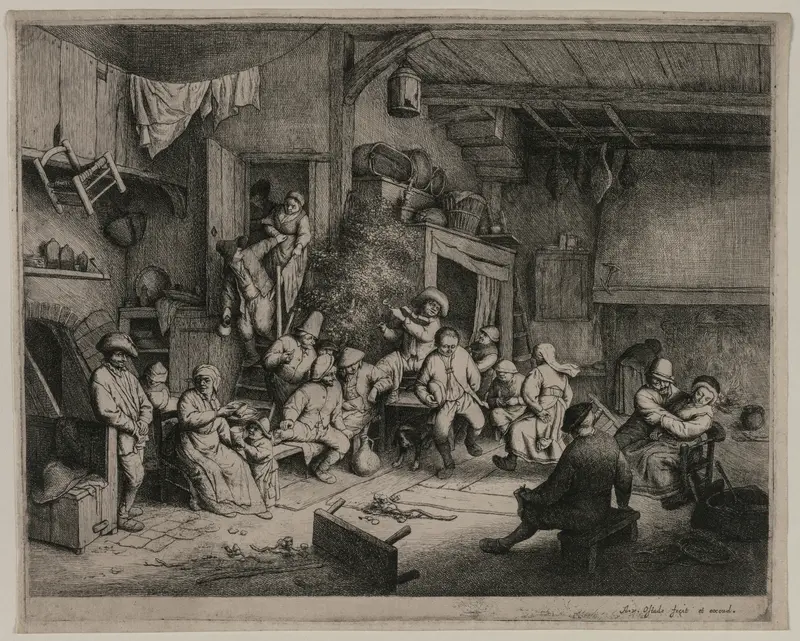
Dance at the Inn
Adriaen van Ostade
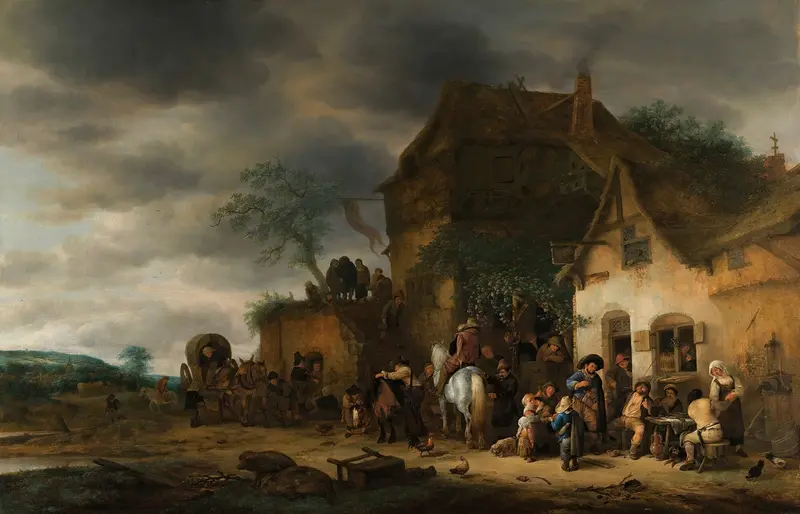
Travellers Halted At A Country Inn
Adriaen van Ostade
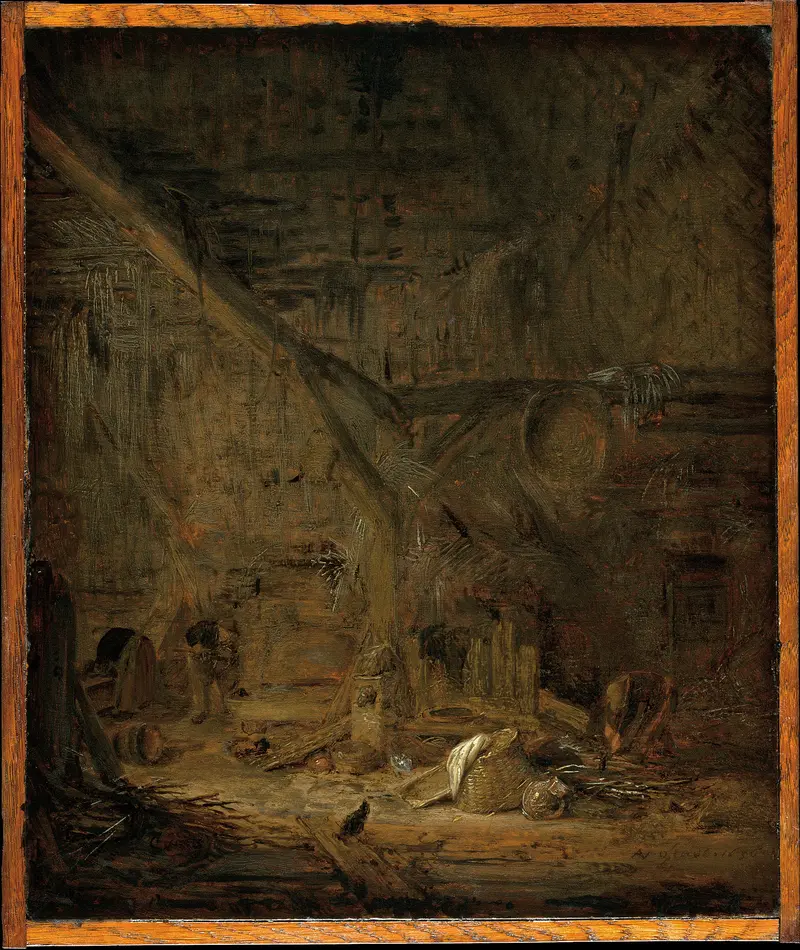
Interior of a Barn
Adriaen van Ostade
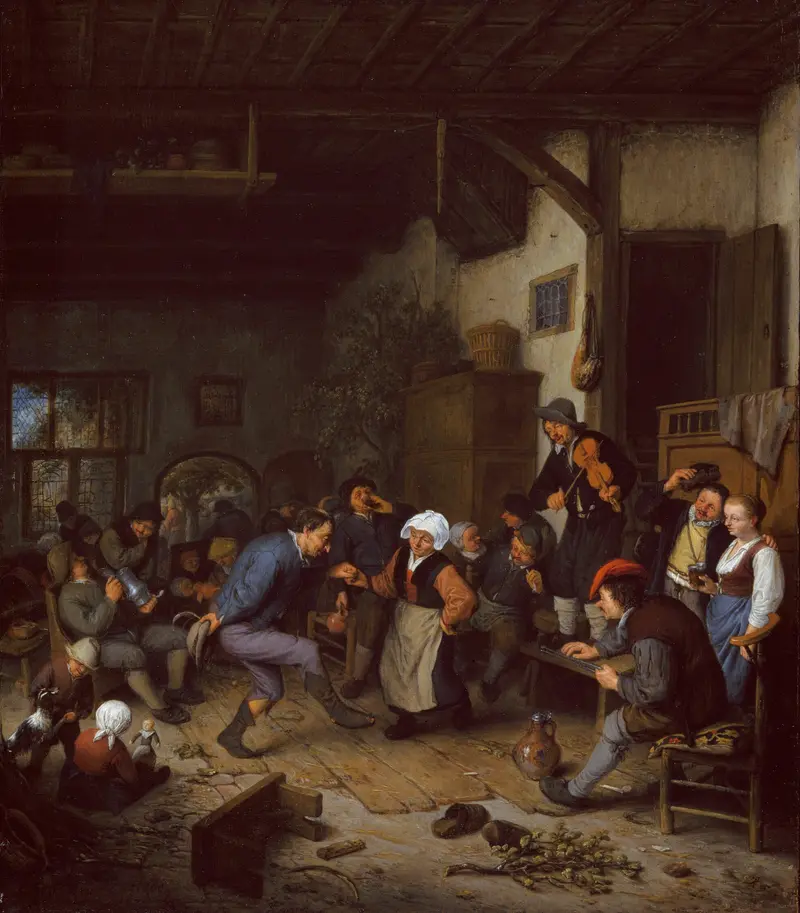
Merrymakers in an Inn
Adriaen van Ostade
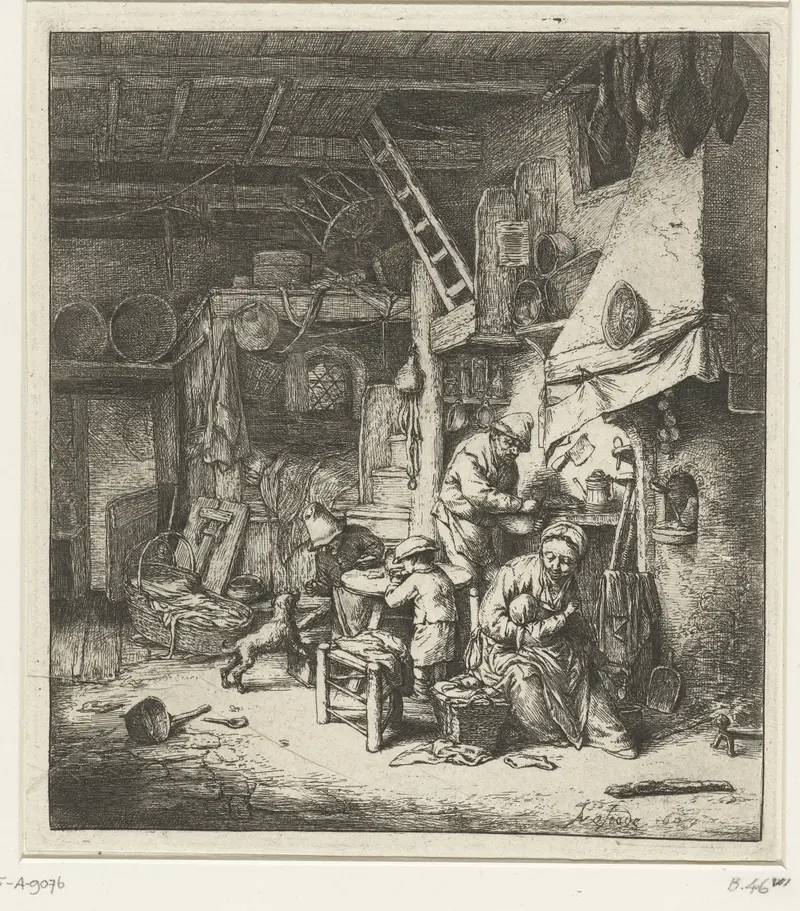
Boerengezin in interieur
Adriaen van Ostade
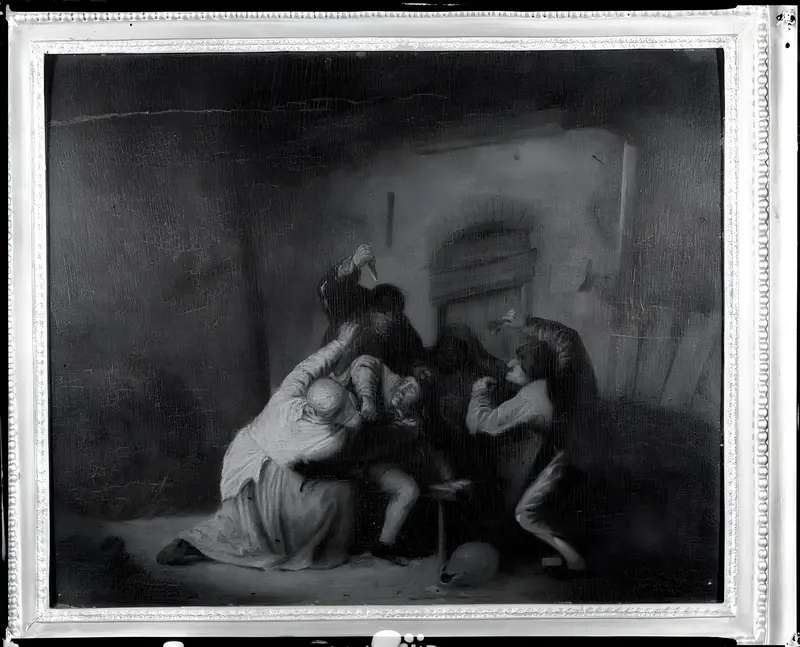
Peasants Brawling in a Tavern
Adriaen van Ostade
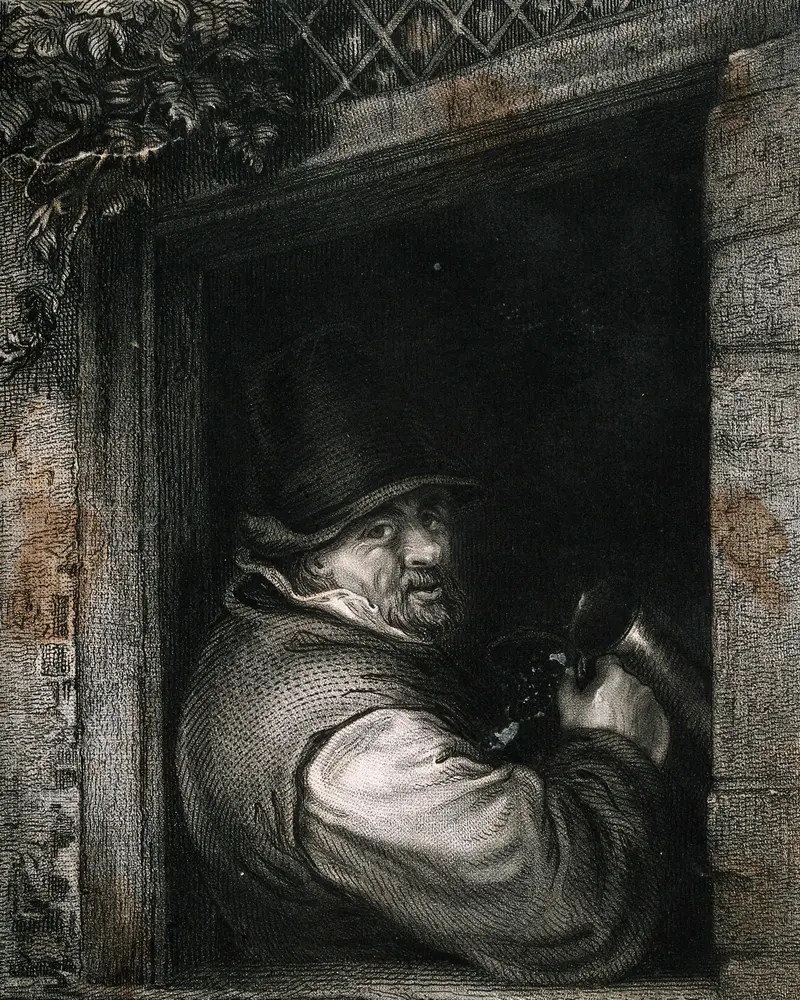
Man with a Tankard at a Window
Adriaen van Ostade
Dans in de herberg
Adriaen van Ostade
More Genre Scene Art

Banquet of the Officers of the St George Civic Guard
Frans Hals

Rembrandt and Saskia in the Scene of the Prodigal Son
Rembrandt van Rijn

Bal du moulin de la Galette
Pierre-Auguste Renoir

Quadrille at the Moulin Rouge
Henri de Toulouse-Lautrec

A Burial at Ornans
Gustave Courbet

When Will You Marry?
Paul Gauguin