
Interior with a Peasant Family — History & Facts
What first draws the eye in Interior with a Peasant Family is not the figures themselves, but the hush of the space they inhabit—a vast, shadowed barn or cottage interior that seems to swallow sound. In the center, a woman bends over a child, her gesture protective and tender, while a man stands nearby, leaning on a stick, his posture weary but attentive. The light, carefully rationed, picks out these figures from the gloom, making their small world feel both intimate and isolated.
The rough textures of wood and straw, the slanting beams, and the barrel at the left all speak of a life shaped by labor and necessity, yet the painter’s attention to the warmth between the figures suggests a quiet dignity at the heart of this humble scene. This painting, made in Holland in 1637 and now in the collection of the Los Angeles County Museum of Art, belongs to a tradition that flourished in the Dutch Golden Age: the depiction of everyday life, or genre painting. Artists like Adriaen van Ostade found endless material in the daily routines of peasants and townsfolk, creating works that were prized by a growing class of urban collectors eager for images that reflected their own world, rather than the distant lives of saints or kings. Such paintings were often small, intended for private enjoyment, and they invite the viewer to step quietly into another’s life.
History has kept few traces of the individual stories behind these scenes, but their power lies in the way they make the ordinary unforgettable—look again at the way the light falls on the mother’s cap, and the silent conversation it creates between her and the viewer.
More Artworks by Adriaen van Ostade

Dans in de herberg
Adriaen van Ostade
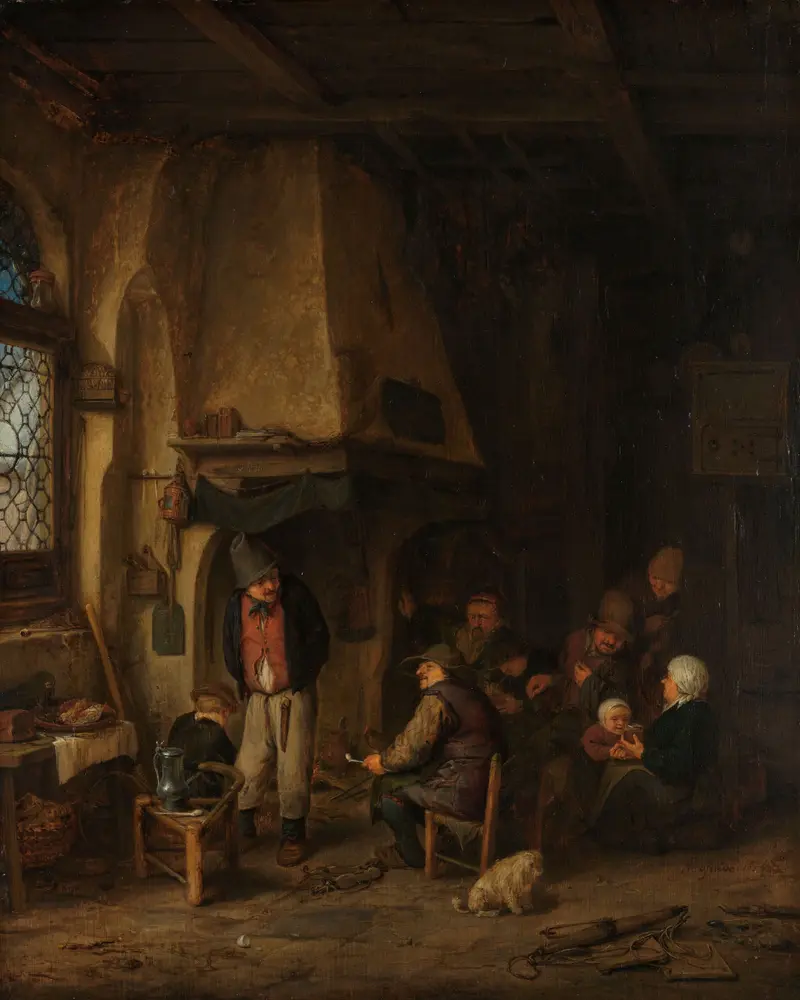
‘The Skaters’: Peasants in an Interior
Adriaen van Ostade
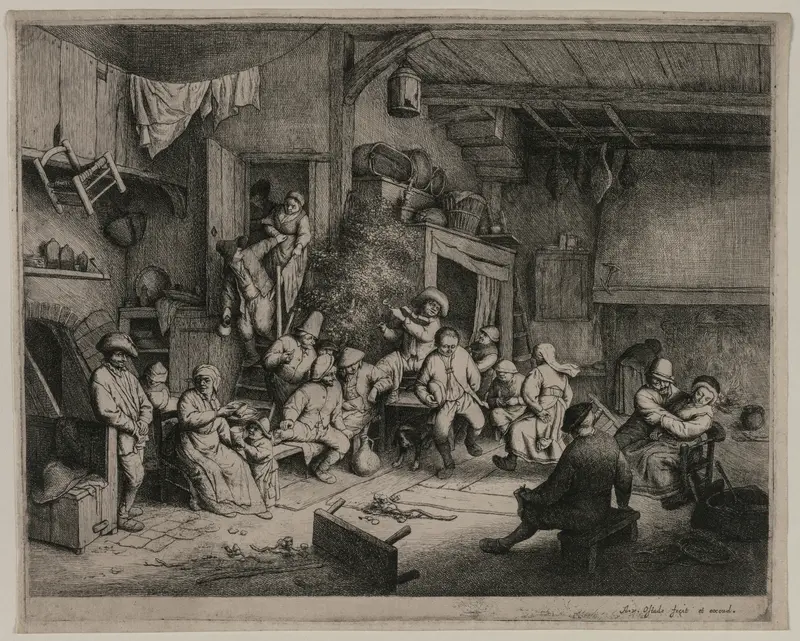
Dance at the Inn
Adriaen van Ostade
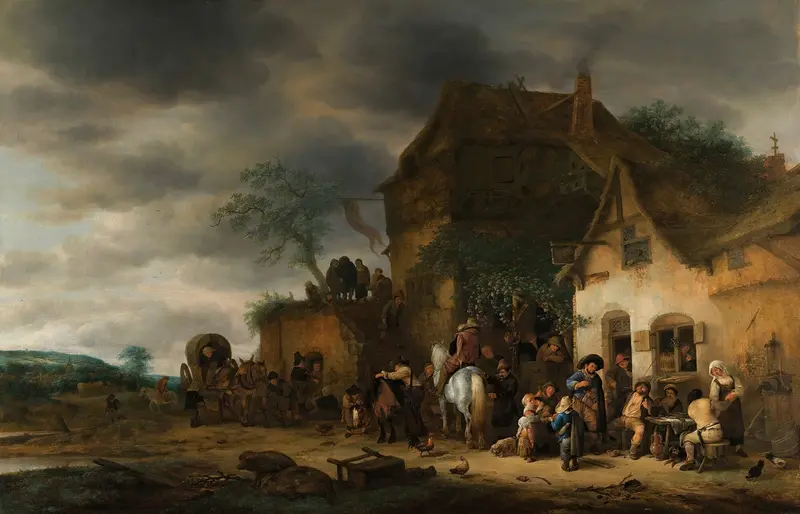
Travellers Halted At A Country Inn
Adriaen van Ostade
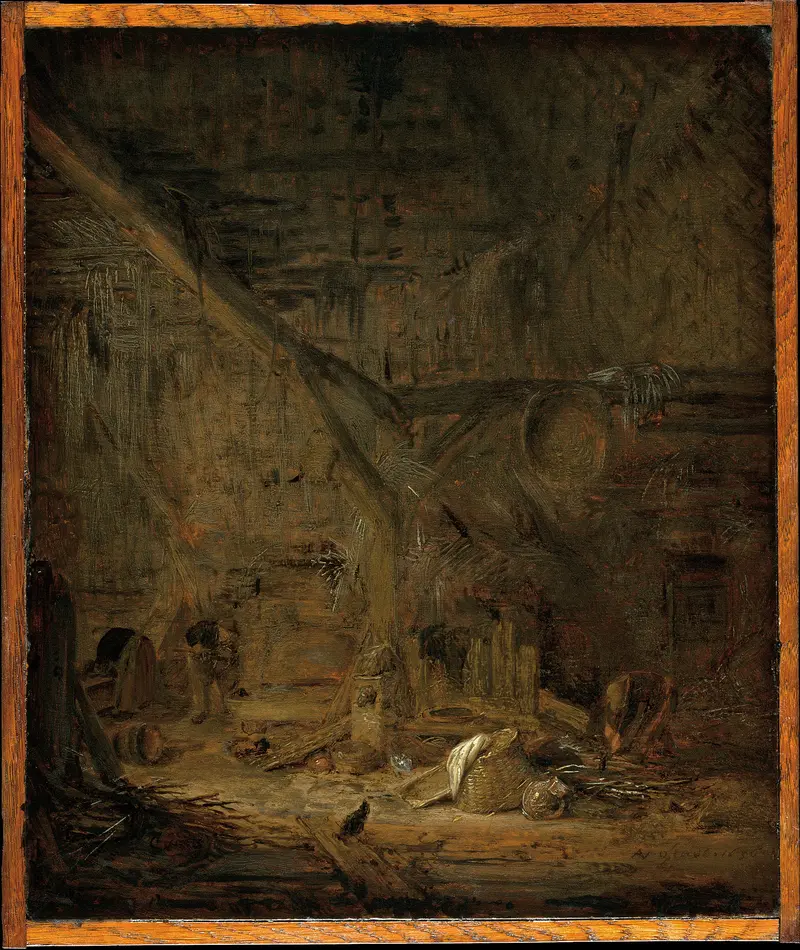
Interior of a Barn
Adriaen van Ostade
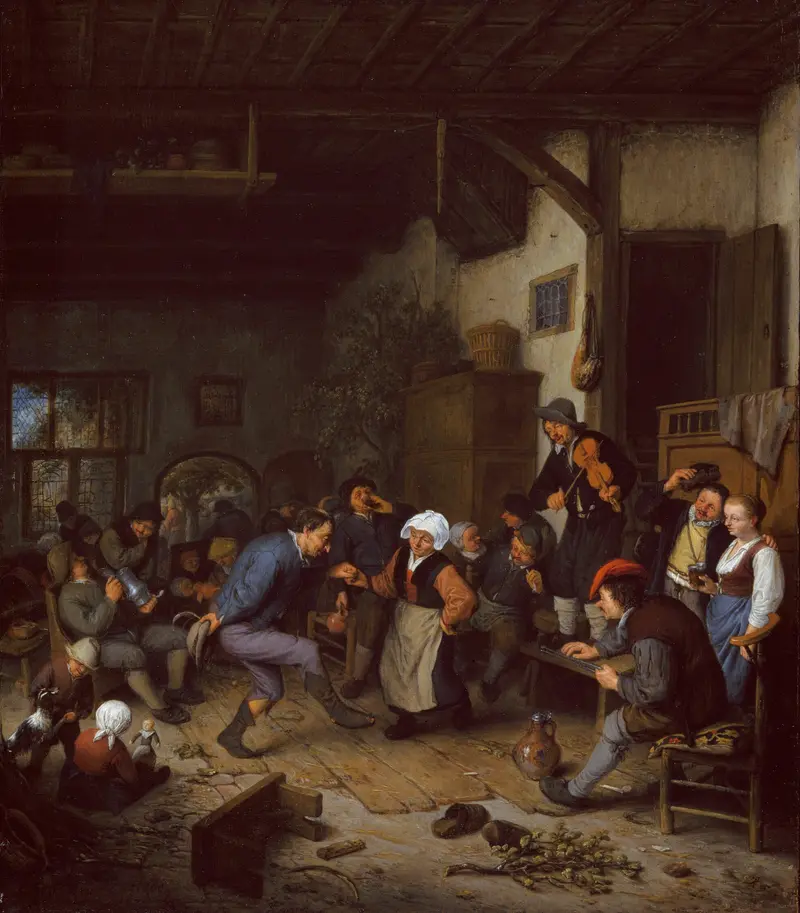
Merrymakers in an Inn
Adriaen van Ostade
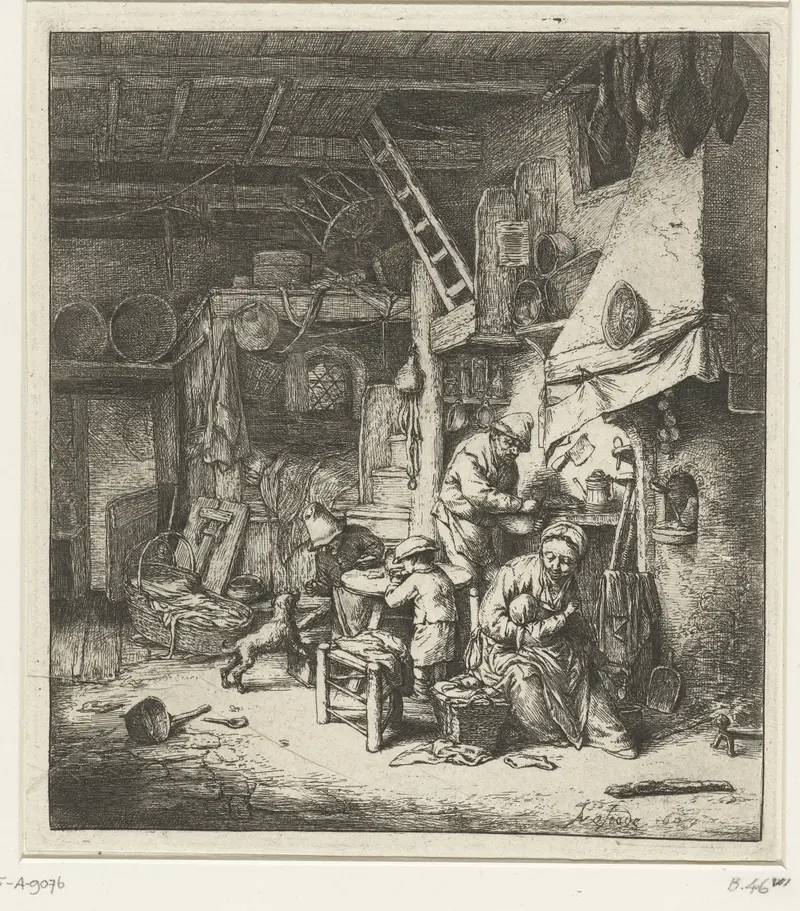
Boerengezin in interieur
Adriaen van Ostade
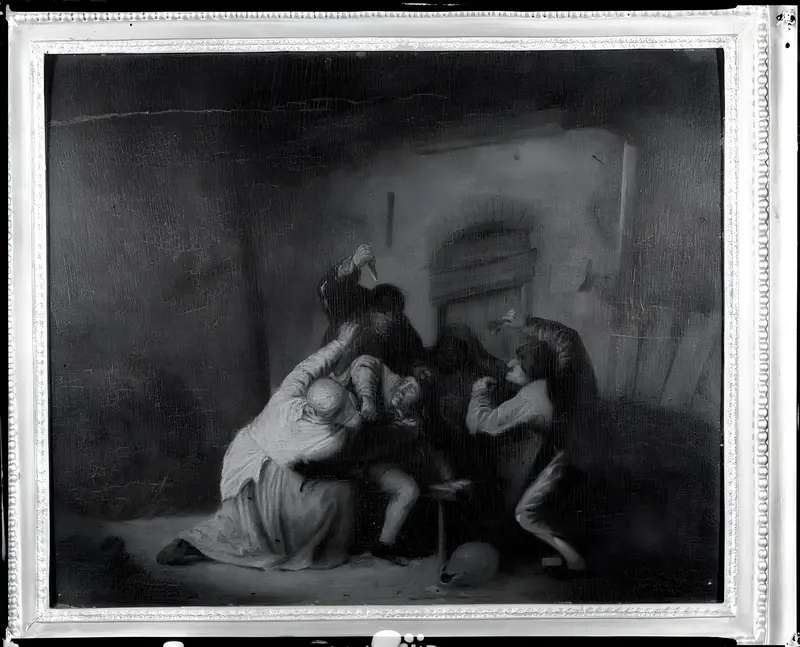
Peasants Brawling in a Tavern
Adriaen van Ostade
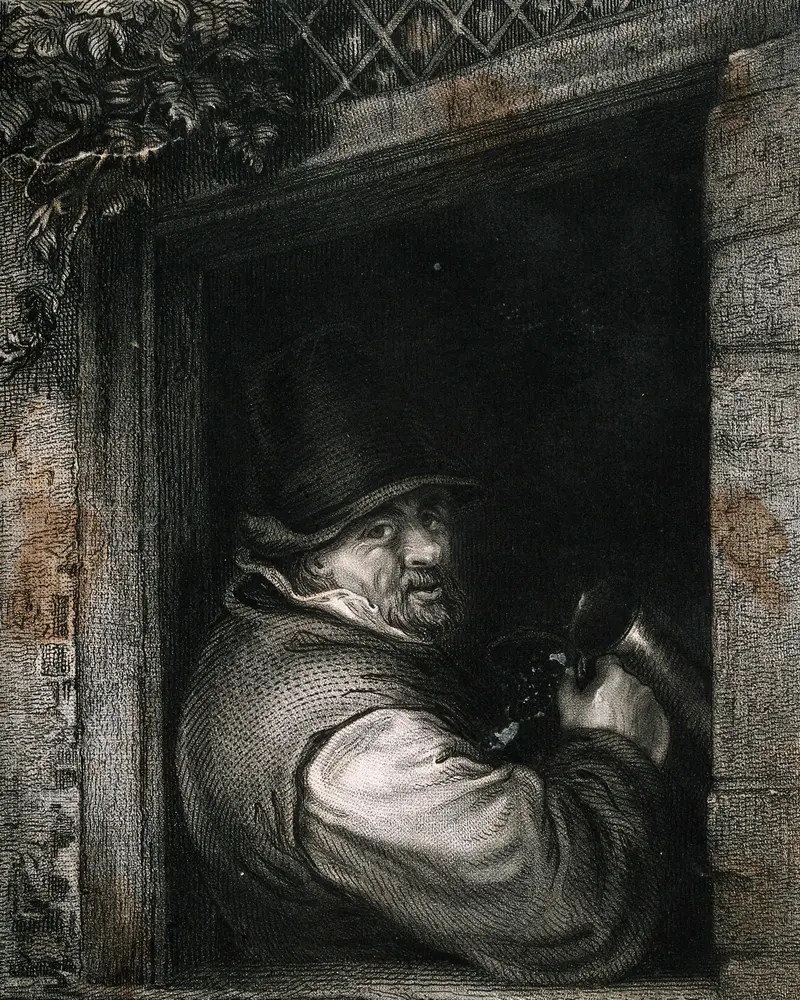
Man with a Tankard at a Window
Adriaen van Ostade
Dans in de herberg
Adriaen van Ostade
More Genre Scene Art

Banquet of the Officers of the St George Civic Guard
Frans Hals

Rembrandt and Saskia in the Scene of the Prodigal Son
Rembrandt van Rijn

Bal du moulin de la Galette
Pierre-Auguste Renoir

Quadrille at the Moulin Rouge
Henri de Toulouse-Lautrec

A Burial at Ornans
Gustave Courbet

When Will You Marry?
Paul Gauguin