
Italian Landscape with Shepherd and Shepherdess — History & Facts
Who listens when art speaks of silence? In a world bursting with chaos, Gerard de Lairesse's Italian Landscape with Shepherd and Shepherdess invites viewers into a serene moment, brimming with an unsettling tranquility that conceals hints of madness beneath the surface. Look to the left where the shepherd stands, his posture relaxed yet watchful, a guardian over the sheep that graze lazily in the dappled sunlight. The lush Italian countryside sprawls in the background, painted with soft, earthy tones that evoke the warmth of the sun-soaked earth. Notice how the light filters through the trees, casting delicate shadows that mimic the quietude of the scene yet stir an undercurrent of unease.
The shepherdess, her gentle demeanor juxtaposed against the wildness of nature, draws the eye toward the right, where a distant storm brews on the horizon, hinting at a sudden disruption. Delve deeper into the painting and you’ll find the tension between human presence and the untamed landscape. The juxtaposition of the shepherd's calmness with the looming tempest suggests that madness might be just a breath away from harmony. Tiny details emerge on closer inspection: the sharp angles of the trees contrast with the shepherdess’s soft curves, and her gaze, though serene, hints at an awareness of the wildness around her, as if she senses the madness waiting at the fringes of their pastoral paradise. Created around 1687, this work finds de Lairesse at a pivotal moment in his career, grappling with both his artistic identity and deteriorating health.
Living in Amsterdam, he was heavily influenced by the Baroque movement and the search for beauty amid chaos, mirroring a broader artistic trend that sought to balance the idyllic with the tumultuous. The world around him was a canvas of conflict and change, echoing the hidden narrative in this seemingly simple landscape.
More Artworks by Gerard de Lairesse
Browse all →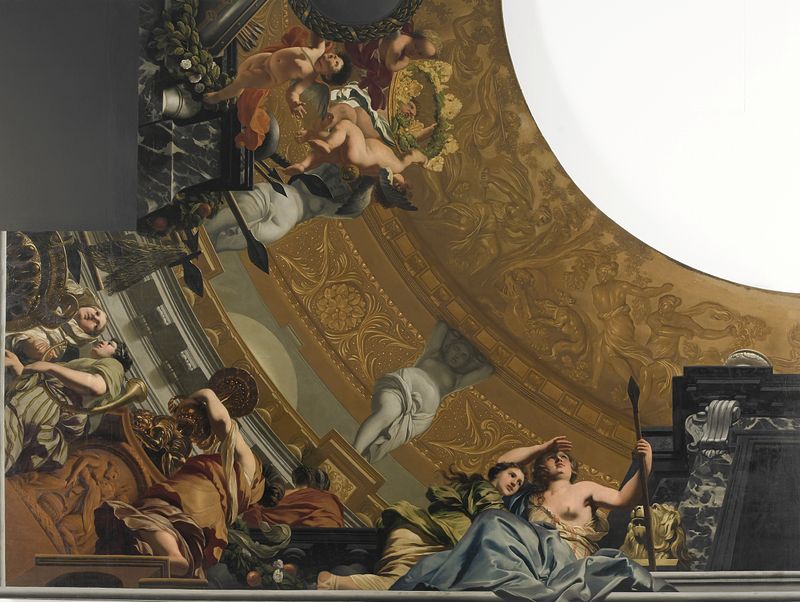
Ceiling painting with Diana and her companions
Gerard de Lairesse

Allegory of Fame
Gerard de Lairesse
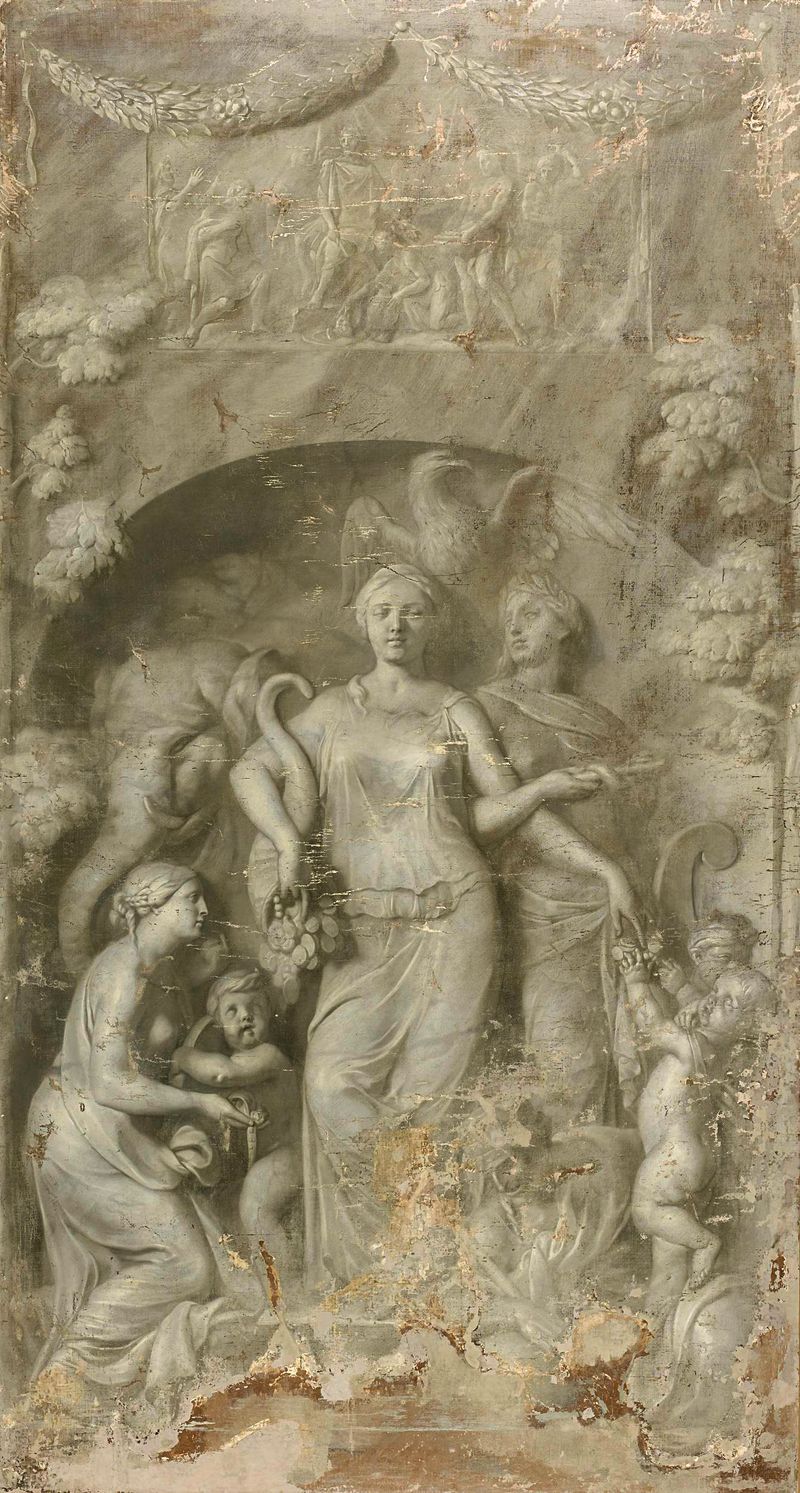
Allegory of Charity
Gerard de Lairesse

Allegory of Dawn
Gerard de Lairesse
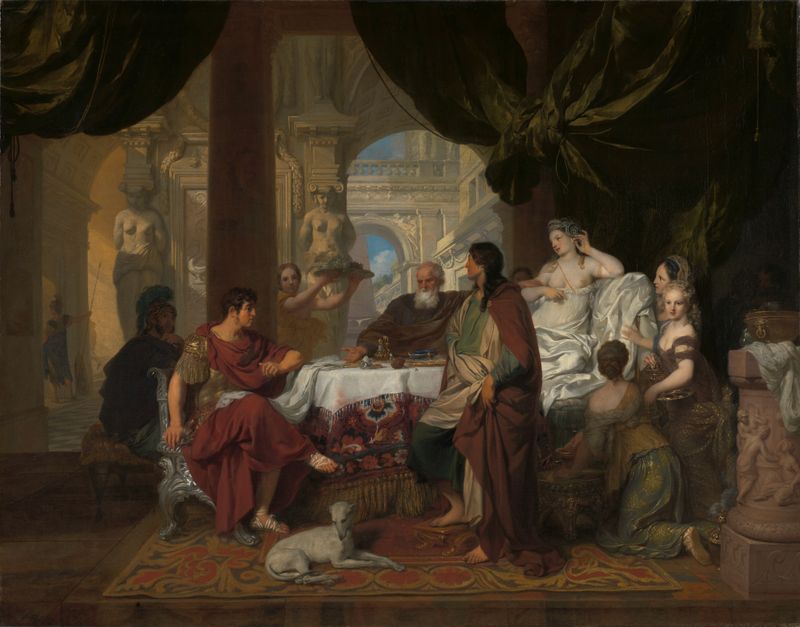
Cleopatra’s Banquet
Gerard de Lairesse
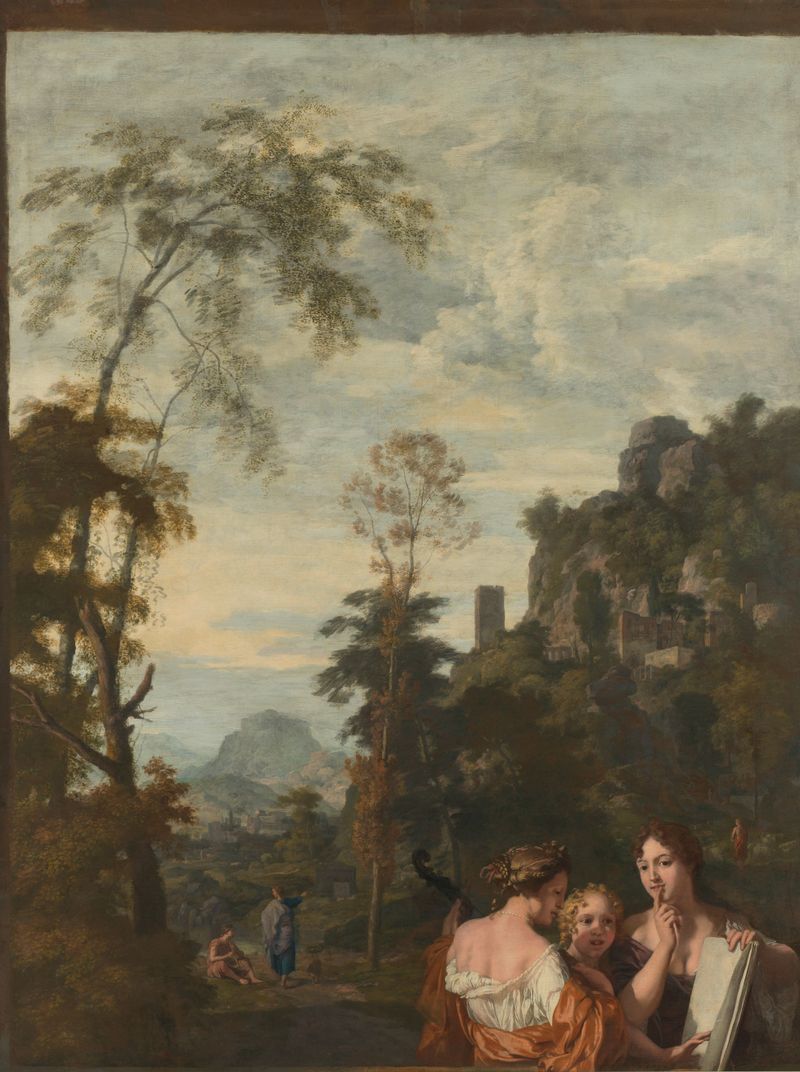
Italian Landscape with three Women Making Music
Gerard de Lairesse
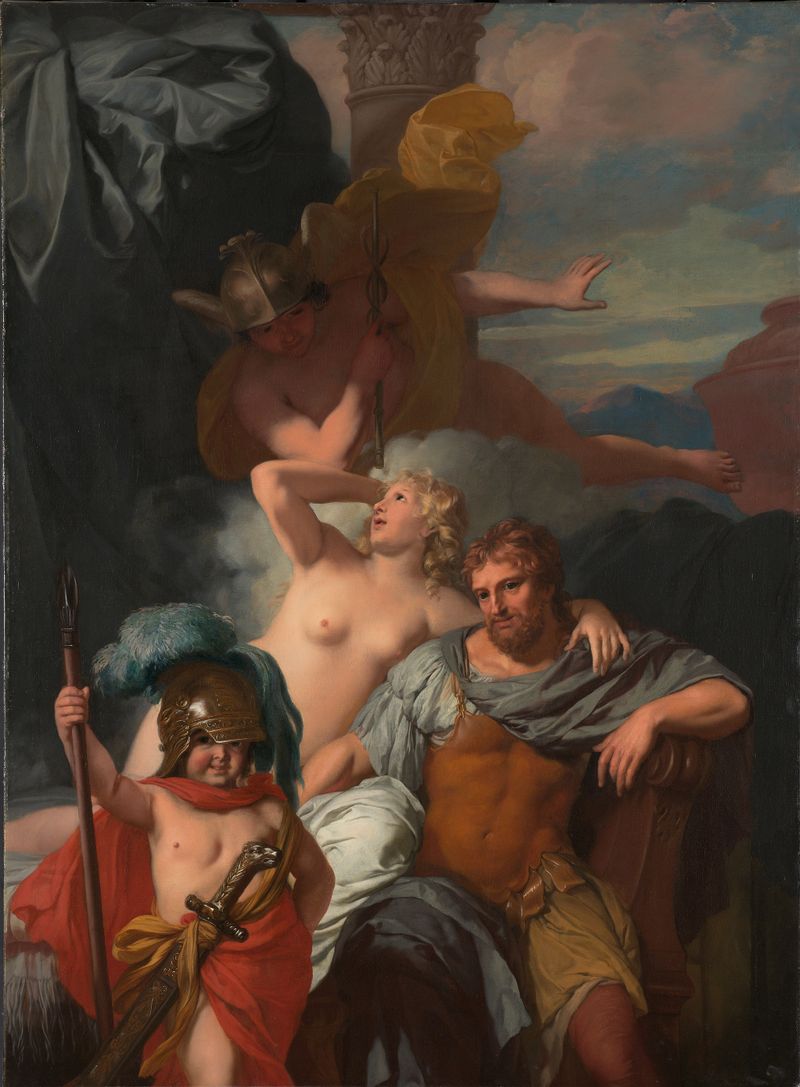
Mercury Ordering Calypso to Release Odysseus
Gerard de Lairesse
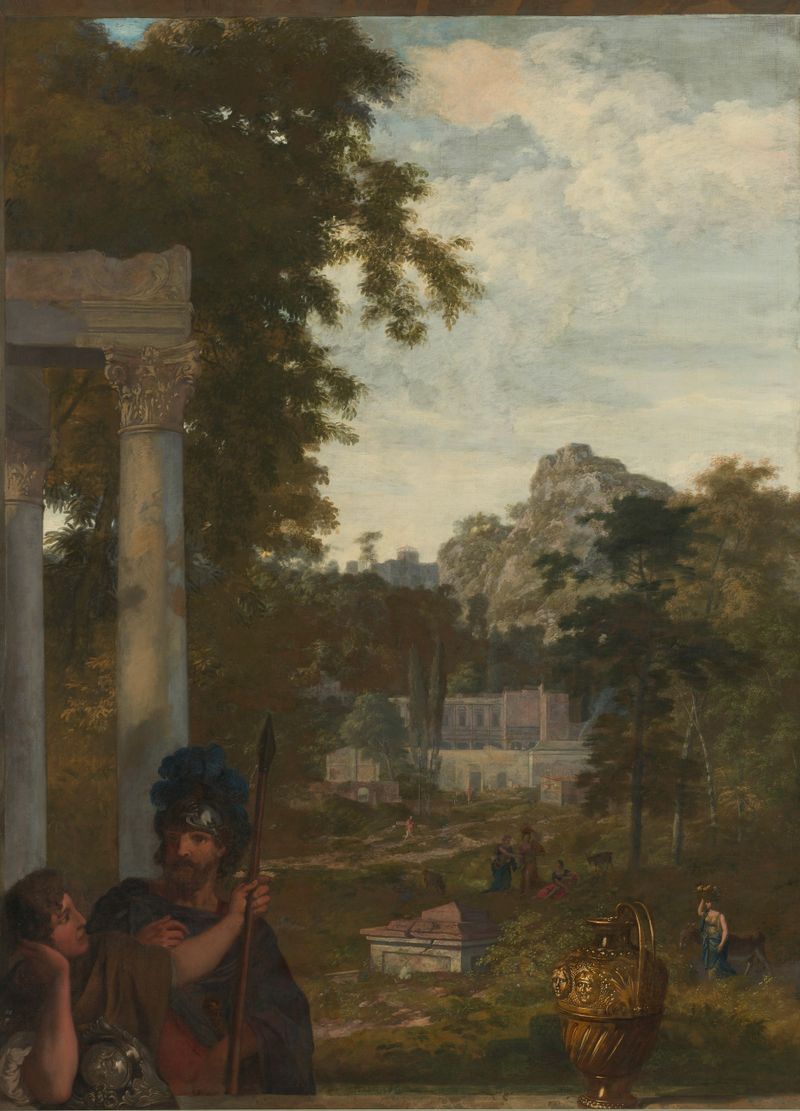
Italian Landscape with two Roman Soldiers
Gerard de Lairesse
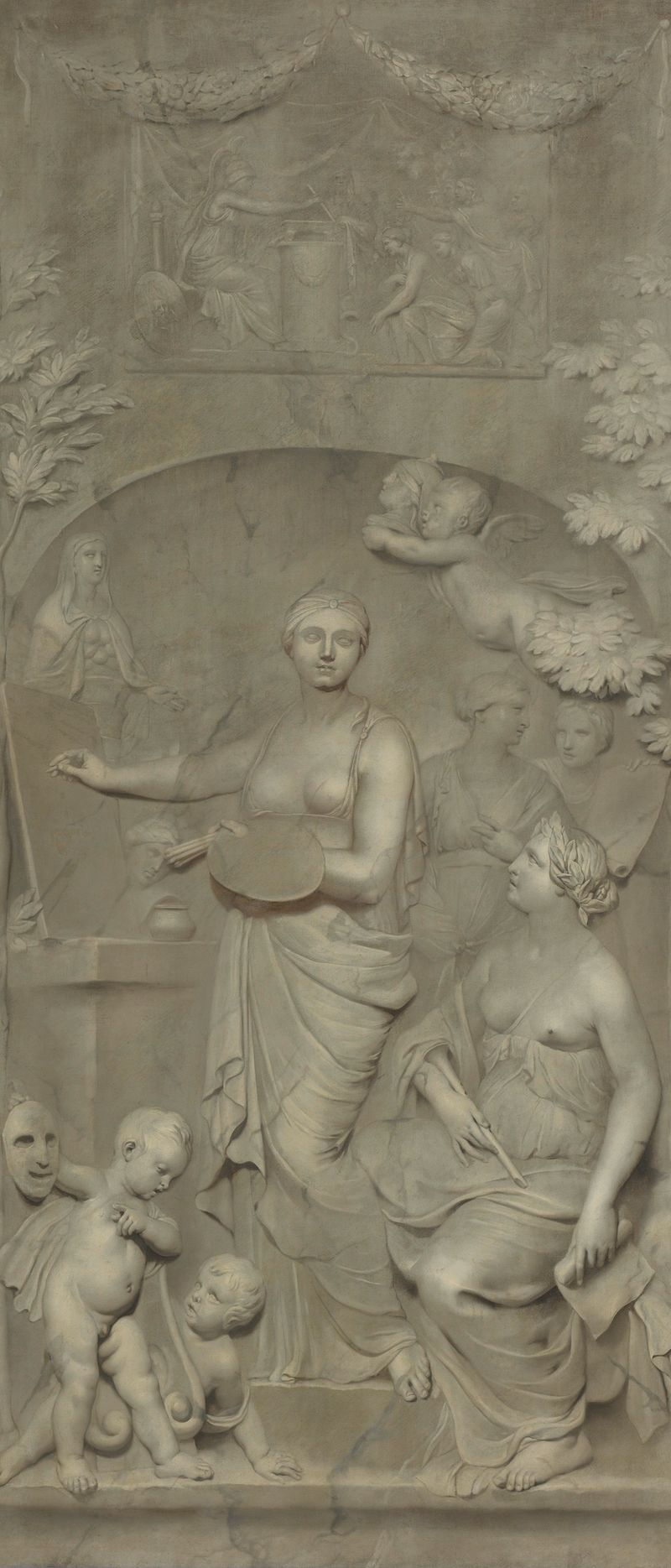
Allegory of the Arts
Gerard de Lairesse

Selene and Endymion
Gerard de Lairesse





