Jardin à Veneux — History & Facts
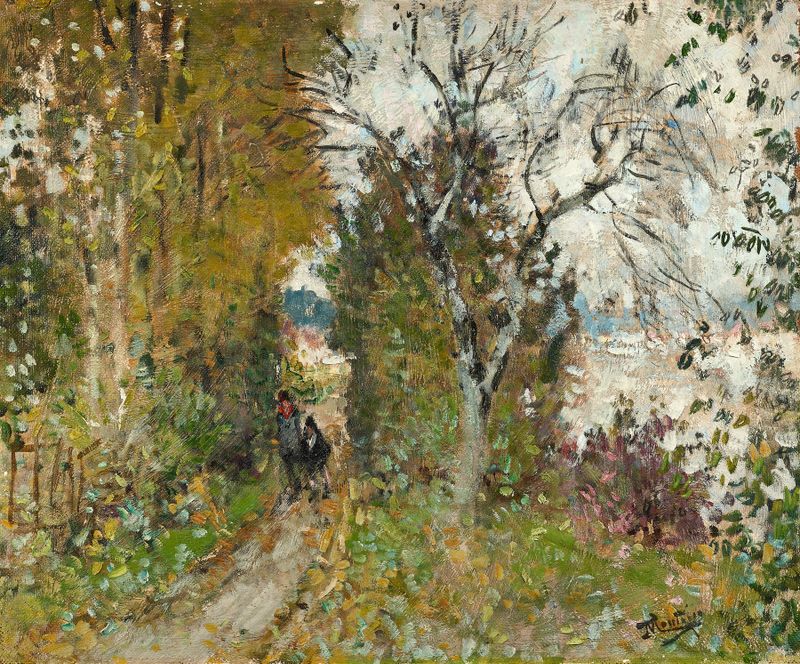
What secret hides in the quiet of the canvas? In Jardin à Veneux, the soothing embrace of an idyllic garden invites viewers to pause, reflect, and connect with a fleeting moment of nostalgia. Look to the left at the lush, verdant foliage that spills vibrantly into the scene, each leaf meticulously painted to capture the play of light filtering through. The delicate strokes create a sense of movement, almost as if a gentle breeze whispers through the branches. In the center, a tranquil path meanders, beckoning us to explore the hidden gems of this serene oasis.
The warm palette—rich greens, soft yellows, and hints of lavender—evokes a comforting warmth, wrapping the viewer in a sense of familiarity. Beneath the surface, the work speaks of fleeting time and the layers of memory that gardens often evoke. The play of light suggests a moment frozen just before dusk, hinting at the melancholy of an ending day. In this tranquil setting, there lies a contrast between the vibrancy of the flora and the stillness of the path, reminding us of the paradox of life—a vibrant existence held in the quiet moments of reflection.
This tension captures the essence of nostalgia: a longing for something beautifully ephemeral. The artist painted Jardin à Veneux during a prolific period in the early 20th century, possibly inspired by the natural beauty surrounding his home in France. As the world began to tremble with the rise of modernism, Montézin found solace in the timelessness of nature, cultivating an aesthetic that resonated with the profound appreciation of the simpler joys of life. This piece stands as a testament to his ability to weave emotional narratives into the very fabric of his art.
More Artworks by Pierre-Eugène Montézin
Browse all →
Chaumières aux fenêtres et volets tourquoises
Pierre-Eugène Montézin

Quai à Saint-Mammes
Pierre-Eugène Montézin
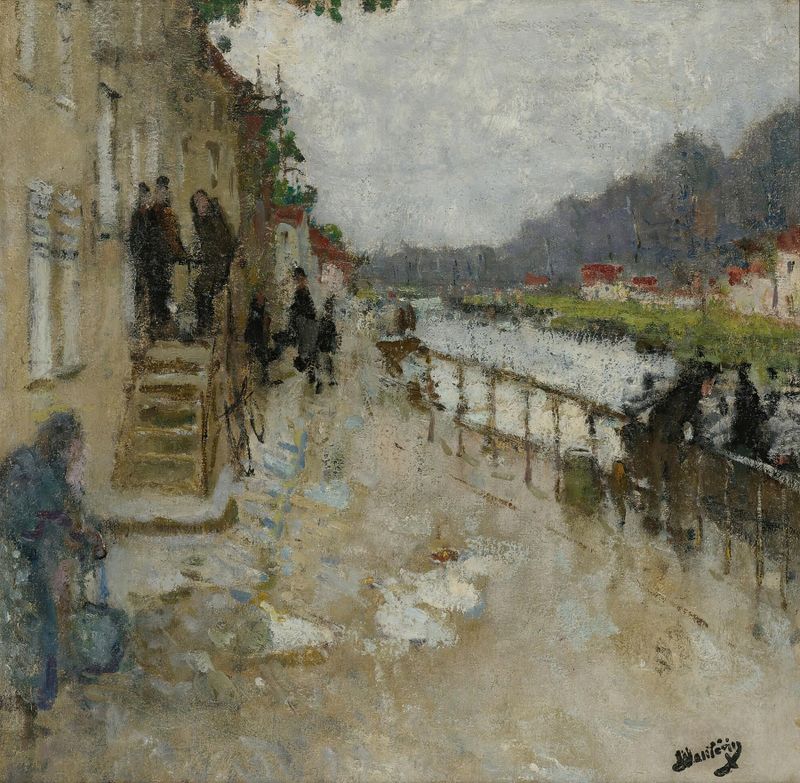
Bord De Canal À Saint-Mammès
Pierre-Eugène Montézin
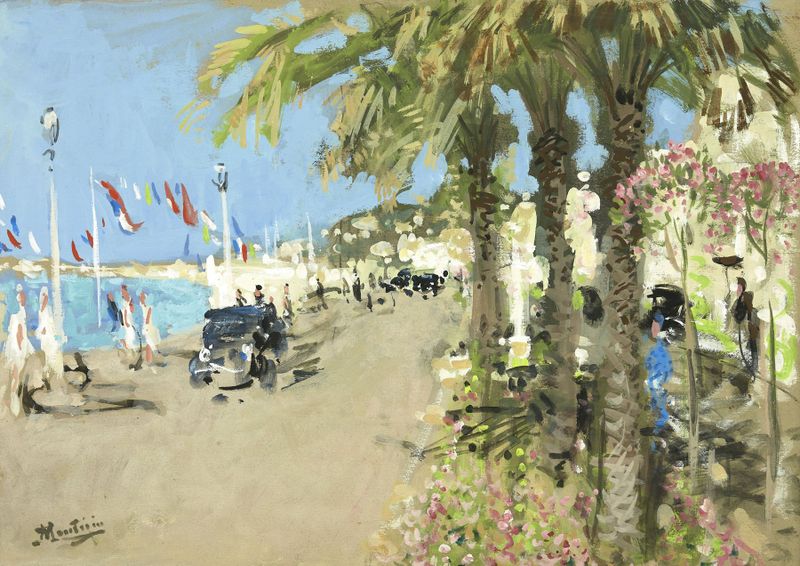
La promenade des Anglais, Nice
Pierre-Eugène Montézin
Promenade au bord de l’eau
Pierre-Eugène Montézin

Verger en fleurs
Pierre-Eugène Montézin

Misy Sur Yonne
Pierre-Eugène Montézin
Bord De L’eau
Pierre-Eugène Montézin

La Seine à St. Monance
Pierre-Eugène Montézin

L’entrée Du Village
Pierre-Eugène Montézin