Jõemaastik — History & Facts
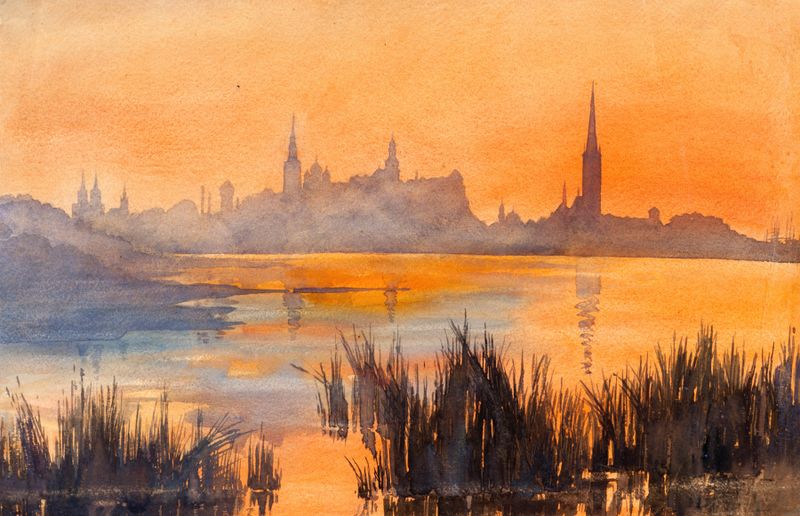
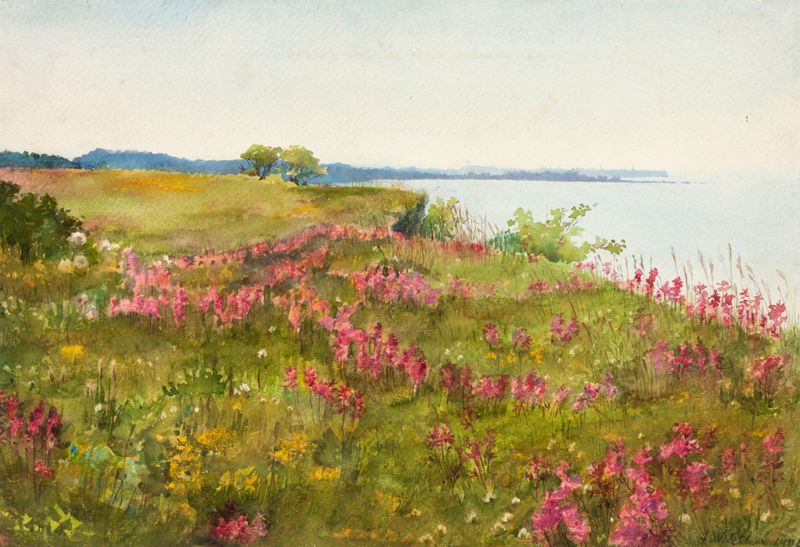
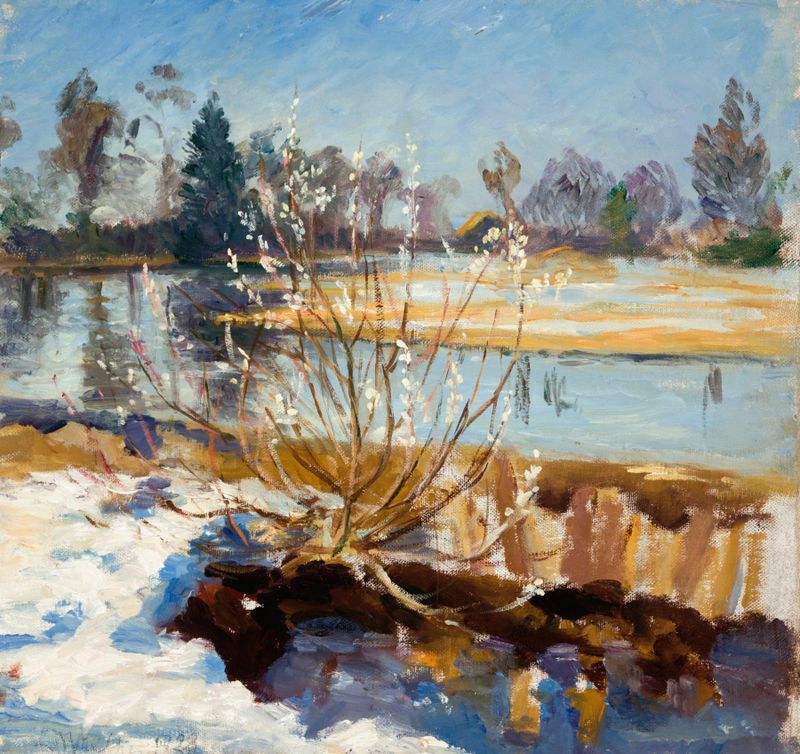
Who listens when art speaks of silence? In Jõemaastik, a landscape unfolds, steeped in melancholy, as if the world itself holds its breath, inviting contemplation. Look to the horizon, where muted greens and ochres blend seamlessly, evoking a sense of quietude. The gentle strokes suggest wind whispering through the trees, while the softly painted water reflects a sky heavy with unspoken thoughts. Notice how the light plays delicately on the surface, illuminating patches of solitude amidst the shadows, guiding your eyes towards the center where the landscape seems to pulse with an unseen energy. The contrast between the vibrant earth and the somber sky creates an emotional tension, suggesting a dichotomy between life and stillness.
Small details, like the solitary tree standing against the backdrop, symbolize resilience in isolation, while the subtle ripples in the water mirror the complexities of human experience—both serene and troubled. This duality invites the viewer to reflect on their own journey through moments of tranquility and turmoil. Lilly Walther painted Jõemaastik in 1915, during a time when the world was engulfed by the turmoil of World War I. Living in Germany, she was influenced by the shifts in the art world, moving towards a more introspective and emotive style that sought to convey deeper psychological landscapes.
This piece represents not just a physical landscape but an internal reflection of the era’s broader uncertainties and melancholy, encapsulating a moment when silence spoke volumes.