Viljapõld Worpswedes — History & Facts
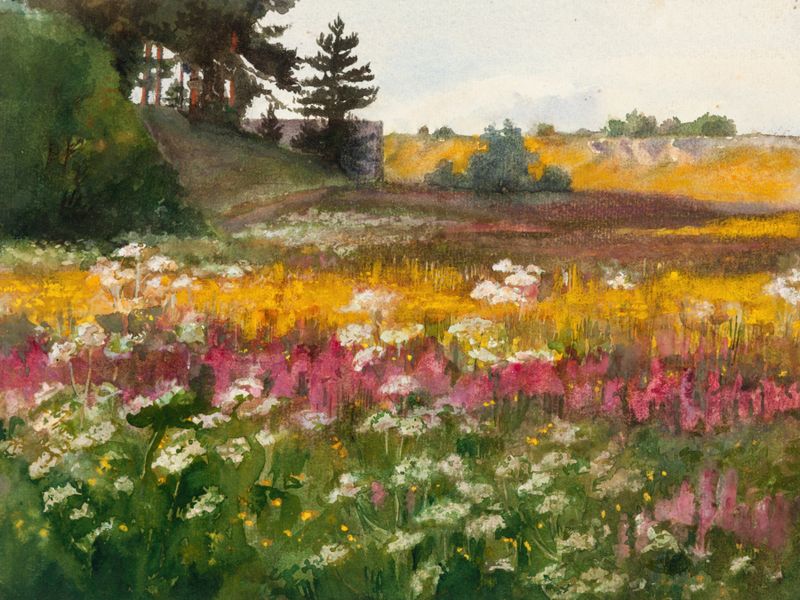
Could a single brushstroke hold eternity? In Viljapõld Worpswedes, the answer unfurls with each vibrant layer, inviting contemplation on the boundless possibilities of creation. Focus on the rich expanse of golden wheat swaying gently under the painter's strokes, each blade alive and dancing. The horizon, a soft blend of blues and greens, draws the eye upward, while the textured sky, dense with movement, pulses with the promise of change. Notice how the light filters through the clouds, casting a warm glow on the field, illuminating the essence of nature in a moment both fleeting and eternal. Within this pastoral scene lies an exploration of contrast: the delicate balance between man and nature, freedom and restraint.
The gentle waves of wheat suggest the vitality of life, full of promise, while the shadows lurking at the edges hint at the inevitable passage of time. Each brushstroke encapsulates not just a scene but a dialogue between the essence of the landscape and the artist's inner world, revealing the struggle and harmony of creation itself. Lilly Walther painted Viljapõld Worpswedes in 1908 while immersed in the vibrant artist community of Worpswede, Germany. This period marked a significant phase in her career as she sought to harmonize the Impressionist techniques she admired with her unique vision of the natural world.
At that time, her contemporaries were exploring the emotional resonance of landscapes, paving the way for a new understanding of the relationship between art and nature.