Vaade Jalta ja Gursuffi vahel — History & Facts
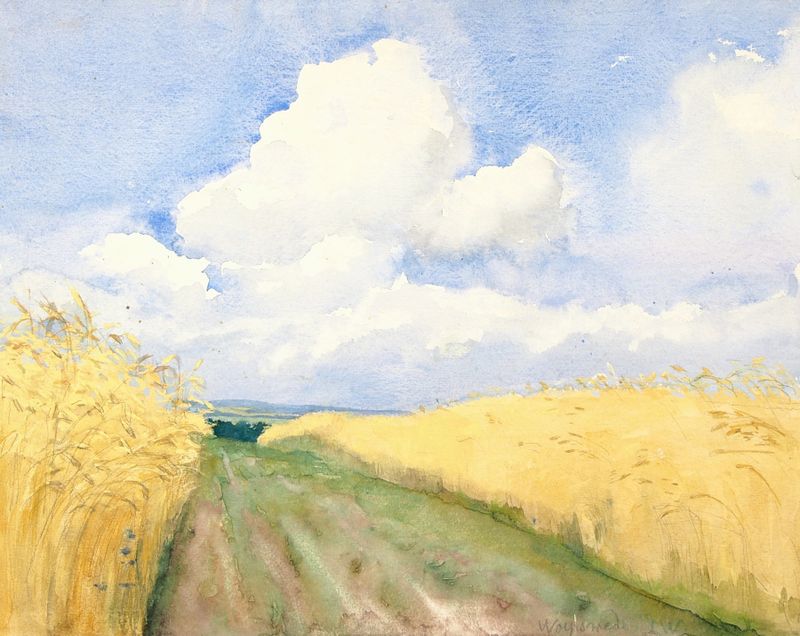
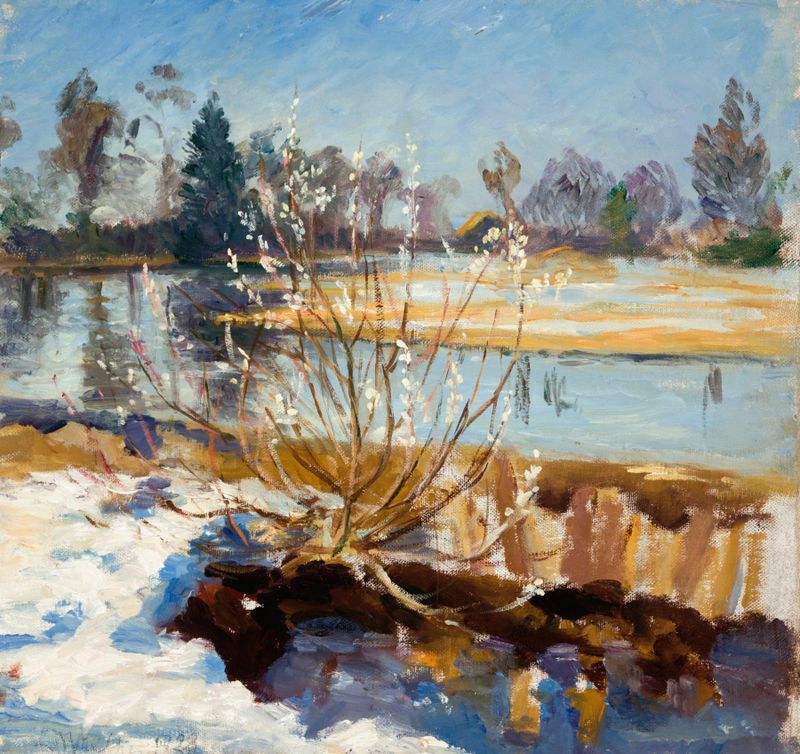
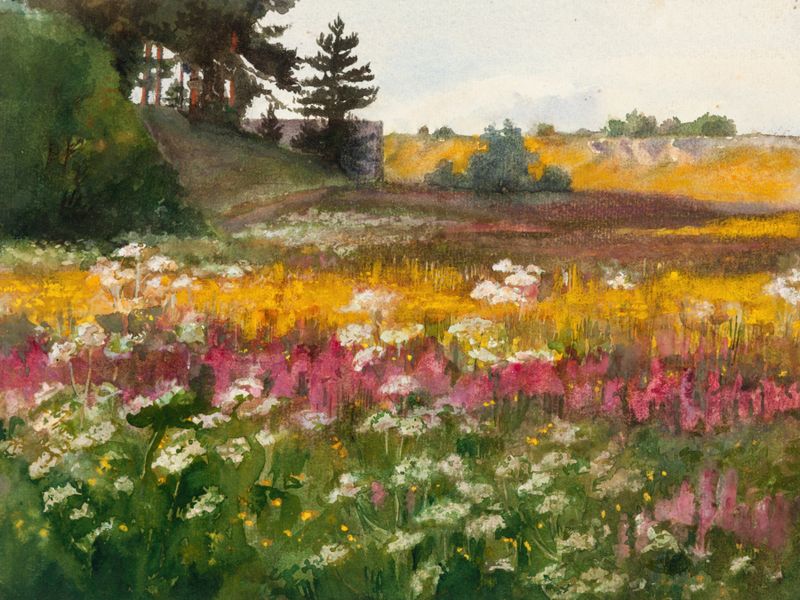
Where does light end, and longing begin? In the vast expanse of Lilly Walther's Vaade Jalta ja Gursuffi vahel, the interplay of shadow and illumination speaks to an ineffable yearning that resonates within us all. Look to the left at the soft contours of the landscape, where gentle hills rise and fall beneath a diffused sky. The palette—muted blues, soft grays, and whispering greens—suggests a tranquil yet melancholic atmosphere. Notice how the light filters through the clouds, casting subtle reflections upon the undulating terrain, inviting the viewer into a contemplative embrace.
Each brushstroke is deliberate, allowing the viewer to trace the outline of the land in a way that feels both intimate and distant. Yet, beneath this serene exterior lies a profound sense of emptiness. The expansive sky looms above, almost suffocating in its vastness, contrasting with the muted earth below. This duality speaks to the emotional tension of longing for connection amid isolation—a reminder that beauty often coexists with solitude.
Each detail, from the weight of the clouds to the softness of the hills, echoes the complexities of human experience, where hope and despair intertwine. In 1918, as Walther painted this scene, Europe was grappling with the aftermath of World War I, a period marked by profound change and uncertainty. Living in Germany, the artist was enveloped in a world marked by both devastation and rebirth in the arts. During this time, her work reflected a search for peace and meaning amidst chaos, capturing the essence of a moment that resonates deeply with our own search for solace.