Meri kuuvalgel — History & Facts
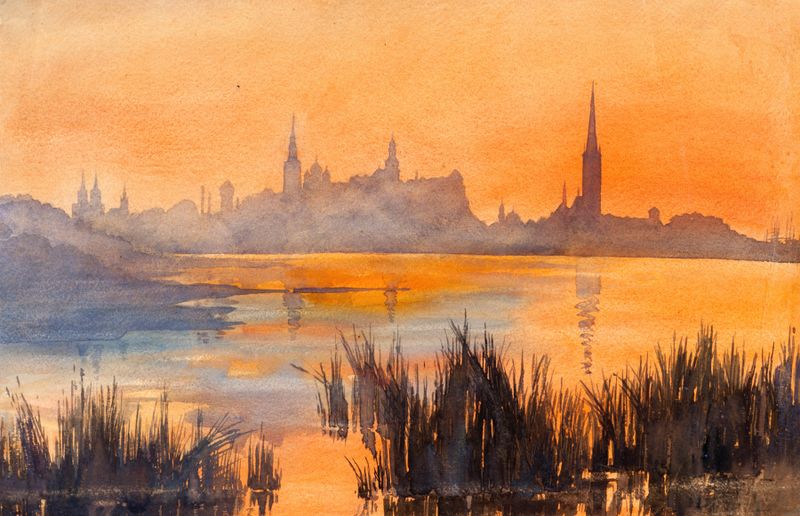
In the stillness of Meri kuuvalgel, divine whispers resonate between the figures, inviting contemplation on the sacred and the ethereal. The artwork captures a moment suspended in time, where the viewer becomes a silent witness to the interplay of light and shadow, imbued with a spirituality that transcends the ordinary. Look closely at the center of the composition, where a gentle luminosity bathes a solitary figure in a soft glow. The use of pastel hues creates an atmosphere of serenity, accentuating the delicate features and quiet expression of the subject.
Notice how the light, carefully placed, illuminates the contours of the figure while casting elongated shadows that stretch towards the edges, inviting your gaze to wander beyond the immediate and into a realm of contemplation. The juxtaposition of the figure’s introspective posture against the vast emptiness surrounding it evokes a profound sense of solitude, yet also an intimate connection to the divine. The subtle detailing in the figure's attire—soft textures and flowing lines—suggests fluidity, as if the fabric itself breathes with the essence of the moment. This tension between the material and the spiritual reinforces the idea that divinity can be found in the quietest of places, inviting viewers to reflect on their own silent confessions. Painted in 1918, Meri kuuvalgel emerged during a time of significant change for Lilly Walther.
Living in Germany, she navigated the aftermath of World War I, a period marked by profound reflection and a search for meaning. This artwork stands as a testament to her exploration of spirituality and the human condition, aligning with her wider artistic vision of capturing the fleeting moments that hint at a greater existence beyond the tangible world.