
Jeune femme au repos — History & Facts
A young woman, caught in a moment of quiet withdrawal, gazes out from the delicate lines of Jeune femme au repos. The artist, Berthe Morisot, draws the viewer in with a pose that feels both intimate and unguarded: an elbow propped against the arm of a chair, her head resting on her hand, her eyes half-lost in thought. The lightness of the print’s touch—barely more than a whisper of graphite—suggests a fleeting pause rather than a staged portrait.
The woman’s loose hair and relaxed posture signal a rare permission to be at ease, a private interval in a world that often demanded poise. Works like this emerged from the late nineteenth-century Parisian world, where artists such as Morisot—one of the few women at the heart of Impressionism—turned their attention to the rhythms of domestic life and personal moments. Prints and drawings of this kind were rarely grand commissions; instead, they were often made for friends, collectors, or simply as studies in seeing. The Rijksmuseum’s collection preserves this print, though history has kept few traces of its early journey.
What remains is the sense of immediacy: a woman at rest, and an artist’s hand intent on capturing the truth of a quiet afternoon.
More Artworks by Berthe Morisot

The Harbor at Lorient
Berthe Morisot
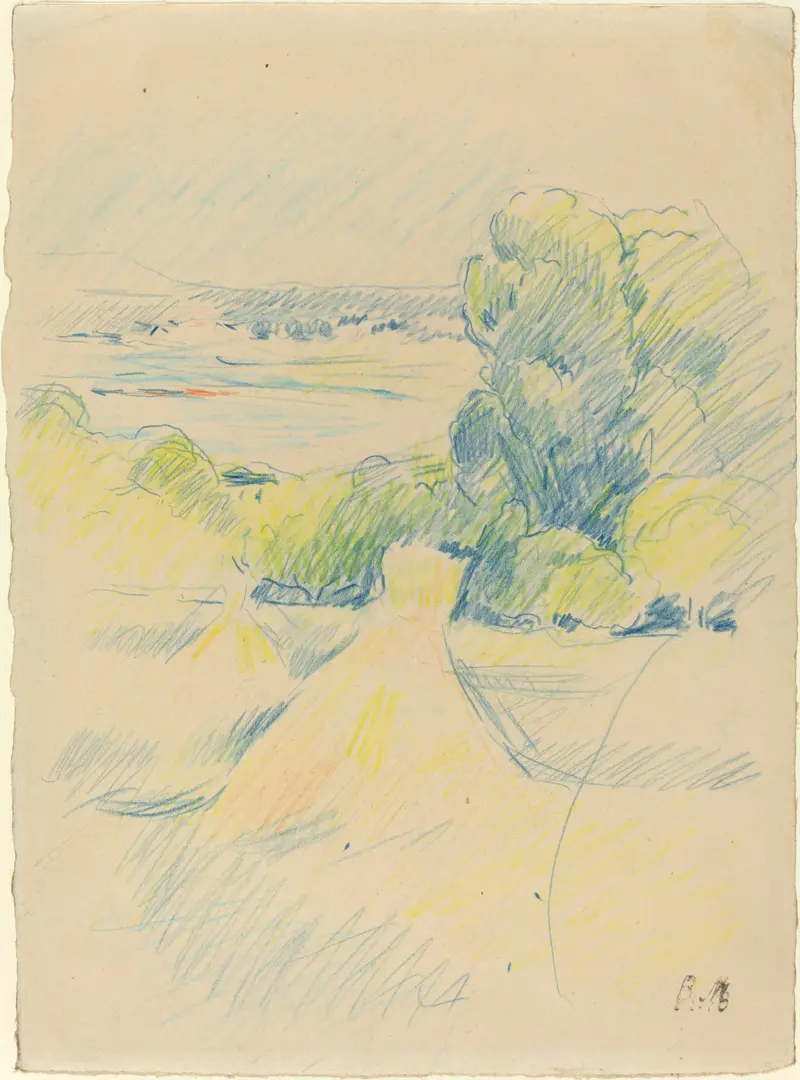
Landscape
Berthe Morisot

Hanging the Laundry out to Dry
Berthe Morisot

Woman in a Garden
Berthe Morisot

Young Girl with Hat
Berthe Morisot
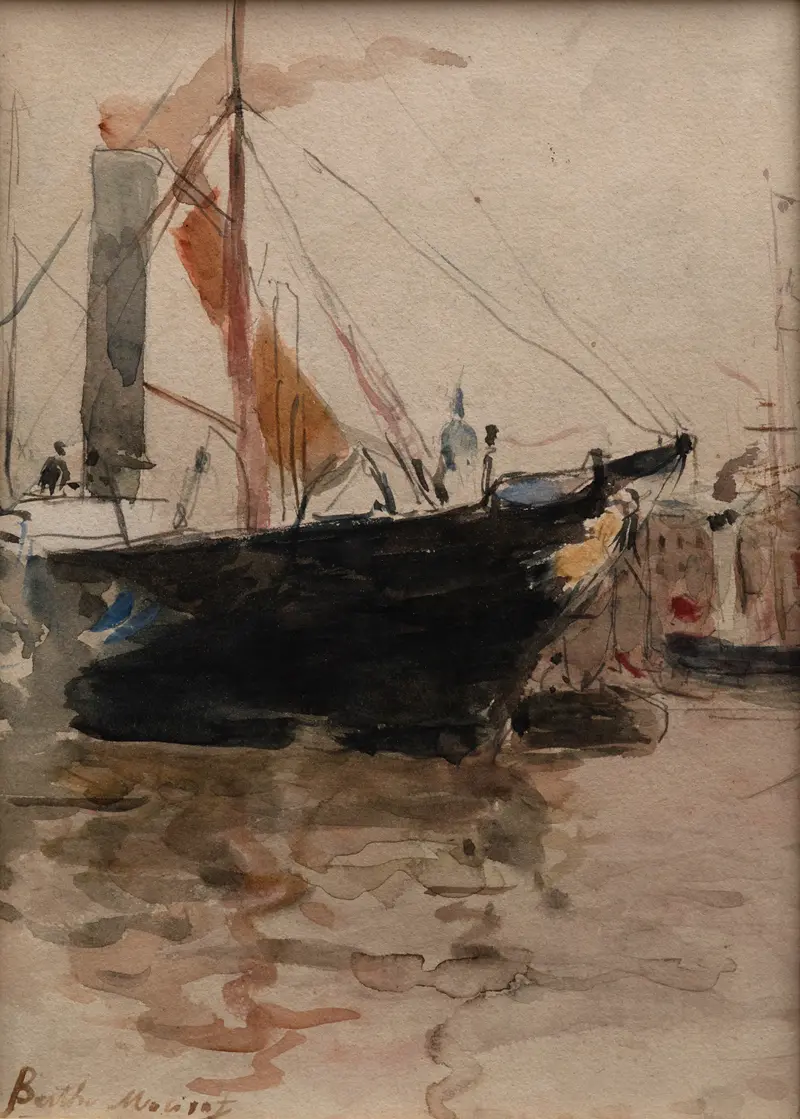
Harbor Scene, Isle of Wight
Berthe Morisot
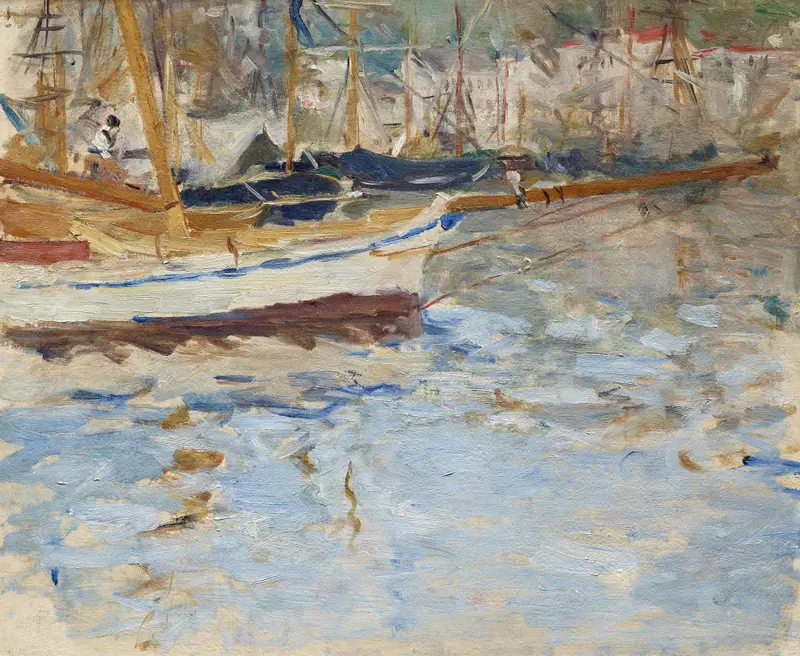
The Port of Nice
Berthe Morisot
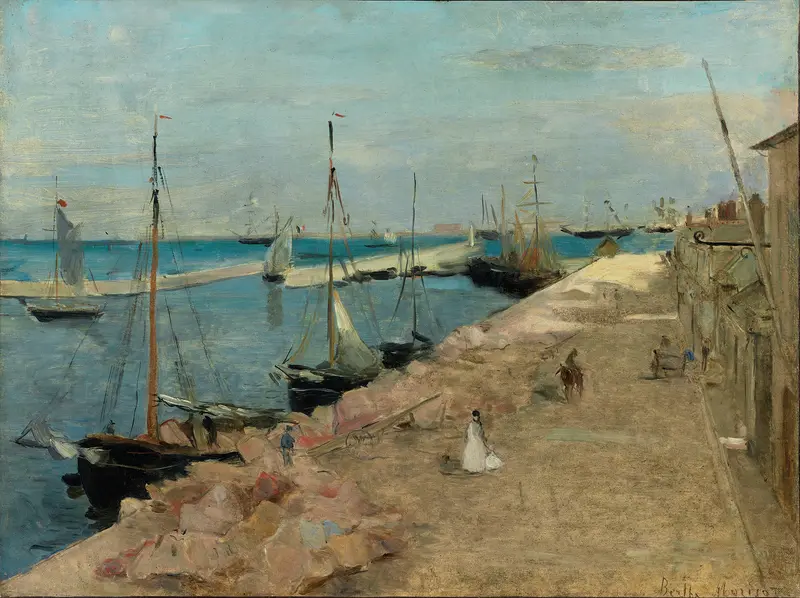
The Harbor at Cherbourg
Berthe Morisot

The Mother and Sister of the Artist
Berthe Morisot
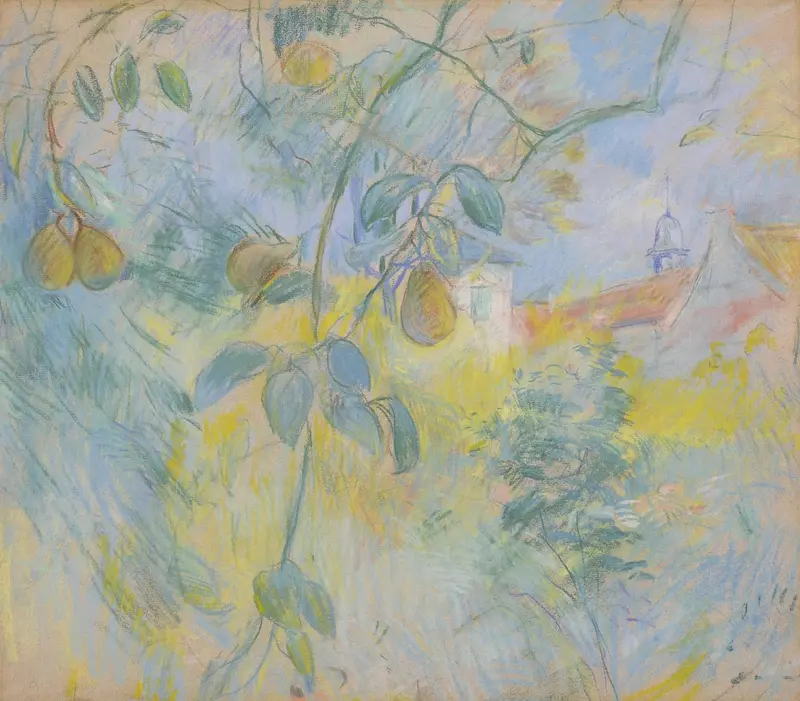
Les Poires
Berthe Morisot





