
Jozef wordt door zijn broers in de put gegooid — History & Facts
Who listens when art speaks of silence? In Georg Pencz’s Jozef wordt door zijn broers in de put gegooid, a profound stillness envelops the moment before chaos, where shadows loom larger than life itself. Look to the center of the composition, where the figure of Jozef is poised in desperate vulnerability, caught in the act of being cast down. Notice the deep browns and muted colors that dominate the palette, creating a stark contrast against the light that falls almost hauntingly on his face, illuminating his wide eyes brimming with fear and disbelief. The tension is palpable, amplified by the vigorous gestures of his brothers, their bodies contorted with aggression, yet frozen in time, as if the act itself is suspended within the confines of the canvas. The emotional intricacies of betrayal and despair resonate deeply through the figures’ expressions and postures.
Observe how the brothers, despite their collective action, are portrayed in various stages of conflict—some appear resolute, while others show hesitation as if swayed by the weight of their decision. The shadows that envelop the entire scene serve as a metaphor for the dark undercurrents of jealousy and animosity that bind them, making the viewer question the forces that drive familial betrayal and the stark realities that often conceal themselves in familial bonds. In 1546, Pencz painted this work during a time of significant transition in the Northern Renaissance, reflecting the prevailing themes of human emotion and moral dilemmas. Emerging as a prominent figure in the Nuremberg school, he sought to depict not only historical narratives but also the deeper psychological states of his subjects, a practice that would influence the trajectory of European art.
The painting captures a moment that is both timeless and specific, revealing the artist's keen insight into the human condition.
More Artworks by Georg Pencz
Browse all →
Parabel van de zaaier
Georg Pencz

Parabel van de arbeiders in de wijngaard
Georg Pencz
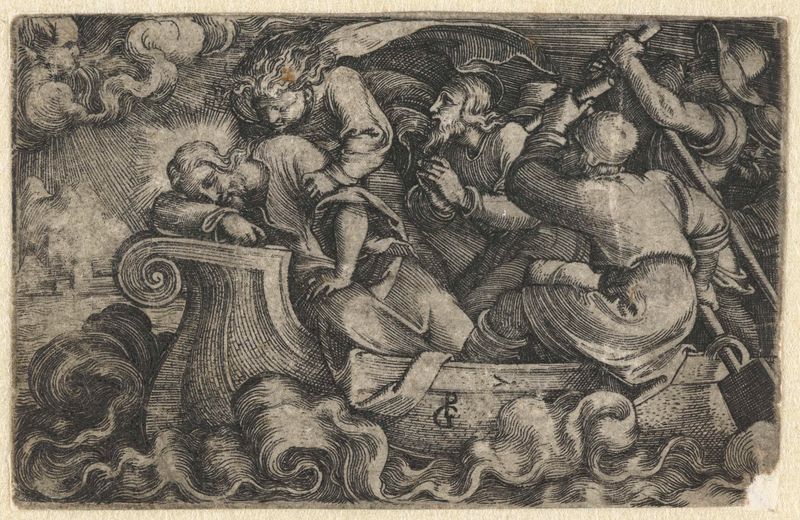
Discipelen wekken slapende Christus tijdens storm op Meer van Galilea
Georg Pencz

Afgunst (Invidia)
Georg Pencz
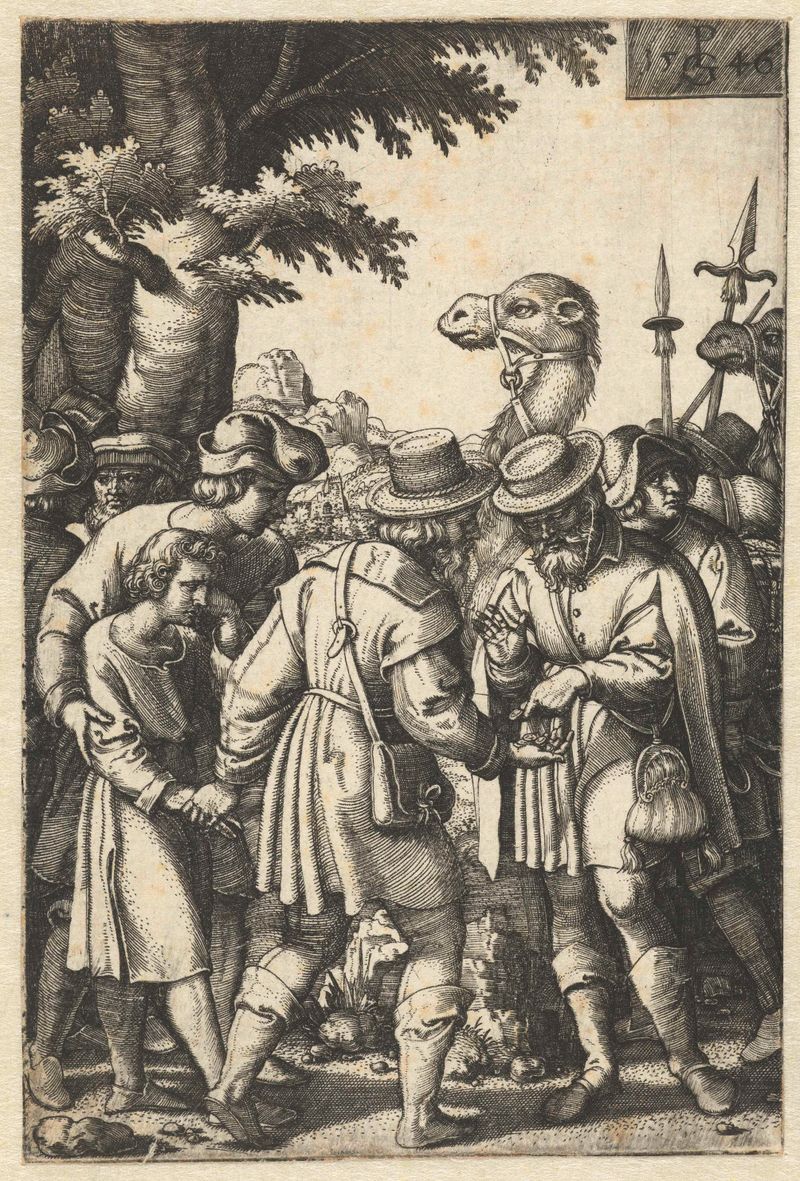
Jozef wordt verkocht aan kooplieden op weg naar Egypte
Georg Pencz

Aanbidding der koningen
Georg Pencz
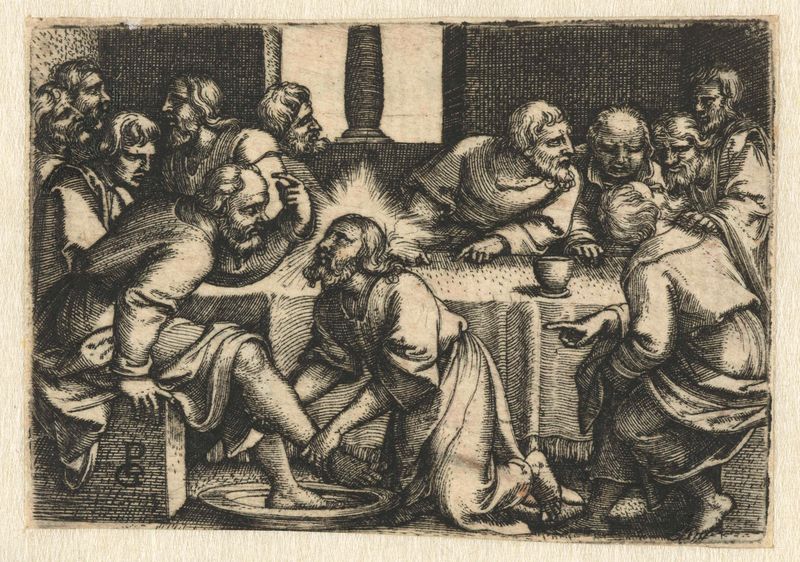
Petrus protesteert als Christus zijn voeten wast
Georg Pencz
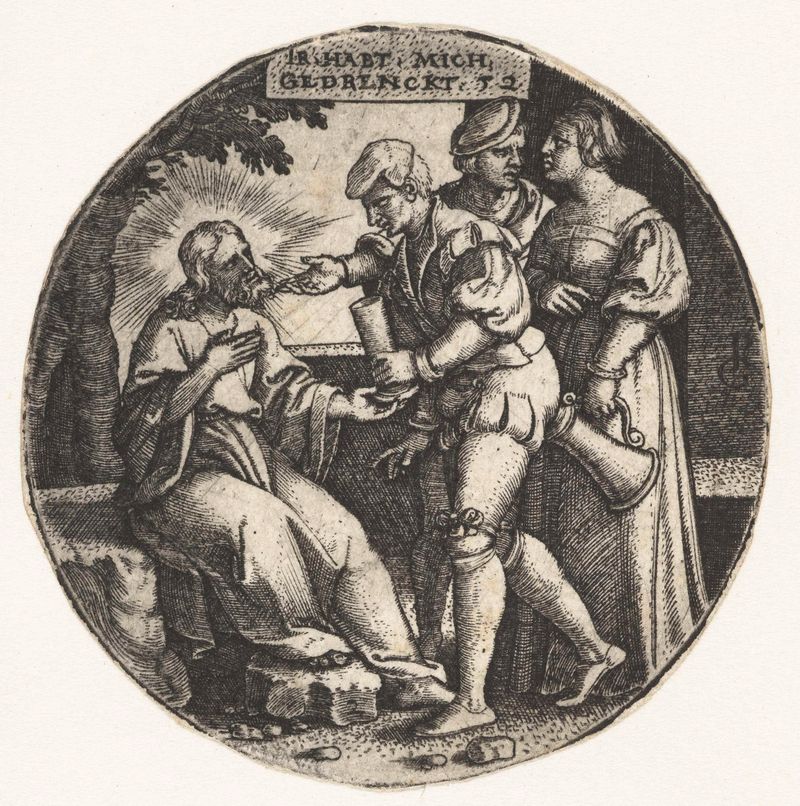
Christus heeft dorst en krijgt drinken aangeboden
Georg Pencz
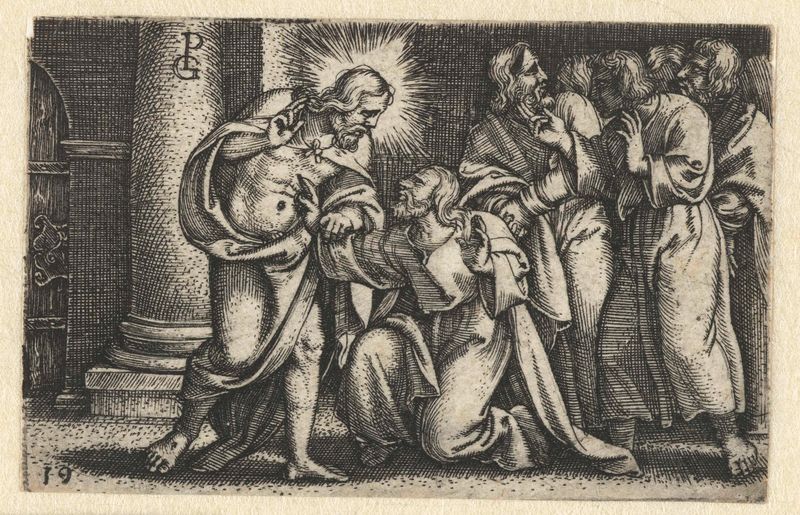
Ongelovige Thomas raakt wonden Christus aan
Georg Pencz

Offer van Abraham van Isaak
Georg Pencz
More Historical Art
Browse all →
The Night Watch Militia Company of District II under the Command of Captain Frans Banninck Cocq
Rembrandt van Rijn

Lincoln Memorial
Henry Bacon

The Third of May 1808
Francisco de Goya

Isaac and Rebecca, Known as ‘The Jewish Bride’
Rembrandt van Rijn

The Charge of the Mamelukes (1814)
Francisco de Goya

De vier ruiters van de apocalyps
Albrecht Dürer