
Judgement of Paris — History & Facts
What first catches the eye in Judgement of Paris is the poised stillness at the heart of a mythic decision. The figures are arranged in a careful choreography: Paris, half-rising from his seat, gestures with uncertainty, while Venus stands at the center, her gaze direct and her hand extended with the golden apple. The painter draws the viewer’s attention to this moment of choice, the apple gleaming as the axis on which the story turns.
Above, playful putti hover, their presence both lightens the mood and reminds us that this is a scene of gods, not mortals. The gentle gradation of light across the figures’ skin, the careful placement of drapery, and the attentive rendering of the dog and doves at their feet all serve to heighten the sense of anticipation. This work, created in 1712 by Adriaen van der Werff, belongs to a world where history painting was the highest calling for an artist, and mythological themes offered a stage for both technical skill and moral reflection. In the early eighteenth century, collectors—often princes or wealthy burghers—sought such scenes for their private galleries, where the learned could debate the virtues and follies of gods and men.
The painting’s presence in a volume on the Dresden royal collection hints at its journey through the hands of connoisseurs who prized both its subject and its polished execution. History has kept few traces of this particular canvas’s path, but its finely balanced figures and theatrical lighting invite us to linger, searching for the moment when desire tips the scales of fate.
More Artworks by Adriaen van der Werff

Descent from the Cross
Adriaen van der Werff
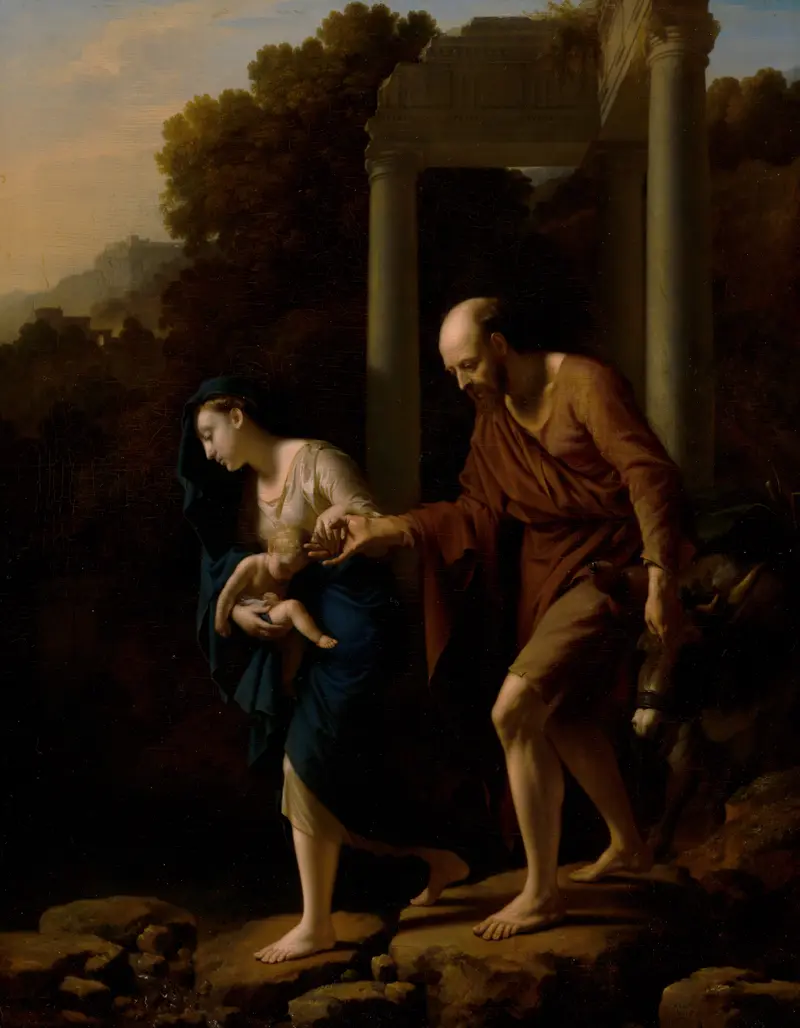
The Flight into Egypt
Adriaen van der Werff
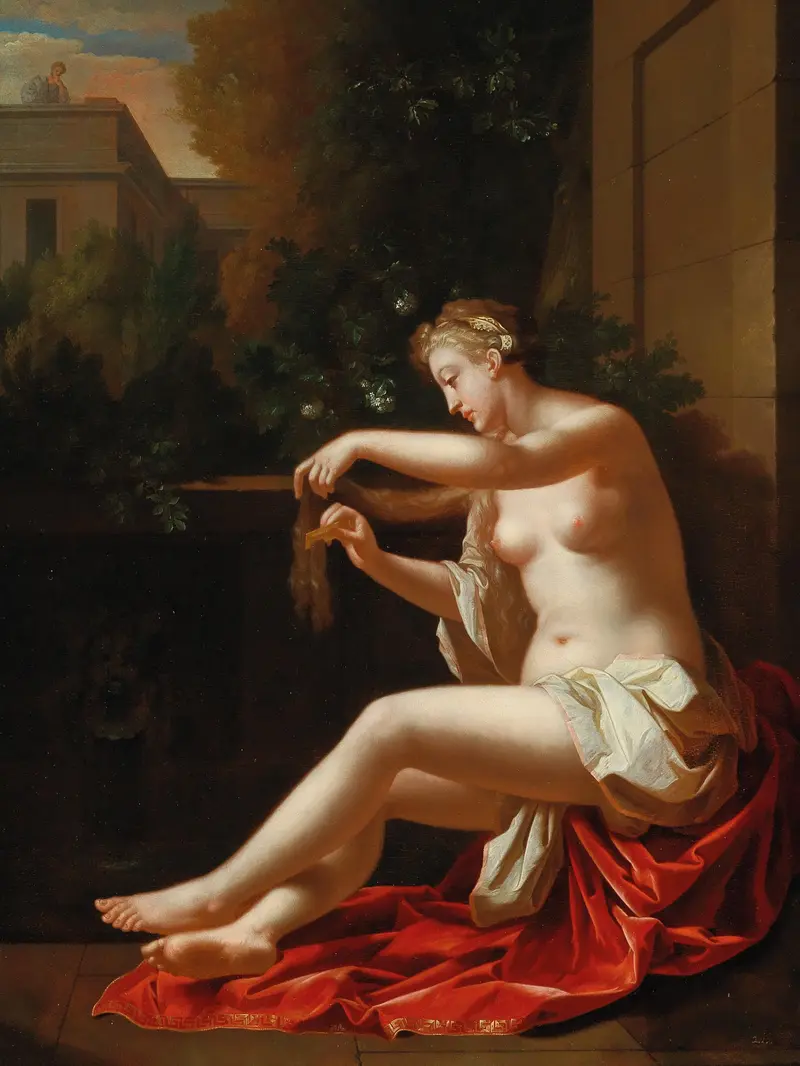
Bathsheba
Adriaen van der Werff
Portrait of Johan Versijden de Jonge
Adriaen van der Werff
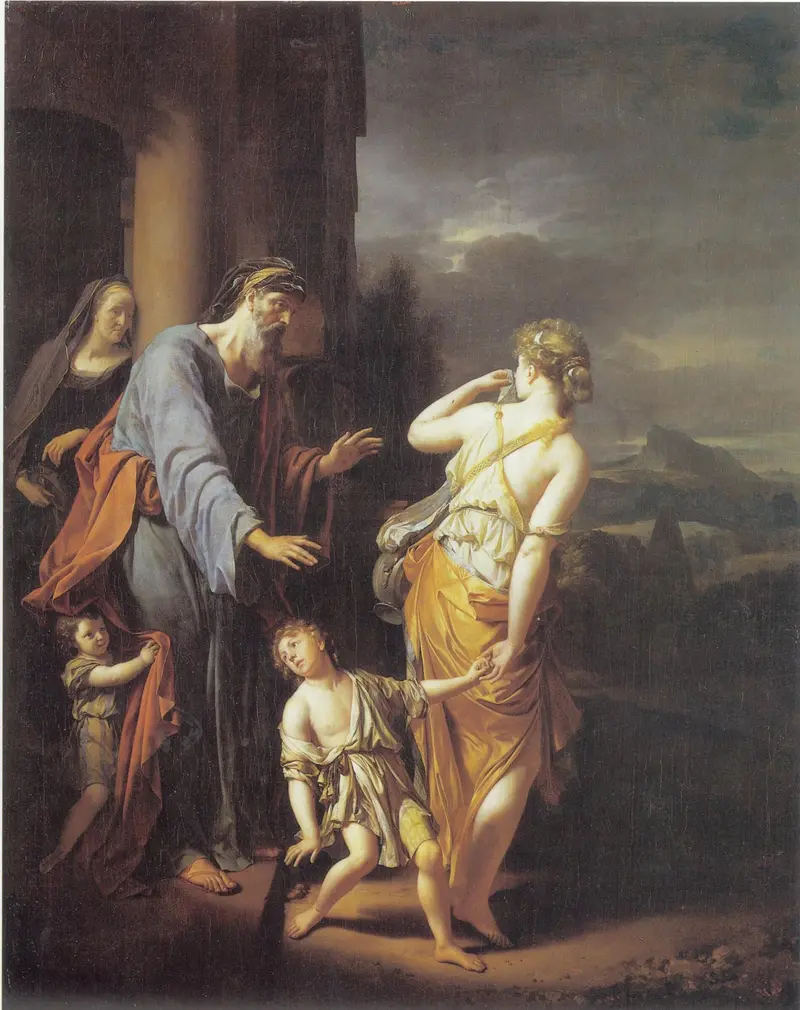
The Banishment of Hagar
Adriaen van der Werff
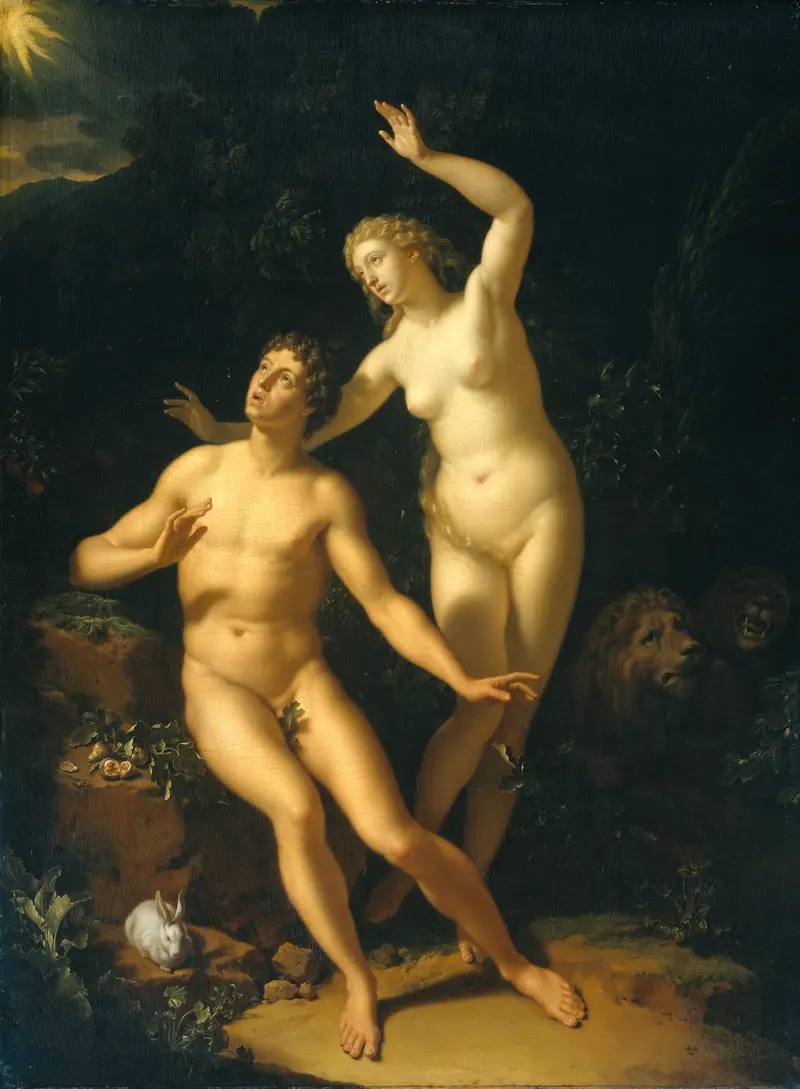
God Holds Adam and Eve Responsible
Adriaen van der Werff
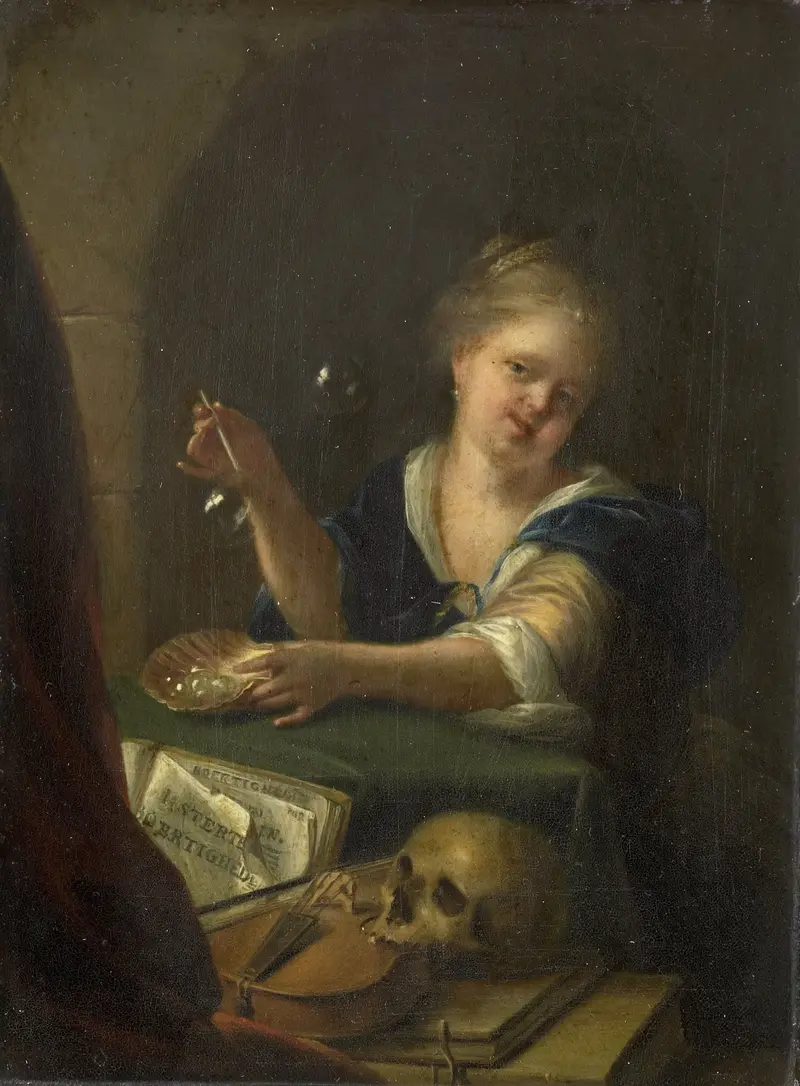
Bubble-blowing Girl with a Vanitas Still Life
Adriaen van der Werff
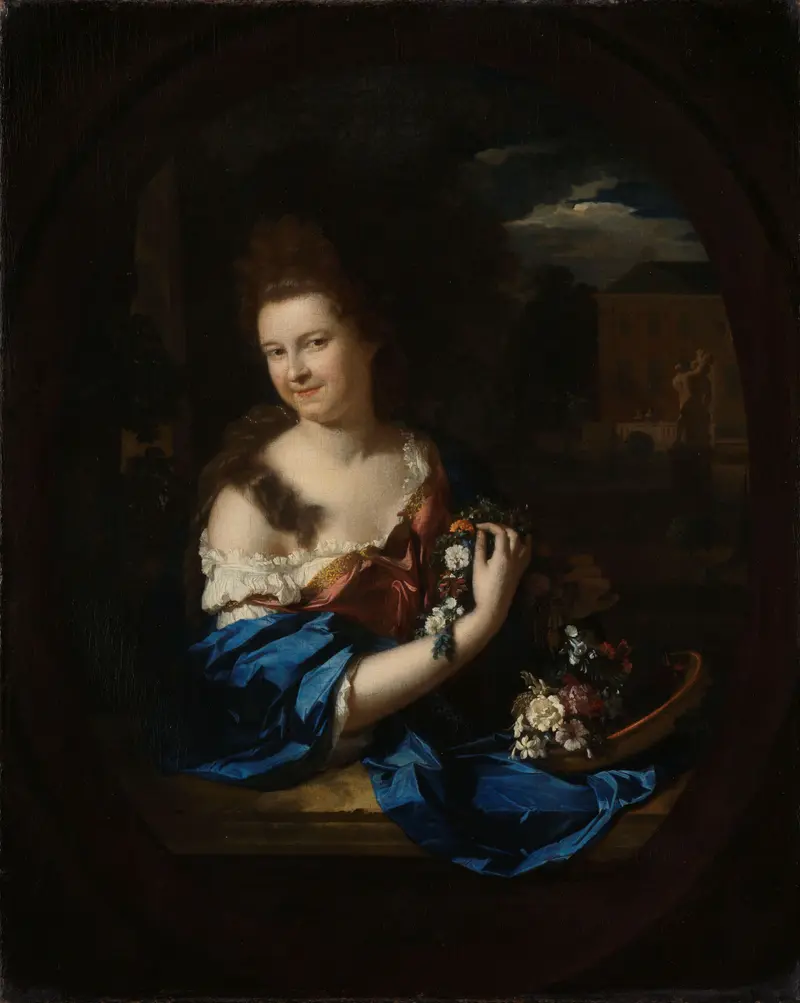
Portrait of Margaretha Rendorp (1673-1730), wife of Jan van de Poll
Adriaen van der Werff
Portrait of Jacob Hendricksz. Vingerhoed
Adriaen van der Werff
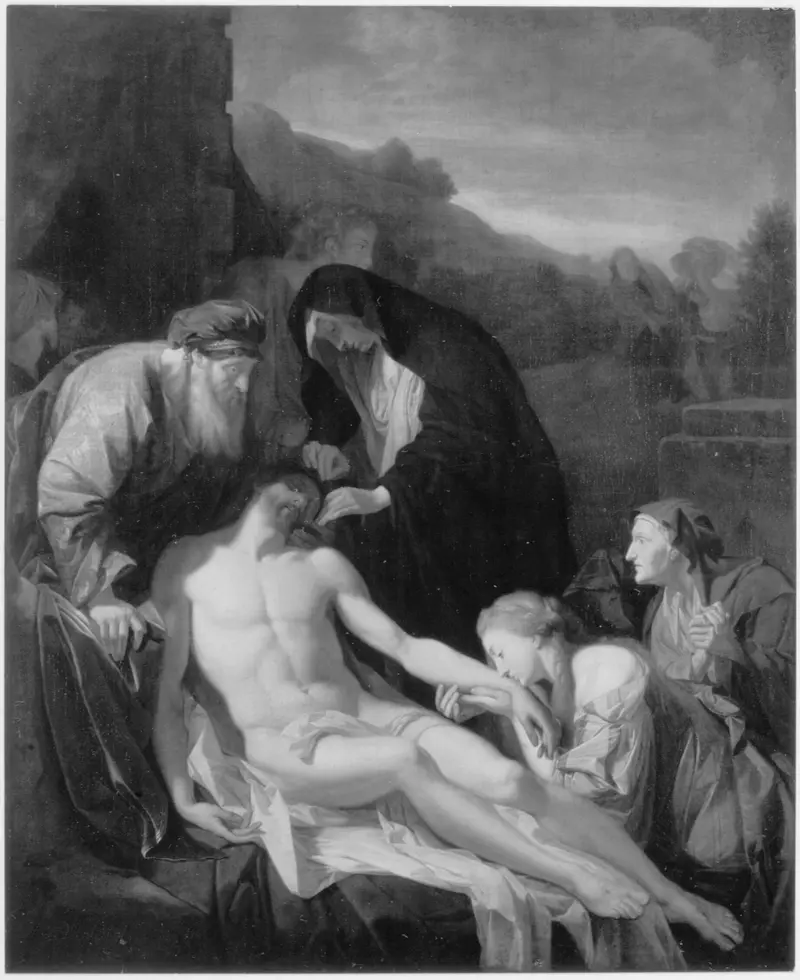
The burial of Christ
Adriaen van der Werff





