
Junction of Thomas and Porter Rivers — History & Facts
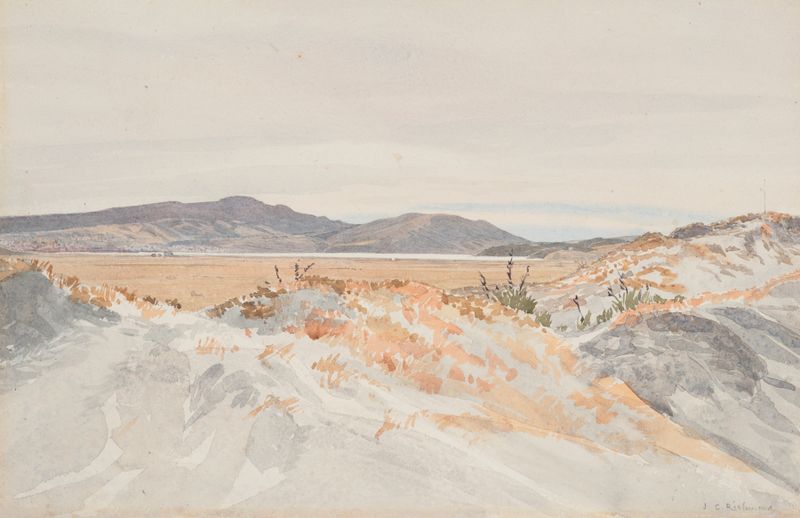
Could beauty survive in a century of chaos? James Crowe Richmond’s Junction of Thomas and Porter Rivers captures nature's serene resilience against the backdrop of relentless human endeavor. Look to the foreground, where gentle ripples cradle the reflected hues of a fleeting sunset, a delicate interplay of pink and gold that beckons the eye. Notice how the trees, with their rich, verdant foliage, frame the scene like guardians, creating a contrast against the expansive sky. The artist's meticulous brushstrokes breathe life into the landscape, from the dappling light on the water’s surface to the textured bark of the trees, inviting viewers to immerse themselves in this tranquil oasis. Hidden within the beauty lies a tension between the vibrant, untouched nature and the looming shadows of industry, subtly suggested by the distant silhouettes of structures along the horizon.
The convergence of the rivers symbolizes not just a meeting of waters but also a crossroad of human experience, where peace and progress vie for dominance. The soft palette evokes nostalgia while hinting at the fragility of such idyllic moments, as if the landscape holds its breath against the inevitable tide of change. Richmond painted this work in the late 1880s to early 1890s, a time when the world was rapidly modernizing, and the Impressionist movement was gaining momentum. Living in Australia, he strived to capture the essence of his homeland's natural beauty amidst the encroaching shadows of urbanization and industrialization, reflecting both the harmony and discord of his era.
More Artworks by James Crowe Richmond
Browse all →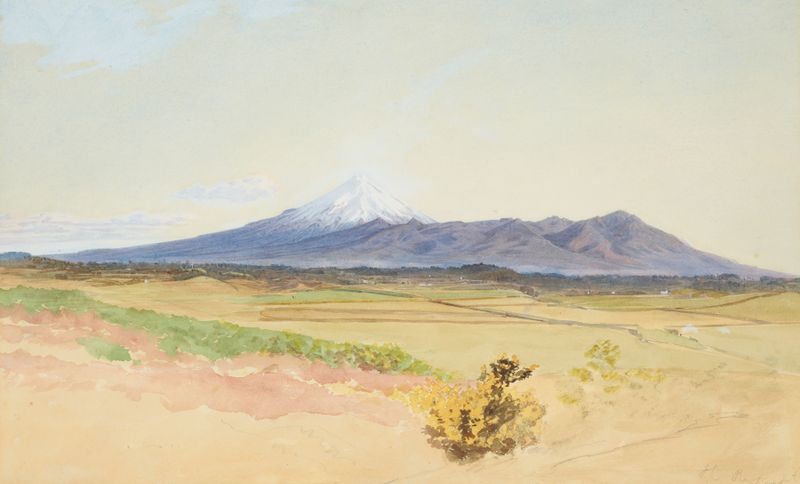
Mount Egmont and Pouakai, from New Plymouth
James Crowe Richmond
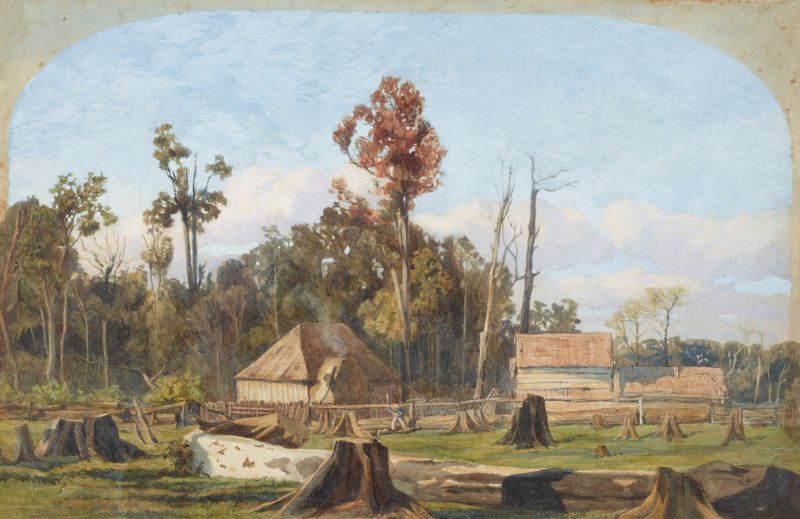
Settler’s home, Merton, near New Plymouth
James Crowe Richmond
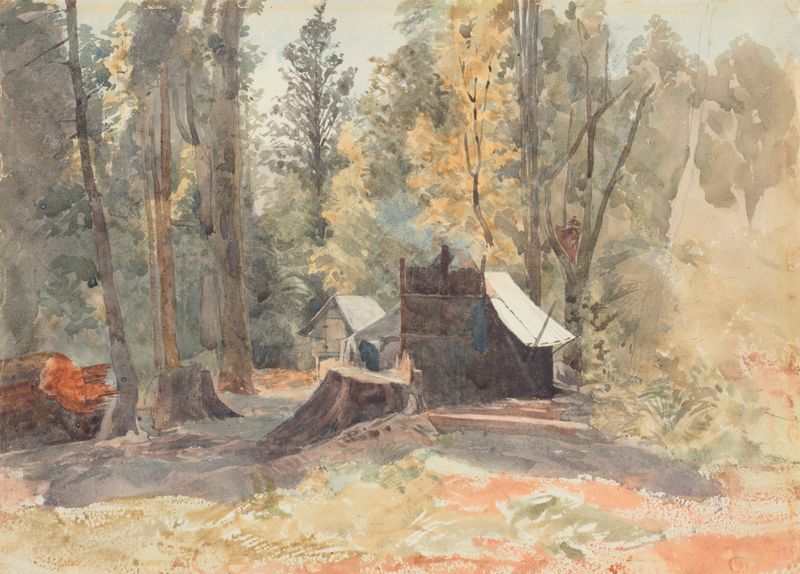
Hut of the ‘Italian party’, old diggings on Buller
James Crowe Richmond

Mosque at Tlemcen
James Crowe Richmond

Ngatapa, Te Kooti’s Pa
James Crowe Richmond

Dividing Range, Riwaka and Takaka
James Crowe Richmond
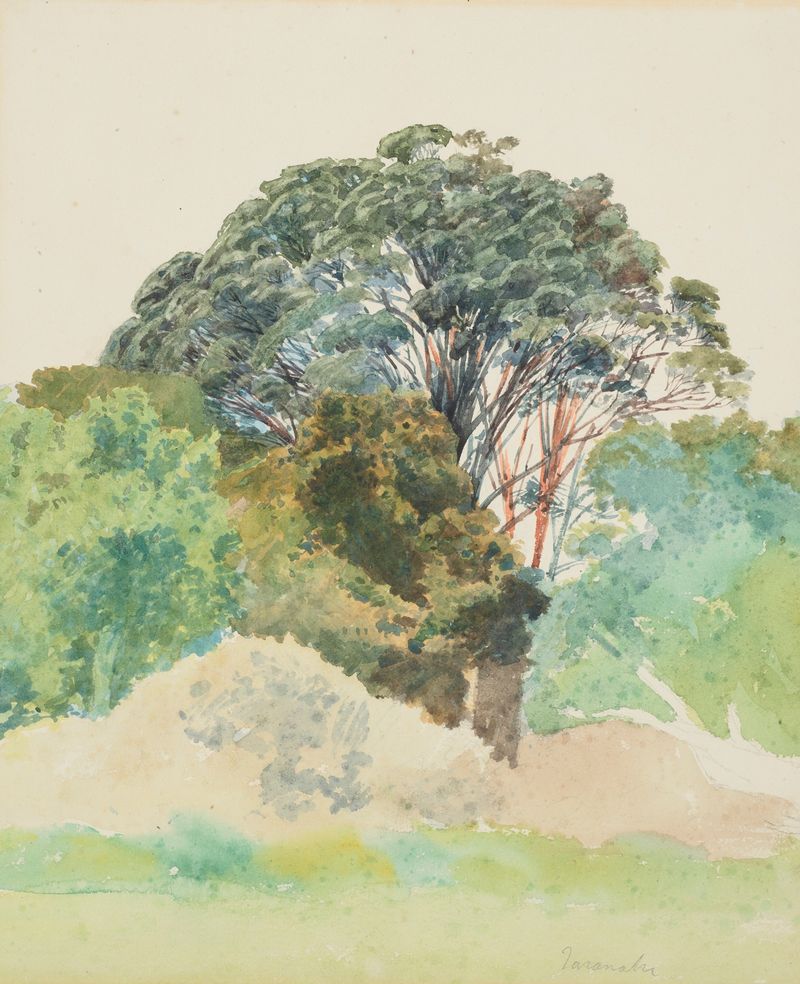
Rata, Taranaki
James Crowe Richmond

Grey River, on the beach
James Crowe Richmond
Dunedin from the Ocean Beach
James Crowe Richmond

On Collingwood Goldfields
James Crowe Richmond





