
Karl, der bringer vand til to heste (kopi efter Paulus Potters maleri på Louvre) — History & Facts
What secret hides in the quiet of the canvas? Beneath the placid surface of everyday life, transformation whispers through color and form, inviting the viewer to delve deeper. Look to the left, where the figure of a man stands poised, a vessel of clear water in his hands. The cool blues and greens of the landscape envelop him, enhancing the gentle curve of his back and the subtle play of sunlight that dances upon the water’s surface. Notice how the hues of the horses’ coats, with their glossy browns and soft whites, echo the tranquility of the scene while contrasting sharply with the earthy tones of the dirt path.
The composition expertly draws the eye, allowing the viewer to traverse from the man to the waiting horses, creating a rhythm that embodies both motion and stillness. Yet, beneath this serene exterior lies a deeper narrative of service and connection, embodied in the act of bringing water. The man's posture reflects a quiet strength, a humble duty that elevates the mundane to the profound. The horses, patient and eager, symbolize a bond that transcends mere utility; they are companions in the toil of life, awaiting the sustenance that the man provides.
This delicate interplay between human and animal speaks to themes of care and interdependence, suggesting that transformation is not solely an act of nature but also a gesture of nurturing relationships. In 1906, Theodor Philipsen created this piece as a homage to the original work by Paulus Potter, which hangs in the Louvre. During this period, Philipsen was deeply influenced by his surroundings in Denmark, where rural life flourished alongside emerging modernist sentiments in art. He found beauty in simplicity, capturing the essence of daily existence while reflecting broader changes in society and artistic expression.
This work stands as a testament not only to his technical skill but also to his keen observation of life’s transformative moments.
More Artworks by Theodor Philipsen
Browse all →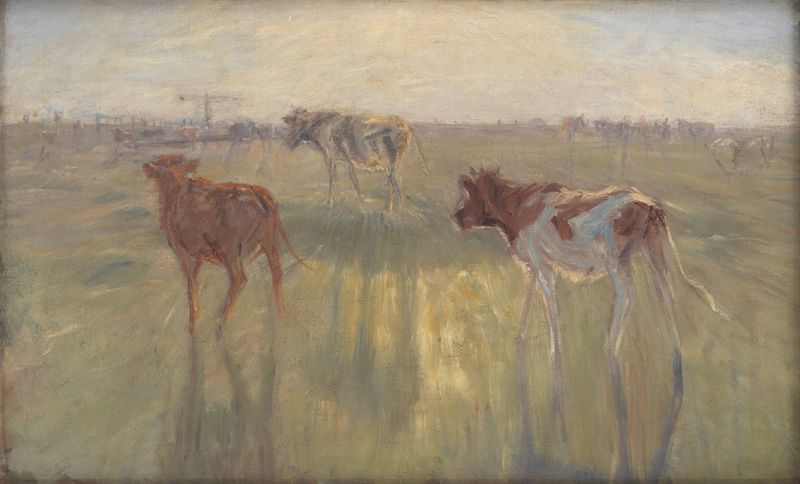
Cattle Seen against the Sun on the Island of Saltholm
Theodor Philipsen

Køer og gæs ved Nyværk på Saltholm (udkast til dekoration af punchebolle)
Theodor Philipsen

Long Shadows. Cattle on the Island of Saltholm
Theodor Philipsen

Camels in a Street in Tunisia
Theodor Philipsen

Cowshed on the Island of Saltholm
Theodor Philipsen

Late Autumn Day in the Jægersborg Deer Park, North of Copenhagen
Theodor Philipsen
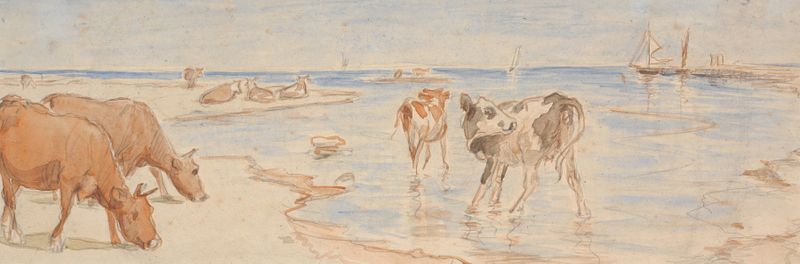
Køer og kalve nær indskibningsstedet på Saltholm (udkast til dekoration af punchebolle)
Theodor Philipsen

Evening Landscape
Theodor Philipsen

Malkepladsen ved Dyrehavegård
Theodor Philipsen

A River near Meilgård Manor, Jutland
Theodor Philipsen





