
Kensington Gardens — History & Facts
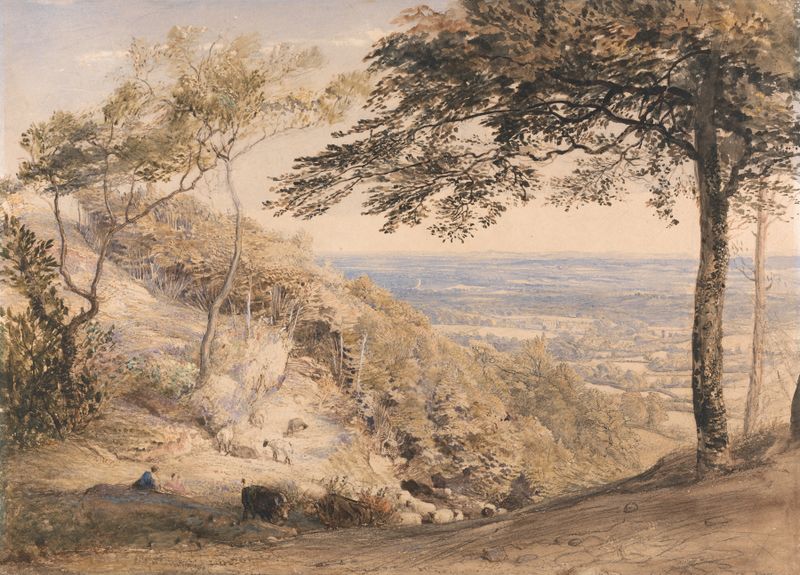
In the twilight of a fading day, a figure wanders through the verdant expanse of Kensington Gardens, shadows stretching long behind him. The soft glow of the setting sun bathes the scene in a warm, golden hue, illuminating the foliage with an ethereal shimmer. In this quiet moment, there exists a palpable yearning, as if the soul yearns to connect with the beauty that surrounds it. Look to the left, where the trees rise majestically, their leaves a vibrant tapestry of greens and browns, interspersed with glimmers of sunlight.
Notice how the winding path draws the eye deeper into the enveloping landscape, inviting one to step forward. Palmer's use of soft brushstrokes creates a dreamy atmosphere, while his rich palette evokes a sense of nostalgia and longing that resonates with the viewer. Within this tranquil scene lies a contrast between the serenity of nature and the solitude of the figure. The lushness of the gardens evokes life and growth, while the lone wanderer suggests a deeper emotional struggle — the search for belonging and meaning.
Subtle details, like the way the light filters through the leaves or the gentle bend of the path, emphasize the tension between isolation and harmony, creating a poignant dialogue between man and nature. Painted in 1848, this work emerged during a transformative period for its creator, who was deeply influenced by Romantic ideals. At this time, Palmer was living in London, grappling with his artistic identity amidst the shifting tides of the art world, which were leaning towards realism. The work reflects his romantic sensibilities, capturing not just a moment in time, but also the profound inner longing that defines the human experience.
More Artworks by Samuel Palmer
Browse all →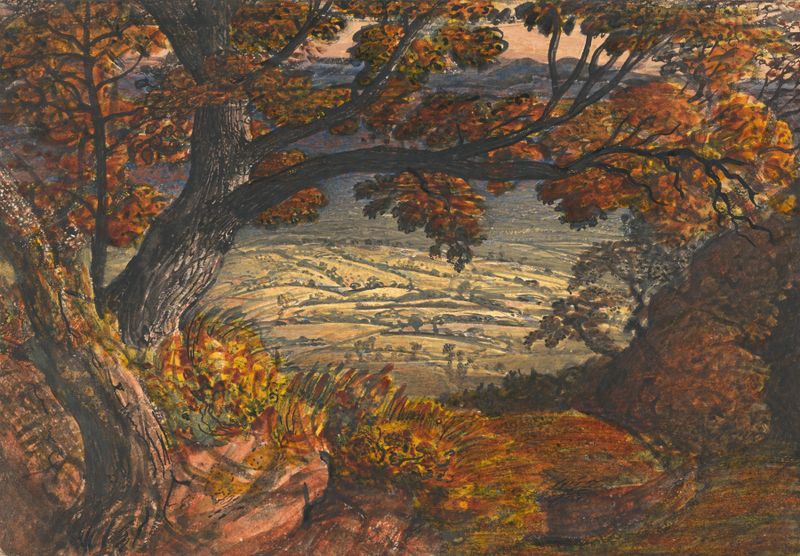
The Weald of Kent
Samuel Palmer
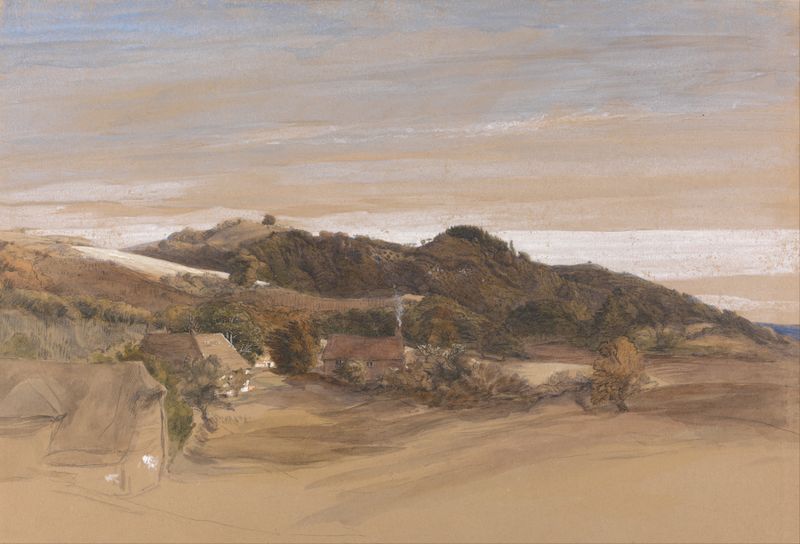
Underriver Hills, near Sevenoaks, Kent, from the Grounds of J. Herries, Esq.
Samuel Palmer
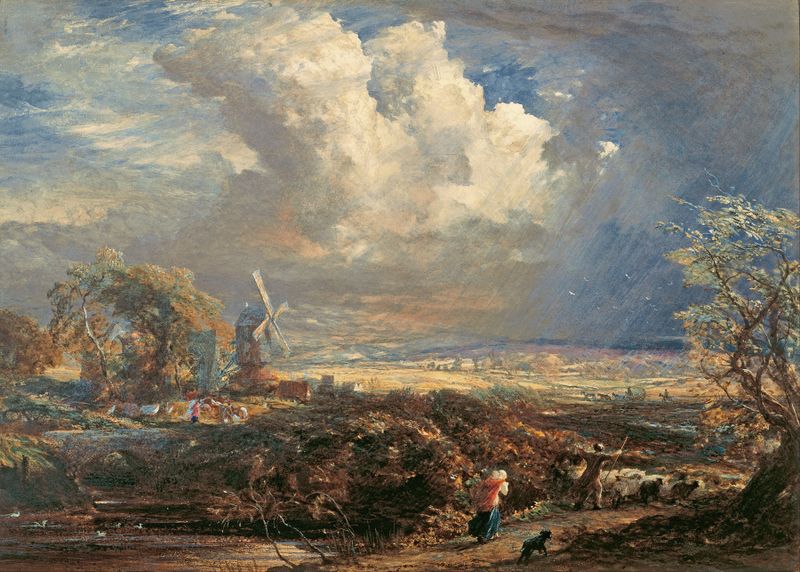
Summer Storm near Pulborough, Sussex
Samuel Palmer
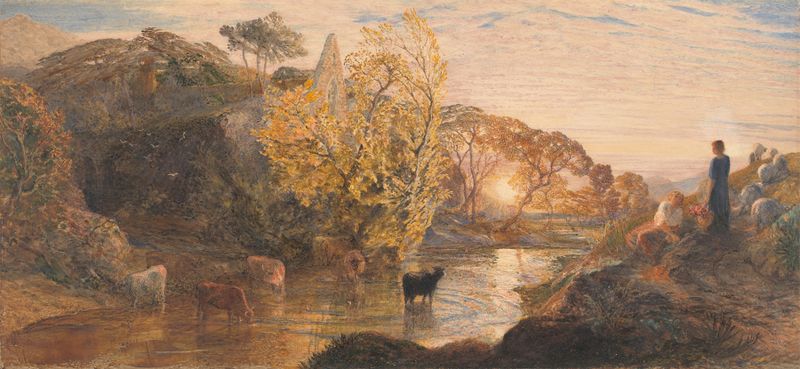
Tintern Abbey at Sunset
Samuel Palmer
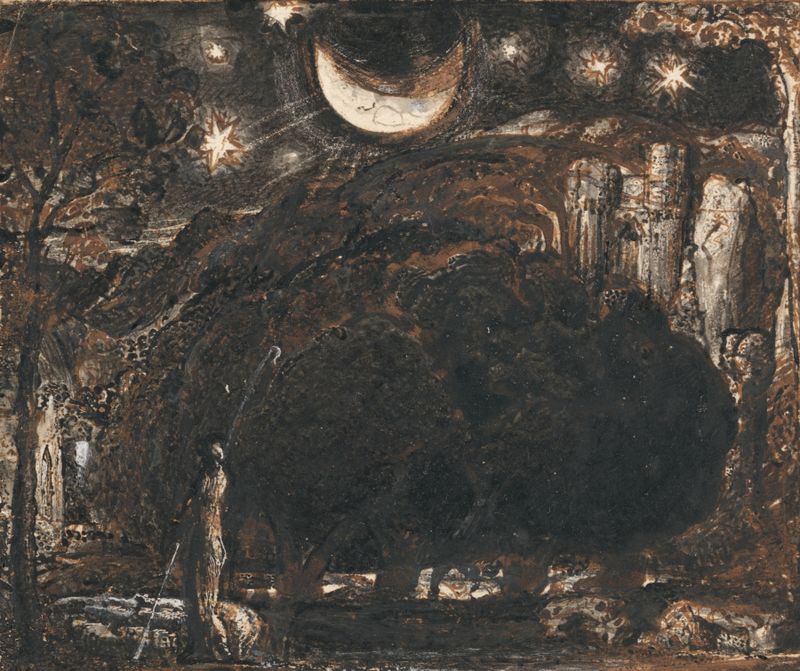
A Shepherd and his Flock under the Moon and Stars
Samuel Palmer
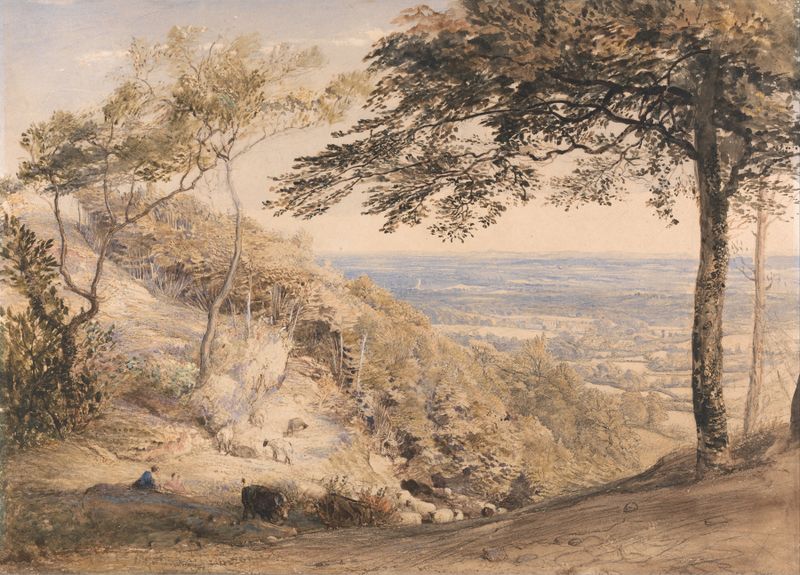
Wilmot’s Hill, Kent
Samuel Palmer
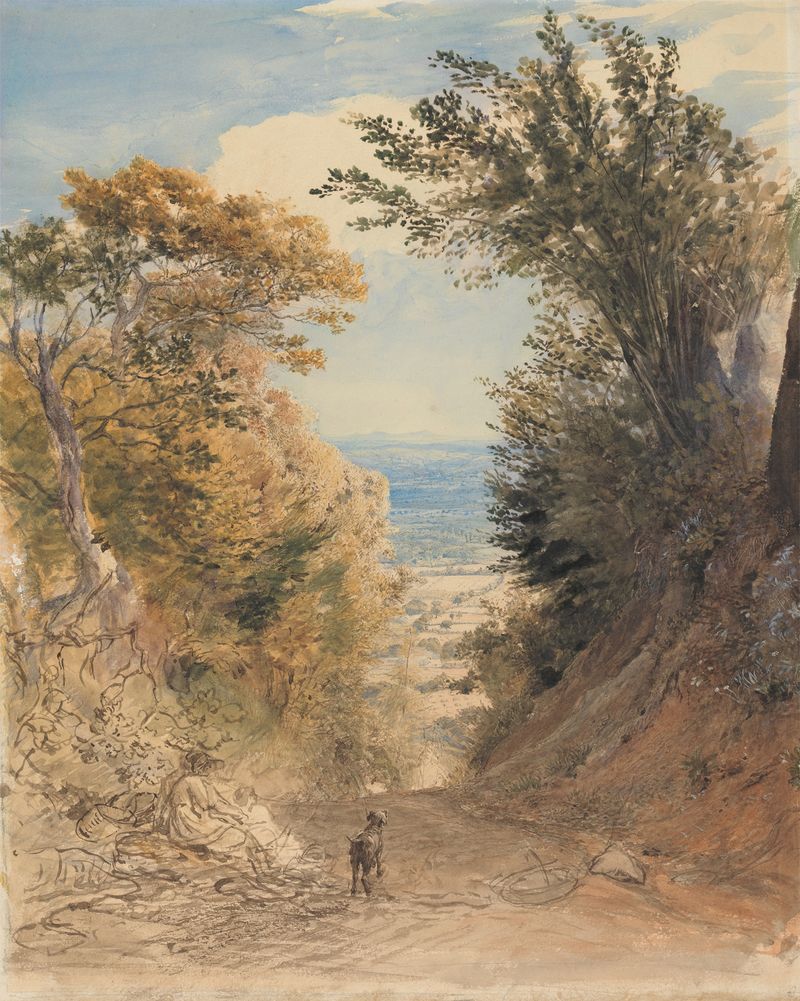
View from Rook’s Hill, Kent
Samuel Palmer
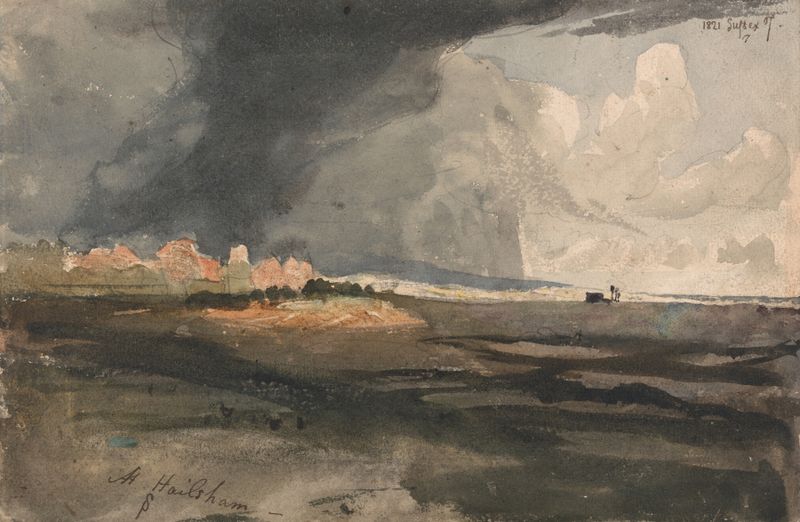
At Hailsham, Sussex; a Storm Approaching
Samuel Palmer
Wilmot’s Hill, Kent
Samuel Palmer
Tintern Abbey
Samuel Palmer





