
Kloster in Italien — History & Facts
In Kloster in Italien, a serene composition unfolds, inviting contemplation of both place and purpose. The tranquil setting, with its ancient architecture bathed in soft, golden light, whispers of destiny—an intersection of human craftsmanship and nature’s embrace. Focus first on the foreground, where the crumbling stone walls of the cloister elegantly recede into the gentle curve of the landscape. Notice how the dappled sunlight dances across the textured surfaces, highlighting the interplay of shadow and illumination.
The rich greens of the surrounding hills offer a lush contrast to the warm tones of the building, drawing the viewer’s eye deeper into the scene. Each brushstroke reveals a meticulous attention to detail, encapsulating the serene beauty that defines this Italian retreat. As you absorb the scene, consider the emotional tension evoked by the stillness versus the vibrant life of nature that surrounds it. The juxtaposition of the rigid architecture and the organic flow of the landscape speaks to the delicate balance between human endeavor and the inevitable passage of time.
The cloister stands both as a sanctuary and a reminder of mortality—its walls, both protective and confining, invite reflection on the fate of those who sought solace within. Johann Wilhelm Schirmer painted this work in 1840 during a period of personal and artistic exploration. Living in Germany but deeply influenced by his travels to Italy, he captured the essence of the Italian landscape while grappling with Romantic ideals. At this time, the art world was shifting towards a greater appreciation for the sublime qualities of nature, and Schirmer's work embodies that journey, seeking to harmonize the earthly and the divine.
More Artworks by Johann Wilhelm Schirmer
Browse all →
Waldlandschaft mit Blick auf Olevano und den Monte Cavo
Johann Wilhelm Schirmer
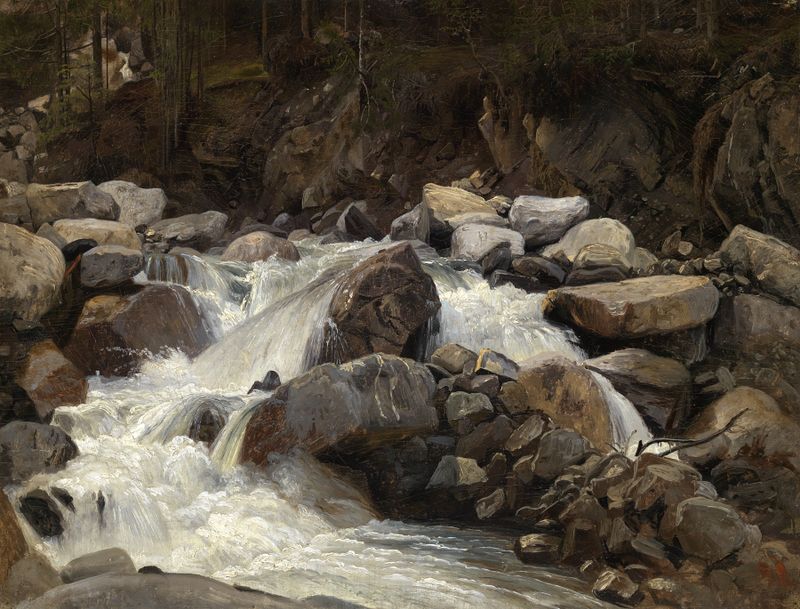
Schweizer Gebirgsbach
Johann Wilhelm Schirmer
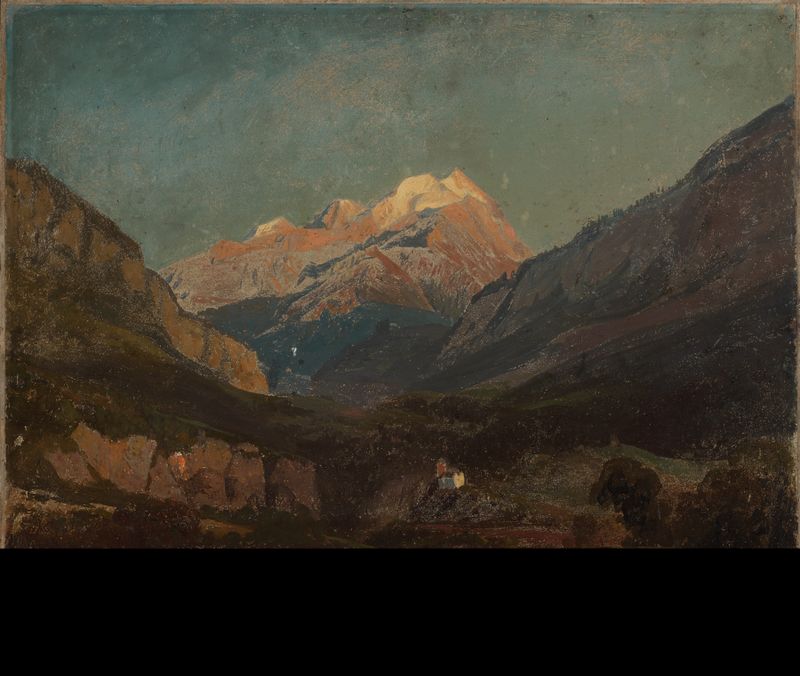
Schweizer Gebirgslandschaft mit Kapelle und fernem Schneegipfel
Johann Wilhelm Schirmer

Schweizer Gebirgslandschaft mit dem Piz Beverin im Hintergrund
Johann Wilhelm Schirmer

Waldinneres mit Hirschen am Wasser
Johann Wilhelm Schirmer

The Wetterhorn
Johann Wilhelm Schirmer

Partie aus der Römischen Campagna
Johann Wilhelm Schirmer

Felsabhang in der Schweiz
Johann Wilhelm Schirmer
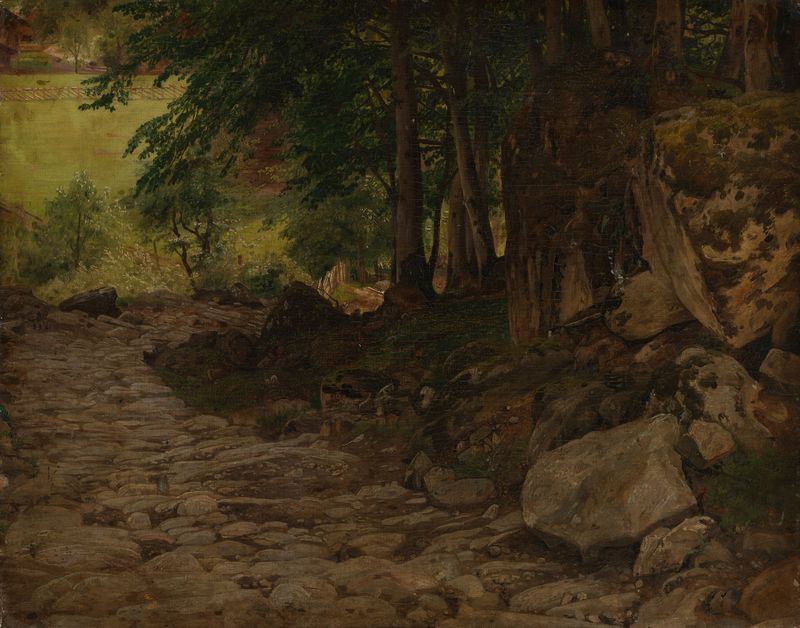
Felsweg in der Schweiz
Johann Wilhelm Schirmer
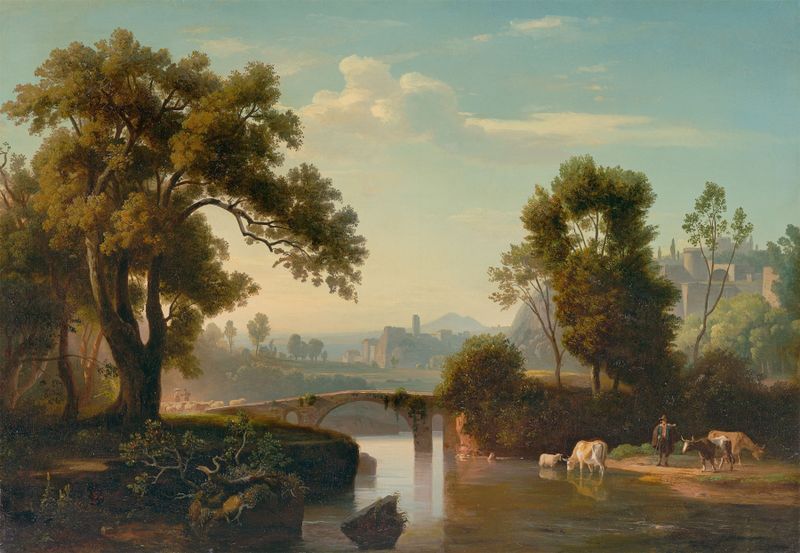
Italienische Landschaft mit Hirten
Johann Wilhelm Schirmer
More Architecture Art
Browse all →
The statue of Liberty
Frédéric Auguste Bartholdi

View of Houses in Delft, Known as ‘The Little Street’
Johannes Vermeer

View of Houses in Delft, Known as ‘The Little Street’
Johannes Vermeer

The Cathedral in Rouen. The portal, Grey Weather
Claude Monet

The yellow house
Vincent van Gogh

The Church in Auvers-sur-Oise, View from the Chevet
Vincent van Gogh