
Kopela Cleaning Church Vessels — History & Facts
What first draws the eye is the hush: a young woman, absorbed in her work, sits in the filtered light of a church interior, surrounded by the gleam of sacred vessels. The artist, Theodoros Ralli, lets the golden halos of the icons on the wall hover behind her, their silent gaze lending gravity to her humble task. Every object in this quiet corner has a purpose—brass and silver vessels awaiting her careful hands, a basin filled with water, a cloth ready for use.
The warmth of her embroidered blouse and striped apron brings a note of domesticity, but the setting is unmistakably sacred; the flicker of a candle and the blurred forms of saints remind us that this is not merely housework, but a ritual of care for the objects of worship. Works like Kopela Cleaning Church Vessels belong to a world where the boundaries between daily life and the spiritual were often porous, especially in the Eastern Mediterranean at the turn of the twentieth century. Painters such as Ralli—active between 1873 and 1907, as documented—found inspiration in the rhythms of Orthodox ritual and the quiet dignity of those who served behind the scenes. Such images were often collected by those who wished to remember or romanticize a vanishing way of life, or to celebrate the unsung labor that kept sacred spaces alive.
Today, history has kept few traces of this specific painting’s journey, but its gentle realism and attentive observation invite us to linger, to imagine the cool hush of the church and the soft sounds of metal and water, and to see devotion in the simplest acts.
More Artworks by Theodoros Ralli

The Sleeping Concubine
Theodoros Ralli
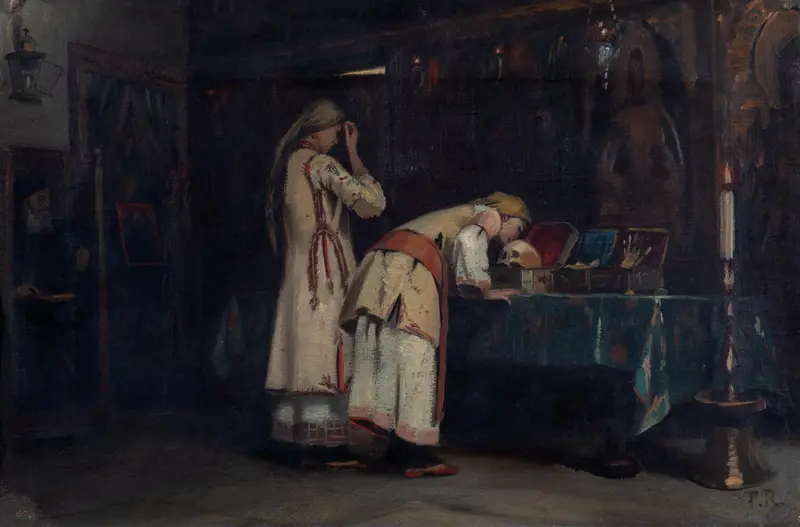
Holy Relics
Theodoros Ralli
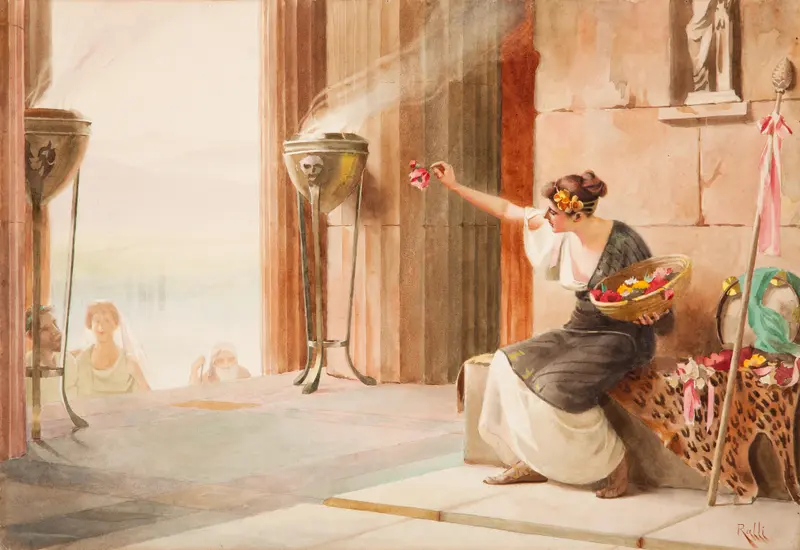
Flower Seller at the Parthenon
Theodoros Ralli
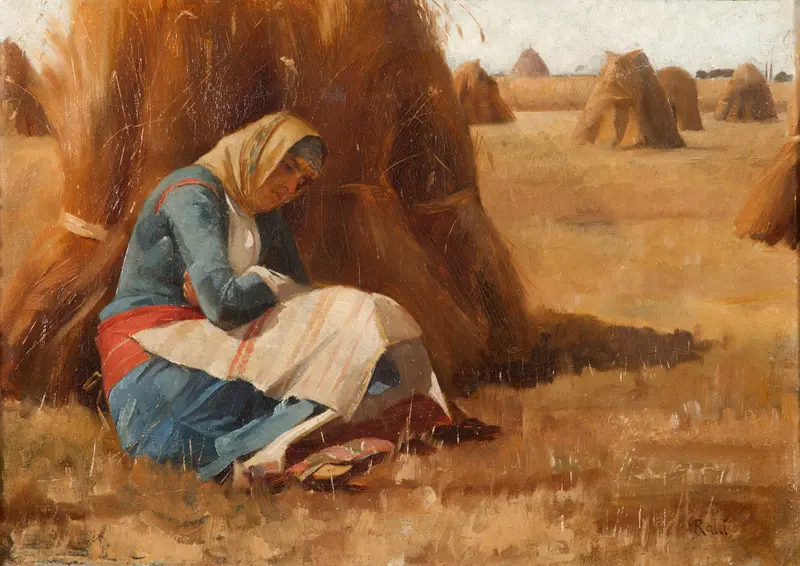
Resting by a Haystack
Theodoros Ralli
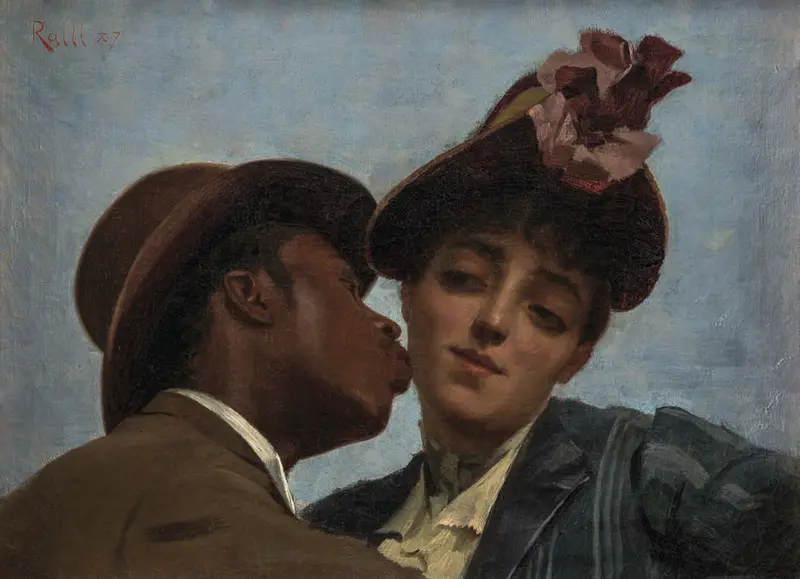
The Kiss (Ralli)
Theodoros Ralli
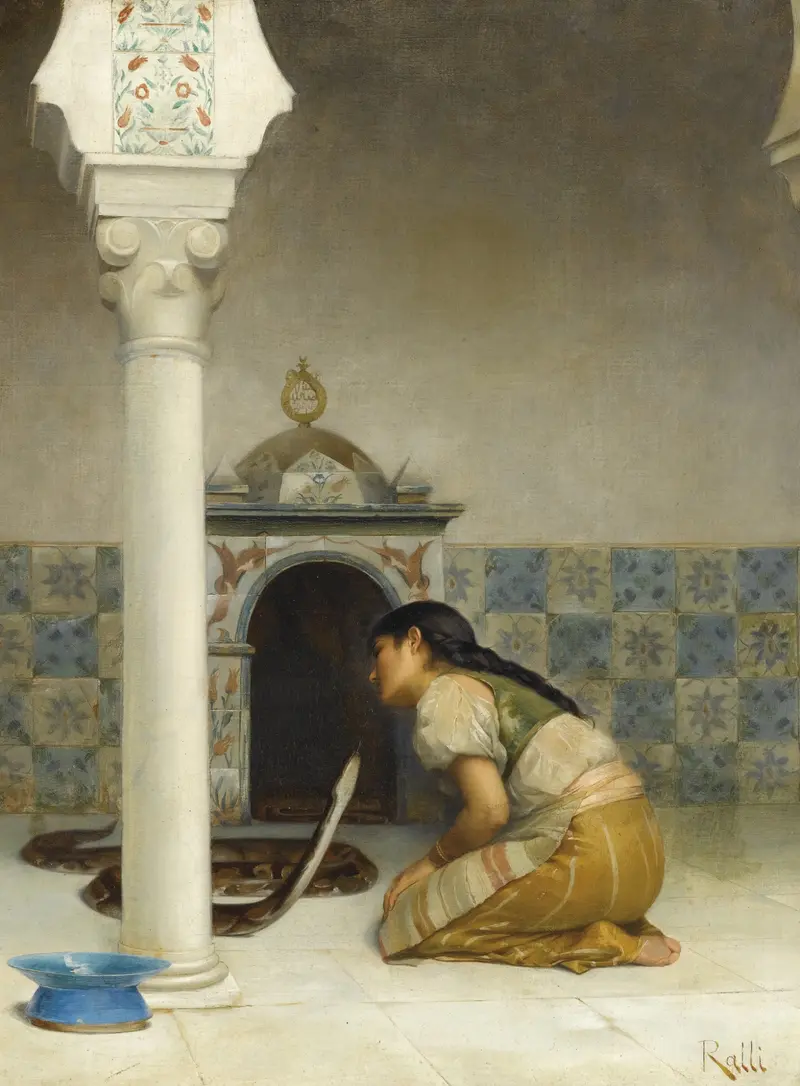
The Sacred Serpent
Theodoros Ralli
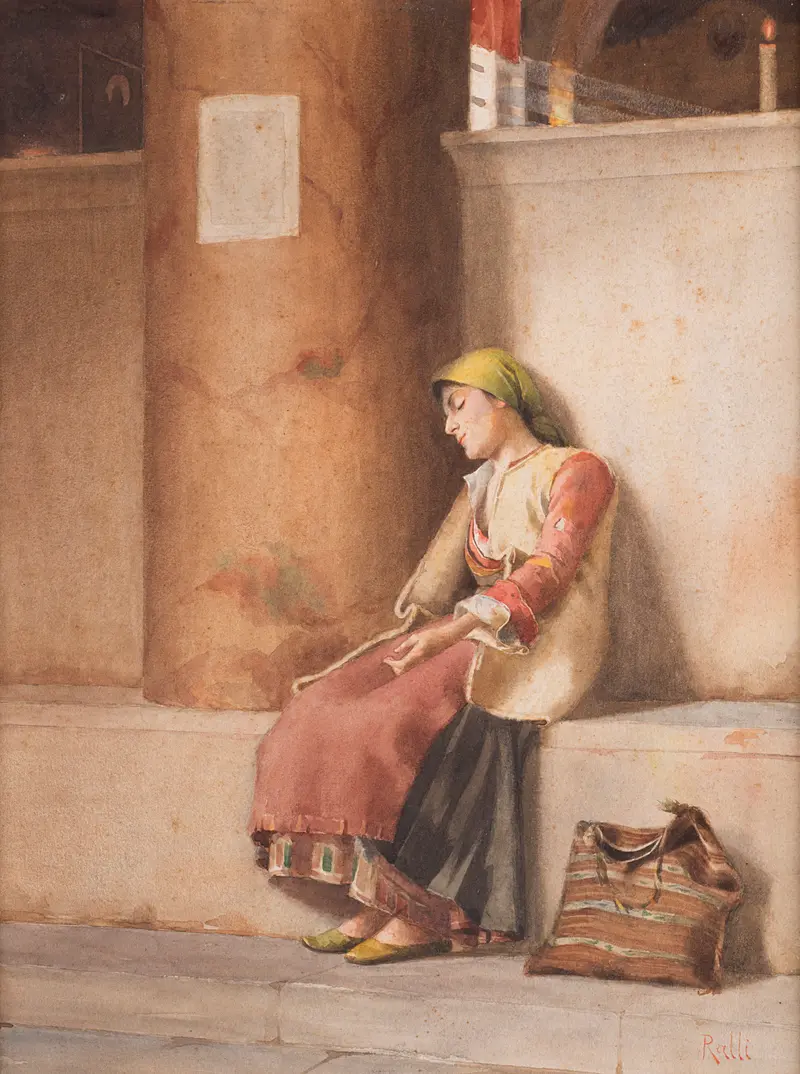
A Moment of Reflection
Theodoros Ralli
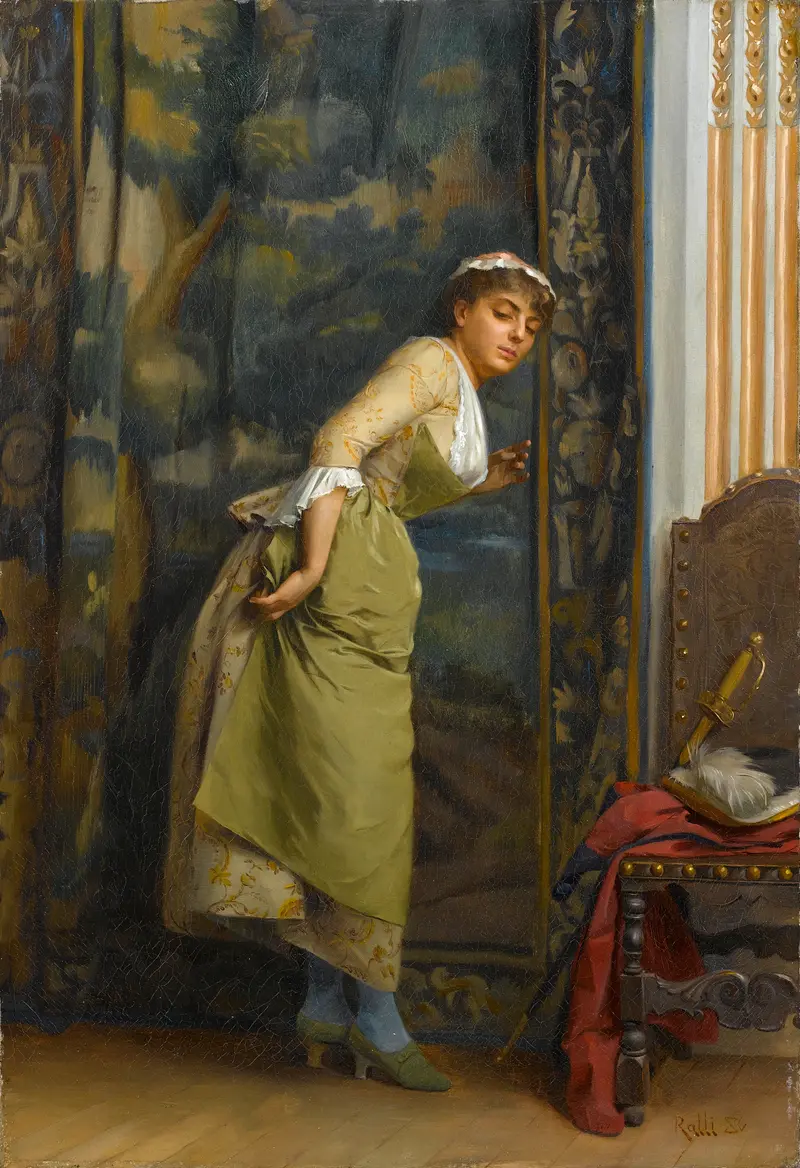
Eavesdropping (Ralli)
Theodoros Ralli
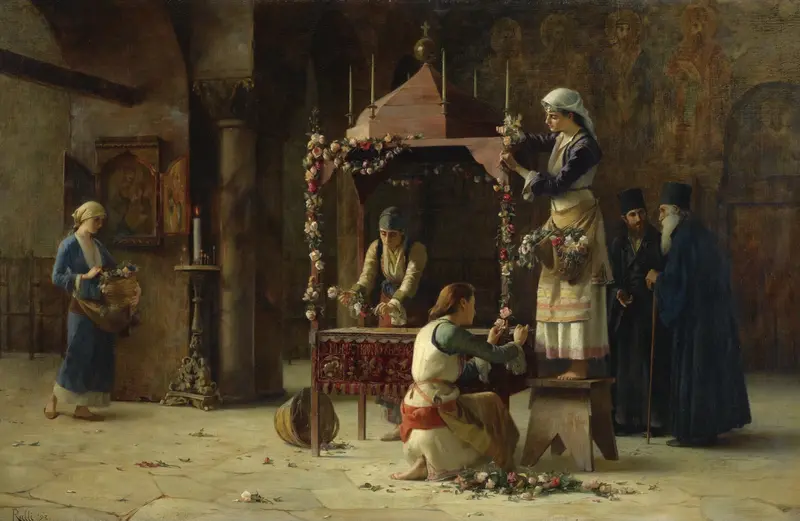
Holy Friday, Greece
Theodoros Ralli
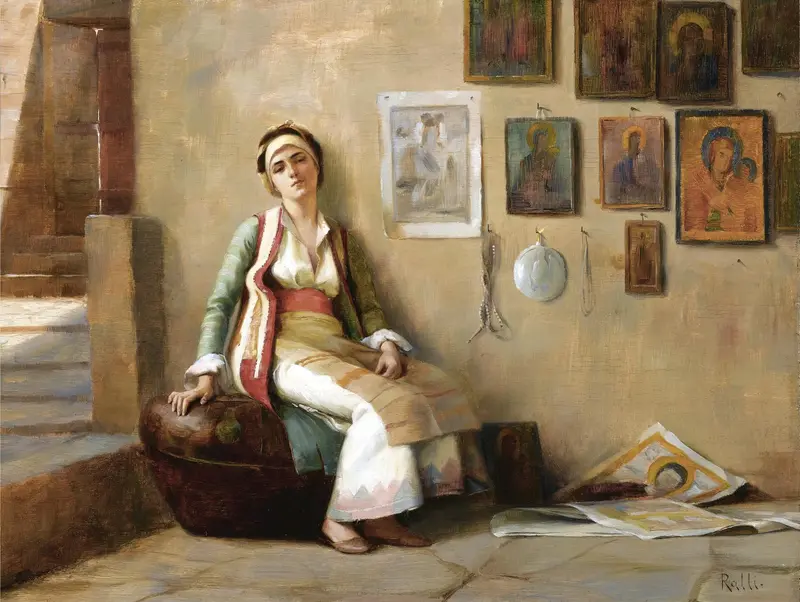
A Moment's Rest
Theodoros Ralli
More Genre Scene Art

Banquet of the Officers of the St George Civic Guard
Frans Hals

Rembrandt and Saskia in the Scene of the Prodigal Son
Rembrandt van Rijn

Bal du moulin de la Galette
Pierre-Auguste Renoir

Quadrille at the Moulin Rouge
Henri de Toulouse-Lautrec

A Burial at Ornans
Gustave Courbet

When Will You Marry?
Paul Gauguin