
L’abandon (Les deux amies) — History & Facts
In L’abandon (Les deux amies), Henri de Toulouse-Lautrec presents two women in a tender moment of intimacy. The colors are soft and warm, with a palette dominated by muted reds, browns, and yellows. The figures are depicted with a sense of closeness, suggesting a deep friendship.
The background is simple, allowing the focus to remain on the two friends. The painting is characterized by Toulouse-Lautrec's signature style, which blends realism with impressionistic elements. The brushwork is loose, creating a sense of movement and life. The figures are outlined clearly, yet the colors blend softly, enhancing the emotional tone of the scene.
This piece exemplifies the artist's ability to capture human relationships. Henri de Toulouse-Lautrec was known for his depictions of Parisian nightlife, but L’abandon (Les deux amies) reflects a more intimate side of his work. Created in the 1890s, this painting showcases the artist's interest in the dynamics of friendship. An interesting fact about this work is that it highlights the emotional connections between women, a theme not often explored in his other works.
More Artworks by Henri de Toulouse-Lautrec
Jane Avril
Henri de Toulouse-Lautrec
Jane Avril.
Henri de Toulouse-Lautrec

Quadrille at the Moulin Rouge
Henri de Toulouse-Lautrec
At the Moulin Rouge- The Dance
Henri de Toulouse-Lautrec
Ambassadeurs. Aristide Bruant dans son cabaret
Henri de Toulouse-Lautrec
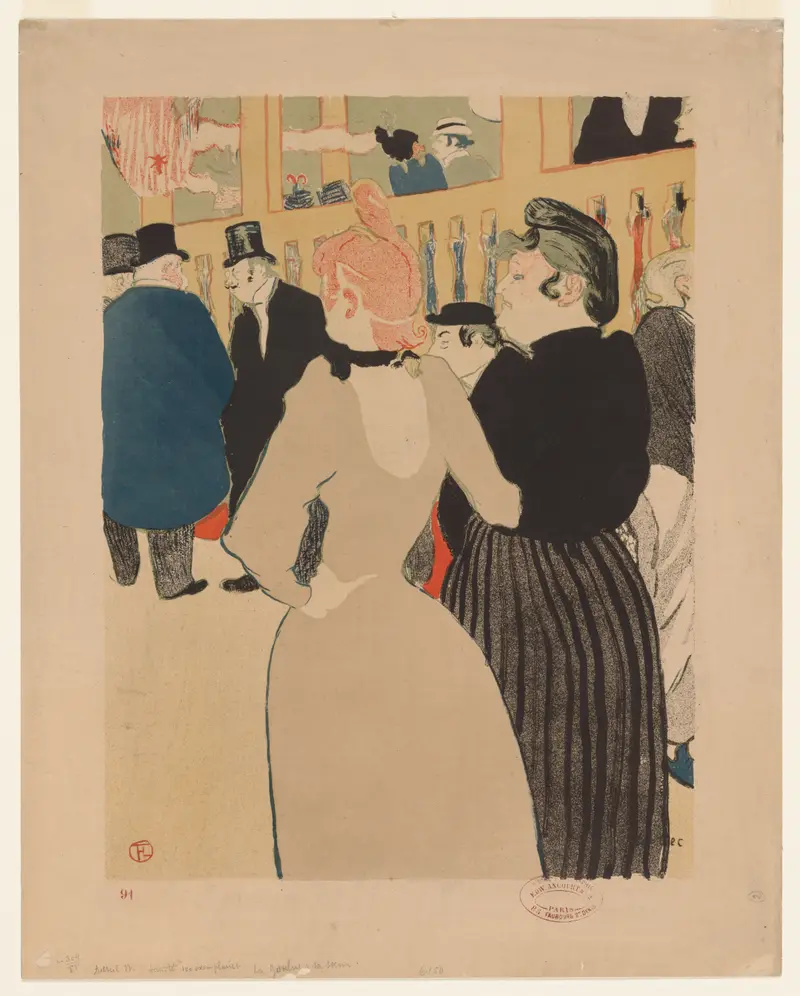
At the Moulin Rouge; La Goulue and Her Sister
Henri de Toulouse-Lautrec
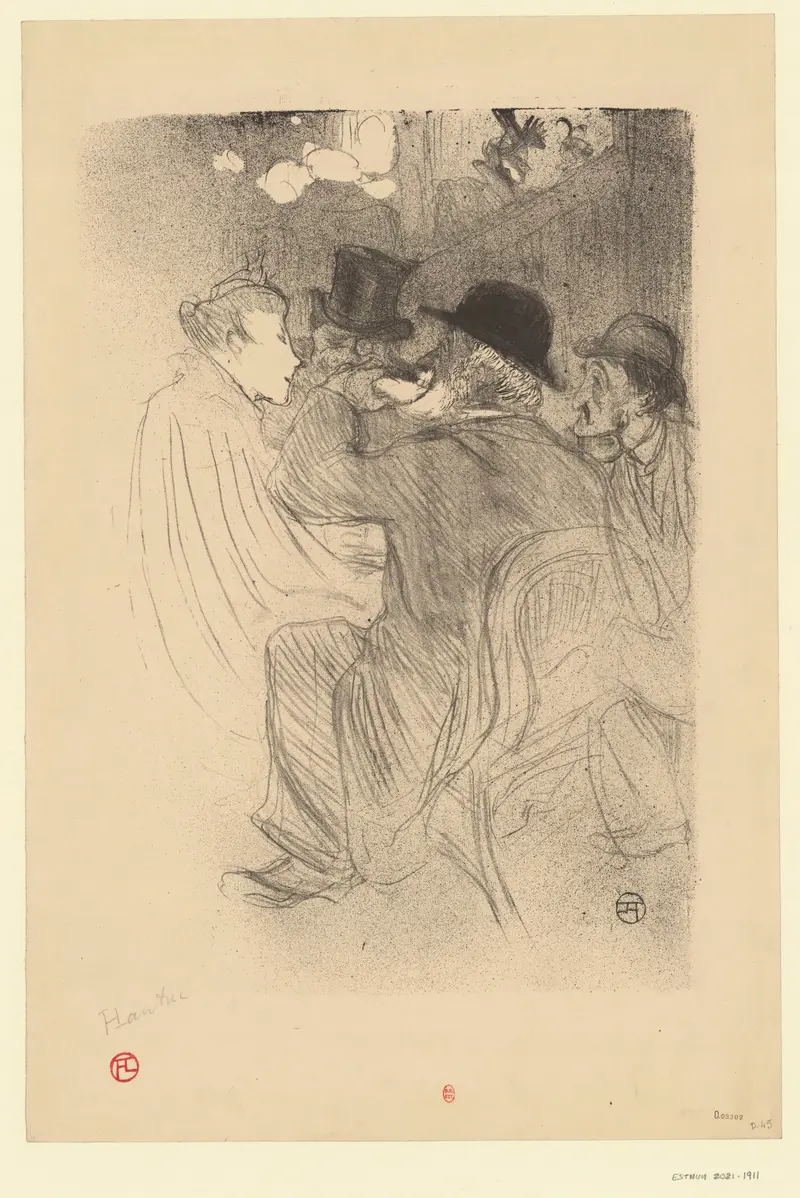
Au Moulin Rouge;Un Rude! Un Vrai Rude!
Henri de Toulouse-Lautrec
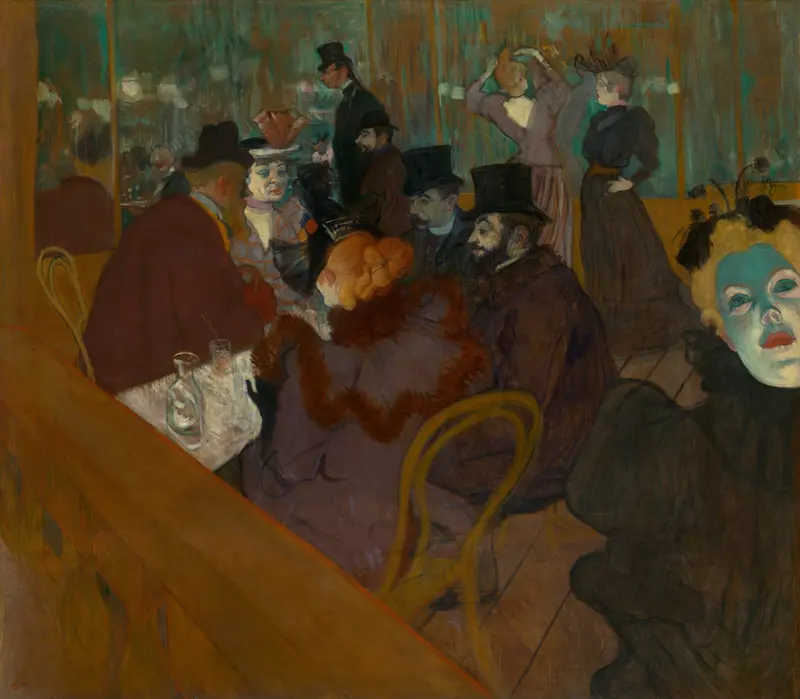
At the Moulin Rouge
Henri de Toulouse-Lautrec
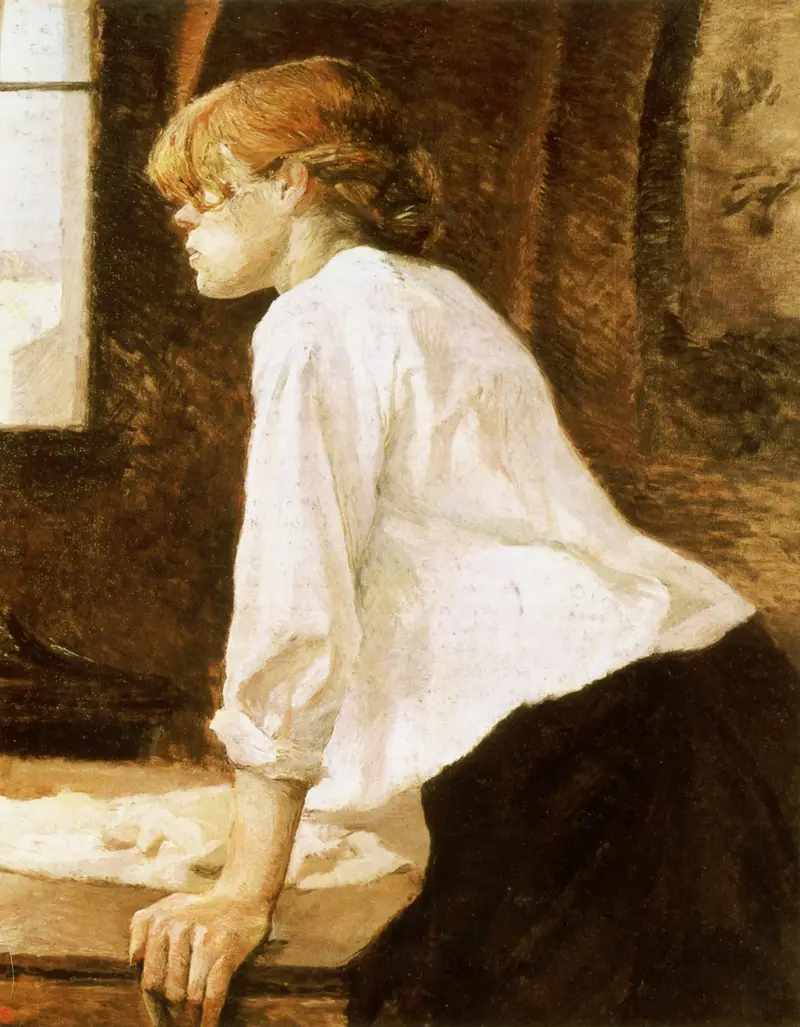
La Blanchisseuse
Henri de Toulouse-Lautrec
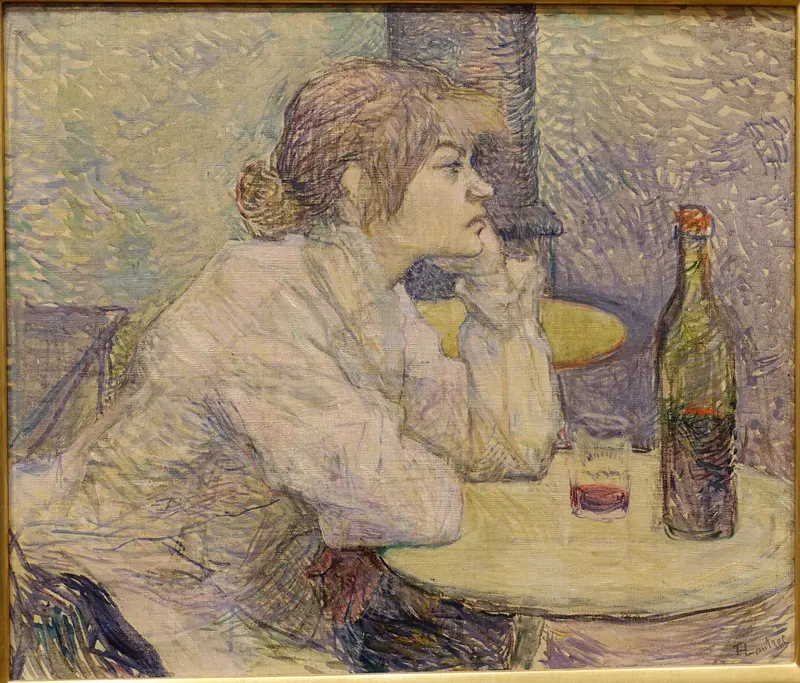
The Hangover (Suzanne Valadon)
Henri de Toulouse-Lautrec
More Genre Scene Art

Banquet of the Officers of the St George Civic Guard
Frans Hals

Rembrandt and Saskia in the Scene of the Prodigal Son
Rembrandt van Rijn

Bal du moulin de la Galette
Pierre-Auguste Renoir
Quadrille at the Moulin Rouge
Henri de Toulouse-Lautrec

A Burial at Ornans
Gustave Courbet

When Will You Marry?
Paul Gauguin