
L'église et le village de la Frette — History & Facts
What first draws the eye in L'église et le village de la Frette is the gentle ripple of reflection, where the village’s forms dissolve and double in the river’s surface. The church, with its pointed steeple and ochre walls, anchors the scene, but Marquet’s brushwork refuses to let it sit in solemn isolation. Instead, the whole village seems to drift—its houses, trees, and boats all softened by the watery mirror and the dappled, shifting light.
The palette is brisk and direct: earthy reds and greens, sky and water in cool, muted tones, and a hillside that rises behind like a protective arm. The boats, moored and still, suggest a pause in the day’s activity, a moment caught between movement and rest. Painted in 1939, this work belongs to the world of interwar France, when painters like Albert Marquet found poetry in the everyday landscapes of riverside towns. Marquet, associated with the loose, light-filled brushwork of the Fauves, often sought out the quiet drama of water and sky, and here he lets the river do much of the storytelling.
Such paintings were rarely grand commissions; instead, they were made for collectors who prized the immediacy of observation and the artist’s hand. Now held by Richard Green Fine Paintings, L'église et le village de la Frette stands as a record of a particular place and hour, inviting viewers to linger in the hush between village life and the slow drift of the river.
More Artworks by Albert Marquet
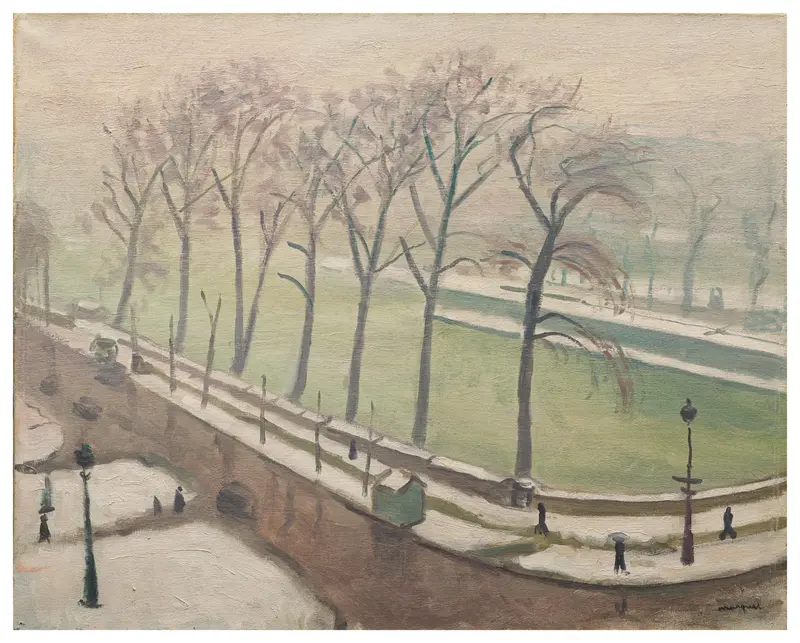
Pont-Neuf sous la neige
Albert Marquet

Le Port d’Alger
Albert Marquet
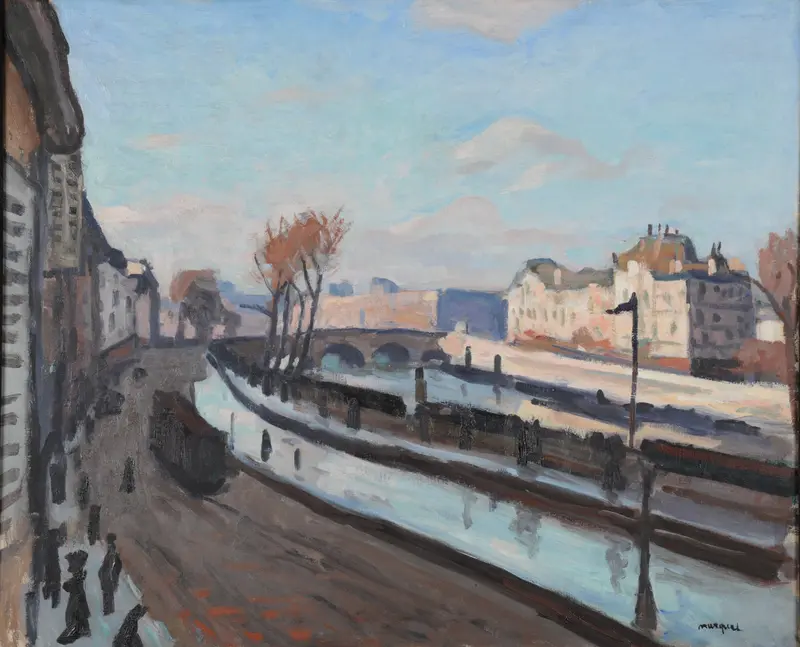
Le quai des Grands Augustins
Albert Marquet

Le jardin à l’Estaque
Albert Marquet
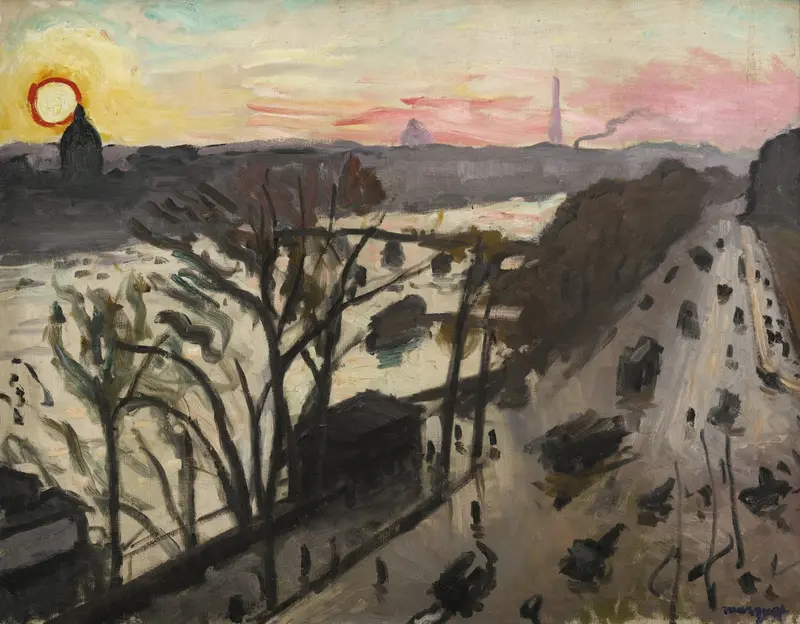
Paris, quai du Louvre, soleil d’hiver
Albert Marquet
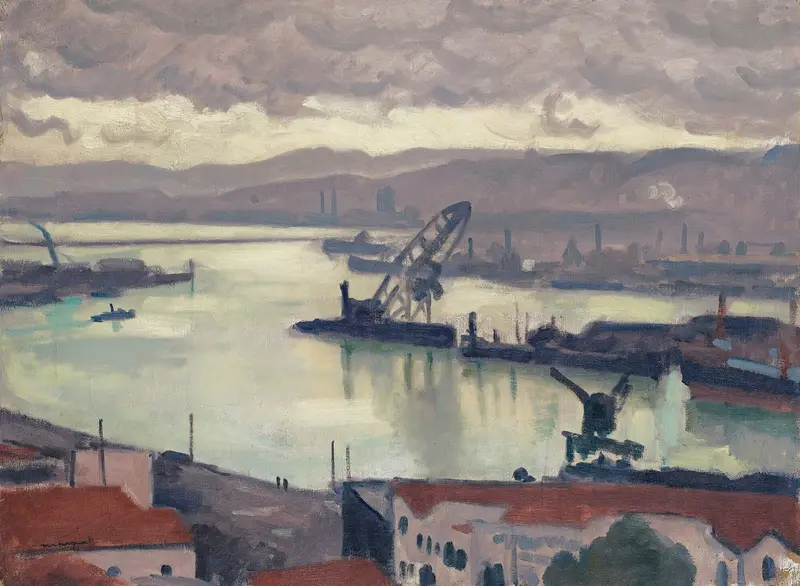
Alger, Temps Gris
Albert Marquet

Berge de la Seine à Méricourt
Albert Marquet
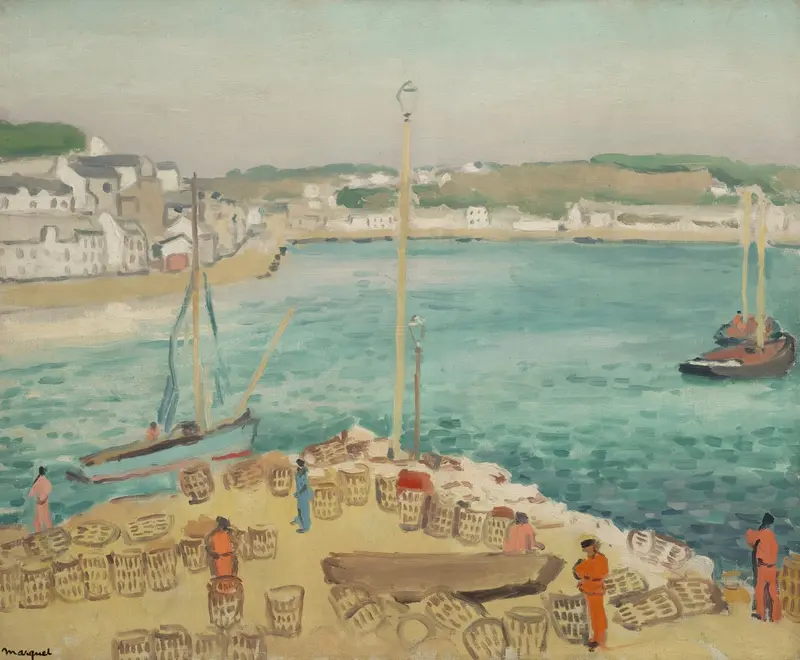
Audierne, les tonneaux
Albert Marquet
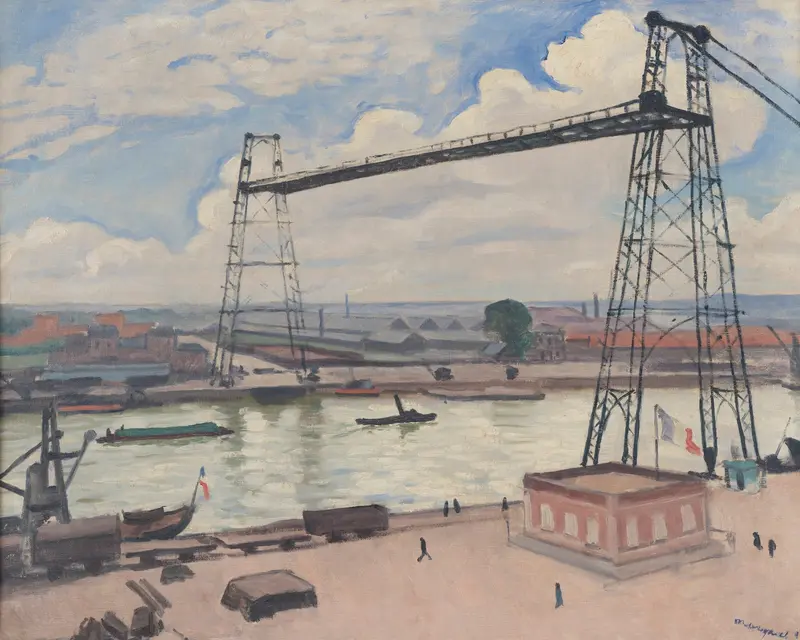
Rouen, le pont transbordeur
Albert Marquet
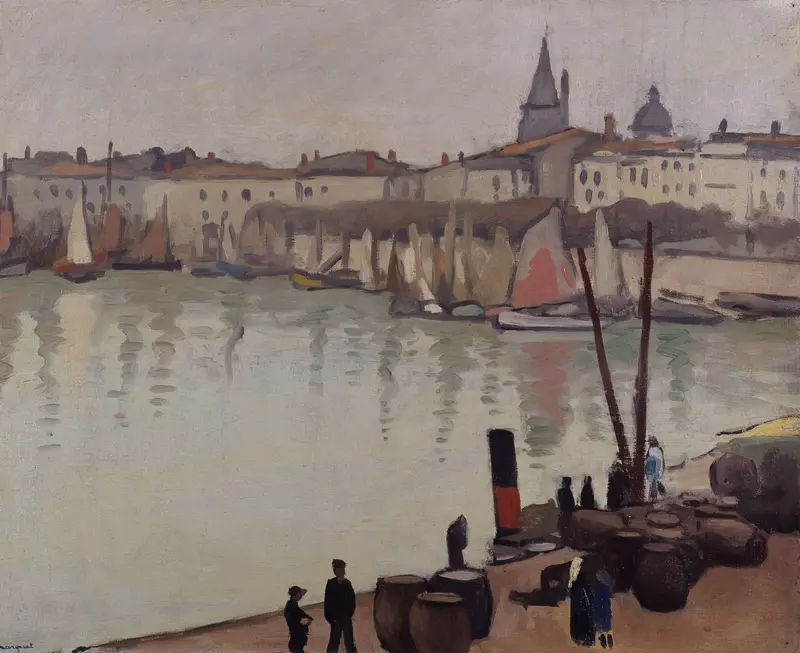
Port of La Rochelle
Albert Marquet
More Landscape Art

The Starry Night
Vincent van Gogh

View of Delft
Johannes Vermeer

Water Lilies
Claude Monet

The Grand Canal, Venice, looking north-west from the Ca' Corner to the Ca' Contarini degli Scrigni, with the campanile of Santa Maria della Carità
Canaletto

Windsor Castle
Canaletto

The Grand Canal looking North-East from the Palazzo Dolfin-Manin to the Rialto Bridge
Canaletto