
L'Idéal qui passe — History & Facts
What draws the eye first in L'Idéal qui passe is the hush of anticipation that hangs between two figures on a balcony, their gazes fixed on the horizon where the last gold of daylight slips away. The woman leans forward, her chin resting on her clasped hands, every line of her posture drawn taut with longing or thought, while the man beside her, marked by his pink hat and profile, stands in quiet companionship. The city behind them is rendered in soft, muted strokes, its clustered rooftops and distant smokestack suggesting a world both close and unreachable.
Steinlen’s palette is restrained—greys, ochres, and that single note of pink—focusing attention on the faces and the charged space between them. The composition leads the viewer outward, past the figures, into the fading light, inviting us to wonder what hope or memory fills their silence. This work belongs to the world of late nineteenth- and early twentieth-century Paris, where artists like Théophile Alexandre Steinlen chronicled the lives and dreams of ordinary people. Lithographs such as this, often produced for popular illustration or affordable art editions, brought scenes of urban longing and social observation into middle-class homes.
The date of this piece is uncertain, inferred from similar works, but its mood and style are unmistakably those of a period when the city’s rapid transformation was both thrilling and unsettling. Preserved today in the Boston Public Library collection, L'Idéal qui passe stands as a quiet testament to the fleeting ideals and private reveries that shaped the modern city—look again, and you may catch the echo of your own longing in that twilight gaze.
More Artworks by Théophile Alexandre Steinlen

Village et charrette
Théophile Alexandre Steinlen
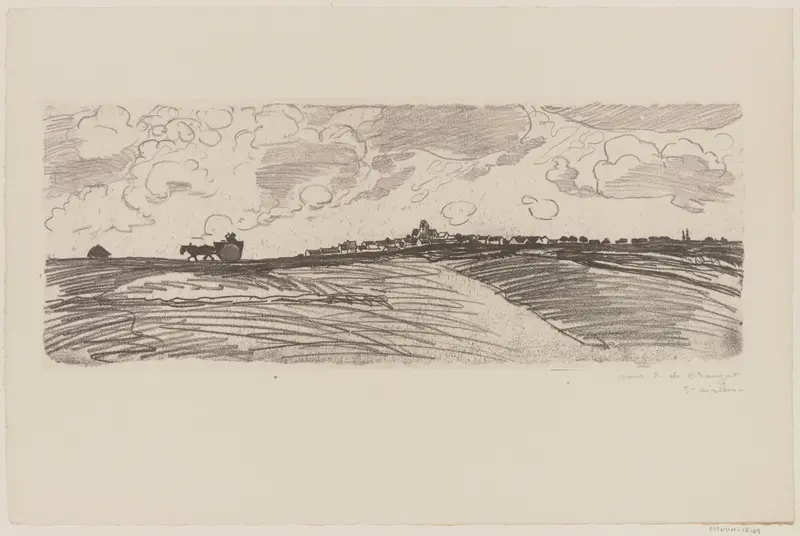
Village et charrette
Théophile Alexandre Steinlen
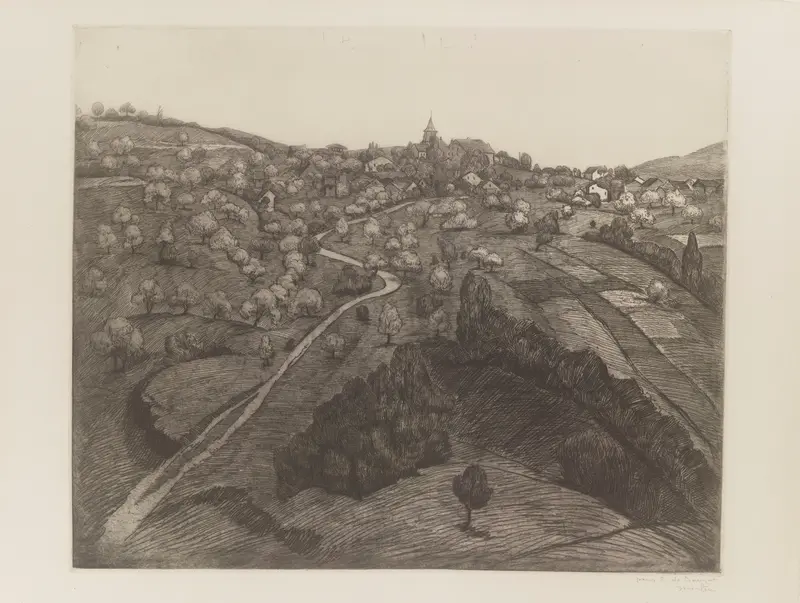
Vue de Belmont, près de Lausanne
Théophile Alexandre Steinlen
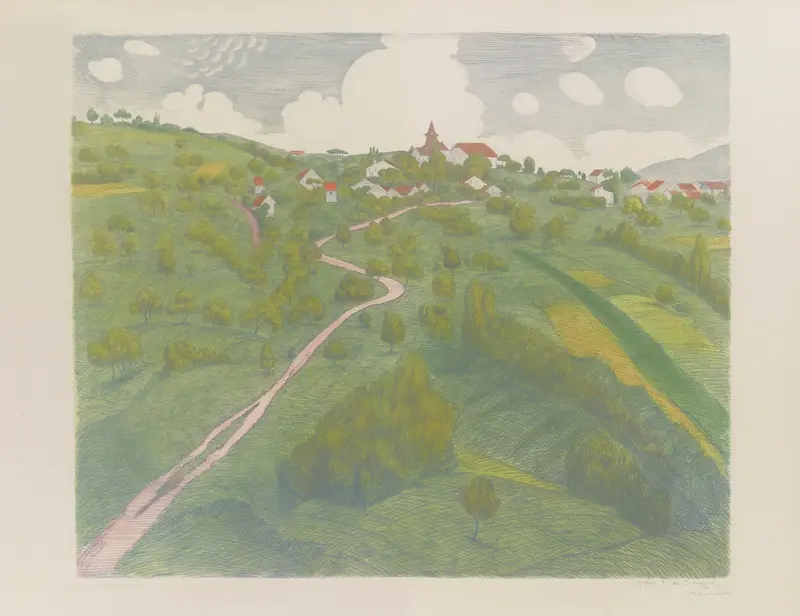
Vue de Belmont, près de Lausanne
Théophile Alexandre Steinlen
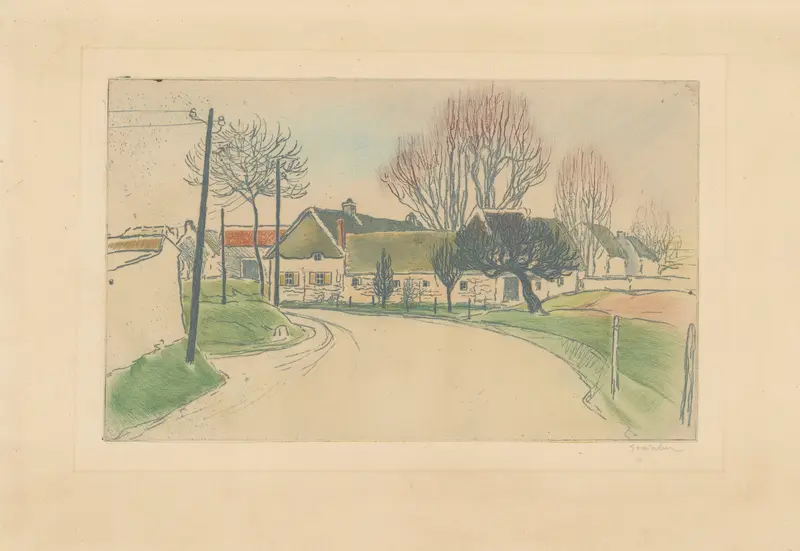
La maison à l’entrée du village
Théophile Alexandre Steinlen
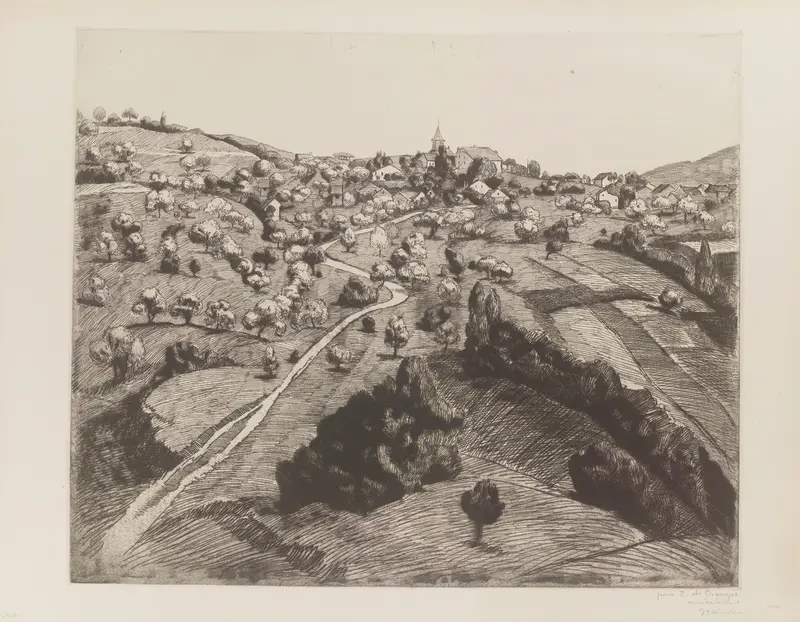
Vue de Belmont, près de Lausanne
Théophile Alexandre Steinlen
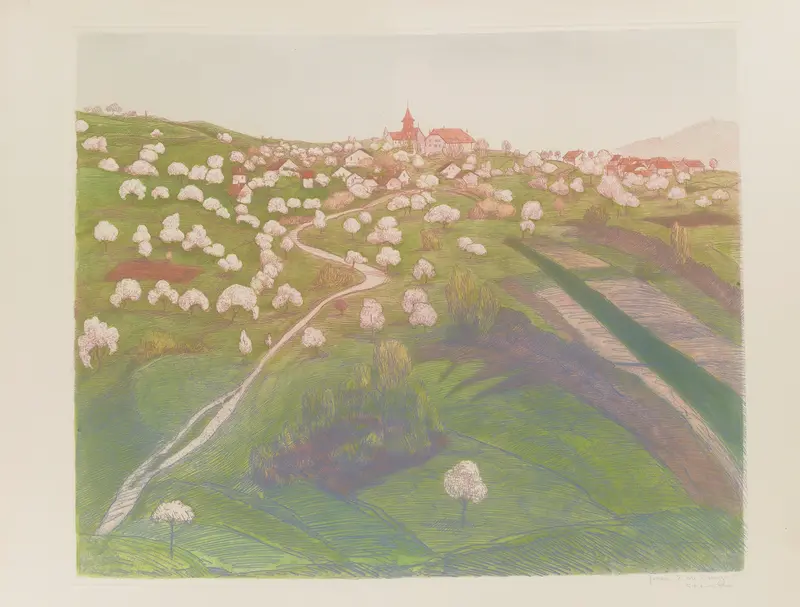
Vue de Belmont, près de Lausanne, n° 2
Théophile Alexandre Steinlen
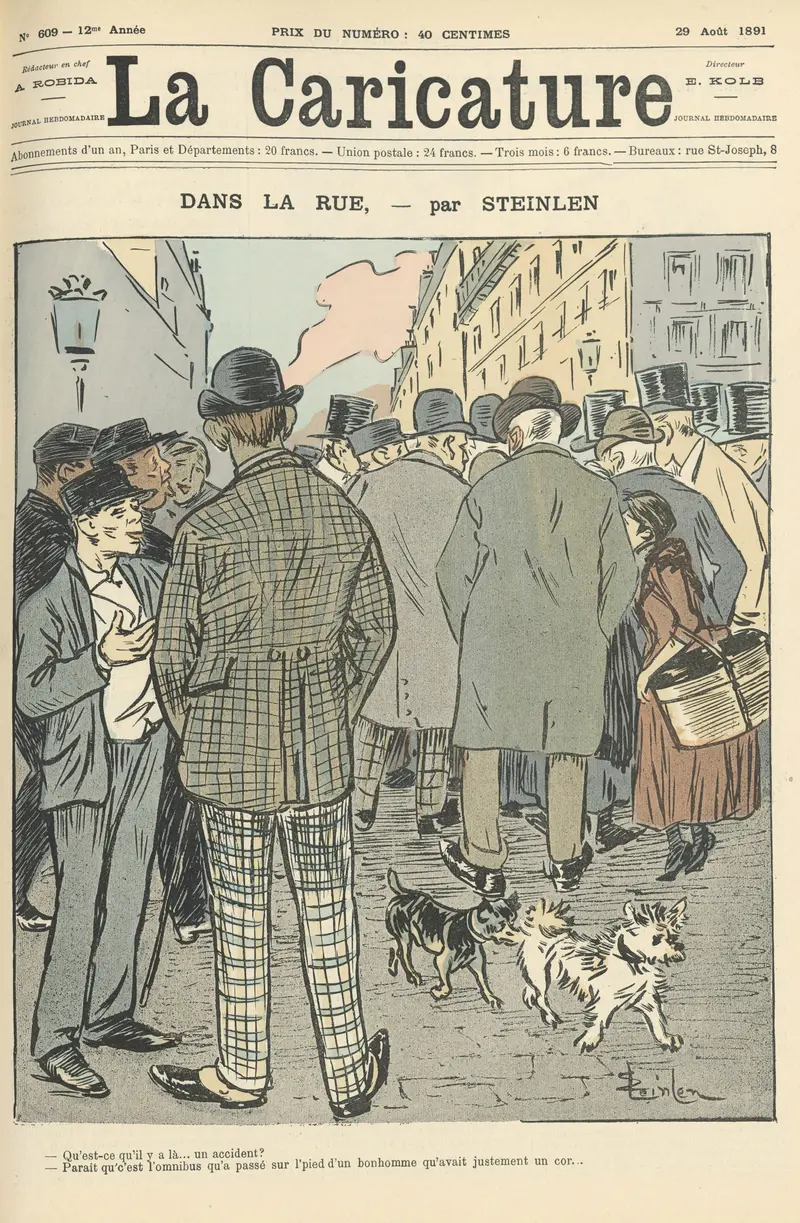
Dans la rue (La Caricature, 29 août 1891)
Théophile Alexandre Steinlen
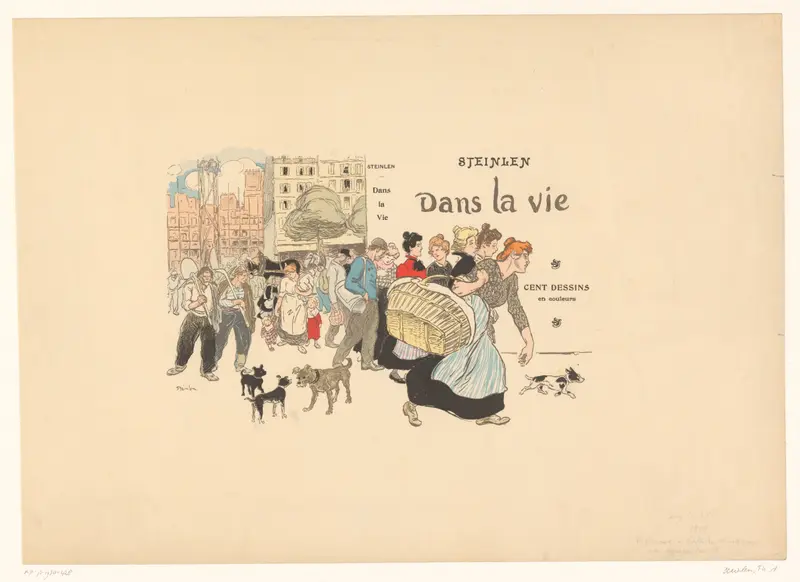
Dans la vie
Théophile Alexandre Steinlen
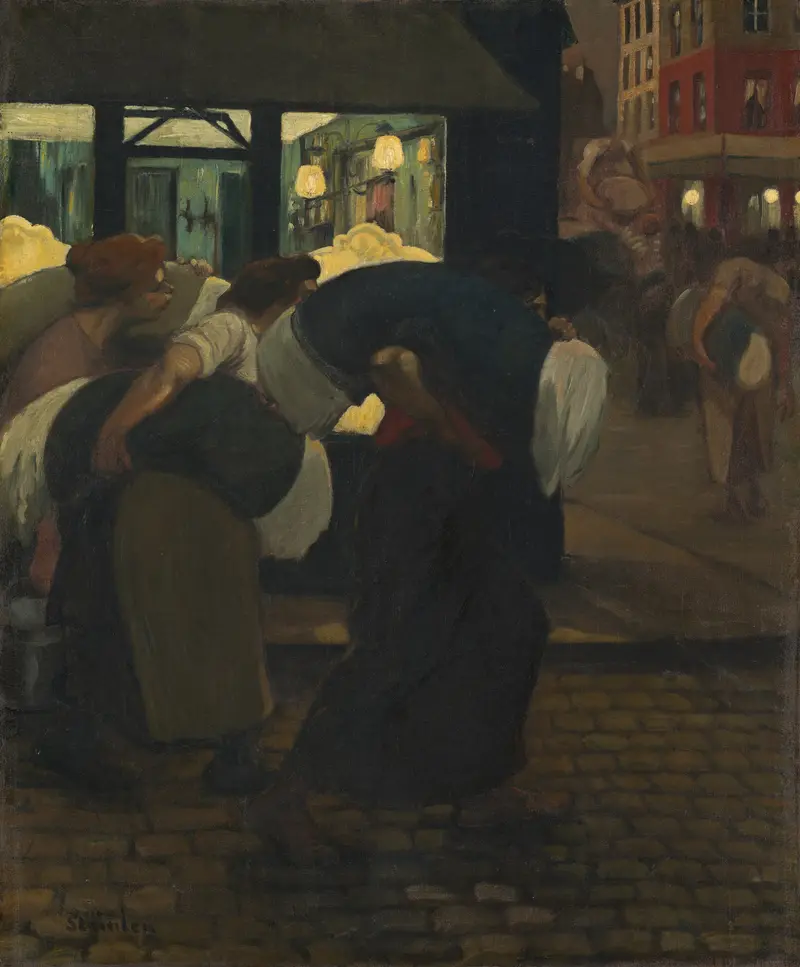
The Laundresses
Théophile Alexandre Steinlen
More Genre Scene Art

Banquet of the Officers of the St George Civic Guard
Frans Hals

Rembrandt and Saskia in the Scene of the Prodigal Son
Rembrandt van Rijn

Bal du moulin de la Galette
Pierre-Auguste Renoir

Quadrille at the Moulin Rouge
Henri de Toulouse-Lautrec

A Burial at Ornans
Gustave Courbet

When Will You Marry?
Paul Gauguin